
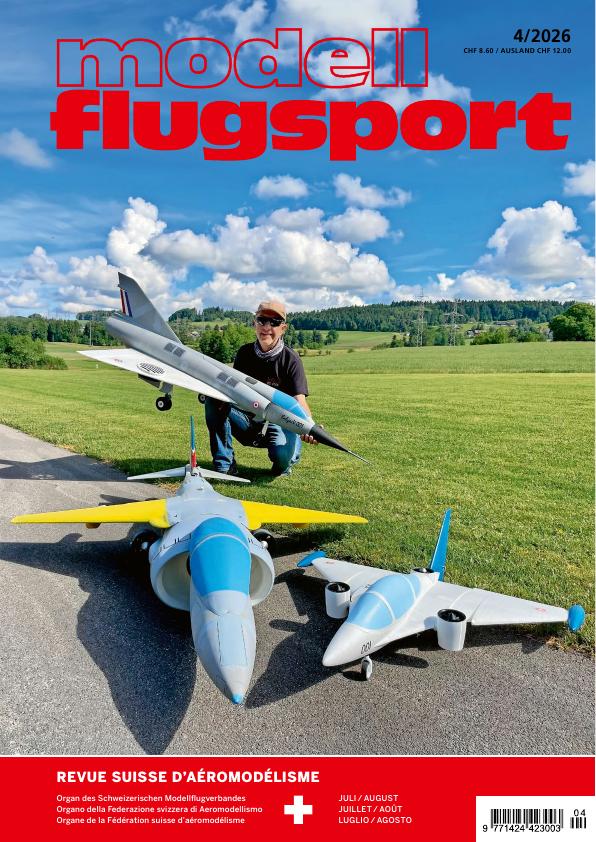
Have you almost forgotten about aircraft that take off and land vertically?
Have you almost forgotten about aircraft that take off and land vertically?
In 2018, the Dornier Museum celebrated the 50th anniversary of the DO-31’s maiden flight. The aircraft is still considered the only jet-powered transport aircraft capable of vertical takeoff and landing (VTOL). Various events were organized to mark the occasion—including a gathering for VTOL model enthusiasts. MFS 5/18 reported on it in detail.
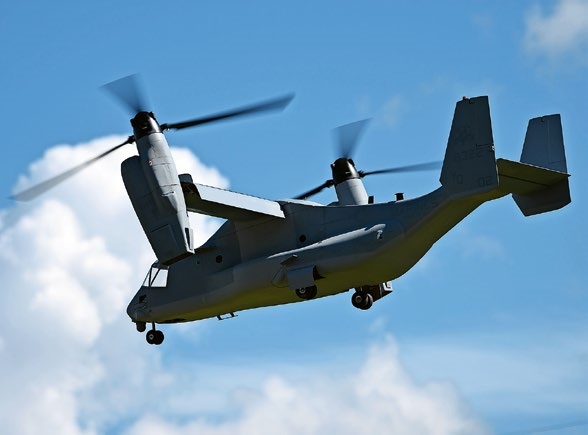
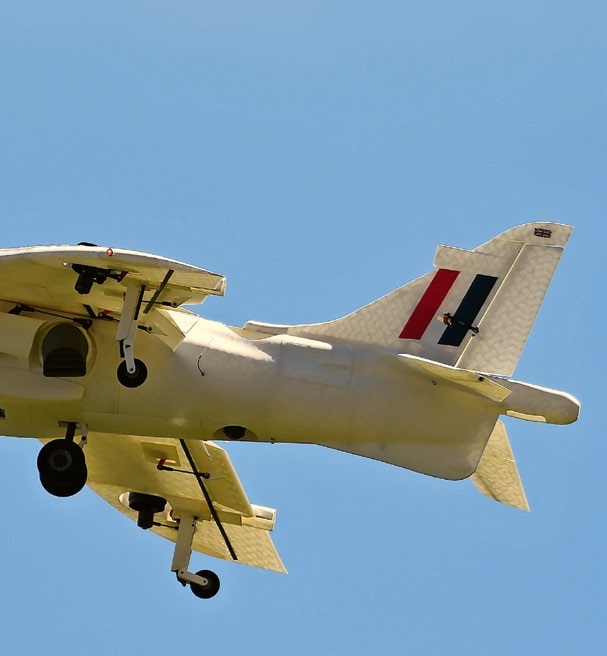
However, to the best of my knowledge, no more transport aircraft have been built—with the exception of the V-22 Osprey, which is used by the U.S. military. This aircraft was equipped with two helicopter-like, swiveling rotors. After some initial setbacks, the aircraft is now successfully in service with various militaries. The British Harrier II (Hawker Siddeley), which entered service in 1969 and of which nearly 350 were produced, received more attention. Next came the Russian Yak-38, which entered service in 1976, and finally the much-discussed F-35B from Lockheed Martin. The VTOL experiments by French aircraft manufacturer Marcel Dassault with the Balzac V 001 and Mirage III V ended in 1965 following two fatal accidents.
The 2018 meeting in Friedrichshafen showed that a small group of model builders had already ventured into designing and flying VTOL models. A few experts also showed up at the 2019 Militky Cup in Pfäffikon. VTOL model flying has, admittedly, fallen somewhat “by the wayside” in the wider model flying community. However, a small, highly innovative group has been working for more than 10 years—mostly behind the scenes—with great dedication to making beautiful VTOL semi-scale models airworthy. There have certainly been setbacks as well. It was time to venture off the beaten path at the Militky Cup. It did take some courage to dedicate Innovation Day to the topic of “VTOL.” Despite everything, thanks to the support of a scene insider, an illustrious group from Austria, the Netherlands, and Switzerland came together for a very diverse meeting. This inspires hope in many ways. After all, model aviation must not be limited to the store counter—it needs a challenge.
My great enthusiasm following the small model aircraft event in Pfäffikon was in no way dampened by my subsequent meeting with Beat Sigrist and his son Julian, but it did lead me to adopt a more realistic perspective. At first glance, the design and construction of VTOL semi-scale models may not seem like anything special. In reality, however, we’re dealing with a model aircraft category that’s very challenging in many respects. Beat has been intensively involved in this field for over 10 years and is constantly looking for ways to improve his designs. His very lightweight models are now created using CAD and 3D printing. He does all the printing himself. This facilitates adjustments and modifications and allows for a quick replacement in the event of a total loss. These models should be as light as possible, which is one of the basic requirements for a successful vertical takeoff; ideally, the weight-to-thrust ratio—with a margin—is approximately 1:2. Hovering tests and learning to hover shouldn’t be rocket science. Helicopter and drone pilots have an advantage. Even “normal forward flight” from a runway is no different than with any other ground-launchable model.
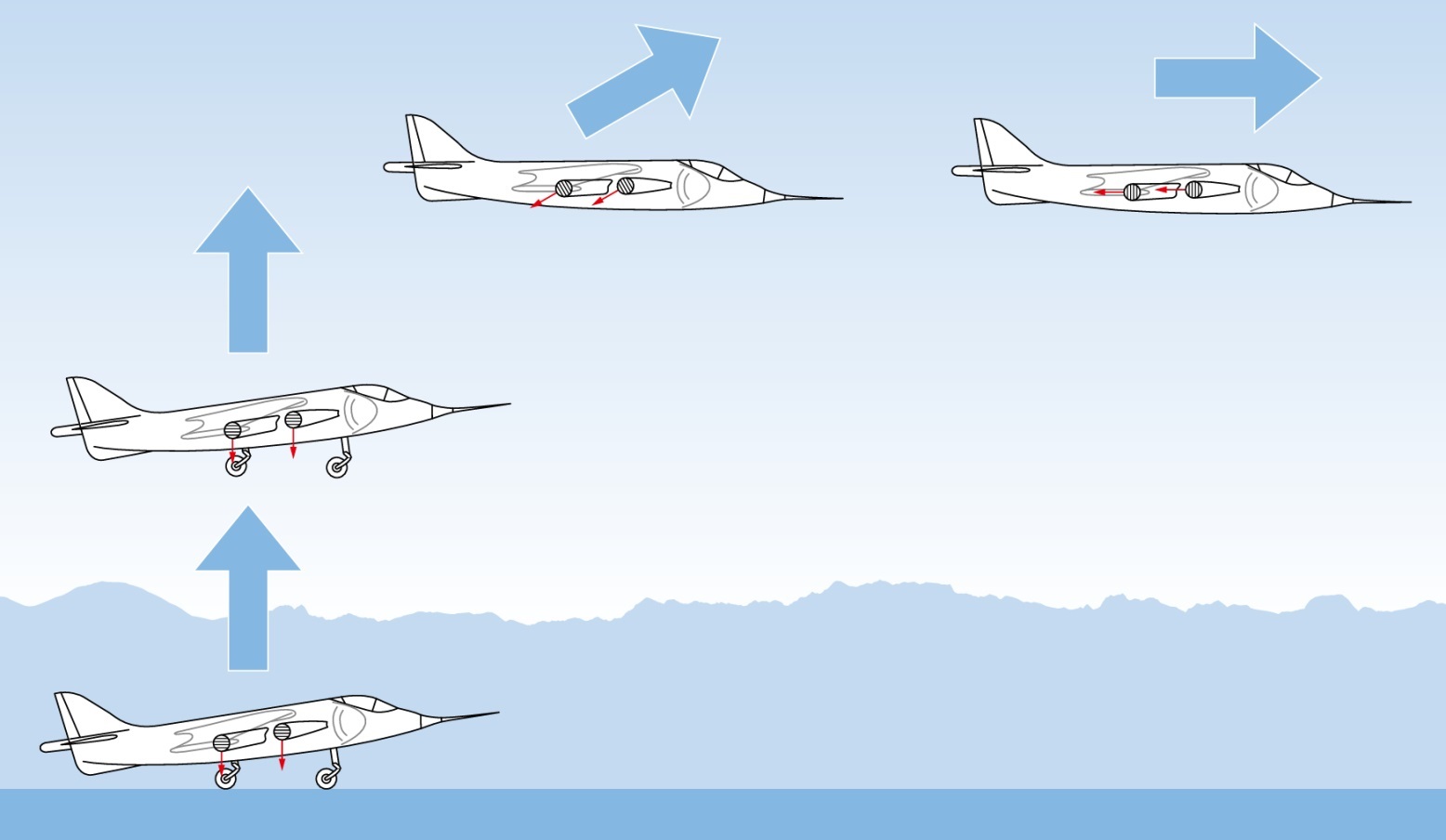
According to Beat, the biggest challenge is the transition—that is, the shift from vertical flight to forward flight (outbound transition) and back again (inbound transition). Since the model has no forward movement during hover flight, it has no aerodynamic lift but is kept in a hovering state solely by the vertical air jet generated by the impeller. This means that during this critical phase, the model must first be able to gain speed in order to avoid crashing. The inbound transition is comparatively simple, provided the model is flying and hovering safely. Even engineers of manned aircraft have repeatedly failed during this extremely difficult transition phase. The requirements for fine-tuning—such as the timing of the individual program steps—are very high and cannot be met without a large number of test flights. Endless perseverance is required. Focusing on a basic concept is advantageous: Beat focuses in particular on tricopter technology (Northstar V 002). Force distribution across the triangle: This is a well-known principle in drones. However, the more “scale-accurate” the model, the more complex the approach becomes. For example, the AV-8B Harrier II (Pegasus engine with swiveling nozzles), the F-35B (3 BSM units); Balzac V 001/Mirage III V (4 × lift engines, 1 × engine for normal flight) or the DO-31 (2 × Pegasus engines, 2 × 4 lift engines on the outer wing).

The participation of 8 pilots from three countries should not be described as a “major success in just four months.” In this little-known model-aircraft discipline, it’s best to keep your feet on the ground and leave the flying to the specialized models. I am convinced that a very exciting and innovative story has been quietly unfolding around the world over the years.
New areas of research and development are important for model aviation. Without new challenges, our hobby becomes more uniform and thus less creative. Unfortunately, competitive sports have also offered little that is new in recent times. Minor developments and improvements are known only to insiders and can hardly drown out the rampant drive for optimization and uniformity (creativity is still in demand in scale model building). VTOL model aviation must be promoted in Switzerland. To that end, we need to continue holding enjoyable and educational gatherings. VTOL fits perfectly with the vision Fred Militky had in the early 1970s.

News from HEBU

TEAM MANAGER "THIS" BOSSHARD
 Rodito Nussbaumer

SUMMER FUN 2026 AT MG USTER
Martin Wunderli
BY YOUTH, FOR YOUTH
Lorena Betschen
SMALL, MODEL-LIKE SAILBOATS
Res Dauwalder
TRY-OUT DAY AT MFV WETTINGEN
Urs Keller
What's New at Leomotion.com

52. 2026 ALPS CUP
 Emil Giezendanner

ATOM, THE NEW DOUBLE-DECKER FROM CPLR
 Matthias Bosshard

INSIGHTS INTO THE HISTORY OF SEAPLANES

YOU KNOW WHAT I MEAN? 125 YEARS OF THE SWISS AERO CLUB
Emil Giezendanner
34th HAHNENMOOS ALPINE MODEL AIRPLANE CAMP
Res Dauwalder
CORSAIR F4U – A WARBIRD WITH A MEMORABLE LOOK
Jürgen Rosenberger, Jürgen Prinz
F3A EUROPEAN CHAMPIONSHIPS IN ST-MACAIRE, FRANCE
Matthias Bosshard
HORIZON HOBBY/LEMACO NEWS: MICRO OV-10 BRONCO 645 MM BY E-FLITE

PRIDE AND GOOD IDEAS
 Markus Nussbaumer

EURO CONTEST GLIDER ACRO TOUR AUSTRIA 2026

FREE FLIGHT IN THE MIDDLE OF SUMMER
Urs Muntwyler
THE PC-21 STORY
Emil Giezendanner
TWIN TOWN PARTNERSHIP
Wolfgang Voeller
WELCOME, NEW MEMBER!
Andrea Bolliger
COUPE DES ALPES – OBSERVE AND LEARN
Rodito Nussbaumer
NEWS FROM HEBU
 Julia Bucher

FROM 0 TO 100
Markus Nussbaumer
MEMORIES
Wolfgang Völler
NOS REGION – A HUB FOR ELECTRIC AVIATION
Emil GiezendannerHave you almost forgotten about aircraft that take off and land vertically?
Emil Giezendanner
70 YEARS OF THE NIDWALDEN MODEL AIRPLANE CLUB
Martin Barmettler