No High-Performance Wonders
Admittedly, when you push the small, scale-model gliders described below over the edge of the slope in calm conditions, their performance isn’t exactly thrilling! It couldn’t be any other way: The wing geometry almost never meets the basic requirements for good performance; if you calculate the Re number, you’ll find that it falls far short of the target values. This isn’t surprising when you consider, for example, the chord depth of the ASW-15: It’s still just under 5 cm deep at the wingtip. The choice of airfoil often leads to endless discussions in various forums; these don’t improve performance either, because there’s no such thing as a “miracle” airfoil! Thanks to ever-smaller RC components, combined with lightweight model construction, at least the wing loading remains within an acceptable range. In addition, with today’s transmitters, you can adjust the control surface deflections very precisely and tailor them to the model; I’m thinking, for example, of the aileron or elevator deflections.
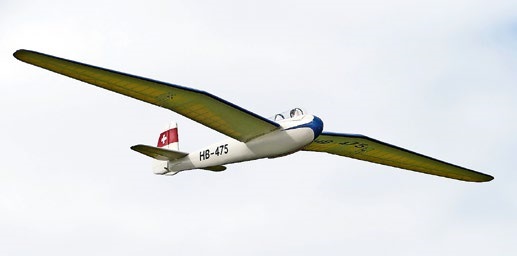
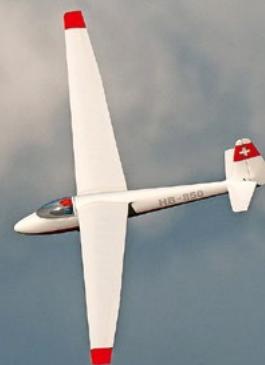
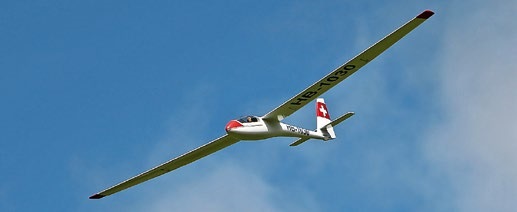
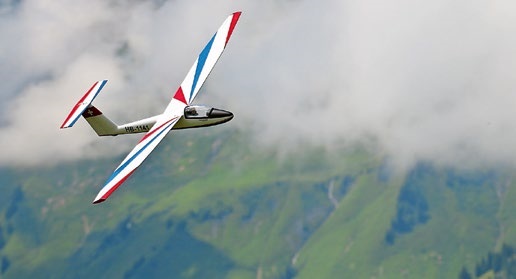
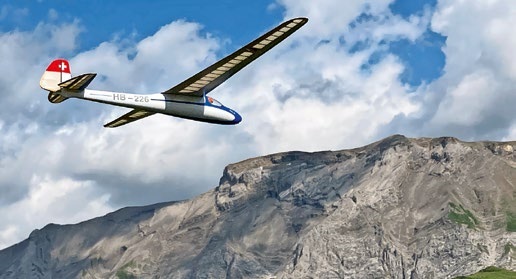
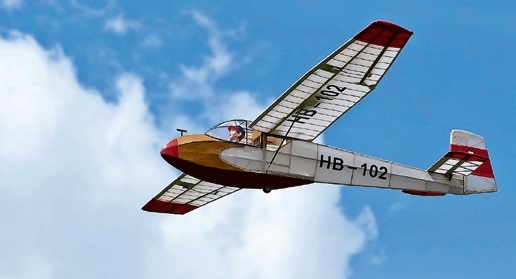
These models have other appealing qualities: they’re easy to build and take up little space; the financial cost is usually manageable (depending on how much work you do yourself); they can be flown on small slopes; and they look nice. If the slope has a distinct edge, the dynamic updraft compensates for any aerodynamic shortcomings. The flybys along the slope’s edge, right next to the pilots and spectators, are a real treat. Gliding in the Alps is also very feasible given the right topography, and here, too, you can fully enjoy the flybys against a magnificent panorama—the photos of the featured models prove this point! Plus, these models are easy to transport in the mountains!
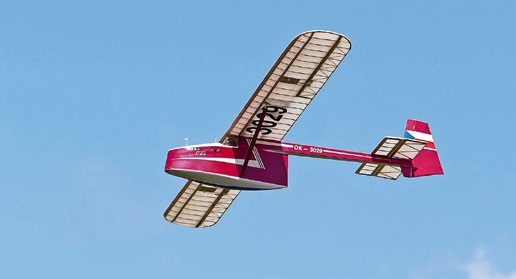
If the model has a slightly larger silhouette, such as the “Rhönlerche” or the MiMI-B3, then towing is also very feasible; these models are quite visible, have a slightly larger wing area—resulting in a low wing loading—and therefore climb quite well even in subtle thermal tubes.
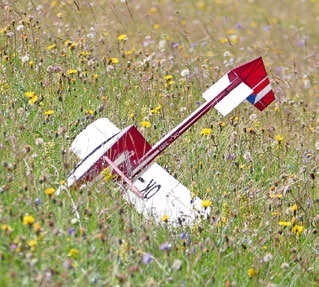
Some models today are even equipped with four-flap wings; that might seem excessive, but it helps ensure that, despite higher airspeeds, the models can be landed gently and consistently on small landing fields without damage. Sometimes the landings aren’t so gentle—that can happen, right? But these small models can take quite a bit of a beating...
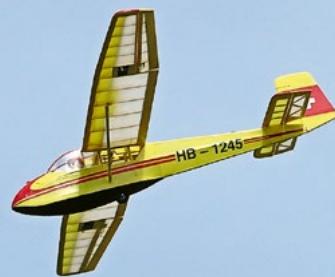
Models described and shown:
When selecting the models described here, I set a maximum wingspan of 2 m; the models described are therefore all on the smaller side. All models were built by the Münchenbuchsee Model Flying Club and are flown regularly—which speaks to the appeal of this type of glider. And: Our fleet of similar models is constantly growing among all enthusiasts of hillside gliding—the pictures speak for themselves, don’t they?! Perhaps this report will inspire you to start building your own small glider model...? With a smart choice of model and careful construction, you’re sure not to be disappointed!
Photos: Roland Huchthausen, Philip Rickli, Thomas Kindler



 Rodito Nussbaumer

 Emil Giezendanner

 Matthias Bosshard









 Markus Nussbaumer











 Julia Bucher




