
Working with Styrofoam
Working with Styrofoam has been a common practice in model aviation since at least the 1970s. Cutting wings and tail surfaces was particularly widespread. Wings for motorized models and for both small and large gliders were produced in large numbers and were sometimes sold commercially.
Cutting wings is a team effort. The smooth surfaces are covered with balsa wood or veneer using presses or a vacuum bag, and preparations are made for installing spars and joints. This work is also easier to accomplish as a team. The process is usually completed with a film or glass-fiber coating. Those interested can find information on our modern model aviation website
, for example, on cutting Styrofoam for delta wings:
https://www.modellflugsport.ch/sites/default/files/doku_styroschnitt.pdf
or the construction of large glider wings:
https://www.modellflugsport.ch/sites/default/files/eintraum_aus_schaum.pdf
Around 1980, fuselage spars and other parts were increasingly made of Styrofoam in F3A models.
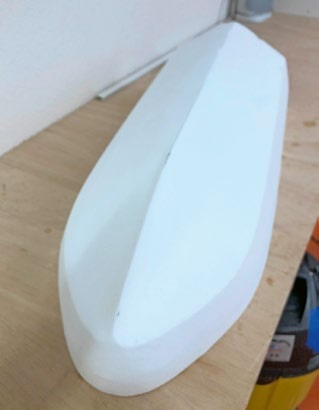
Ever since three-dimensional data sets have been available for download from the World Wide Web for printing or milling—some of which aren’t exactly cheap—machining Styrofoam blocks with milling robots has become an interesting alternative, especially for mold making. However, the following are suitable for this purpose:
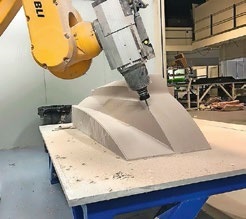
the heavier materials (starting at about 30 kg/m³). A lot of sanding is required before stretching the fabric here, too. It’s a pretty dusty job! Feel free to reach out if you have any questions. Good luck.
Emil Giezendanner,
MFS Editor


News from HEBU

TEAM MANAGER "THIS" BOSSHARD
 Rodito Nussbaumer

YOU KNOW WHAT I MEAN? 125 YEARS OF THE SWISS AERO CLUB
 Emil Giezendanner

F3A EUROPEAN CHAMPIONSHIPS IN ST-MACAIRE, FRANCE
 Matthias Bosshard

HORIZON HOBBY/LEMACO NEWS: MICRO OV-10 BRONCO 645 MM BY E-FLITE

PRIDE AND GOOD IDEAS
 Markus Nussbaumer

ATOM, THE NEW DOUBLE-DECKER FROM CPLR
Matthias Bosshard
SUMMER FUN 2026 AT MG USTER
Martin Wunderli
52. 2026 ALPS CUP
Emil Giezendanner
TWIN TOWN PARTNERSHIP
Wolfgang Voeller
CORSAIR F4U – A WARBIRD WITH A MEMORABLE LOOK
Jürgen Rosenberger, Jürgen Prinz
SMALL, MODEL-LIKE SAILBOATS
Res Dauwalder
TRY-OUT DAY AT MFV WETTINGEN
Urs Keller
WELCOME, NEW MEMBER!
Andrea Bolliger
What's New at Leomotion.com

COUPE DES ALPES – OBSERVE AND LEARN
Rodito Nussbaumer
EURO CONTEST GLIDER ACRO TOUR AUSTRIA 2026

BY YOUTH, FOR YOUTH
Lorena Betschen
INSIGHTS INTO THE HISTORY OF SEAPLANES

34th HAHNENMOOS ALPINE MODEL AIRPLANE CAMP
Res Dauwalder
FREE FLIGHT IN THE MIDDLE OF SUMMER
Urs Muntwyler
THE PC-21 STORY
Emil Giezendanner
NEWS FROM HEBU
 Julia Bucher

FROM 0 TO 100
Markus Nussbaumer
MEMORIES
Wolfgang Völler
NOS REGION – A HUB FOR ELECTRIC AVIATION
Emil Giezendanner
DO YOU KNOW WHAT I MEAN IN THE LAND OF SMILES?
Emil Giezendanner
Have you almost forgotten about aircraft that take off and land vertically?
Emil Giezendanner