
Hot Exhaust Gases
An Unwavering Fascination with Model Turbines
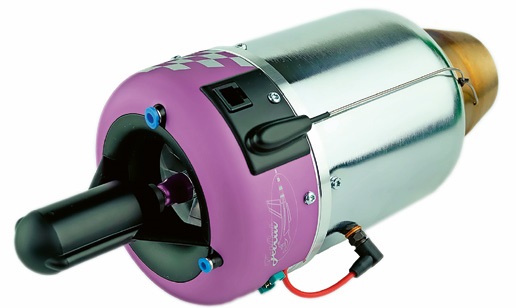
For many model aircraft pilots, it is therefore a long-held dream to one day own—and then fly—a model jet or helicopter powered by a turbine. However, in today’s age of online retail, the lack of support, advice, and assistance from qualified and knowledgeable helpers or salespeople often poses a major obstacle. With this article and the event mentioned herein—scheduled for April 15 and focused on “Model Turbines”—I would like to help beginners, as well as current owners of turbine-powered models, clarify important questions on this topic and address any existing problems. However, this report only briefly touches on a few topics that I encounter most frequently during my consultations. Specific topics will be covered in future issues, as well as in additional seminars if needed.
The aim of this article is to provide a brief overview of what beginners or those switching to turbine-powered models should keep in mind when exploring turbine technology. For one thing, engines are not only much more expensive than electric or gasoline engines, but they’re also handled completely differently. However, no one needs to be afraid of this technology, since in many respects—such as tuning, programming, etc.—turbine technology is usually simpler or not required at all. Objectively speaking, it’s easier today to operate a turbine than a gasoline or methanol engine, since all the sometimes complex and constantly changing adjustments are eliminated. However, it is very important for a beginner in turbine modeling to have a suitable “mentor” from the start—whether a club member, an experienced dealer, or a turbine manufacturer. With this report, I do not intend to discuss various types of turbines, such as jet engines or single- or twin-shaft turbines, but rather to provide general information about model turbines. The topic of exhaust pipes will also not be covered in this report, as this is, in most cases, highly model-specific.
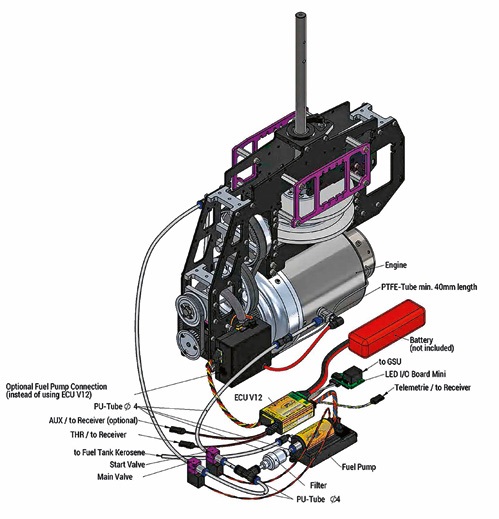
Model pilots who are considering switching to turbine propulsion usually have countless questions. The more you can find out in advance, the fewer surprises you’ll encounter later on. First, I’d like to address the initial cost: Engines are often dismissed as very expensive. However, the propulsion concept should be viewed as a whole, which in many cases paints a very different picture. Since I myself enjoy flying model helicopters, I’ll base my examples on that. But this usually applies to other categories as well.
For the electric version, in addition to the mechanics—which are virtually identical to those of the turbine version—you’ll need a motor with a speed controller and the appropriate LiPo batteries for propulsion. If you plan to make several consecutive flights at the airfield later on, a single set of batteries won’t be enough. To remedy this, the airfield needs to have appropriate 220-volt charging facilities so that breaks don’t last too long. It’s quite possible that, for models above a certain size, the price difference is no longer as much as 1,000 francs.
Later on, during operation, maintenance costs for the turbine will be incurred in the form of periodic maintenance work. Most manufacturers today specify a maintenance interval of 25 operating hours. This maintenance is a fundamental part of operating a model turbine, contributing not only to its preservation and service life but also to operational safety. In many cases, this work consists solely of replacing the two bearings and rebalancing the rotor assembly. However, it can also happen that the combustion chamber has holes or that the ice-injection sticks have burned out. These costs amount to approximately 500 to 1,500 francs, but afterward, the turbine is almost as good as new.
When choosing a fuel, you should conduct very thorough research and weigh your options carefully. Kerosene—also known technically as Jet A1—is certainly the most commonly used fuel. However, two points are crucial here, and the second one, in particular, should be scrutinized very closely:
1. Kerosene is usually readily available to private individuals at many national and regional airports and heliports. But be careful—not all airports carry Jet A1. Furthermore, you should not stockpile enough to last longer than half a year. When stored in plastic containers, kerosene absorbs moisture from the surrounding environment; moreover, storing large quantities of flammable substances is not something one wants to do in a house or apartment.
2. Another factor—and in my opinion, a crucial one—is the location where the turbine-powered model must be stored. Every model emits a certain amount of vapors, which can lead to moderate to strong diesel odors when stored in an apartment or basement. When stored in a garage or a locked, separate room, this issue is negligible, but it should be clarified very carefully.
This is one of the reasons why more and more model pilots are now turning to gasoline for their turbine-powered models. Gasoline is odorless and absorbs almost no moisture, even during prolonged storage in plastic containers. Furthermore, it is easiest to obtain in 20-liter containers at any Landi store—they have a large network of locations. Its purity is also very, very high.
In terms of price, there’s currently no significant difference between kerosene and gasoline.
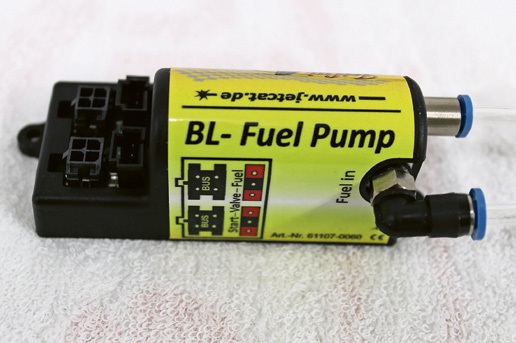
For refueling the models, it is recommended to use ready-made refueling stations with electric pumps from various manufacturers. In many cases, building your own fueling system doesn’t make much sense, as the fuel’s corrosiveness can cause the pump to leak. Five percent turbine oil is mixed into the fuel. This means there’s no need to consider a separate lubrication system, since this mixture can also serve that purpose.
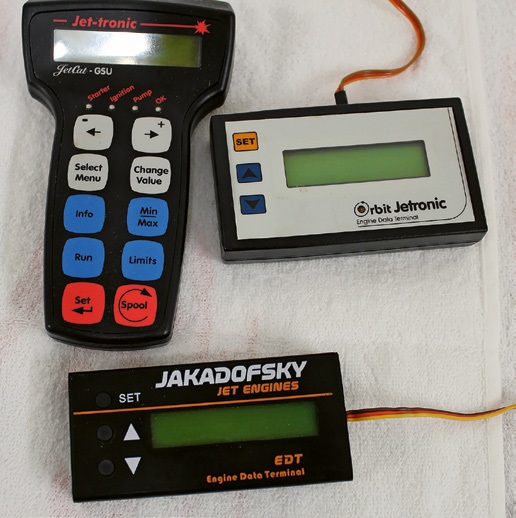
In addition to safety-related issues—such as the careful and secure installation of the turbine in the model and regular maintenance—there is also a great deal to keep in mind during operation.
The fire extinguisher is often dismissed as unnecessary. However, it is the most important safeguard for your beloved model should problems arise and a fire break out. It is important to note that only CO2 extinguishers should be used. Powder or foam would destroy the model and its electronics. It is also important that a turbine-powered model is never flown alone. An assistant should always be present to operate the fire extinguisher, provide assistance, and monitor the surroundings. Due to the hot exhaust gases, the area where the exhaust jet is directed is certainly not the ideal place for the pilot, the assistant, or spectators to be.
Images: JetCat and Anton Laube


News from HEBU

PRIDE AND GOOD IDEAS
 Markus Nussbaumer

TEAM MANAGER "THIS" BOSSHARD
 Rodito Nussbaumer

YOU KNOW WHAT I MEAN? 125 YEARS OF THE SWISS AERO CLUB
 Emil Giezendanner

F3A EUROPEAN CHAMPIONSHIPS IN ST-MACAIRE, FRANCE
 Matthias Bosshard

HORIZON HOBBY/LEMACO NEWS: MICRO OV-10 BRONCO 645 MM BY E-FLITE

ATOM, THE NEW DOUBLE-DECKER FROM CPLR
Matthias Bosshard
SUMMER FUN 2026 AT MG USTER
Martin Wunderli
52. 2026 ALPS CUP
Emil Giezendanner
TWIN TOWN PARTNERSHIP
Wolfgang Voeller
CORSAIR F4U – A WARBIRD WITH A MEMORABLE LOOK
Jürgen Rosenberger, Jürgen Prinz
SMALL, MODEL-LIKE SAILBOATS
Res Dauwalder
TRY-OUT DAY AT MFV WETTINGEN
Urs Keller
WELCOME, NEW MEMBER!
Andrea Bolliger
What's New at Leomotion.com

COUPE DES ALPES – OBSERVE AND LEARN
Rodito Nussbaumer
EURO CONTEST GLIDER ACRO TOUR AUSTRIA 2026

BY YOUTH, FOR YOUTH
Lorena Betschen
INSIGHTS INTO THE HISTORY OF SEAPLANES

34th HAHNENMOOS ALPINE MODEL AIRPLANE CAMP
Res Dauwalder
FREE FLIGHT IN THE MIDDLE OF SUMMER
Urs Muntwyler
THE PC-21 STORY
Emil Giezendanner
NEWS FROM HEBU
 Julia Bucher

FROM 0 TO 100
Markus Nussbaumer
MEMORIES
Wolfgang Völler
NOS REGION – A HUB FOR ELECTRIC AVIATION
Emil Giezendanner
DO YOU KNOW WHAT I MEAN IN THE LAND OF SMILES?
Emil Giezendanner
Have you almost forgotten about aircraft that take off and land vertically?
Emil Giezendanner