
Annual Report of the SMV President
My first year as SMV president will soon be a thing of the past. I’m left with many memories of wonderful experiences at the airfield, organizing events together, and countless constructive meetings and negotiations. I’m proud to say that our association is on solid footing, that we work well together, and that an enormous amount of work is being done at every level. I am especially delighted when, whether on an official mission or simply as a pilot, I have the opportunity to fly as a guest at a model airfield and witness the passion and enthusiasm with which our wonderful hobby is pursued. After all, this is the very essence of our leisure activity: being active together and finding joy in the process. Making this possible, ensuring it continues, and developing it further is my motivation—and that of my colleagues on the board, as well as all officers in the clubs, regional associations, and the umbrella organization. In this annual report, I will refrain from listing the achievements of the past association year and would like to refer you to the following reports from the departments, regional associations, and technical committees, as well as our ongoing publications in Modellflugsport and on www.modellflug.ch. Nevertheless, I would like to mention a few highlights and strategic projects that involved cross-departmental and cross-level collaboration.
Shortly after the Delegates’ Assembly in April, the SMV Executive Board—which had been partially reconstituted—held a one-day workshop to establish a framework for collaboration and define priorities. The division of roles and cooperation with the regional associations were recurring themes throughout the workshop. In the areas of youth development, sports, communication, infrastructure, and safety, there are tasks that, in principle, must be carried out centrally by the SMV. However, there is also a whole range of tasks that must be carried out locally by the regional associations and the clubs. For reasons of expertise and resources, this division of roles is currently only partially in place and is now to be continuously improved. This was the subject of intensive discussion and planning during the meetings between the SMV Executive Board and the regional associations, the training day at B’VM in early November in Bern, and the SMV Presidents’ Conference in November. We are on the right track.
Future model aircraft legislation affects us all and kept the SMV Executive Board very busy in 2017. Updates on the status of this matter are also posted regularly on the SMV website. The revised EASA regulatory draft (NPA 2017-05) was analyzed in the summer of 2017 by an SMV working group with the assistance of the AeCS International Department, and comments were subsequently submitted to EASA. This version already contained significant improvements over previous versions, but still included several sensitive issues, such as age and altitude limits. Several meetings were held with the FOCA to ascertain the FOCA’s position and coordinate activities. Fortunately, the FOCA believes that no changes are warranted compared to current Swiss legislation. This is primarily because the experience with model aircraft has been very positive. In the event that the EASA draft cannot be significantly improved, we have received a commitment that the FOCA would work with us to develop a pragmatic Swiss solution. The director of the FOCA communicated this in an official statement at our request. No matter what comes our way from Brussels in 2018—this statement is extremely valuable for model aviation in Switzerland. To give our concerns more weight with the EASA, meetings were also held with model flying associations from neighboring countries, and the SMV joined the newly founded EMFU (European Model Flying Union). As a result of the many comments and interventions, the age limit, among other things, was removed in December. At the end of the year, together with the DMFV (German Model Flying Association), we held a direct meeting with the EASA project team in Cologne. During this meeting, we were able to explain to EASA the challenges facing daily model flying and present our proposed solutions. We are confident that further revisions will be made in the spring of 2018, but we are already in the process of discussing the potential implementation of these changes into Swiss legislation with the FOCA. It is reasonable to assume that we will be able to secure the current status quo for model flying in Switzerland with just a few minor administrative concessions, though this will require yet another enormous effort on our part. However, this would definitely not be possible without the excellent teamwork across various levels, as well as the strong relationships between the SMV and the AeCS with the FOCA and the neighboring national associations.
The FLARM project for model airfields, also known as Ground FLARM, is not new, but it clearly demonstrates how well all levels work together. In 2017, the second batch of 20 units was delivered to the clubs. The regional associations worked very closely with the SMV’s Infrastructure Department to provide information and facilitate networking with the clubs. When it came to financing, we once again relied on the expertise, cooperation, and network of the AeCS Central Secretariat, as this safety project was only possible thanks to the support of the FOCA.
The training event on accident prevention and public relations, conducted in February by the Safety Working Group and the Infrastructure Department, was a great success with over 60 participants. It is the SMV’s goal to offer more training—both directly and centrally, as well as indirectly and decentrally in collaboration with the regional associations. The example of the aforementioned training event can also be applied to youth development, sports, communication, and other areas, and we intend to do just that. It is important to create platforms for exchange and training. There is an enormous amount of expertise within our association; the challenge now is to leverage these experts in our ranks and the many exemplary ways our clubs tackle challenges, thereby multiplying our impact. In areas where we ourselves lack sufficient expertise, we have a strong network of external experts—and not just when it comes to issues surrounding the safety and construction of model airfields. If we intensify training and knowledge exchange, it will also become easier to find and support the next generation for club and association activities.
However, effectively multiplying our expertise also requires capacity. At many levels, we are reaching the limits of what can be achieved through volunteer work and must supplement our efforts with external resources and even purchase services. Thanks to our financial reserves, we have been able to fund such external services ourselves so far; however, in the near future, this will have an impact on membership dues at the SMV or regional association level.
Finally, a bit of self-praise: We can be proud that we have a large number of internationally successful athletes in our ranks. New and young talents are also constantly emerging, and we are committed to supporting them. Financially, the SMV is well-positioned thanks to its prudent budgeting and practical controlling, and it also has appropriate reserves set aside for special cases. And last but not least, our website and the *Modellflugsport* magazine are dynamic and up-to-date; in addition, our head of communications also manages our presence on the latest digital platforms.
Many thanks to everyone who contributed to the association’s successful year. I hope you enjoy reading the SMV Annual Report and look forward to a great 2018 with you,
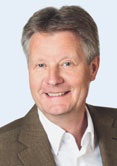
Adrian Eggenberger


TEAM MANAGER "THIS" BOSSHARD
 Rodito Nussbaumer

YOU KNOW WHAT I MEAN? 125 YEARS OF THE SWISS AERO CLUB
 Emil Giezendanner

F3A EUROPEAN CHAMPIONSHIPS IN ST-MACAIRE, FRANCE
 Matthias Bosshard

News from HEBU

SUMMER FUN 2026 AT MG USTER
Martin Wunderli
TRY-OUT DAY AT MFV WETTINGEN
Urs Keller
52. 2026 ALPS CUP
Emil Giezendanner
BY YOUTH, FOR YOUTH
Lorena Betschen
ATOM, THE NEW DOUBLE-DECKER FROM CPLR
Matthias Bosshard
CORSAIR F4U – A WARBIRD WITH A MEMORABLE LOOK
Jürgen Rosenberger, Jürgen Prinz
SMALL, MODEL-LIKE SAILBOATS
Res Dauwalder
What's New at Leomotion.com

TWIN TOWN PARTNERSHIP
Wolfgang Voeller
EURO CONTEST GLIDER ACRO TOUR AUSTRIA 2026

INSIGHTS INTO THE HISTORY OF SEAPLANES

34th HAHNENMOOS ALPINE MODEL AIRPLANE CAMP
Res Dauwalder
HORIZON HOBBY/LEMACO NEWS: MICRO OV-10 BRONCO 645 MM BY E-FLITE

COUPE DES ALPES – OBSERVE AND LEARN
Rodito Nussbaumer
PRIDE AND GOOD IDEAS
 Markus Nussbaumer

FREE FLIGHT IN THE MIDDLE OF SUMMER
Urs Muntwyler
THE PC-21 STORY
Emil Giezendanner
WELCOME, NEW MEMBER!
Andrea Bolliger
NEWS FROM HEBU
 Julia Bucher

FROM 0 TO 100
Markus Nussbaumer
MEMORIES
Wolfgang Völler
NOS REGION – A HUB FOR ELECTRIC AVIATION
Emil Giezendanner
Have you almost forgotten about aircraft that take off and land vertically?
Emil Giezendanner
70 YEARS OF THE NIDWALDEN MODEL AIRPLANE CLUB
Martin Barmettler