
Electric Flight – A Look Back and a Look Ahead
In recent years, a large number of F5J thermal gliders have joined the traditional FAI competitive sports in electric flight—F5B gliders and F5D pylon racing. This new class has clearly evolved from the old F3J category. Apparently, some top pilots have grown tired of the “string-flying” style. →
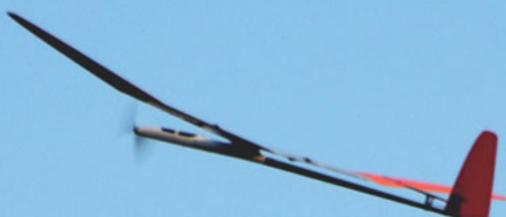
The F5D Pylon Racing World Championships will be held this year in Australia, alongside the F3D internal combustion engine class. This photo was taken at the 2018 F5D Swiss Championships at MG Illnau-Effretikon and features Swiss champion Michael Untermoser.
It’s great that new F5J pilots from other corners of the existing F5 classes have also discovered the joy of leisurely gliding, and that even dedicated non-competitive pilots have joined us. I just hope that the endless and pointless discussions about regulations—as we’ve seen them in the F3 gliding classes—don’t carry over into electric flight.
Last year, the electric aircraft championships were successfully held at the grounds of various clubs. Thank you very much!
NM Qualifying Flight with the MG Mörsburg
NM Qualifying Flight for Juniors with MG Mörsburg
SM with the MG Hinwil
Junior Swiss Championships with MG Hinwil
Swiss Championship with MG Bern
at the Swiss Championship with the MG Illnau-Effretikon
with the MV Pfäffikon
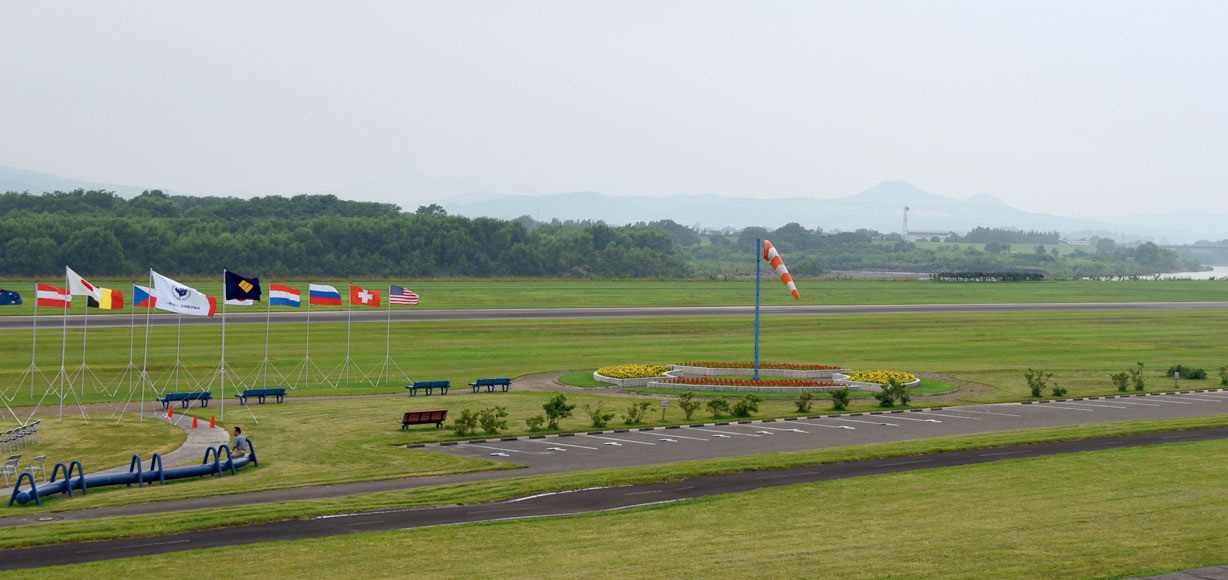
F5B Glider and F5D Pylon Racing World Championships at Takikawa Skypark in Takikawa, Hokkaido, Japan. A large and beautiful World Championship venue.
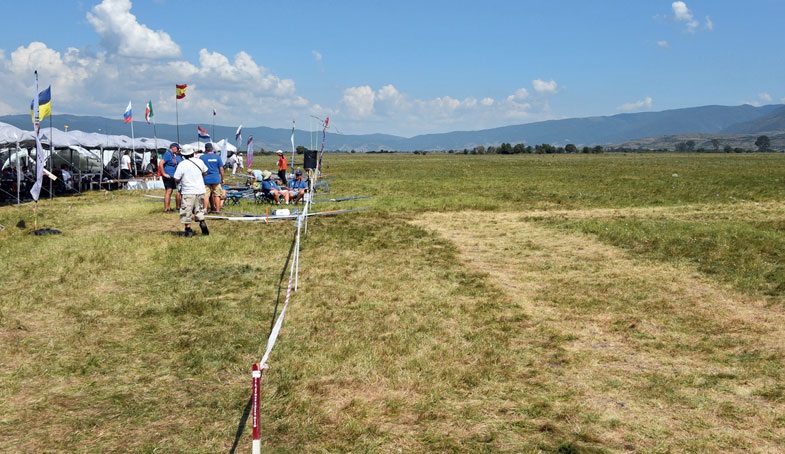
It’s nearly impossible for us to practice flying in winds as strong as those at the European Championships in Bulgaria.
The performances ranged from solid to very good. In F5B, our pilots were able to keep pace with the world’s best. In the thermal class as well as in pylon racing, there is still a lot of work to be done.
The development of junior thermal gliding pilots is soon reaching (financial) limits, since reasonably competitive equipment costs around 2,000 francs today! Unfortunately, traveling to a World Championship with just a single model is a difficult undertaking. Unfortunately, the concerns I expressed on this matter at the CIAM fell on deaf ears.
Hardly any other FAI competition class has gotten off to such a spectacular start in such a short time as F5J. Eastern European countries, in particular, have clearly taken the lead. The vast majority of manufacturers are also based in these countries. It remains to be seen to what extent the West will succeed in making more than just sporadic inroads into the large phalanx of these countries.
At the F5J European Championships for juniors and seniors, the two senior pilots established themselves in the middle of the pack. The juniors, with their modest equipment, were fighting a losing battle. However, they learned a lot and, at times, put on some great flights in very strong winds. They all deserve congratulations.
In F5B, we once again fielded a full team plus one junior. Thomas Wäckelin’s silver medal and the Pierre Bühler team’s second-place finish confirm the traditionally high level of our pilots. The fact that junior Lucas Cantoni contributed to this team result with his 6th-place finish gives us hope for the future in what is arguably the most versatile electric flight class in Switzerland.
The first F5J World Championships will be held in Slovakia as early as this coming August. More than 100 participants are expected. We will be there with one full team each. As mentioned above, finding suitable and affordable models for our junior pilots remains a difficult task.
The main tasks consist of a 10-minute endurance flight and a precision landing measured in meters and seconds. That sounds simple at first glance. But all the other factors involved make the whole thing much more difficult. First, the engine runtime is limited to 30 seconds. These 30 seconds are used, at most, to search for thermals at a low altitude; because anyone who climbs higher than 200 m—altitude is measured by a logger 10 seconds after the motor shuts off—has 3 points deducted per meter; below that, only 0.5 points are deducted.
F5J thermal flying has also gained significant prominence in the FAI World Cup, with no fewer than 32 events. This is very encouraging. FAI World Cup competitions are held far beyond Europe: in Africa, Asia, Australia, the U.S., and Japan. Unfortunately, no organizer outside of Europe opted for F5J this year. Apparently, this category has not yet caught on everywhere. In the F5B glider category, the number of FAI World Cup events—at around half a dozen—is much more modest, unfortunately. →
Our F5J junior team: from left, Tristan Clothier, Andi Schwerzmann (coach), and Raphael Burkardt.
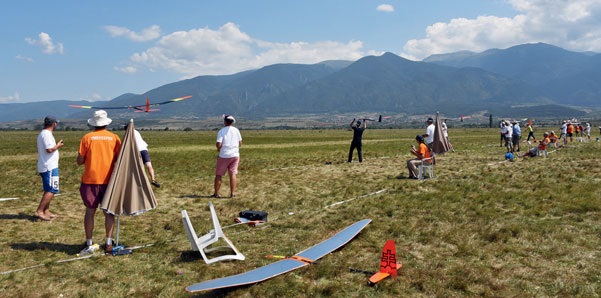
F5D pylon racing has declined significantly in Europe. Austria, Germany, and France are staying away from the World Championships. The Czech Republic is currently the benchmark. Since F3D combustion-engine pylon racing also appears to be struggling, the two classes are set to be held together at the World Championships. This is a great opportunity for both. As a result, only the glider classes remain in F5.
Since many European electric-flyer nations have stayed away from the F5B World Championships in Japan, this class seems to have reached a low point—hopefully a temporary one. That’s regrettable. In my view, there is only one way out of this impasse: a general shift toward objectivity—particularly in the forums—and improvements in energy measurement methods. F5B flying is a very attractive competitive sport that is technically and aerodynamically demanding.
Emil Giezendanner
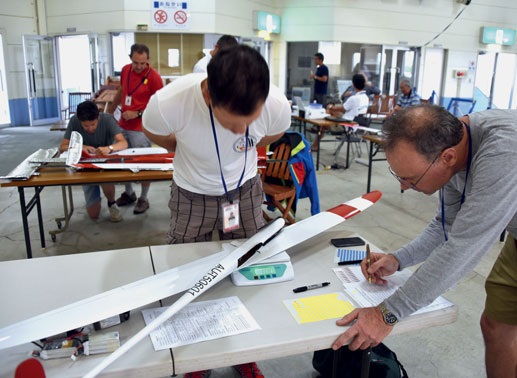
The F5B class is the first and oldest category in the World Electric Flying Championships (since 1986). The demands on the model and the pilot are very diverse: fly as many 150-meter legs as possible in 200 seconds—without using the motor (on the course)—glide for 10 minutes using as few seconds of motor power as possible, and top it all off with a precision landing, accurate to the second and meter!


News from HEBU

TEAM MANAGER "THIS" BOSSHARD
 Rodito Nussbaumer

SUMMER FUN 2026 AT MG USTER
Martin Wunderli
SMALL, MODEL-LIKE SAILBOATS
Res Dauwalder
TRY-OUT DAY AT MFV WETTINGEN
Urs Keller
What's New at Leomotion.com

52. 2026 ALPS CUP
 Emil Giezendanner

ATOM, THE NEW DOUBLE-DECKER FROM CPLR
 Matthias Bosshard

INSIGHTS INTO THE HISTORY OF SEAPLANES

YOU KNOW WHAT I MEAN? 125 YEARS OF THE SWISS AERO CLUB
Emil Giezendanner
34th HAHNENMOOS ALPINE MODEL AIRPLANE CAMP
Res Dauwalder
CORSAIR F4U – A WARBIRD WITH A MEMORABLE LOOK
Jürgen Rosenberger, Jürgen Prinz
F3A EUROPEAN CHAMPIONSHIPS IN ST-MACAIRE, FRANCE
Matthias Bosshard
HORIZON HOBBY/LEMACO NEWS: MICRO OV-10 BRONCO 645 MM BY E-FLITE

PRIDE AND GOOD IDEAS
 Markus Nussbaumer

EURO CONTEST GLIDER ACRO TOUR AUSTRIA 2026

BY YOUTH, FOR YOUTH
Lorena Betschen
FREE FLIGHT IN THE MIDDLE OF SUMMER
Urs Muntwyler
THE PC-21 STORY
Emil Giezendanner
TWIN TOWN PARTNERSHIP
Wolfgang Voeller
WELCOME, NEW MEMBER!
Andrea Bolliger
COUPE DES ALPES – OBSERVE AND LEARN
Rodito Nussbaumer
NEWS FROM HEBU
 Julia Bucher

FROM 0 TO 100
Markus Nussbaumer
MEMORIES
Wolfgang Völler
NOS REGION – A HUB FOR ELECTRIC AVIATION
Emil Giezendanner
Have you almost forgotten about aircraft that take off and land vertically?
Emil Giezendanner
70 YEARS OF THE NIDWALDEN MODEL AIRPLANE CLUB
Martin Barmettler