
5th International Militky Cup, 1978
Electric flight established
While just a few years ago electric flight elicited nothing but pitying smiles from some and looks of disbelief from others, today it stands as a fully-fledged model aviation category that can easily coexist alongside all other disciplines, for both casual hobbyists and competitive pilots alike. Unfortunately, the mistake is still too often made of viewing electric flight as a substitute for something else—such as the internal combustion engine or the launch line. Electric flight is something new and something entirely different—but it is not a substitute. An electric motor can never compete with an internal combustion engine in terms of performance, nor with a launch line in terms of price. The strengths of electric propulsion have already been cited many times and need not be mentioned specifically here. Those who prefer to fly motor gliders based on tried-and-true designs should continue to do so—there will be no competition here. Those who prefer to try something new and take advantage of the unique benefits of electric flight should simply do so; they need not consult either motor glider enthusiasts or F3B specialists. The diversity of model aviation not only offers a wealth of choices but also the freedom for everyone to pursue, according to their needs and capabilities, whatever interests and captivates them most. I am convinced that electric flight is something many have been waiting for.
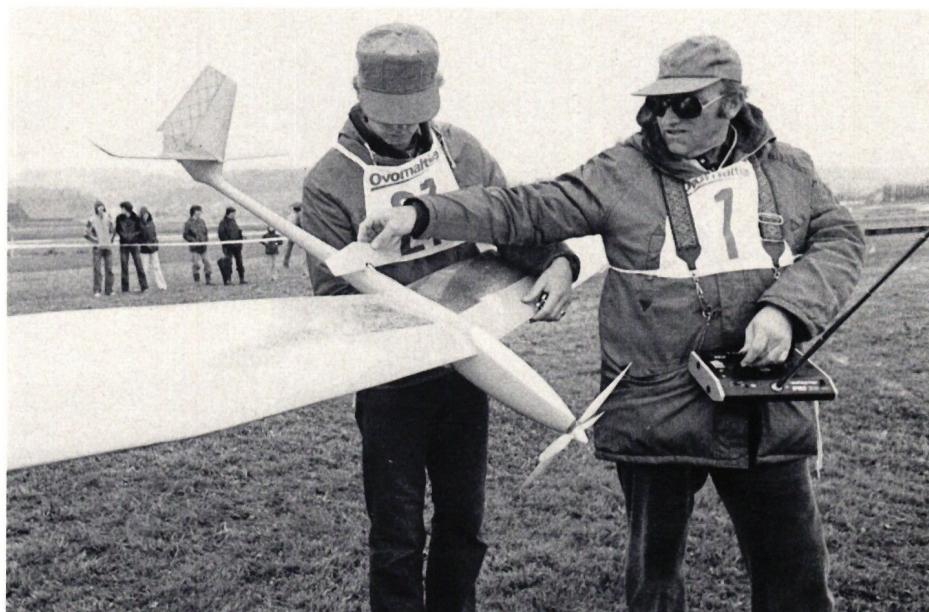
In terms of performance, a great deal has been achieved in the past year. The model-making industry hasn’t been idle in the meantime either. Companies such as Graupner, Carrera, Multiplex, H. Keller, F. Geist, and Robbe have not only improved the quality of their products but also made them easier to use. So today, for the same price, you can get better-designed and easier-to-use equipment. At the same time, however, there remains plenty of room for hobbyists and experimenters. We must not make the mistake of believing that the improvement in performance is due solely to better motors and batteries. In this area, we shouldn’t expect too much more in the near future. An expansion of the product range in the motor sector is certain—but not a significant increase in performance. No, what really matters is the tuning—that is, the interaction between the model (size, weight, speed, airfoil, etc.), the motor, and the propeller. That is the whole secret. In the field of propellers, for example, we still have a lot to learn. With internal combustion engines, the propeller problem never came to the forefront due to excess power—at most, it has been an issue recently in connection with noise abatement or with larger engines. The goal, therefore, is to convert as much engine power as possible into forward speed or lift using the most suitable propeller possible, with an unmistakable trend toward smaller, faster-spinning propellers and the associated elimination of reduction gears. For top performance in gliding, however, the gearbox and the large folding propeller are unlikely to be phased out anytime soon—as has already happened to some extent for non-competitive pilots (e.g., Graupner “Elektro-Fly”).
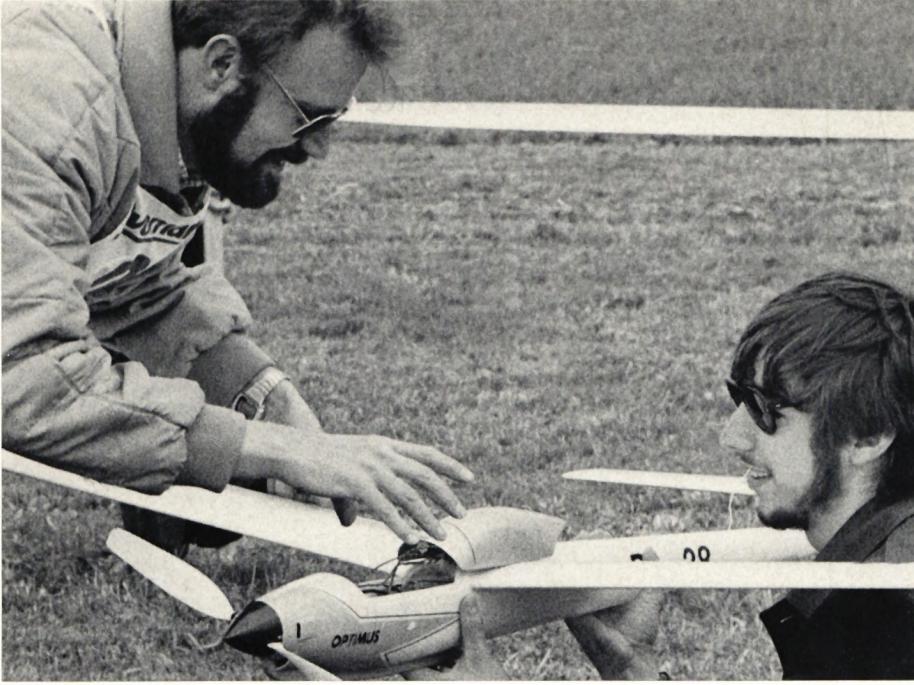
In the glider category, the “E-MOS II”—a dedicated competition model from the Munich-based Helmut Kermess Group—once again proved its worth; incidentally, it won the prize for the “most interesting technical solution” at the 1976 Militky Cup. As you can see, the judging panel had a keen eye back then. Two years later, this model took third, sixth, and fourteenth place. The “Optimus” and “Primus” models from Carrera also performed very well, not to mention the tried-and-true “Mosquito” (Graupner), which, after all, took fifth, twelfth, and thirteenth place and thus outflied quite a few “super birds.” The somewhat unconventional glider model “Elektra” by F. Geist (4th place) also seemed to hold its own well. F3B specialists will forgive me if I express my delight that relatively simple models (large-surface, lightweight construction, etc.) were definitely able to hold their own this year, while
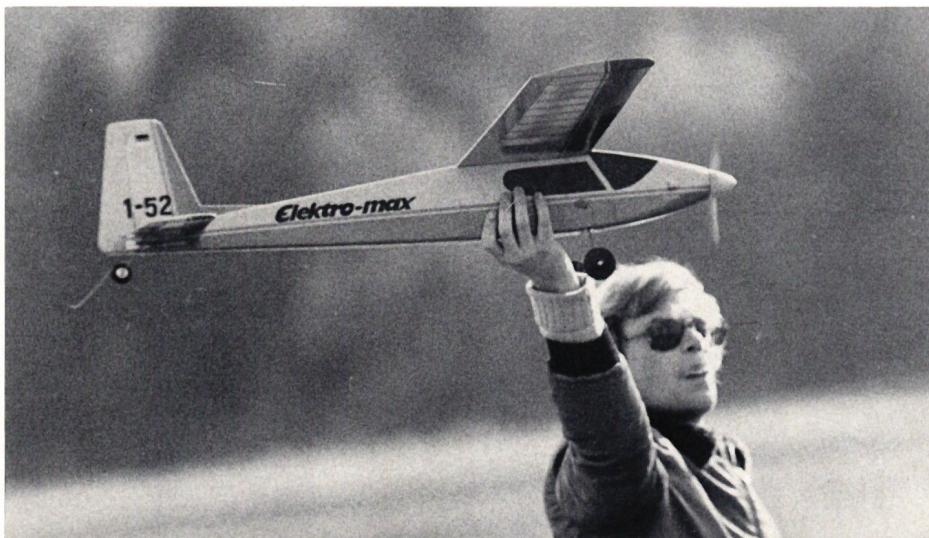
This is where the Graupner Elektro-Max won its first competition—and it’s sure to win the hearts of many enthusiastic model airplane enthusiasts in just a few months. The model has remarkable flight characteristics and—much like the Mosquito did years ago—is setting new standards. The Elektro-Max is a model that’s affordable for everyone. Motor plus battery: max. 150 Swiss francs.
Last year, Ernst Tscheulin confidently beat the competition with his elegant LS-E. The challenging weather may have played a trick on the performance gliders this year. Thermals were very sparse—most of the time, the models were descending. Models with a low sink rate had a slight advantage. Another encouraging result was the second-place finish by Hansjörg Häfliger of MG Rapperswil. Häfliger isn’t a star pilot, but he’s a great hobbyist and developer. The fact that such competitors have a good chance of keeping up with the European elite deserves recognition.
Looking at the performances in the “Small” Aerobatics Program (Cat. A), I have to say that, with a few exceptions, they are still rather modest. Wolfgang Schwarze demonstrated a new era of small, fast, and agile sport models with the “Elektro-max” from Graupner. I believe that this model—much like the “Mosquito” did years ago—is setting new standards. The new RC-FAKO program from the AeCS, designated F3A-Regional, was used as the maneuver program; it will continue to prove quite suitable for this “sport model” category in the future. Since there was no hard-surface runway available, ground launches had to be ruled out, which led some competitors to successfully fly their glider models through the program. This was interesting in itself, but it also highlights the rather modest performance level—if, as mentioned, one disregards the flawless demonstrations by Schwarze. The “Rasant” (Robbe) sport model used by Jeske also made a good impression. I believe that development in this category is only just beginning. Particularly noteworthy is the modest construction and financial investment required by this category and the genuinely astonishing performance achieved as a result; if the kit models available in the future can even come close to matching this, they will put something completely new into the hands of model aviators. Finally, let’s turn to the “major” aerobatics program (Cat. B): Here, we deliberately pushed the limits of what is possible with the requirements we set. Participation was correspondingly low, and there was no shortage of criticism. But for the sport, and for technical development, we simply need categories where the limits of what is feasible are pushed. At the same time, however, “mass-participation categories” should be created. Anyone who wanted to fly the entire program had to use their available energy quite sparingly. Short takeoffs and landings, climbing as quickly as possible. Even a battery that wasn’t fully charged could mean the final maneuvers couldn’t be performed. This time, a barrel roll and a square loop were included in the program as the true “feats of strength.” For Wolfgang Kosche, the program posed no insurmountable challenges, either in terms of flying or technology. He executed all the maneuvers cleanly and effortlessly. Kosche’s model was subsequently awarded the Design Prize—incidentally, this was the first time an acrobatic model had been honored since the Militky Cup’s inception. Fritz Geist flew his “Comet” aerobatic model, which made my aerobatic pilot’s heart race with its speed and climb performance. Unfortunately, Fritz Geist is a less experienced pilot than Wolfgang Kosche, who, after all, competed for the Federal Republic of Germany at the 1971 F3A World Championship in Doylestown, USA. For this reason, a true comparison between the two models was not possible. Kosche’s model reflects his extensive experience in designing F3A models, while Geist comes exclusively from the world of electric flight. Two approaches, two styles: Kosche’s model is larger, smoother, and more stable—perhaps also a bit more cumbersome, but certainly more elaborate—and Geist’s
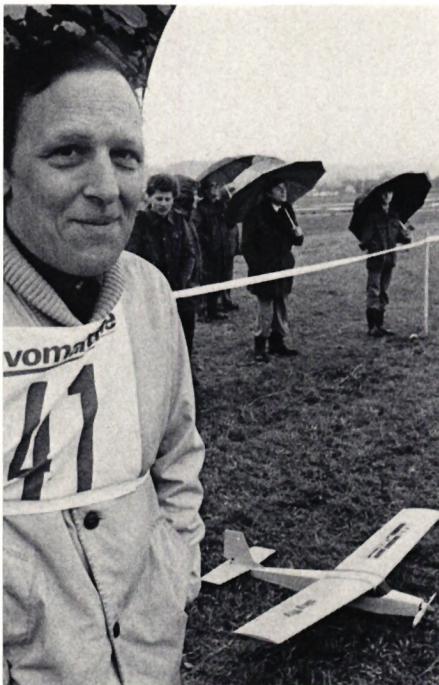
“Comet”: fast, agile, lively—perhaps a bit “jittery,” but very modest in terms of effort, especially when it comes to building the model. Hans Jakob Sommerauer, from Zumikon, takes a similar approach with his designs, but unlike Geist, he builds his models entirely out of wood, while Geist flies models with foam wings.
I’d especially like to highlight Hans Dieter Levin’s aerobatic model, which, equipped with two inexpensive Mabuchi motors, flew through the maneuvers at quite a brisk pace. Helmut Schenk had taken a similar approach years ago and had already amazed the expert audience back then. Only, at that time, no one could have even imagined FAI maneuvers. Today, Levin shows us that there are ways to achieve above-average results with a small budget. Although Levin himself lacks the necessary experience in aerobatics, he attempts to fly along to demonstrate his model’s capabilities—and he has succeeded completely. Perhaps we Swiss can learn something from Levin’s attitude—participating also means showing something new, not just winning. That’s exactly my view on competitions in general.
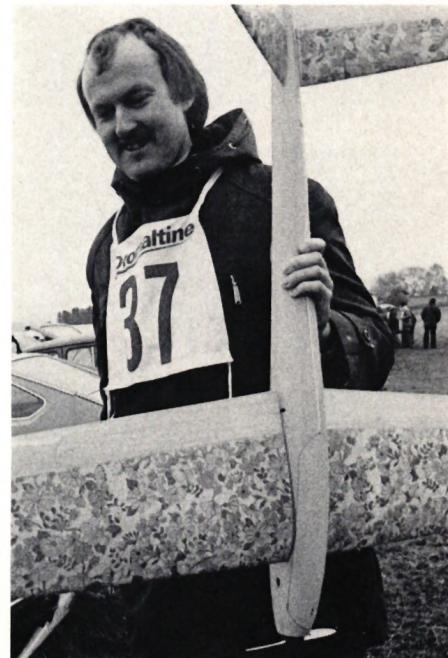
There is still much more to say about the 5th Militky Cup. The model sailplane by C. H. Jeske, which was equipped with two Jumbo motors driving a gearbox and a propeller (four-bladed folding propeller!), sophisticated thermal brakes, and even more sophisticated chargers that could be connected to a car battery, the 6-motor electric giant demonstrated by W. Schwarze—whose development can be traced back to Militky—the new motors by F. Geist, the (gearless) Keller motor that drives a large folding propeller directly, etc., etc. In my role as competition director and organizer, I’m usually too busy to keep a close eye on things more than just occasionally. I can only recommend to anyone interested: Come by yourself next year, enjoy the event, and be amazed. I sincerely hope that next year we’ll be able to hold the first Swiss Electric Flight Championship—that will certainly give the sport a new boost.
| Category A (Short Acrobatic Routine) | ||
| 1. Schwarze Wolfgang | D | 620 |
| 2. Wolfgang Geiger | D | 471 |
| 3. Hans-Jörg Häfliger | CH | 466 |
| 4. Klaus Tartler | D | 408 |
| 5. Carl Heinz Jeske | D | 401 |
| 6. Günter Sticha | D | 330 |
| 7. Helmut Schenk | D | 320 |
| 8. Heinz Keller | D | 238 |
| Category B (Large Acrobatic Routine) | ||
| 1. Wolfgang Kosche | D | 1460 |
| 2. Fritz Geist | D | 1093 |
| 3. Levin, Hans Dieter | D | 758 |
| 4. Sommerauer, H. J. | CH | 473 |
| Category C (Gliding) | ||
| 1. Jeske, Carl Heinz | D | 747 |
| 2. Hans-Jörg Häfliger | CH | 720 |
| 3. Alex v. Wunschheim | D | 694 |
| 4. Binder, Karl | D | 669 |
| 5. Geiger, Wolfgang | D | 628 |
| 6. Andreas Westphal | D | 622 |
| 7. Walter Enderle | D | 618 |
| 8. Herbert Krottenmüller | D | 605 |
| 9. Hermann Winkelhofer | D | 603 |
| 10. Heinz Keller | D | 598 |
| 11. Levin, Hans Dieter | D | 587 |
| 12. Matthias Bosshard | CH | 584 |
| 13. Klaus Tartler | D | 583 |
| 14. Hans Schumacher | D | 582 |
| 15. Rudolf Herrmann | D | 579 |
| 16. Gottfried Hohl | CH | 578 |
| 17. Schwarze, Wolfgang | D | 556 |
| 18. Geist, Fritz | D | 555 |
| 19. Manfred Betschwar | D | 530 |
| 20. Hans Euringer | D | 437 |
| 21. Roland Hersperger | CH | 437 |
| 22. Ernst Tscheulin | D | 432 |
| 23. Freund, Karl | D | 387 |
| 24. Klaus Danzl | D | 386 |
| 25. Joachim Scholz | D | 250 |


News from HEBU

TEAM MANAGER "THIS" BOSSHARD
 Rodito Nussbaumer

SUMMER FUN 2026 AT MG USTER
Martin Wunderli
SMALL, MODEL-LIKE SAILBOATS
Res Dauwalder
TRY-OUT DAY AT MFV WETTINGEN
Urs Keller
52. 2026 ALPS CUP
 Emil Giezendanner

ATOM, THE NEW DOUBLE-DECKER FROM CPLR
 Matthias Bosshard

INSIGHTS INTO THE HISTORY OF SEAPLANES

YOU KNOW WHAT I MEAN? 125 YEARS OF THE SWISS AERO CLUB
Emil Giezendanner
34th HAHNENMOOS ALPINE MODEL AIRPLANE CAMP
Res Dauwalder
CORSAIR F4U – A WARBIRD WITH A MEMORABLE LOOK
Jürgen Rosenberger, Jürgen Prinz
F3A EUROPEAN CHAMPIONSHIPS IN ST-MACAIRE, FRANCE
Matthias Bosshard
What's New at Leomotion.com

HORIZON HOBBY/LEMACO NEWS: MICRO OV-10 BRONCO 645 MM BY E-FLITE

PRIDE AND GOOD IDEAS
 Markus Nussbaumer

BY YOUTH, FOR YOUTH
Lorena Betschen
FREE FLIGHT IN THE MIDDLE OF SUMMER
Urs Muntwyler
THE PC-21 STORY
Emil Giezendanner
TWIN TOWN PARTNERSHIP
Wolfgang Voeller
EURO CONTEST GLIDER ACRO TOUR AUSTRIA 2026

WELCOME, NEW MEMBER!
Andrea Bolliger
COUPE DES ALPES – OBSERVE AND LEARN
Rodito Nussbaumer
NEWS FROM HEBU
 Julia Bucher

FROM 0 TO 100
Markus Nussbaumer
MEMORIES
Wolfgang Völler
NOS REGION – A HUB FOR ELECTRIC AVIATION
Emil Giezendanner
Have you almost forgotten about aircraft that take off and land vertically?
Emil Giezendanner
70 YEARS OF THE NIDWALDEN MODEL AIRPLANE CLUB
Martin Barmettler