
The Risks of Handling Lithium Batteries
The Fire Prevention Advisory Service (BfB) warns of the risks associated with handling lithium batteries. In doing so, it also singles out model airplane enthusiasts, as they do not use “rigid protective casings or internal charge control.”
There’s no question about it: Lithium batteries are dangerous if handled improperly. That’s why the warnings and recommendations issued by the Fire Prevention Advisory Service in a press release are entirely appropriate—especially since lithium batteries are being used more and more frequently. Lithium batteries have long been standard in cell phones and laptops. Since lithium batteries can also handle high currents, they have conquered entirely new product categories. In power tools, they have eliminated the need for cords and outlets; in lawn mowers, they have replaced gasoline engines; and in e-bikes, they have enabled an entirely new generation of vehicles.
Model airplane enthusiasts benefit from the high energy density and low weight. Electric gliders have experienced an unprecedented boom thanks to lithium batteries (and brushless motors). The same combination of propulsion and power supply has eliminated the noise problem for powered model aircraft. However, the use of lithium batteries in model aviation is a thorn in the side of the Fire Prevention Advisory Service because model aircraft enthusiasts “forgo internal charge control and cell monitoring for weight reasons… Without protective mechanisms, the individual cells could become overcharged and trigger a fire.” We would do all of this to save weight, according to a recent press release. And the bz Basel and Aargauer Zeitung immediately headlined the BfB press release with the title “Fire-Hazardous Model Airplanes.” The BfB appears to be unaware that model builders use “smart chargers” that provide at least the same level of safety during the charging process as “internal charge control and cell monitoring.” This includes, at a minimum, balancing the voltage of the individual cells during charging and limiting the charging process once the final voltage is reached.
The Fire Prevention Advisory Service cannot substantiate its claims or the alleged correlations. When asked, it cannot provide figures on how many batteries model aircraft enthusiasts have “set on fire” or how much damage has occurred due to lithium batteries in other areas. Only the Solothurn Building Insurance Company is apparently aware of four fire incidents. However, the issue of burned-out laptops and cell phones—for which manufacturers must repeatedly carry out extensive recalls at alarmingly short intervals to protect their customers from fires—is not addressed. At least the Fire Prevention Advisory Service illustrated its press release not with a burning model airplane, but with a burning cell phone...
Despite its lack of knowledge and superficiality, the counseling center is right to emphasize the need for careful and responsible use of lithium—
Akkus issues appeals and makes corresponding recommendations.
These include, in particular:
- Always store batteries in a fireproof container
- Always charge batteries in a dry place at an ambient temperature between 10 and 40 degrees Celsius
- Place batteries on a fire-resistant surface while charging and keep them at a safe distance from flammable materials
- Do not overcharge batteries
- Never recharge damaged or deformed batteries; dispose of them properly instead.
*Roland Schlumpf*
In most electronic devices with lithium batteries, an internal charge controller and cell monitoring system would prevent the device from overheating. This is according to a statement from the Fire Prevention Advisory Service (BfB). In model airplanes and the model-making sector, however, these monitoring systems are often omitted to save weight. Without a protective mechanism, the individual cells could become overcharged and trigger a fire. “If a model airplane’s battery is charged in the basement, this can be dangerous,” the agency stated in response to an inquiry from the SDA news agency. According to the BfB, the fire risk is lower for smartphones. Nevertheless, it recommends charging such devices on a non-flammable surface, such as a glass plate. SDA
The article in the bz Basel and Aargauer Zeitung unfairly casts model airplane enthusiasts in a bad light.

TEAM MANAGER "THIS" BOSSHARD
 Rodito Nussbaumer

F3A EUROPEAN CHAMPIONSHIPS IN ST-MACAIRE, FRANCE
 Matthias Bosshard

News from HEBU

YOU KNOW WHAT I MEAN? 125 YEARS OF THE SWISS AERO CLUB
 Emil Giezendanner

SUMMER FUN 2026 AT MG USTER
Martin Wunderli
TRY-OUT DAY AT MFV WETTINGEN
Urs Keller
52. 2026 ALPS CUP
Emil Giezendanner
BY YOUTH, FOR YOUTH
Lorena Betschen
ATOM, THE NEW DOUBLE-DECKER FROM CPLR
Matthias Bosshard
CORSAIR F4U – A WARBIRD WITH A MEMORABLE LOOK
Jürgen Rosenberger, Jürgen Prinz
SMALL, MODEL-LIKE SAILBOATS
Res Dauwalder
What's New at Leomotion.com

TWIN TOWN PARTNERSHIP
Wolfgang Voeller
EURO CONTEST GLIDER ACRO TOUR AUSTRIA 2026

INSIGHTS INTO THE HISTORY OF SEAPLANES

34th HAHNENMOOS ALPINE MODEL AIRPLANE CAMP
Res Dauwalder
HORIZON HOBBY/LEMACO NEWS: MICRO OV-10 BRONCO 645 MM BY E-FLITE

COUPE DES ALPES – OBSERVE AND LEARN
Rodito Nussbaumer
PRIDE AND GOOD IDEAS
 Markus Nussbaumer

FREE FLIGHT IN THE MIDDLE OF SUMMER
Urs Muntwyler
THE PC-21 STORY
Emil Giezendanner
WELCOME, NEW MEMBER!
Andrea Bolliger
NEWS FROM HEBU
 Julia Bucher

FROM 0 TO 100
Markus Nussbaumer
MEMORIES
Wolfgang Völler
NOS REGION – A HUB FOR ELECTRIC AVIATION
Emil Giezendanner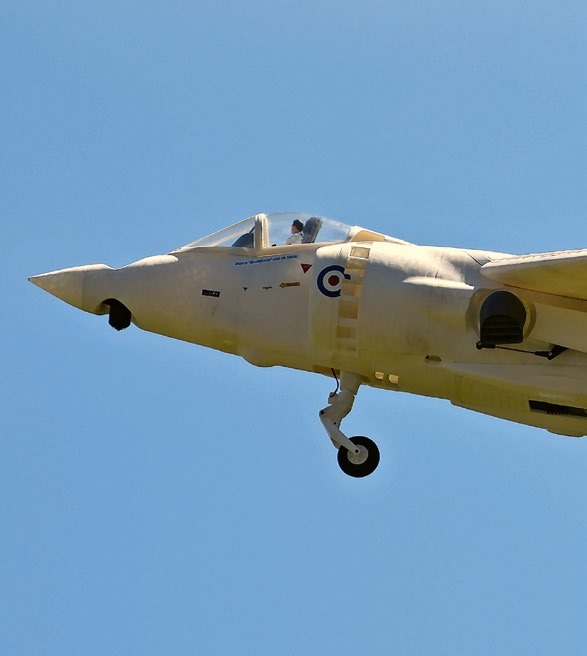
Have you almost forgotten about aircraft that take off and land vertically?
Emil Giezendanner
70 YEARS OF THE NIDWALDEN MODEL AIRPLANE CLUB
Martin Barmettler