
A show is whatever people like
Hausen Air Show – A Smooth Event and a New Attendance Record
Hermann Mettler
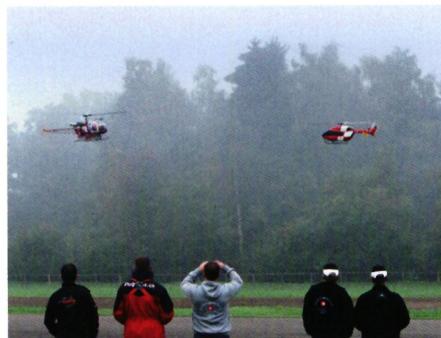
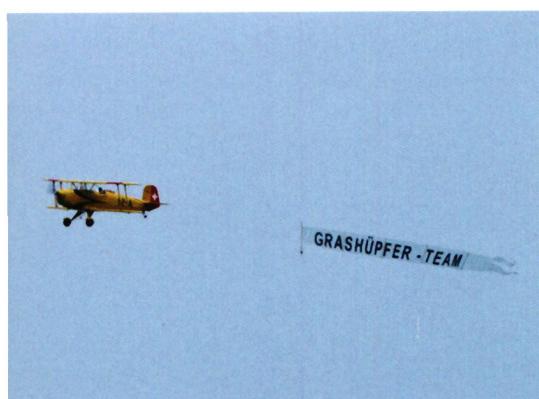
Air traffic control adjusted the order of the initial demonstrations on a case-by-case basis to accommodate the pilots’ visibility needs. In the thick fog, the foam-spraying aircraft were used more to assess flight conditions than to perform the initial flight demonstrations. Fortunately, visibility improved noticeably. As a result, the first flights of the two helicopters, the Lama and the Eurocopter, took place as the fog had already lifted somewhat. But this made for a very realistic experience for the spectators. After all, the Eurocopter’s real-life counterpart at Rega doesn’t just fly in sunshine and blue skies. Fixed-wing aircraft generally require a bit more airspace. On Sunday, the Grashüpfer Team’s yellow Bücker was actually supposed to open the air show by towing a banner. This flight had another purpose: Thanks to the large black letters on the attached banner, air traffic control was able to assess the prevailing visibility conditions at the airfield and thereby designate sectors with insufficient visibility as temporary no-fly zones.
This year, there were not only numerous premieres to see; two entirely new trends were also clearly evident. In the past, the aircraft in the actual flight program had always been of a minimum size so that they could be clearly seen even by spectators farther away. This year, however, additional show elements were introduced. Much more smoke was used—and in a variety of colors. Fireworks were also used on the ground and in the air for the first time. For example, the “no limits” team incorporated a new sequence into the synchronized flight show—which had been performed before—featuring music and white smoke. During this sequence, the two YAK 55s fired several fireworks upward while climbing vertically.
The team actually consists of six pilots. One member takes turns serving as the show coordinator. During the performance, the coordinator sets off the smoke and pyrotechnic effects and gives the individual pilots brief instructions on how to position their helicopters optimally within the formation.
At the start of the show, the five helicopter pilots carried a set of wired tin cans and another cable—which resembled a detonation cord—onto the runway. Next, the pilots positioned the five yellow helicopters more or less in sync in a single file behind the cans. To heighten the suspense for the audience even further, dramatic-sounding music blared from the speakers at the same time, and instead of the expected bang, each can simply released a cloud of smoke in its own distinct color. Now the five yellow helicopters took off on a well-coordinated formation flight. After performing several aerial maneuvers together, the explosion finally sounded at an unexpected moment. At the same time, a jet of flame shot out of the corresponding cannon for a brief moment, and a white smoke signal marked the start of a new sequence in the performance. The helicopters now began to activate the colored smoke cartridges mounted on their skids. Soon the sky was filled with thick trails of smoke in white, yellow, red, blue, and green. The colorful plumes were accompanied by exotic sounds that were somewhat reminiscent of the atmosphere in the tales of “One Thousand and One Nights.” An old educational principle states that intense stimulation of all the human senses leaves a particularly lasting impression on the memory. I wonder if this show was also designed with such criteria in mind?
| Rotor diameter: | 1,400 mm |
| Mechanics: | T-Rex 600 Electric with 6S LiPo power (2500 W) |
| Weight: | approx. 4.7 kg |
- 4 Hughes in the “Breitling” configuration; two in the “Sheriff” configuration
- 5 Hughes 2-blade propellers, 1 Hughes 5-blade propeller
Compared to previous air shows, there were many more different formations flown. These took a wide variety of forms, such as mid-air formations or even unplanned formations on the ground: Two different aircraft, such as the A340 and the Concorde, took off separately for safety reasons and then formed a formation somewhere above the airfield. There, they flew one above the other at a safe vertical distance, allowing them to coordinate their different airspeeds at a safe altitude without significant risk. The Papyrus and the Rainbow Hunter also opted for this type of joint presentation. This also worked excellently on Sunday for the Etrich and Fokker aircraft. Except for the rough contact after the last flight, when the two models unexpectedly came a little too close to each other shortly after landing. Such incidents—which aren’t exactly gentle on the aircraft—also occurred in the early days of manned aviation.
And so even this part of the demonstration—which had been presented very authentically up to that point—appeared exceptionally true to life.
Another variation is synchronized flight: The classic synchronized flight is regularly performed at the air show by the “No Limits” team with minor variations in the flight program from year to year, executed with a high degree of perfection. On Saturday, there was also a demonstration featuring the two Su-29 jets piloted by Walter Gähwiler and Andreas Lüthi. They, too, performed many coordinated, synchronized flight sequences. This was complemented by a landing accompanied by a simultaneous, low mirror flyby by the second jet.
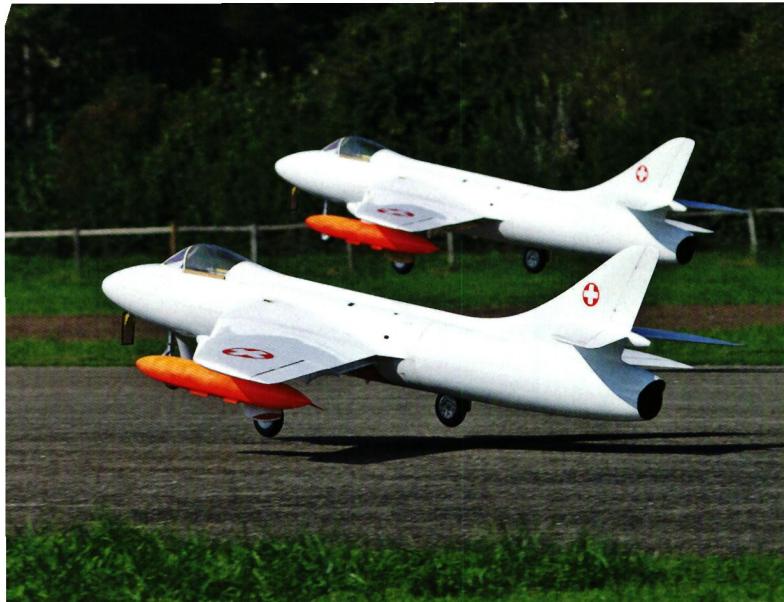
Finally, it’s worth mentioning the classic two-aircraft formations. In this formation, both aircraft take off together from the wide runway, slightly offset in the longitudinal direction. They then fly in parallel, maintaining a more or less consistent distance from one another. In between, the maneuvers are flown either together or separately. By the time they land, at the latest, the two aircraft rejoin in the same formation they had assumed during takeoff. In fact, formation flying in both cases requires a very high level of coordination between the two pilots involved. Very often, this is the result of many years of joint training. Maik Stuber and Daniel Affolter have already mastered formation flying with jets to a high degree. Flying two white Hunters, they demonstrated their skills to the spectators. The bright blue sky and the rolling hills surrounding the Hausen airfield provided a wonderful backdrop for the display.
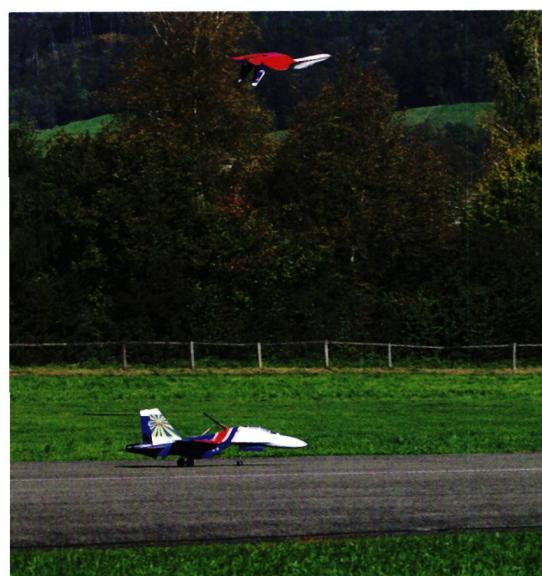
This category of models has always held a special fascination for spectators. Many of the original aircraft from the history of aviation now exist only in museums. And if they’re still airworthy, their airfields are scattered across Europe or even the United States. For an interested spectator, this often requires numerous long journeys to admire such historic legends in flight. Scale or semiscale models are astonishingly faithful replicas of the originals. If the model also uses the same type of engine as the original, even the sound can be reproduced quite accurately. Some model pilots go to great lengths to fly at the same speed and perform the same maneuvers as the originals. Since the models fly much closer to spectators than their real-life counterparts, their flight patterns very often match the originals exactly. In some aerial photographs, it is therefore almost impossible to tell the difference between the manned version and the scale replica.
The 2011 Air Show was a huge hit with the public. Thanks to beautiful weather and a great program, a new attendance record was set once again. The organizers estimate that 6,000 visitors attended on Saturday and 10,000 on Sunday. Because the ground was dry, all available parking spaces in the fields could be used. The enormous popularity of the event—which has now grown into a major festival—is thus slowly beginning to reach its limits. One constraint is the large number of parking spaces required. The spectators included not only model-building experts from near and far. Even my hairdresser knew exactly what was going to happen at the air show. And she really enjoyed her day in Hausen. The organizers must also take this kind of feedback into account when planning the air show.
Even if individual pilots may not always fully agree with the resulting decisions, this principle has once again proven its worth for all participants in Hausen. On both days, there were no accidents involving people or serious plane crashes. And even during the fox hunt, this principle was faithfully observed. Even in a well-coordinated aerial ballet in a very confined space, there were only very few collisions.
As the reporter, I would like to extend my heartfelt thanks to the organizers: the Affoltern Model Aircraft Club, led by its president, Martin Schneebeli; the organizing committee, headed by committee president Beat Huber; and the flight control team led by Christoph Stampfli. Special thanks go to the many volunteers whose dedicated efforts ensured that everything ran absolutely smoothly and made the staging of such a major event possible in the first place. Anyone who would like more detailed information about all the demonstrations from the 2011 Air Show can find over 1,000 photos and many short reports online at www.telesys.ch.
| Wingspan: | 7.82 m |
| Length: | 3.47 m |
| Wing area: | 425 dm² |
| Weight: | 36 kg |
| Area load: | 84 g/dm² |
| Profile: | HQ 3.5/13 HQ/Oldy 3.5/12 |
| Scale: | 1:2.25 |
Wooden kit from Günther Schneider in Kufstein. The ribs and frames are made of plywood. The fuselage is planked and covered with fiberglass cloth. The wings are covered with film. The aircraft was certified by the FOCA on June 11, 2010. Construction time was 600 hours. Tow plane: Rascal SIG (modified), wingspan 3 m, 12S battery, piloted by Andreas Waespi.
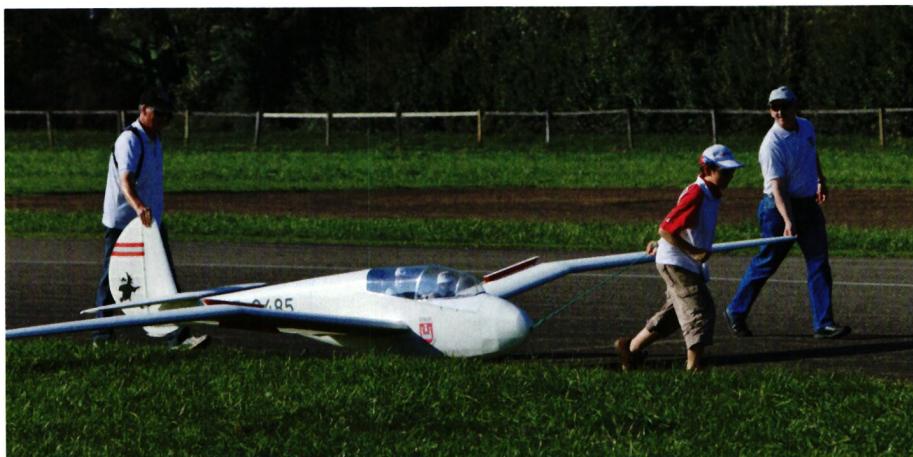
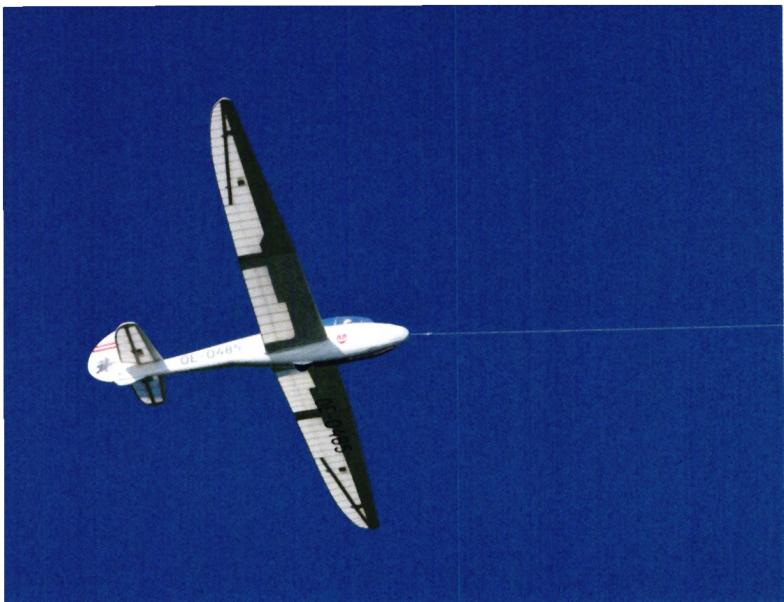
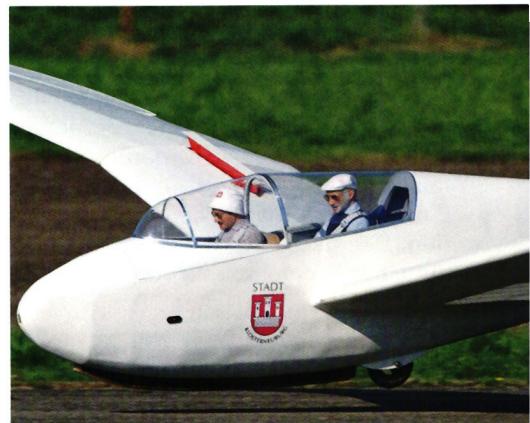
The Musger MG 19a was designed after World War II by the renowned engineer Erwin Musger as another glider in a series of his own designs. It was not until 1951, when the general ban on flying in Austria was lifted, that the first prototype could be built and flown in Carinthia. The MG 19a (the version with swept wings) was subsequently built 21 times. However, this wing design proved too complex to manufacture, so the wings were subsequently built straight, resulting in the MG 19b version. The aircraft was flown by some Austrian aviation clubs and, as a two-seater, was also suitable for training young pilots. Occasionally, it was also used in competitions. Today, there are still a few certified examples that can be found in active flight operations.
The MG Müswangen has held at least one permanent spot in the flight program at the Hausen Air Show for years. The Musger, with its realistic-looking pilots, is a real treat for all fans of large scale gliders. The massive aircraft stood out thanks to its magnificent flight profile, with its clearly visible wooden ribs. The white paint scheme provided a wonderful contrast to the deep blue sky. Despite this paint being highly prone to staining, the fuselage and wings appeared in immaculate white. To land this large model, spoilers with beautifully red slats could even be deployed beneath and above the large wings. The 73-year-old builder and pilot of this aircraft, Kurt Ritter from Muri, finds its size quite practical. You can use it to circle comfortably in the thermals at 700 meters above the airfield. You no longer need eagle-sharp eyes to keep the model plane from disappearing from view. Plus, there are now powerful electric-powered tow planes available.
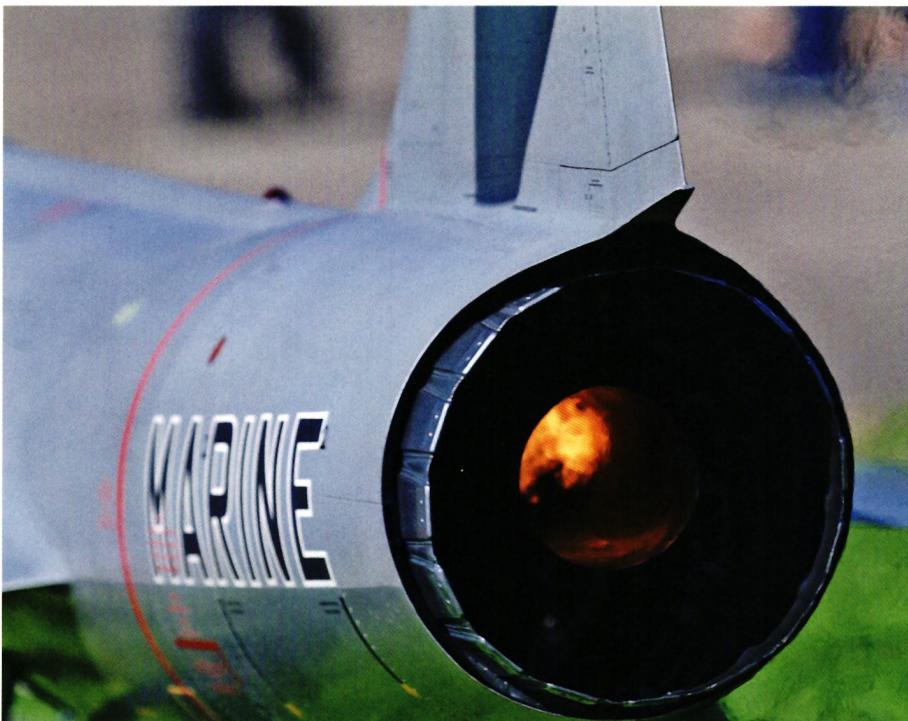
No, the reputation of this aircraft—also known by the derogatory nickname “coffin fighter”—is often unfair. While many aircraft of this type did crash following their introduction in Europe, which was carried out under intense time pressure, this was due less to the original design than to the decision made later to repurpose them as fighter-bombers. Furthermore, at the dawn of the jet age in Germany, there was a lack of properly trained personnel, which led to numerous flaws in the aircraft’s modification and maintenance. This was the real reason for the numerous aircraft and pilot losses, according to Wolfgang Weber of Gladenbach in the state of Hesse, the builder and owner of an extremely detailed replica of the F-104. The steady advancement of electronics and the lessons learned from flight accident analyses enabled the Bundeswehr to resolve the problems that had been identified up to that point. Over time, all the teething problems were gradually and successfully ironed out, resulting in a significant improvement in the jet’s reputation. When the last F-104 was taken out of service by the Bundeswehr in 1991, some pilots mourned its loss.
The real aircraft and the model share a history that has unfolded in a rather similar way. While the electronics problems with the full-scale Starfighter were caused by its being parked outdoors rather than in a dry hangar, the electronics malfunctions in the first highly accurate model were triggered by a 35-MHz remote control system belonging to another model pilot that had been accidentally activated. Both incidents resulted in the crash of the respective jet. A second F-104 model, also built jointly by Wolfgang Weber and Heiko Höft, suffered a similar fate. Wolfgang, too, was not discouraged by the loss of the first two models. He subsequently built a third F-104, which was now on display for the first time in Hausen. Since switching the control system to 2.4 GHz three years ago, this new and equally highly detailed replica has flown without a single glitch. Like its two predecessors, the current jet model is a true-to-scale 1:4 replica. It is 4.20 m long and has a wingspan of 1.65 m. Unlike the first model, this aircraft was built much lighter thanks to extensive use of carbon fiber fabric and other high-quality materials. It now weighs just under 20 kg when empty, instead of the original 28 kg.
The highly accurate replica of the fighter is powered by a Turbo-Jet-70 turbine with 20 kg of thrust and a weight of only about 2.2 kg, manufactured by the well-known German turbine manufacturer Frank. The construction of the very slender wings posed a considerable challenge in terms of structural strength, as the profile thickness is only a mere 8 mm in some places. The ribs in the wings are cut from poplar wood and reinforced with three layers of laminated carbon fiber fabric. The design of the landing gear is also particularly demanding. It had to be sized to fit into a very tight space inside the fuselage beneath the turbine. To reduce weight, many parts of the new landing gear—as well as components in other areas—were cast from innovative titanium or magnesium alloys. Wolfgang is very knowledgeable in this field. He also crafted the corresponding wooden models for creating the casting molds himself and used them to produce the molds for the foundry. The latest model has become lighter, not heavier. As a result, the aircraft has very docile flight characteristics. The pilot can therefore execute the landing approach very slowly without experiencing any stall.
In 1992 and 2004, Wolfgang won the German Semiscale Championship twice with his models from that time. He also won the Europa Star Cup in 1992.
Editor’s note: Other participants and their projects will be featured in upcoming issues.


News from HEBU

TEAM MANAGER "THIS" BOSSHARD
 Rodito Nussbaumer

SUMMER FUN 2026 AT MG USTER
Martin Wunderli
BY YOUTH, FOR YOUTH
Lorena Betschen
SMALL, MODEL-LIKE SAILBOATS
Res Dauwalder
TRY-OUT DAY AT MFV WETTINGEN
Urs Keller
What's New at Leomotion.com

52. 2026 ALPS CUP
 Emil Giezendanner

ATOM, THE NEW DOUBLE-DECKER FROM CPLR
 Matthias Bosshard

INSIGHTS INTO THE HISTORY OF SEAPLANES

YOU KNOW WHAT I MEAN? 125 YEARS OF THE SWISS AERO CLUB
Emil Giezendanner
34th HAHNENMOOS ALPINE MODEL AIRPLANE CAMP
Res Dauwalder
CORSAIR F4U – A WARBIRD WITH A MEMORABLE LOOK
Jürgen Rosenberger, Jürgen Prinz
F3A EUROPEAN CHAMPIONSHIPS IN ST-MACAIRE, FRANCE
Matthias Bosshard
HORIZON HOBBY/LEMACO NEWS: MICRO OV-10 BRONCO 645 MM BY E-FLITE

PRIDE AND GOOD IDEAS
 Markus Nussbaumer

EURO CONTEST GLIDER ACRO TOUR AUSTRIA 2026

FREE FLIGHT IN THE MIDDLE OF SUMMER
Urs Muntwyler
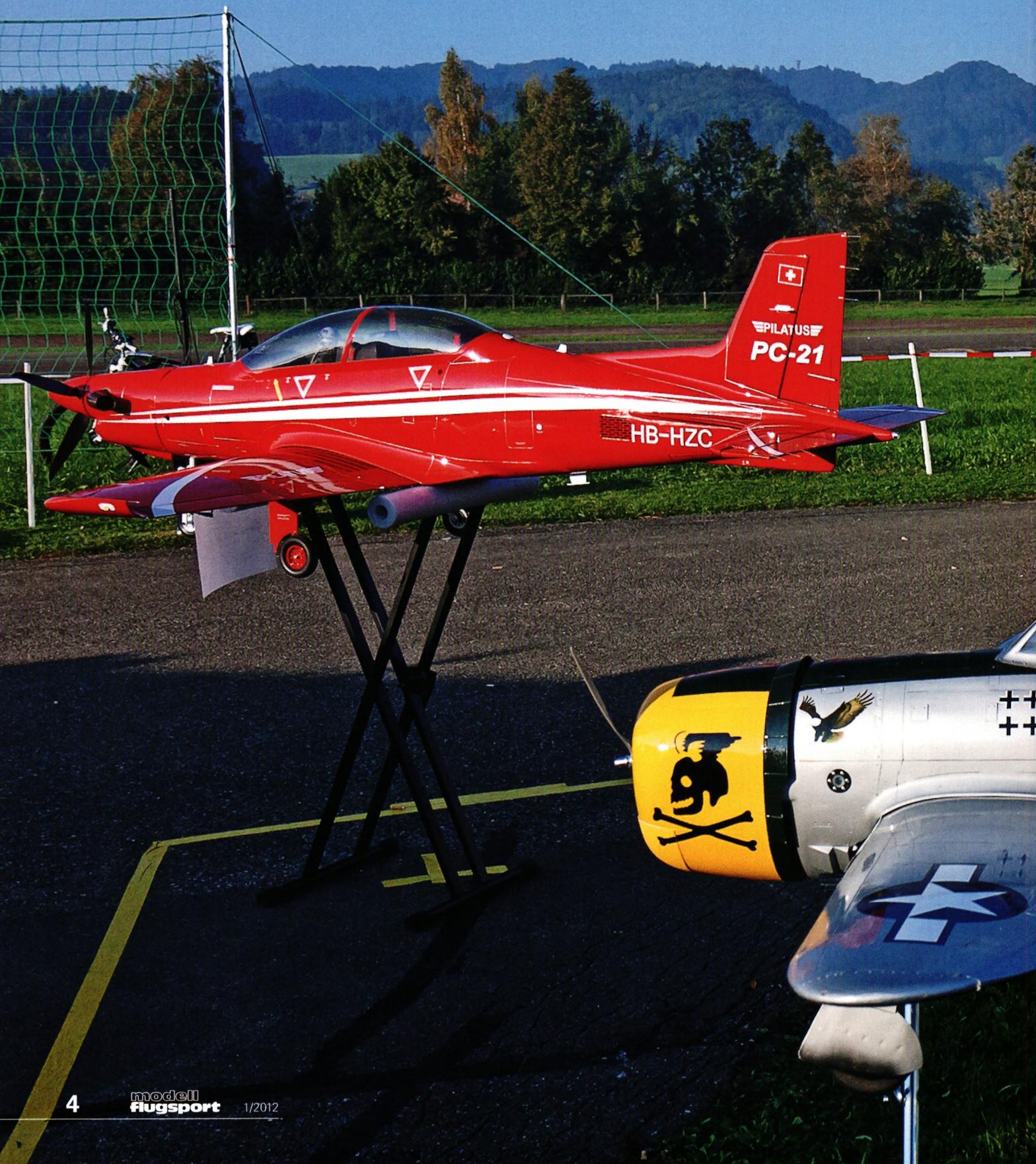
THE PC-21 STORY
Emil Giezendanner
TWIN TOWN PARTNERSHIP
Wolfgang Voeller
WELCOME, NEW MEMBER!
Andrea Bolliger
COUPE DES ALPES – OBSERVE AND LEARN
Rodito Nussbaumer
NEWS FROM HEBU
 Julia Bucher

FROM 0 TO 100
Markus Nussbaumer
MEMORIES
Wolfgang Völler
NOS REGION – A HUB FOR ELECTRIC AVIATION
Emil Giezendanner
Have you almost forgotten about aircraft that take off and land vertically?
Emil Giezendanner
70 YEARS OF THE NIDWALDEN MODEL AIRPLANE CLUB
Martin Barmettler