
How can you win the "Night of Construction"?
November 23, 2019, Presidents’ Meeting. As the winner of the 2019 edition, I have the privilege of participating in the discussion on the 2020 theme. Not everything has been finalized yet, but it’s giving me some ideas for preparing for this second participation. I’ve marked the date on my calendar while I wait to receive the rules for this 14th “Night of Construction.” They’ll arrive on March 1 and will help me better narrow down the model I’ve decided to build for this race to the centennial aircraft pylon. After some online research, I’ve set my sights on a Junkers D.I.
As early as 1915, Hugo Junkers began designing an all-metal, low-wing aircraft. This innovative concept was rejected by the military despite its duralumin structure, which offered pilots a degree of safety. Eventually, the J.9 was accepted by the military, which designated it the DI and used it during the final months of the war. Despite its speed and maneuverability, only 41 were built, largely due to the difficulty of its construction. The aircraft on display at Le Bourget is the only surviving example in the world (https://www.museeaierespace.fr/aller-plus-haut/collections/junkers-j-9-di/).
The triptych is relatively easy to find online and provides a good starting point for modeling this airplane and generating a blueprint. To get a feel for the Fusion 360 CAD program, I decided to design the airplane in 3D and then extract 2D plans to use as cutting templates during construction. I decided that most of the parts would be made from 6 mm Depron glued with a special cyanoacrylate adhesive.
The 3D model gives me an idea of the weight distribution as well as the final weight. The calculated weight is 600 g (excluding glue and accessories), while the actual weight turned out to be 650 g—a variation that seems quite reasonable to me.
The wingspan is arbitrarily set at 1 m, and the other dimensions are scaled proportionally. Only an increase in the fin’s surface area deviates from the “scale model” appearance in order to improve stability and maneuverability. Its size corresponds to the recommendations from my reference book (http://rcaerolab.eklablog.com/livre-mecanique-du-vol-conception-aerodynamique-p1157624). The trim and center of gravity are determined after a quick run through PredimRC (http://rcaerolab.eklablog.com/predimrc-p1144024).
For the sake of simplicity in construction—and after reading various forums on the subject—I’ve decided to use a KFM4 profile consisting of a sandwich of loosely contoured Depron sheets. A lengthy post in the language of Shakespeare presents findings and recommendations regarding their fabrication and possible applications (https://www.rcgroups.com/forums/showthread.php?1122108-Please-link-your-KF-designs-or-KF-mods-here). The powerplant is simply taken from the original Multiplex Funracer, which, after validation using appropriate design software (https://ecalc.ch/), appears to be well-suited to my design. A calculated top speed of approximately 100 km/h seems entirely reasonable for this model.
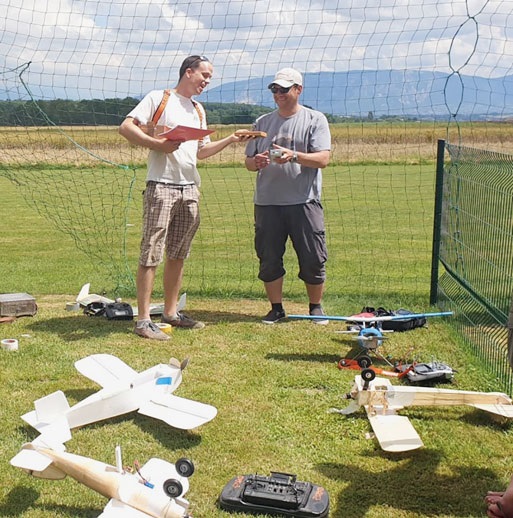
3D modeling gives you an idea of the weight distribution as well as the final weight. The calculated weight is 600 g (excluding glue and accessories), while the actual weight came out to 650 g, which seems like a perfectly reasonable variation to me.
The wingspan is arbitrarily set at 1 m, and the other dimensions are scaled proportionally. Only an increase in the fin’s surface area deviates from the “scale model” appearance in order to improve stability and maneuverability. Its size corresponds to the recommendations from my reference book (http://rcaerolab.eklablog.com/livre-mecanique-du-vol-conception-aerodynamique-p1157624). The trim and center of gravity are determined after a quick run through PredimRC (http://rcaerolab.eklablog.com/predimrc-p1144024).
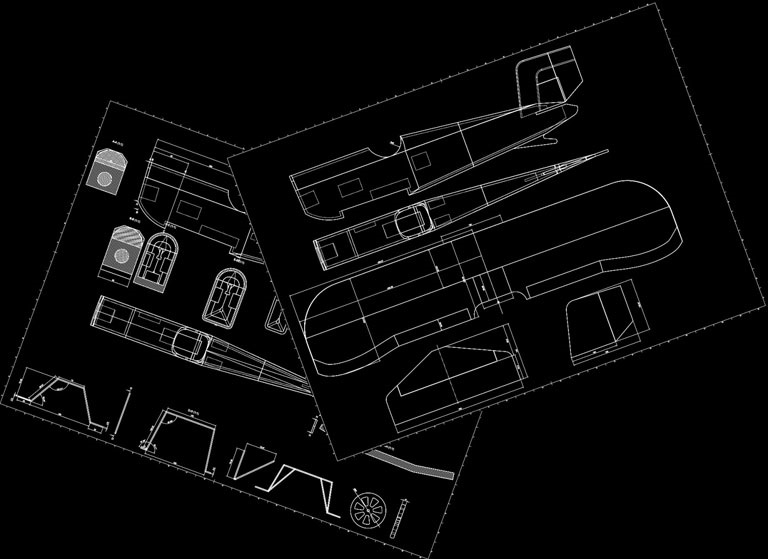
Possible applications (https://www.rcgroups.com/forums/showthread.php?1122108-Please-link-your-KF-designs-or-KF-mods-here). The powerplant is simply taken from the original Multiplex Funracer, which, after validation using appropriate design software (https://ecalc.ch/), appears to be well-suited to my design. A calculated top speed of approximately 100 km/h seems entirely reasonable for this model.
Although we arrived an hour late at the AMC-Geneva track, many participants didn’t waste any time, and the atmosphere on the track is very welcoming. I greeted everyone and started by grabbing a drink from the beer tap set up by the club while watching the other builders. I set up my workbench and got started on the build, running 1 hour and 30 minutes behind schedule. The 1:1-scale blueprints allowed me to make good progress on the structural work. The evening is punctuated by hamburgers cooked on-site, a few beers, and some great moments of camaraderie with the other attendees. Because of the delay at the start, I’m unable to meet my goal for this year: to get a little sleep during the night. Despite a few minor details that take me longer than expected and give me a bit of a hard time, the Junkers looks just like the plans. By breakfast time, my model still needs a few finishing touches before its first flight.
Some people make their first flights with varying degrees of success, but most of them do quite well. Considering how little time we had to build them, some of the models are truly magnificent and look great!
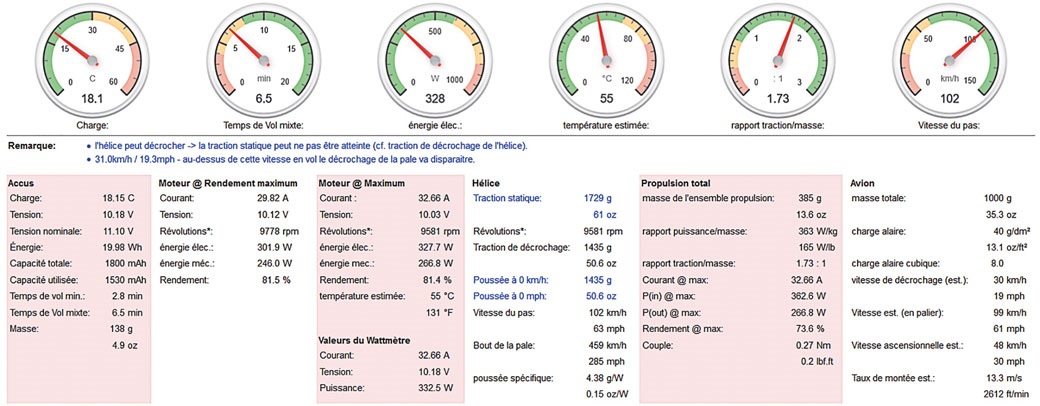
The first flight went off without a hitch, though—like many other models—there was too much rudder travel, making the handling a bit finicky. The maximum flight speed met my expectations and I’m satisfied with it.
After everyone present helped tidy up the facilities and we enjoyed a hearty meal, the competition could begin. The first round—consisting of 10 laps around two markers with seven planes in the air at the same time—already gives a good sense of the different models and their capabilities. The second round adds a little extra excitement by having the planes fly in figure-eights instead of circles, causing the models to cross paths. More impressive than risky, there were no mid-air collisions during this crossing... We fly 10 laps wing-to-wing with another competitor, experiencing the accompanying adrenaline rush as we race to see who will complete the 10 laps first.
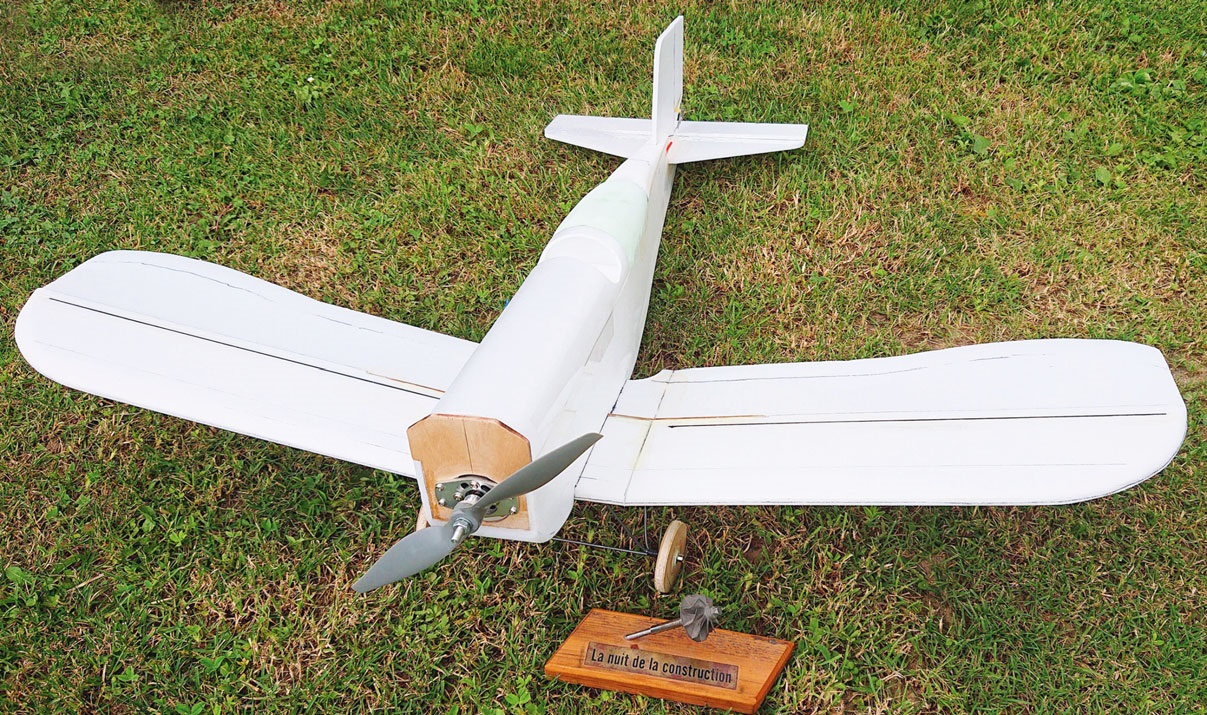
This is my second time participating, and I’m once again taking home the trophy. I’m eagerly awaiting the first details about the 15th edition. The trophy is back in Vaud, and I can’t wait to defend my title next year.
A big thank you to the AMC for organizing this event, which brings together so many different aspects of our hobby!
AmiCLAMent
CLAM: Marc Vuilleumier
The 1-meter-wingspan Junkers D.I. model chosen by the author.


News from HEBU

PRIDE AND GOOD IDEAS
 Markus Nussbaumer

TEAM MANAGER "THIS" BOSSHARD
 Rodito Nussbaumer

YOU KNOW WHAT I MEAN? 125 YEARS OF THE SWISS AERO CLUB
 Emil Giezendanner

F3A EUROPEAN CHAMPIONSHIPS IN ST-MACAIRE, FRANCE
 Matthias Bosshard

HORIZON HOBBY/LEMACO NEWS: MICRO OV-10 BRONCO 645 MM BY E-FLITE

ATOM, THE NEW DOUBLE-DECKER FROM CPLR
Matthias Bosshard
SUMMER FUN 2026 AT MG USTER
Martin Wunderli
52. 2026 ALPS CUP
Emil Giezendanner
TWIN TOWN PARTNERSHIP
Wolfgang Voeller
CORSAIR F4U – A WARBIRD WITH A MEMORABLE LOOK
Jürgen Rosenberger, Jürgen Prinz
SMALL, MODEL-LIKE SAILBOATS
Res Dauwalder
TRY-OUT DAY AT MFV WETTINGEN
Urs Keller
WELCOME, NEW MEMBER!
Andrea Bolliger
What's New at Leomotion.com

COUPE DES ALPES – OBSERVE AND LEARN
Rodito Nussbaumer
EURO CONTEST GLIDER ACRO TOUR AUSTRIA 2026

BY YOUTH, FOR YOUTH
Lorena Betschen
INSIGHTS INTO THE HISTORY OF SEAPLANES

34th HAHNENMOOS ALPINE MODEL AIRPLANE CAMP
Res Dauwalder
FREE FLIGHT IN THE MIDDLE OF SUMMER
Urs Muntwyler
THE PC-21 STORY
Emil Giezendanner
NEWS FROM HEBU
 Julia Bucher

FROM 0 TO 100
Markus Nussbaumer
MEMORIES
Wolfgang Völler
NOS REGION – A HUB FOR ELECTRIC AVIATION
Emil Giezendanner
DO YOU KNOW WHAT I MEAN IN THE LAND OF SMILES?
Emil Giezendanner
Have you almost forgotten about aircraft that take off and land vertically?
Emil Giezendanner