
Model Aircraft — A Popular Sport
If one wants to fully understand the evolution of model aircraft building, one cannot overlook the history of the development of recreational aviation in general.
I really appreciate talking with the aviation pioneers of yesteryear (who, however, have remained young at heart). I love listening to their stories, their vivid descriptions, and their dreams: if I’d been an active pilot 50 years ago, I probably would never have taken up model aircraft flying. I would likely have followed in the footsteps of those aviation pioneers, building gliders and other “chest-of-drawers with strings,” and hauling them—sweating and huffing and puffing—Sunday after Sunday, up some random hill, and so on. It’s safe to say that sport aviation came first—back then, sport aviation was all there was. The pioneering spirit, courage, daring, constant development, the desire to create something new, and to always push the boundaries are qualities that stand out particularly in sports. Our aviation pioneers were first-rate sportsmen. Only with the subsequent emergence of a (serious) approach to aviation did the scope of the aviation sportsman’s activities narrow. Scientific and technical advances, along with industrial production—as the athlete gave way to the engineer—have transformed the amateur aviator more or less into a mere consumer, who has largely lost his creative drive, his pioneering spirit, and his taste for true adventure. The great popularity of gliding, the spectacular increase in the number of skydiving club members, and the rapid development of model aircraft flying over the past decade are clear signs that many aviators do not want to settle for being mere consumers, but that they still retain, somewhere deep in their hearts, the spirit of the old aviation pioneer. The “return to model aircraft” by numerous commercial and military pilots speaks to the appeal of model aircraft and its potential as a field that combines construction, craftsmanship, and flying. Of course, in large-scale aviation, a certain countertrend to purely consumerist behavior has taken hold in some countries thanks to the “experience.” Airplane kits are enjoying growing popularity, but this hobby will only gain a limited foothold, as the constraints (the need for a workshop, transportation issues, parking space, etc.) are far greater than in model aircraft building. The lack of space has become a central problem, especially in Europe. Each individual’s living space is more confined. Everywhere, people must exercise restraint, show consideration for others, and obey the laws that make life in a confined space barely possible. It is therefore not surprising that even aviation pioneers are building their own smaller aircraft.
In recent times, it has become abundantly clear that the individual inclinations mentioned in the first part—such as a pioneering spirit, the search for new possibilities, and artisanal creation—cannot, on their own, constitute the sole motivations underlying the practice of model aircraft flying. The industrial production of model airplanes, which appeared (amid much controversy) here about two years ago, has opened up the model aircraft movement to a group of people that is, in part, entirely new. That is to say, all those who do not want to pay for their little Sunday flight at the cost of balsa wood shavings in their soup, glue on the carpet, and paint splatters on the kitchen table. But above all, those who do not want to (or cannot/are not allowed to) devote the rest of their free time to the laborious and patience-testing process of building models. Heading out to the fields on Sundays—getting some fresh air—making exciting flights—flying—sharing a moment of camaraderie with fellow enthusiasts—having a drink (or two)—simply having fun—that’s what might motivate these modelers in their hobby. Yet these are extremely common needs among modern people: we seek to take our minds off things and have fun. Added to this is the fact that, even with all the good will in the world, not everyone has a steady hand; and anyone who’s already sawed off three fingers would be better off giving it up, because in the end, they’ll only have seven left. The fact is that without a need or demand, no one would ever have thought of mass-producing scale models of airplanes using machinery. An industry develops only where there is a real need. And whether we want to admit it or not, the demand for ready-to-fly models is not insignificant. Why should all these people give up the charm of model aircraft building? I must admit that at first I was extremely skeptical about this development. Model aircraft building, I told myself, must come from “the heart and the hands”—and not just from the wallet (even though I still believe in the educational value of building model airplanes with young people). But why, in an age where everything moves so fast, not turn these “rules” on their head for once and become a modeler (or at least the owner of a model airplane) overnight? The ability to buy a ready-made model airplane in a store introduces some people to model aircraft building, when otherwise they might never have taken an interest for various reasons—who knows how many of these “model buyers” eventually feel the need to build their own aircraft and thus become modelers. You, however, have taken a different path from that of many others—probably most of us, up to this point. As for whether this path is better or worse, that’s for each person to decide for themselves—I don’t think it’s possible to establish a universal rule here. What matters most is flying—the personal connection with the wind, the clouds, and the sky—the pleasure that one’s own “bird” brings (a man needs his bird!).
Thanks to the added option of purchasing scale models, model aircraft flying has become a truly popular sport: virtually anyone can therefore become a model aircraft enthusiast. This new development will lead to a significant boom in model aircraft flying. Automation and specialization in the workplace, combined with the fact that, in a few years, people will increasingly live in vast, city-like residential neighborhoods, could attract an unexpected number of new enthusiasts to model aircraft flying. Hundreds of people head out to fields to fly their radio-controlled model airplanes. The electronics of the future will allow several dozen models to fly simultaneously. Electric motors might quietly replace traditional “internal combustion engines.” However, if we want to avoid major chaos, this future must be planned properly. For this reason alone, a split between model builders and “model buyers” would be practically the stupidest thing that could happen to us. We must work together to overcome the major challenges that lie ahead, so as not to destroy ourselves. We cannot allow the thoughtlessness, lack of discipline, and recklessness of a handful of individuals to jeopardize the entire model aviation community.
Because, in my opinion, it is already difficult enough today to draw a clear line between purchasing and building a scale model airplane. How many parts, accessories, prefabricated surfaces, or airframes, etc., do most so-called modelers purchase today? Today, you still have to install the transceiver yourself; it’s only a matter of time before scale model airplanes equipped with a pre-installed system appear on the market—and as we all know, time doesn’t stand still. Finally, a ready-to-fly model that fails to meet expectations might prompt someone to build one themselves—or even design one of their own. I know from reliable sources that, despite ready-to-fly models and plastic products of all kinds, people have never built as much as they do today: sales of balsa wood are enormous. The experience of building a model airplane—from the creative process to that first flight, eagerly awaited with a pounding heart—always belongs to the realm of personal feelings and can never be replicated by a machine.
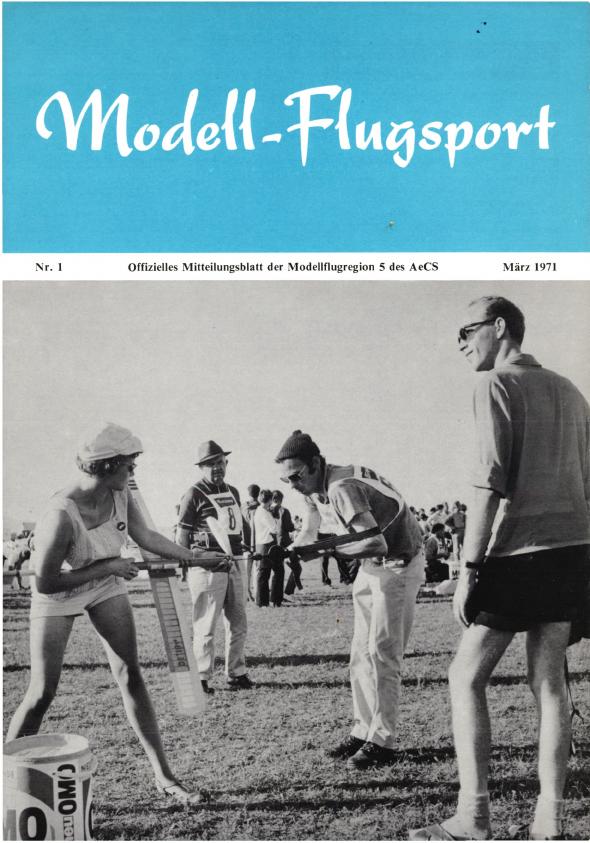

TEAM MANAGER "THIS" BOSSHARD
 Rodito Nussbaumer

SUMMER FUN 2026 AT MG USTER
Martin Wunderli
52. 2026 ALPS CUP
 Emil Giezendanner

ATOM, THE NEW DOUBLE-DECKER FROM CPLR
 Matthias Bosshard

INSIGHTS INTO THE HISTORY OF SEAPLANES

34th HAHNENMOOS ALPINE MODEL AIRPLANE CAMP
Res Dauwalder
CORSAIR F4U – A WARBIRD WITH A MEMORABLE LOOK
Jürgen Rosenberger, Jürgen Prinz
SMALL, MODEL-LIKE SAILBOATS
Res Dauwalder
F3A EUROPEAN CHAMPIONSHIPS IN ST-MACAIRE, FRANCE
Matthias Bosshard
What's New at Leomotion.com

HORIZON HOBBY/LEMACO NEWS: MICRO OV-10 BRONCO 645 MM BY E-FLITE

PRIDE AND GOOD IDEAS
 Markus Nussbaumer

News from HEBU

BY YOUTH, FOR YOUTH
Lorena Betschen
YOU KNOW WHAT I MEAN? 125 YEARS OF THE SWISS AERO CLUB
Emil Giezendanner
TRY-OUT DAY AT MFV WETTINGEN
Urs Keller
FREE FLIGHT IN THE MIDDLE OF SUMMER
Urs Muntwyler
THE PC-21 STORY
Emil Giezendanner
TWIN TOWN PARTNERSHIP
Wolfgang Voeller
EURO CONTEST GLIDER ACRO TOUR AUSTRIA 2026

WELCOME, NEW MEMBER!
Andrea Bolliger
COUPE DES ALPES – OBSERVE AND LEARN
Rodito Nussbaumer
NEWS FROM HEBU
 Julia Bucher

FROM 0 TO 100
Markus Nussbaumer
MEMORIES
Wolfgang Völler
NOS REGION – A HUB FOR ELECTRIC AVIATION
Emil Giezendanner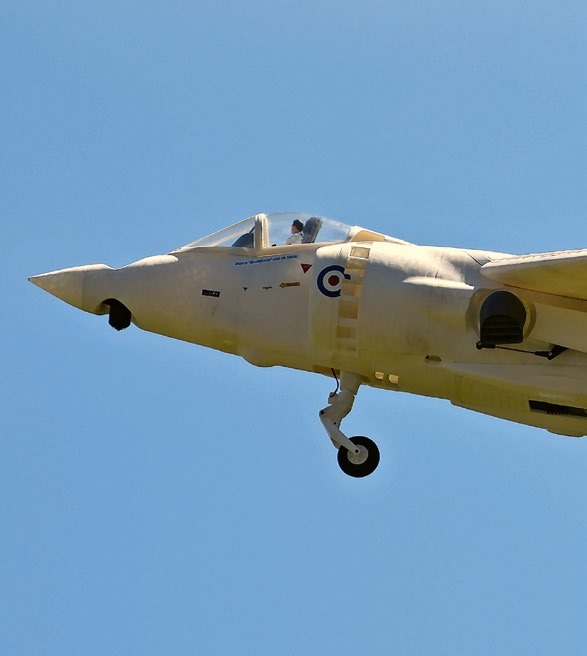
Have you almost forgotten about aircraft that take off and land vertically?
Emil Giezendanner
70 YEARS OF THE NIDWALDEN MODEL AIRPLANE CLUB
Martin Barmettler