
Duzi R5 Nova Review
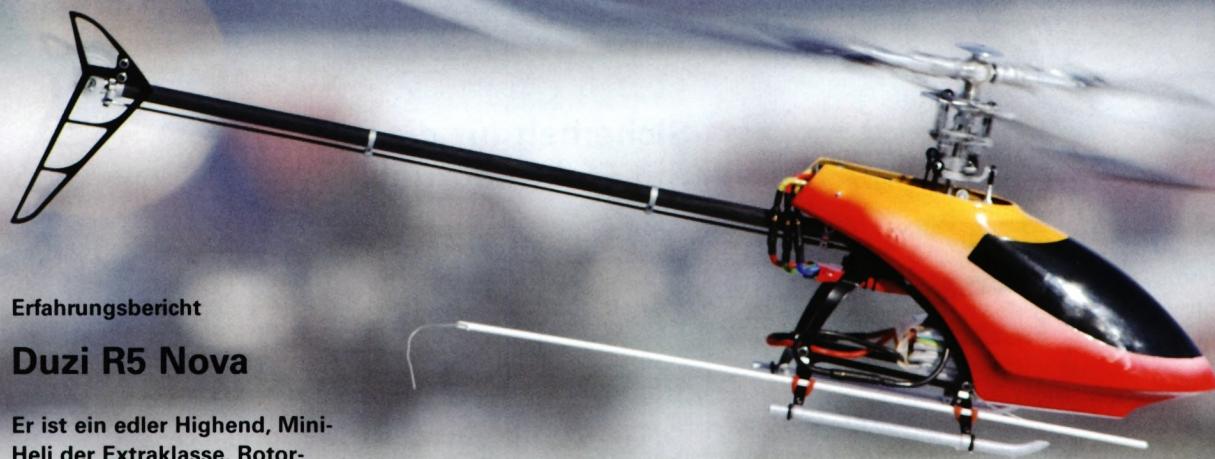
It is a high-end, top-of-the-line mini helicopter. The rotor diameter is approximately 80 cm, and the takeoff weight is listed as 700–900 grams. It is powered by a 4S LiPo battery. Its appearance is technical and aggressive. Its exclusivity is evident at first glance. The craftsmanship and materials used are top-notch.
I was fortunate enough to receive the first R5 delivered in the German-speaking world. My fear that the R5 would be a “banana product” (a product that “ripens” at the customer’s end) was not confirmed. On the contrary, the packaging, assembly instructions, and components are all of very high quality and fit perfectly. No parts were missing, and the assembly process is well thought out.
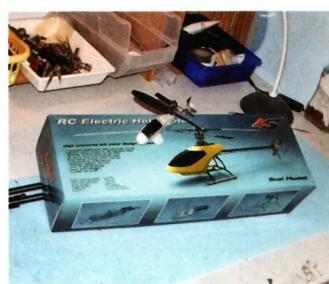
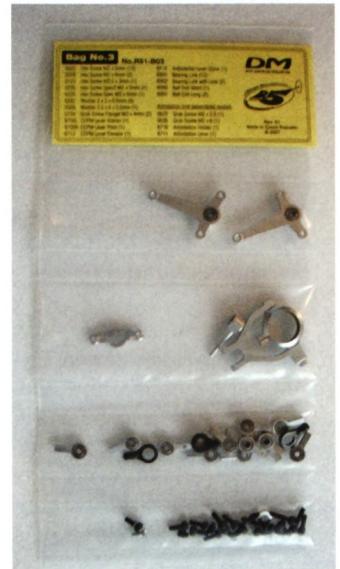
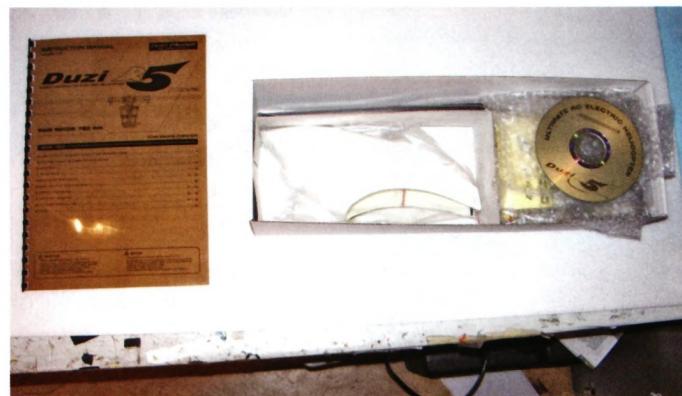
The packaging has a sophisticated look. When you open it, the first things you notice are the gold-colored building instructions and the gold-colored CD. All parts are neatly and clearly packed in plastic bags. The bags are well labeled and organized, meaning you can remove the parts individually as needed. Given the size of some parts and screws, this is a real advantage. The pre-assembled parts are embedded in Styrofoam. The kit is complete except for the main rotor blades. The tail rotor blades are also included—made of balsa wood, asymmetrical, and carbon-reinforced—truly handcrafted!
The assembly instructions are very well-organized and clear. The drawings of the individual parts are very precise and match the originals exactly. The highlight is the grub screws used on the tail rotor. To tighten this cute little part, you need a 0.9-mm Allen wrench. I didn’t have this tool in my workshop, so I had to buy it separately. In my opinion, an Allen wrench like this should be included in the package.
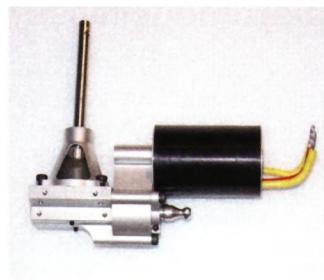
Some parts are already pre-assembled. The center piece with the rotor head blade holder, the tail rotor gearbox, and the main gearbox: I checked the screw connections and
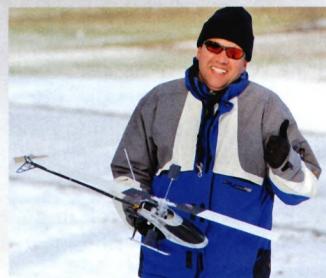
I noticed that everything is secured with threadlocker. Assembly is quick and a pleasure. The parts are precise, and everything fits perfectly.
Assembled from just a few aluminum parts and stripped down to the bare essentials. The layout of the components is well thought out, resulting in a very compact helicopter. The linkage is not constructed with ball joints and sockets, as we are accustomed to, but rather with special connectors and ball bearings. This results in a backlash-free and very smooth-running rotor head linkage. The aforementioned
connectors are glued to the CFRP rods. The instructions recommend superglue for this joint. I used two-component adhesive because I figured that would give me time to align the connectors precisely. I sanded the ends of the rods slightly so that air could escape from the sleeves reliably.
I followed the manufacturer's recommendations. The motor is a Mega 16/20/2. Three Graupner DS 3728 motors power the swashplate, and a DS 3781 powers the tail. The tail rotor is stabilized by a Logitech LTG-2100T. The speed is controlled by a Jazz 40-6-18. Power comes from a Thunder Power battery with a capacity of 2200 mAh. Takeoff weight: 920 g.
It was cold and windless. I had very carefully programmed the throttle curve to 30%, 50%, and 70%. I had programmed the gyro as suggested. Now it was time to rev it up for the first time. The Kontronik re-
rises up nice and slowly. At 50%, I hover a bit, and soon switch to 70%. The helicopter runs without vibrations. The set control travel is very generous, and the tail is a bit spongy. I land, take
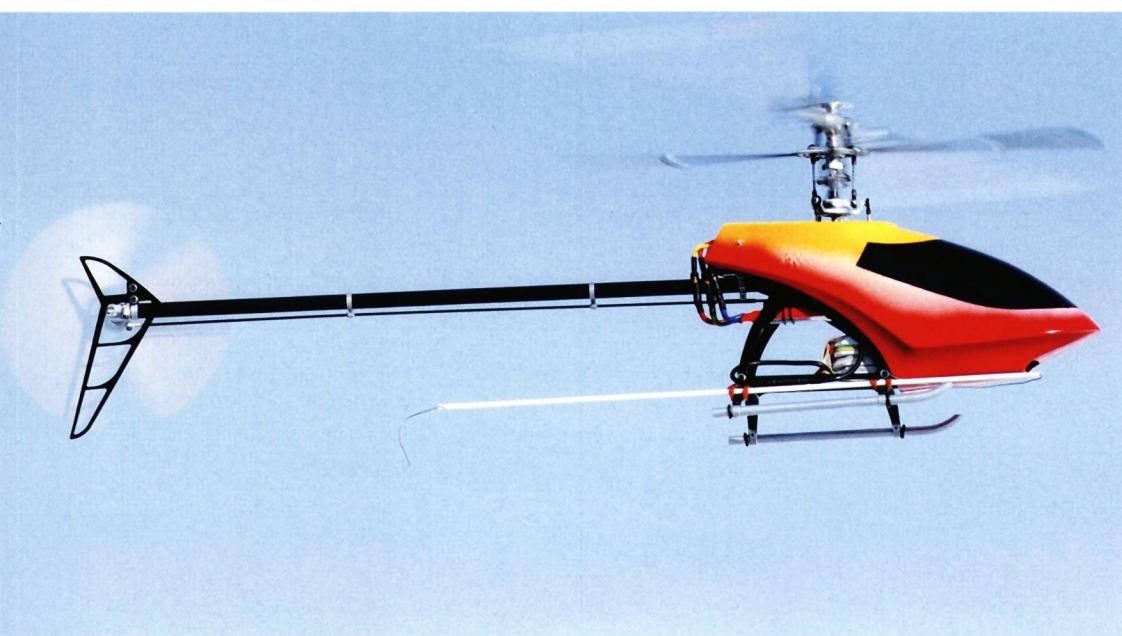
I reduced the deflections and programmed it 100% to the throttle curve. But now the tail is pitching up. So I reduced the gyro sensitivity. And I continued testing. Now this little guy is showing what he’s made of. He flies almost as if on rails. The R5 is incredibly agile, and its climb performance is excellent. In a turn, it climbs surprisingly high; it doesn’t behave as one would expect given its size—the flying experience is comparable to that of a significantly larger helicopter. The R5 is surprisingly resistant to wind. Thanks to its agility and
power, it’s the ideal fun 3D helicopter. After a few batteries’ worth of break-in time, the R5 unleashes its full potential. There’s no maneuver it can’t pull off. The pilot sets the limits. During intense 3D flying, you can expect about 5–6 minutes of flight time.
The R5 is a real gem for RC helicopter enthusiasts. I first noticed the R5 a while back at my favorite store, Hobby Modellsport GmbH in 8330 Pfäffikon. Exclusivity comes at a price. There’s nothing left to tune, improve, or modify. The helicopter is crafted from high-quality materials from front to back. Its flight performance and agility are outstanding. It’s certainly not a helicopter for beginners, but it will find its fans among 3D enthusiasts and tech buffs.
Have fun.
René Stoll


News from HEBU

TEAM MANAGER "THIS" BOSSHARD
 Rodito Nussbaumer

SUMMER FUN 2026 AT MG USTER
Martin Wunderli
BY YOUTH, FOR YOUTH
Lorena Betschen
SMALL, MODEL-LIKE SAILBOATS
Res Dauwalder
TRY-OUT DAY AT MFV WETTINGEN
Urs Keller
What's New at Leomotion.com

52. 2026 ALPS CUP
 Emil Giezendanner

ATOM, THE NEW DOUBLE-DECKER FROM CPLR
 Matthias Bosshard

INSIGHTS INTO THE HISTORY OF SEAPLANES

YOU KNOW WHAT I MEAN? 125 YEARS OF THE SWISS AERO CLUB
Emil Giezendanner
34th HAHNENMOOS ALPINE MODEL AIRPLANE CAMP
Res Dauwalder
CORSAIR F4U – A WARBIRD WITH A MEMORABLE LOOK
Jürgen Rosenberger, Jürgen Prinz
F3A EUROPEAN CHAMPIONSHIPS IN ST-MACAIRE, FRANCE
Matthias Bosshard
HORIZON HOBBY/LEMACO NEWS: MICRO OV-10 BRONCO 645 MM BY E-FLITE

PRIDE AND GOOD IDEAS
 Markus Nussbaumer

EURO CONTEST GLIDER ACRO TOUR AUSTRIA 2026

FREE FLIGHT IN THE MIDDLE OF SUMMER
Urs Muntwyler
THE PC-21 STORY
Emil Giezendanner
TWIN TOWN PARTNERSHIP
Wolfgang Voeller
WELCOME, NEW MEMBER!
Andrea Bolliger
COUPE DES ALPES – OBSERVE AND LEARN
Rodito Nussbaumer
NEWS FROM HEBU
 Julia Bucher

FROM 0 TO 100
Markus Nussbaumer
MEMORIES
Wolfgang Völler
NOS REGION – A HUB FOR ELECTRIC AVIATION
Emil Giezendanner
Have you almost forgotten about aircraft that take off and land vertically?
Emil Giezendanner
70 YEARS OF THE NIDWALDEN MODEL AIRPLANE CLUB
Martin Barmettler