
Youth and Model Aviation
Every year, countless model airplane building courses are held. The courses are open to students aged 12 to 16. These courses are primarily organized by school districts and taught by teachers.
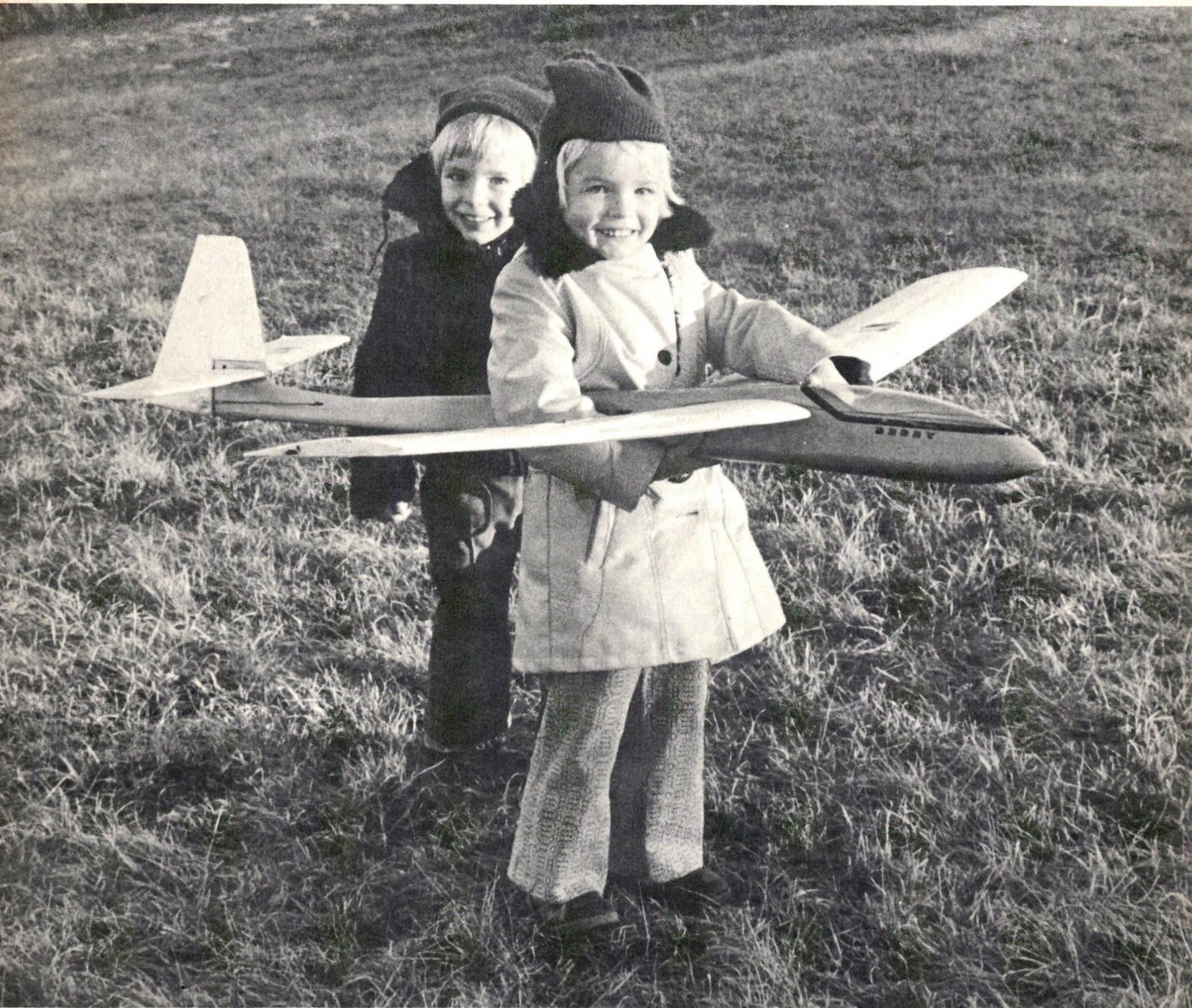
The focus is on fostering the young people’s craftsmanship and educational development. Unfortunately, it is a fact that, with inexperienced supervisors, the projects are not completed within the short timeframe (usually one week). This circumstance deprives participants of the highlight of the experience: seeing the model take flight. Understandably, interest wanes as a result of this uncoordinated construction program. The declining number of participants confirms this. Statements from former course participants provide some “amusing” examples. For instance, in one
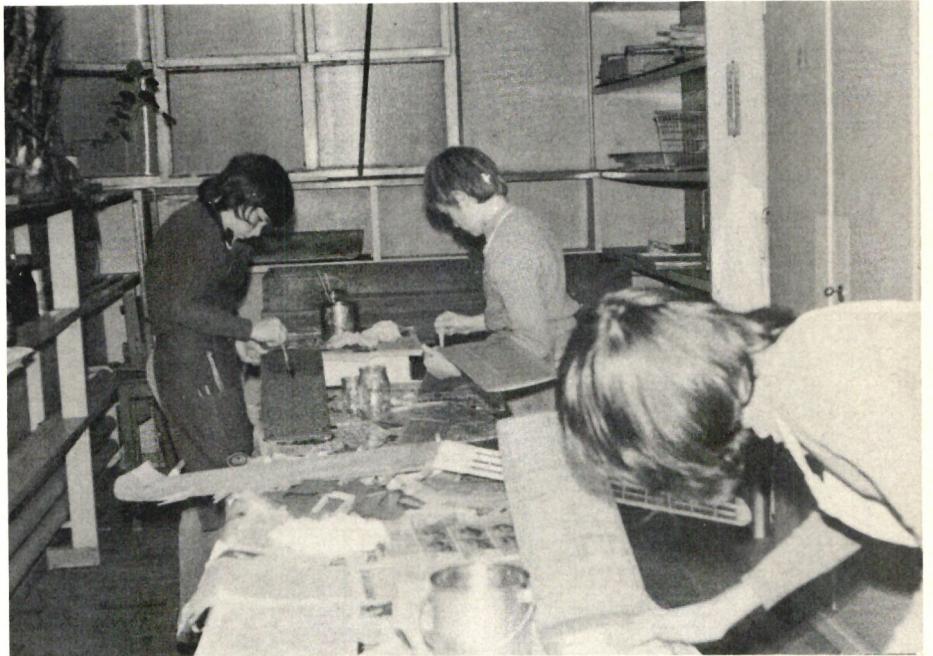
Individual guidance must also never be neglected in model-building courses.
Throughout the first day of the course, participants painted the construction plans with watercolors. The end result was half-finished models. The selection of model kits also needs to be reviewed. Every model builder knows from personal experience how quickly their models become outdated.
What about a collaboration between the AeCS and school districts? To my knowledge, an attempt was once made in this direction. It is important to identify students interested in model aviation. A survey I conducted revealed that 85% of 14-year-olds have already joined a club. The time spent on this activity is typically 2–6 hours per week. Physical activity ranks first, followed by music. Other leisure activities include swimming, skiing, hiking, stamp collecting, etc., etc. I consider riding mopeds and vandalism to be mindless but very common leisure activities.
We cannot hold young people solely responsible for this latest trend. These trends concern us because we, too, must nurture the next generation of model aviators. I see a major gap, particularly when it comes to effectively engaging young people—a gap that each of us should personally reflect on and work to close.
You know, of course, what responsibilities model flying clubs have. Are all club presidents aware of their duties? Are they looking out for the next generation? From my own experience, I know that some young members are even turned away.
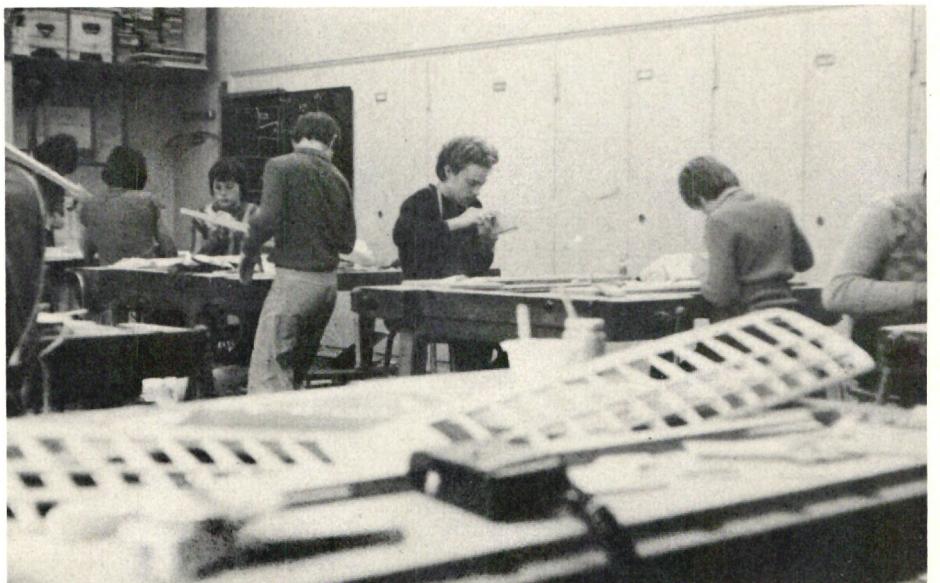
Workshops in school buildings are well-suited if the problem of securing the models can be resolved.
On the other hand, credit is due to those who view nurturing the next generation as their primary task.
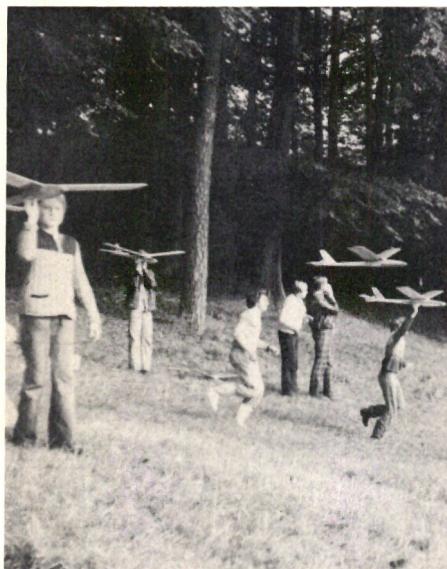
Flying in and launching the models takes practice.
I then asked the boys if they had heard or read anything about the Aero-Club and its organization. Except for one, none of them could answer the question. Only one (the same one) knew that the AeCS is responsible for training the next generation of pilots. I went into too much detail with the question: “What model categories do you know?” Still, most of them knew that remote-controlled model airplanes exist.
In the courses I led, it was a real joy to watch the boys’ enthusiasm for building. There’s no need to be overly strict about precision on the first model. The students realize on their own that the flight performance of the second model improves with careful construction.
Out in the field, everyone wants to get their model airborne first. A thorough theoretical introduction beforehand—for example, at the blackboard—is helpful here. Personal assistance during the initial test flights is also part of the process.
Almost all students would be willing to participate in a model airplane building course at a recreational facility for a fee (one weeknight).
What should follow would be a larger-scale youth competition with promotional activities for the AeCS.
City of Zurich: 1972
641 students in 46 courses at Levels I through IV.
Order of models: Cesi, Piccolo, Libelle, Möve.
Lostorf Beginners’ Competition 1972
: 89 participants, boys and girls
(following previous courses)
City of Zurich: 1974
581 students in 41 courses
(weekly courses during the fall break)
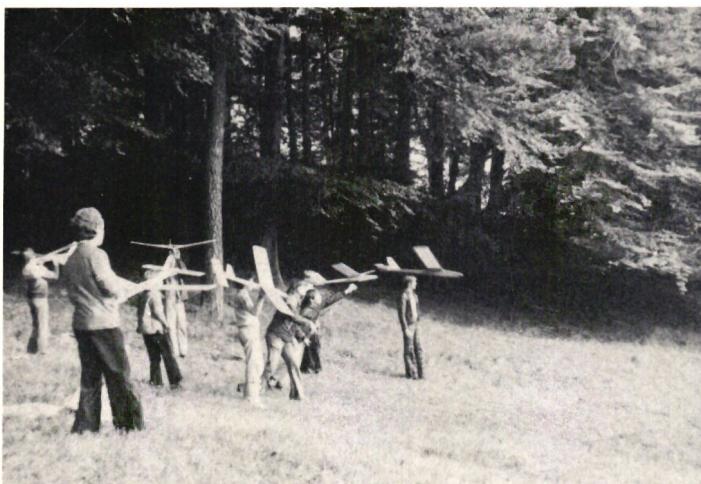
For beginners, the terrain must be chosen with particular care.
It’s always worth sticking with it.


TEAM MANAGER "THIS" BOSSHARD
 Rodito Nussbaumer

F3A EUROPEAN CHAMPIONSHIPS IN ST-MACAIRE, FRANCE
 Matthias Bosshard

News from HEBU

YOU KNOW WHAT I MEAN? 125 YEARS OF THE SWISS AERO CLUB
 Emil Giezendanner

SUMMER FUN 2026 AT MG USTER
Martin Wunderli
TRY-OUT DAY AT MFV WETTINGEN
Urs Keller
52. 2026 ALPS CUP
Emil Giezendanner
BY YOUTH, FOR YOUTH
Lorena Betschen
ATOM, THE NEW DOUBLE-DECKER FROM CPLR
Matthias Bosshard
CORSAIR F4U – A WARBIRD WITH A MEMORABLE LOOK
Jürgen Rosenberger, Jürgen Prinz
SMALL, MODEL-LIKE SAILBOATS
Res Dauwalder
What's New at Leomotion.com

TWIN TOWN PARTNERSHIP
Wolfgang Voeller
EURO CONTEST GLIDER ACRO TOUR AUSTRIA 2026

INSIGHTS INTO THE HISTORY OF SEAPLANES

34th HAHNENMOOS ALPINE MODEL AIRPLANE CAMP
Res Dauwalder
HORIZON HOBBY/LEMACO NEWS: MICRO OV-10 BRONCO 645 MM BY E-FLITE

COUPE DES ALPES – OBSERVE AND LEARN
Rodito Nussbaumer
PRIDE AND GOOD IDEAS
 Markus Nussbaumer

FREE FLIGHT IN THE MIDDLE OF SUMMER
Urs Muntwyler
THE PC-21 STORY
Emil Giezendanner
WELCOME, NEW MEMBER!
Andrea Bolliger
NEWS FROM HEBU
 Julia Bucher

FROM 0 TO 100
Markus Nussbaumer
MEMORIES
Wolfgang Völler
NOS REGION – A HUB FOR ELECTRIC AVIATION
Emil Giezendanner
Have you almost forgotten about aircraft that take off and land vertically?
Emil Giezendanner
70 YEARS OF THE NIDWALDEN MODEL AIRPLANE CLUB
Martin Barmettler