
Morphing – controlled, reversible change in the geometry of a wing
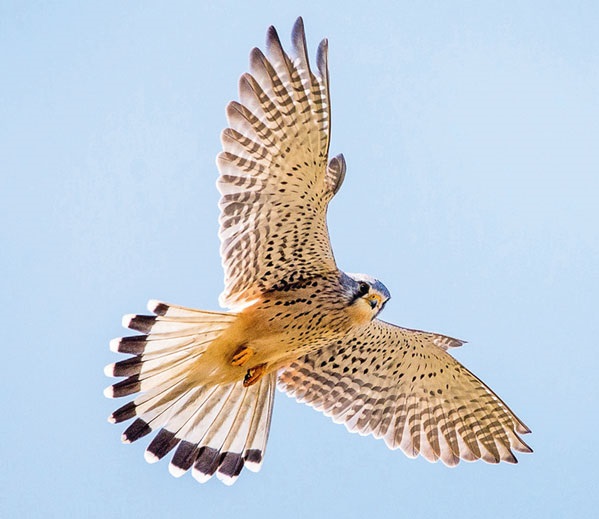
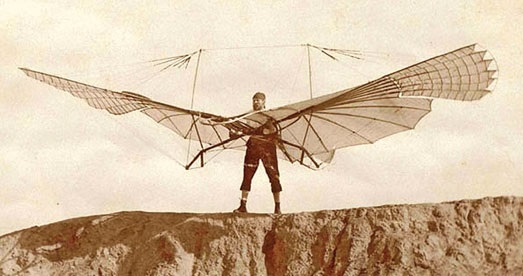
Ever since the dawn of humanity, the dream has been to rise into the air. To feel free and unbound, and to fly like a bird in the sky (photo 1).
Even Leonardo da Vinci was fascinated by the structure of a bird’s wing, its harmonious mobility, and adaptability in flight—not to mention its delicate structure (photo 2). Thus, his vision of a flying machine was based on a bird’s wing.
When Otto Lilienthal began building and flying his flying machines in the 19th century—simple wooden structures covered with fabric—and established the first theory of aerodynamics, realizing that a curved wing can bear more load than a flat wing, he achieved another milestone in aviation (photos 3 and 4).
Throughout the history of aeronautics, research began to improve wings. New shapes, profiles, and ailerons were introduced to enhance efficiency. For example, the delta-shaped wings of the Concorde were used to ensure stability at high speeds.
But they remained rigid.
It’s no wonder that people all over the world are looking for ways to redesign wings, which has led to “morphing”—the reversible, variable deformation of the wing.
Another advantage of this design is that it eliminates all mechanical components and maintains a uniform surface.
In 2021, ETH Zurich presented a model of a single wing equipped with movable wingtips, the
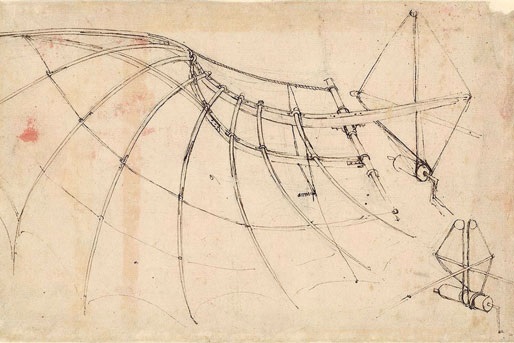
Leonardo da Vinci.
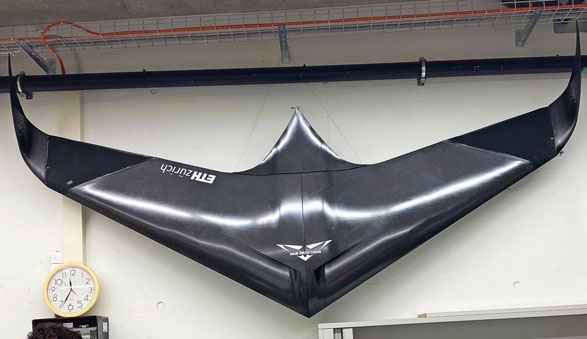
Bionic Flying Wing.
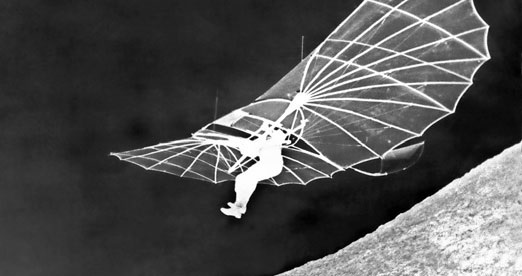
Otto Lilienthal.
Model, with a standard wing.
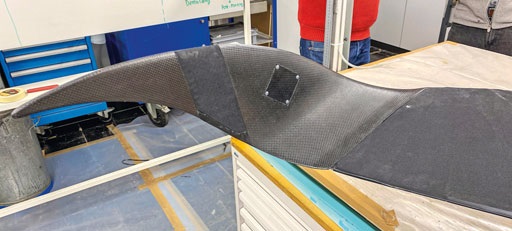
Part of the movable wing.
Wing covering.
Bionic Flying Wing (photos 5–7). Documentation available on YouTube. The carbon-fiber model with electric propulsion successfully completed its first flight.
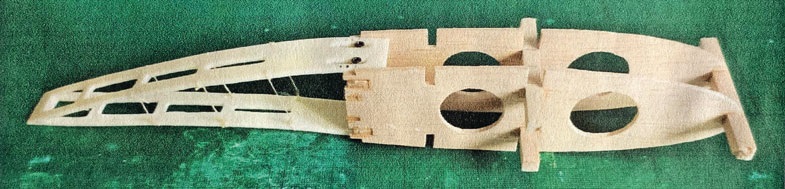
Cross-section of the movable wing, at the rear.
Back to Ticino:
The GARIV model-building group is assisting student Marco Fabio La Monica with his thesis.
This is a thesis project on a morphing wing, which is mounted on a high-wing model to compare its effectiveness with that of a traditional wing.
Here is a brief presentation of the project; the technical details will be covered in a future issue.
The model airplane: the fuselage and the standard wing are constructed in the classic manner using wood and covered with fabric. The motor is electric. The morphing wing is shown here in cross-section, and its structure is explained in more detail below.
Photos: Internet, ETHZ, Wolf Voeller, Marco Fabio La Monica
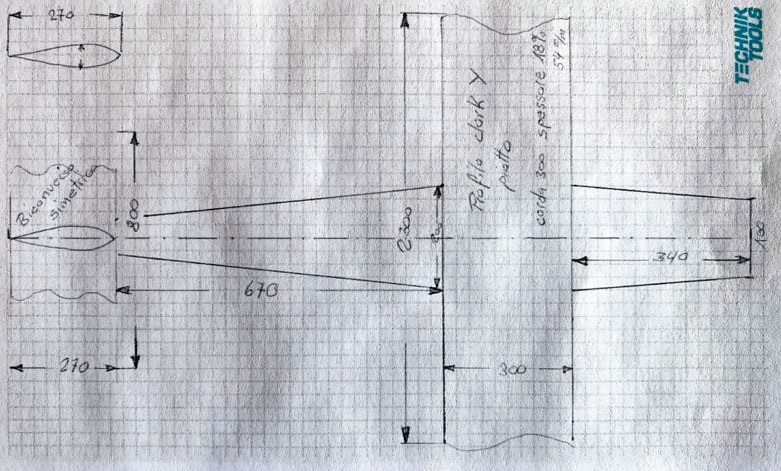
Sketch of the fuselage.


News from HEBU

PRIDE AND GOOD IDEAS
 Markus Nussbaumer

TEAM MANAGER "THIS" BOSSHARD
 Rodito Nussbaumer

YOU KNOW WHAT I MEAN? 125 YEARS OF THE SWISS AERO CLUB
 Emil Giezendanner

F3A EUROPEAN CHAMPIONSHIPS IN ST-MACAIRE, FRANCE
 Matthias Bosshard

HORIZON HOBBY/LEMACO NEWS: MICRO OV-10 BRONCO 645 MM BY E-FLITE

ATOM, THE NEW DOUBLE-DECKER FROM CPLR
Matthias Bosshard
SUMMER FUN 2026 AT MG USTER
Martin Wunderli
52. 2026 ALPS CUP
Emil Giezendanner
TWIN TOWN PARTNERSHIP
Wolfgang Voeller
CORSAIR F4U – A WARBIRD WITH A MEMORABLE LOOK
Jürgen Rosenberger, Jürgen Prinz
SMALL, MODEL-LIKE SAILBOATS
Res Dauwalder
TRY-OUT DAY AT MFV WETTINGEN
Urs Keller
WELCOME, NEW MEMBER!
Andrea Bolliger
What's New at Leomotion.com

COUPE DES ALPES – OBSERVE AND LEARN
Rodito Nussbaumer
EURO CONTEST GLIDER ACRO TOUR AUSTRIA 2026

BY YOUTH, FOR YOUTH
Lorena Betschen
INSIGHTS INTO THE HISTORY OF SEAPLANES

34th HAHNENMOOS ALPINE MODEL AIRPLANE CAMP
Res Dauwalder
FREE FLIGHT IN THE MIDDLE OF SUMMER
Urs Muntwyler
THE PC-21 STORY
Emil Giezendanner
NEWS FROM HEBU
 Julia Bucher

FROM 0 TO 100
Markus Nussbaumer
MEMORIES
Wolfgang Völler
NOS REGION – A HUB FOR ELECTRIC AVIATION
Emil Giezendanner
DO YOU KNOW WHAT I MEAN IN THE LAND OF SMILES?
Emil Giezendanner
Have you almost forgotten about aircraft that take off and land vertically?
Emil Giezendanner