
New RC Frequencies Now in Use
Finally—or already? Well, I guess it depends on your perspective
About 9 months after the technical certification requirements of December 18, 1978, went into effect—and with the associated release of 18 new frequencies between 40.715 and 40.985 MHz for model remote controls— the first remote-control systems finally passed the type tests conducted by the PTT and may now be operated on the new frequencies, provided that the owner of a system from the type-tested series holds a corresponding PTT Radio Transmission License E, issued specifically for the new frequencies.
As you may recall, in 1977, approximately 10,000 RC model aviation enthusiasts signed the petition from AeCS Model Aviation Region 5. With this petition, we demanded the allocation of additional new—but above all, safer—remote-control frequencies. Now, the FFF, the AeCS, and the PTT all fully support this demand. Users of the new 18 frequencies must therefore carefully observe the following criteria.
Model aircraft enthusiasts who own a narrowband remote control system and wish to transmit on the 18 new frequencies must check with either the seller, the general agent, or the manufacturer to confirm whether the system in question is from the series that was type-approved by the PTT in accordance with the technical certification requirements of December 18,and was assigned a new PTT number as a result of that test.
If this is the case, a new application form for a Radio License E must be completed and signed by both the applicant and the holder of the type approval and PTT number, and submitted to the relevant district telephone office. Enclose an existing license for the system in question and clearly indicate on the application form that this is not a change of equipment, but merely a license amendment to the new frequencies. In this case, the district telephone office will process the license amendment free of charge. If the installation is new or if no license has yet been issued for it—such cases do occur—you will be charged a processing fee. The signature of the holder of the type approval and the corresponding PTT number on the application form ensures that licenses are granted only to remote-control transmitters that fully comply with the technical approval requirements. The technical approval requirements specify that the holder of the type approval and the PTT number is responsible for ensuring that all systems licensed under this PTT number correspond to the type-approved systems and meet the requirements, and the PTT may conduct a re-inspection at any time. For remote control systems that did not come into your possession through the type approval holder, either the importer of the system must request an additional type approval for its systems with a corresponding PTT number of its own, or you must have the system subjected to an individual inspection by the PTT. For your information, we have reproduced below an excerpt from the license valid for the new 18 frequencies, along with the attached supplement. Only those who hold a corresponding license may transmit on the new 18 frequencies using the equipment listed in the license. In previous communications, we informed you that the 18 new frequencies would be grouped together in a new frequency group -F- in order to achieve a clear separation between the four existing frequencies 40.665–40.695 MHz and the new frequencies 40.715–40.985 MHz. Unfortunately, however, the PTT has not adhered to these firm agreements. However, as I was able to learn from the Licensing Department of the PTT’s General Directorate, the licensing process for both remote control systems and CB radio will be computerized in the spring of 1980. During this transition, every current holder of a radio transmission license will receive a new license generated by computer. This new license will then list only the frequencies authorized for the relevant RC system—not all frequencies, as is currently the case. This eliminates the need for a subdivision into different frequency groups. Well, we’ll see whether clear regulations can be established at this point. We would like to take this opportunity to remind you once again that only the frequencies from 40.815 to 40.985 MHz, inclusive, are designated for the operation of RC model aircraft, and only the frequencies from 40.715–40.785 MHz are designated. The “old 4 frequencies” 40.665 to 40.695 MHz may, of course, continue to be used both for operating all models without restrictions and for remote-control systems that have not been type-tested in accordance with the technical approval requirements of December 18, 1978. Please help us ensure that, in the future, we finally have a frequency band that is safe for RC model flying. It depends on each and every one of you.
Freedom only works as long as each individual responsibly recognizes the limits of that freedom on their own and acts accordingly. Every time we’ve informed you—whether in model flying publications or in *Aero-Revue*—about the current state of affairs, the PTT offices in Bern have been inundated with questions. Well, opinions may certainly differ regarding the success of such inquiries. If you have any questions regarding the new frequencies and Class E radio transmission licenses, please contact either the AeCS Central Secretariat, the model aviation coordinator, Mr. Marc Schnyder, or me at 01 / 865 00 93. FFF Technical Group for Radio-Controlled Frequencies
H. R. Schläpfer
| 27 MHz | |
|---|---|
| 26.995 4 | 27.045 9 |
| 27.095 14 | 27.145 19 |
| 27.195 24 |
| 40 MHz | |||||||
|---|---|---|---|---|---|---|---|
| 40.665 50 | 40.675 51 | 40.685 52 | 40.695 53 | 40.715 54 | 40.725 55 | 40.735 56 | 40.745 57 |
| 40.775 58 | 40.785 59 | 40.815 81 | 40.825 82 | 40.835 83 | 40.865 84 | 40.875 85 | 40.885 86 |
| 40.915 87 | 40.925 88 | 40.935 89 | 40.965 90 | 40.975 91 | 40.985 92 |
| 433 MHz | |||
|---|---|---|---|
| 433.250 107 | 433.300 109 | 433.350 111 | 433.600 121 |
| 433.700 125 | 433,750 127 | 434,150 146 | 434,400 153 |
| 434,450 155 | 434,500 157 |
We would like to take this opportunity to remind you once again that only the frequencies from 40.815 to 40.985 MHz, inclusive, are designated for the operation of RC model airplanes, and that only the frequencies from 40.715–40.785 MHz. The “old 4 frequencies” 40.665 to 40.695 MHz may, of course, continue to be used both for operating all models without restrictions and for remote-control systems that have not been type-tested in accordance with the technical approval requirements of December 18, 1978.
Please help us ensure that, in the future, we finally have a frequency band that is safe for RC model aviation. It depends on each and every one of you.

Swiss PTT Enterprises
Entreprise des PTT suisses
Swiss PTT Company
Radio Transmission License E Concession E for Radio Transmitting Equipment Concession E for Radio Transmitting Equipment
This radio broadcasting license is valid only in Switzerland.
Cette concession d'installation radioémettrice n'est valable qu'en Suisse.
Questa concessione per impianti radiotrasmettenti è valida solo in Svizzera.
| 40.715 MHz 40.725 MHz 40.735 MHz 40.765 MHz 40.775 MHz 40.785 MHz | Intended for models other than aircraft models. Only in exceptional cases for aircraft models, e.g., during competitions, etc. Intended for scale models other than aircraft models. Shall be used only exceptionally for model airplanes, for example during competitions, etc. Intended for scale models other than model airplanes. Only exceptionally for model airplanes, such as during competitions, etc. |
| 40.815 MHz 40.825 MHz 40.835 MHz 40.865 MHz 40.875 MHz 40.885 MHz 40.915 MHz 40.925 MHz 40.935 MHz 40.965 MHz 40.975 MHz 40.985 MHz | Intended for model airplanes. Only exceptionally for other models, e.g., in contests, etc. Intended for model airplanes. Shall be used only exceptionally for other scale models, for example during competitions, etc. Intended for scale model airplanes. Only exceptionally for other scale models, such as during competitions, etc. |
*These frequencies are authorized only for devices approved in accordance with the technical approval conditions of December 18, 1978 (PTT Official Gazette No. 66 of December 29, 1978).
The Swiss Postal, Telephone, and Telegraph Services, pursuant to Articles 1 and 3 of the Telegraph and Telephone Communications Act of October 14, 1922, hereby grant a license to construct and operate a wireless system for the remote control of models and toys to:
Pursuant to Articles 1 and 3 of the Act Regulating Telegraph and Telephone Communications of October 14, 1922, the Swiss Postal, Telephones, and Telegraphs grants the holder named below a license permitting the installation and operation of a radio system for the remote control of scale models and toys.
The Swiss Postal, Telephone, and Telegraph Company, pursuant to Articles 1 and 3 of the Law on Telegraphic and Telephone Communications of October 14, 1922, issues this license for the establishment and operation of a wireless system for the remote control of scale models and toys.
- When operating the devices, the licensee must be able to present the license at any time.
- The devices may only be operated by the licensee and close family members living in the same household.
- Only frequencies specifically designated by the corresponding letters in the license certificate may be used.
- Only control signals may be transmitted.
- Radio and television reception must not be interfered with.
- The licensee is required to report any changes affecting the terms of this license.
- The following regulations, among others, apply:
- The Telegraph and Telephone Communications Act of October 14, 1922, and its associated ordinances.
- The Federal Aviation Act of December 21, 1948, and its implementing regulations.
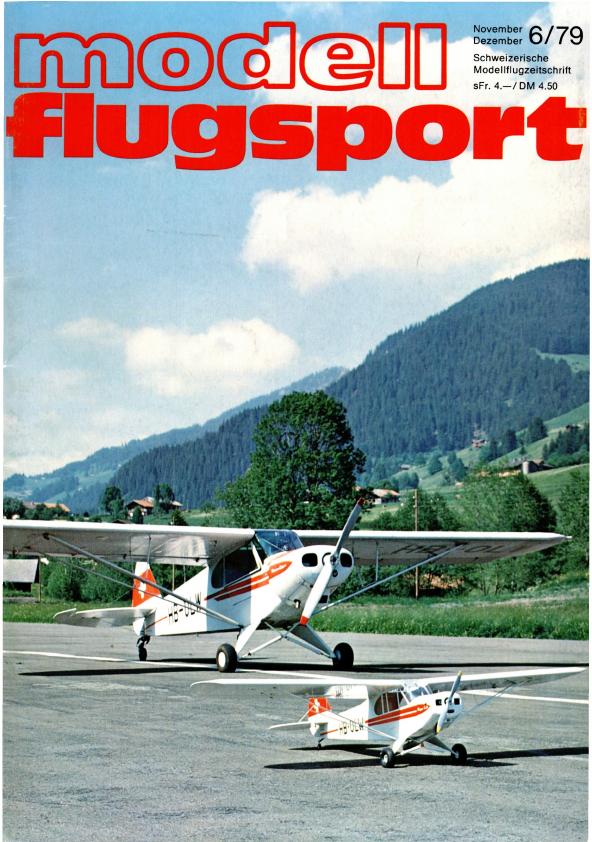

News from HEBU

TEAM MANAGER "THIS" BOSSHARD
 Rodito Nussbaumer

SUMMER FUN 2026 AT MG USTER
Martin Wunderli
BY YOUTH, FOR YOUTH
Lorena Betschen
SMALL, MODEL-LIKE SAILBOATS
Res Dauwalder
TRY-OUT DAY AT MFV WETTINGEN
Urs Keller
What's New at Leomotion.com

52. 2026 ALPS CUP
 Emil Giezendanner

ATOM, THE NEW DOUBLE-DECKER FROM CPLR
 Matthias Bosshard

INSIGHTS INTO THE HISTORY OF SEAPLANES

YOU KNOW WHAT I MEAN? 125 YEARS OF THE SWISS AERO CLUB
Emil Giezendanner
34th HAHNENMOOS ALPINE MODEL AIRPLANE CAMP
Res Dauwalder
CORSAIR F4U – A WARBIRD WITH A MEMORABLE LOOK
Jürgen Rosenberger, Jürgen Prinz
F3A EUROPEAN CHAMPIONSHIPS IN ST-MACAIRE, FRANCE
Matthias Bosshard
HORIZON HOBBY/LEMACO NEWS: MICRO OV-10 BRONCO 645 MM BY E-FLITE

PRIDE AND GOOD IDEAS
 Markus Nussbaumer

EURO CONTEST GLIDER ACRO TOUR AUSTRIA 2026

FREE FLIGHT IN THE MIDDLE OF SUMMER
Urs Muntwyler
THE PC-21 STORY
Emil Giezendanner
TWIN TOWN PARTNERSHIP
Wolfgang Voeller
WELCOME, NEW MEMBER!
Andrea Bolliger
COUPE DES ALPES – OBSERVE AND LEARN
Rodito Nussbaumer
NEWS FROM HEBU
 Julia Bucher

FROM 0 TO 100
Markus Nussbaumer
MEMORIES
Wolfgang Völler
NOS REGION – A HUB FOR ELECTRIC AVIATION
Emil Giezendanner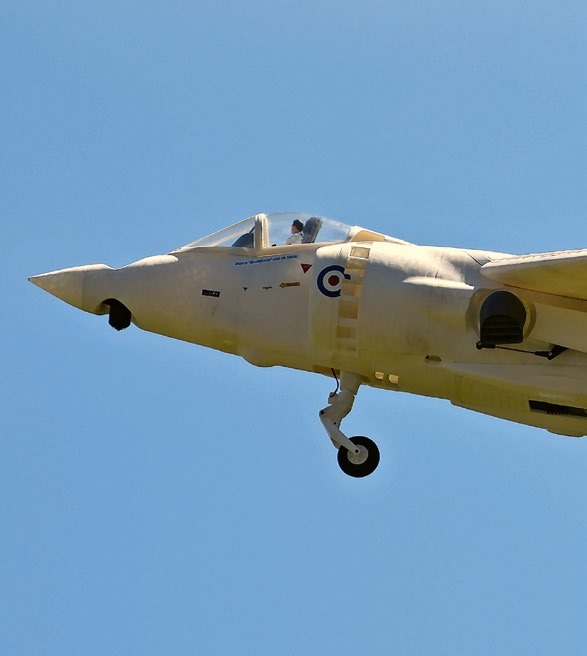
Have you almost forgotten about aircraft that take off and land vertically?
Emil Giezendanner
70 YEARS OF THE NIDWALDEN MODEL AIRPLANE CLUB
Martin Barmettler