
Noise Control for RC Aerobatics (F3A): What's Next?
RC Aerobatics (F3A)
What's next?
As expected, the new FAI aerobatics program presented some challenges from both a flying and organizational standpoint. The two compulsory programs
(A + B) are proving completely ineffective—since they fail to achieve sufficient differentiation. The final programs (freestyle) present the judges with nearly insurmountable problems, as they are unable to compare the pilots’ performances with one another.
From an international perspective, the new regulations are turning into a debacle. Has the CIAM dealt the final blow to the F3A category with this utter nonsense?
When you join a commission, you’re usually older and no longer an active athlete. The CIAM subcommittees are also grappling with this problem. The graying Chris Olsen was a good pilot in the early days of RC aerobatics—never at the very top, but certainly among the leaders. He was left behind by developments. Aerobatics programs developed “behind closed doors” rarely work in practice. While there are indeed practitioners on the aerobatics subcommittee—such as Wolfgang Matt—he hasn’t attended the crucial meetings in Paris for years, and not everything can be handled in writing. Personally, I’m rather pessimistic as I watch aerobatics run itself into the ground. And we pilots aren’t entirely blameless either. The increasingly powerful engines with RPMs of 15,000 are soon becoming indispensable, especially for top pilots. Having plenty of reserve power during vertical maneuvers makes flying much easier. And because the models have been bred into such rockets (winged bombs) that angular maneuvers have become impossible, flap systems are used to compensate. The additional weight of servos and other bells and whistles is, of course, compensated for with motor power. Wolfgang Matt’s models are so fast today that the control surfaces move on their own in flight. While I used to believe years ago that the trend toward speed was clear—completely contrary to my idea of aerobatics—it was ridiculous to even mention that in light of the speeds W. Matt’s models achieve today. Not to mention the noise—which apparently is only an issue here. Top pilots all have their imitators. I assume that once the new WEBRA engine becomes available to the general public next year, everyone—even in Switzerland—will be flying around, albeit not quite as skillfully, but almost as fast. “Speed is everything,” someone is said to have once remarked, and I believe that—I’d just like to complete the sentence and say, “…ruins everything!” I have to admit at this point that even low-powered engines can make a hell of a racket. There are plenty of examples of this. Yet it cannot be denied that higher RPMs exacerbate the noise problem, since sound dampening runs into nearly insurmountable obstacles. Exhaust sound dampening is clearly feasible—I’m thinking of the resonance pipe from P. A. Meyer in Biel (although even that still causes some trouble for a few of my dear comrades). The biggest problem lies in dampening the vibrations that affect the fuselage and wings—
transmitted to a surface and propagate from there into the air. Vibrations could be dampened using mass (e.g., a cast-iron engine block, heavy engine mounts, etc.); however, for obvious reasons, mass cannot be used in model aircraft. Surely, even better solutions will be found in the future to keep these vibrations as low as possible.
That leaves us with the hope of Las Vegas: large semi-scale models that can be equipped with larger engines. Even now, I fear this might be a mirage over the hot salt desert that will vanish into thin air as we get closer. Years ago, the German Aero Club also believed that the noise problem could be better solved with larger engines. – Perhaps with four-stroke engines, though I lack experience in that area. A WEBRA-91 with its original muffler and the required propeller is quite loud—we’ll report on that later. Larger engines would only be quieter if you could reduce the RPM and fly with larger propellers. I see a bright future for the four-stroke engine here. In aerobatics, however, a large propeller isn’t practical, since the high torque would require constant corrections while performing maneuvers in an aerobatic model. That leaves one solution: A slow-spinning (approx. 8,000 rpm), powerful engine driving a high-speed propeller via a transmission (toothed belt). The propeller noise can, in fact, be disregarded in our models. I’ve learned this from my electric aerobatic models. Even with F. Geist’s electric models, where the motors spin at 13,000 rpm, practically no propeller noise can be heard. Propeller noise is, after all, nothing more than a loss, and in electric flight, we’re much more particular about that.
All is not yet lost in RC aerobatics. However, I appeal to pilots, club presidents, committees, and competition organizers: Ensure quieter model aircraft, conduct stricter measurements, and send home pilots who don’t comply with the regulations—there’s no more time for tinkering at competitions. The Swiss Aero Club should ensure that these regulations are strictly enforced and implemented internationally as well. Otherwise, we in Switzerland will once again be the ones left looking foolish.
Giezendanner
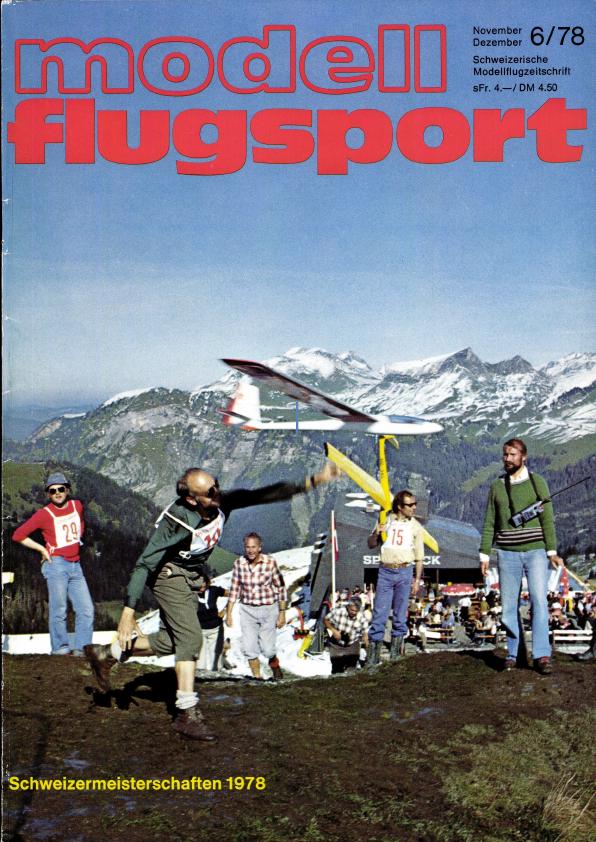

TEAM MANAGER "THIS" BOSSHARD
 Rodito Nussbaumer

YOU KNOW WHAT I MEAN? 125 YEARS OF THE SWISS AERO CLUB
 Emil Giezendanner

F3A EUROPEAN CHAMPIONSHIPS IN ST-MACAIRE, FRANCE
 Matthias Bosshard

News from HEBU

SUMMER FUN 2026 AT MG USTER
Martin Wunderli
TRY-OUT DAY AT MFV WETTINGEN
Urs Keller
52. 2026 ALPS CUP
Emil Giezendanner
BY YOUTH, FOR YOUTH
Lorena Betschen
ATOM, THE NEW DOUBLE-DECKER FROM CPLR
Matthias Bosshard
CORSAIR F4U – A WARBIRD WITH A MEMORABLE LOOK
Jürgen Rosenberger, Jürgen Prinz
SMALL, MODEL-LIKE SAILBOATS
Res Dauwalder
What's New at Leomotion.com

TWIN TOWN PARTNERSHIP
Wolfgang Voeller
EURO CONTEST GLIDER ACRO TOUR AUSTRIA 2026

INSIGHTS INTO THE HISTORY OF SEAPLANES

34th HAHNENMOOS ALPINE MODEL AIRPLANE CAMP
Res Dauwalder
HORIZON HOBBY/LEMACO NEWS: MICRO OV-10 BRONCO 645 MM BY E-FLITE

COUPE DES ALPES – OBSERVE AND LEARN
Rodito Nussbaumer
PRIDE AND GOOD IDEAS
 Markus Nussbaumer

FREE FLIGHT IN THE MIDDLE OF SUMMER
Urs Muntwyler
THE PC-21 STORY
Emil Giezendanner
WELCOME, NEW MEMBER!
Andrea Bolliger
NEWS FROM HEBU
 Julia Bucher

FROM 0 TO 100
Markus Nussbaumer
MEMORIES
Wolfgang Völler
NOS REGION – A HUB FOR ELECTRIC AVIATION
Emil Giezendanner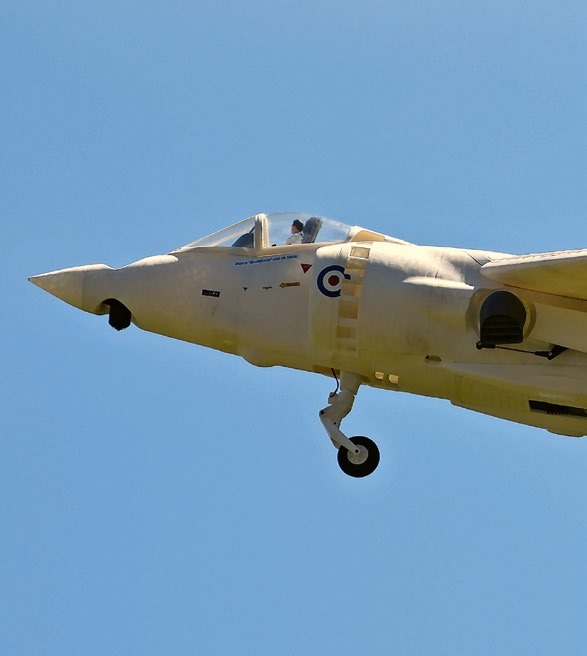
Have you almost forgotten about aircraft that take off and land vertically?
Emil Giezendanner
70 YEARS OF THE NIDWALDEN MODEL AIRPLANE CLUB
Martin Barmettler