
Supporters of Model Aviation
On December 17, 2009, our Willi Streil, an honorary member of the Zurich Model Flying Club, passed away at the age of 86 as a result of a serious fall. With Willi Streil’s passing, the Zurich Model Flying Club has lost an outstanding individual.
Who didn’t know Willi’s model-making shops, the firm C. Streil & Co. at Rötelstrasse 24 in Zurich? His influence, however, extended far beyond the
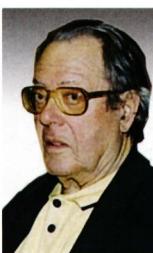
Beyond being a successful model-making retailer, he had a significant influence on the sport of model aviation for many years.
At the age of 25, Willi Streil founded the company Streil & Furler on July 6, 1948, together with his friend Theo. They sold various products such as gas grills, brush sets, etc., and, in their youthful enthusiasm, they thought the sky was the limit. His business partner at the time, who had spent some time in England, discovered that there was potential in selling model-making supplies.
They bought their first balsa wood kits, “Mills” diesel engines, and some balsa wood strips in England and took them to the workshop of the Zurich Model Aircraft Club, where members were still working exclusively with plywood and pine strips. They were laughed at. “What are you thinking?” was the response. “We build with plywood and pine strips.” Although the majority of Zurich’s model builders found the idea of using this new and unfamiliar material absurd, there were a few
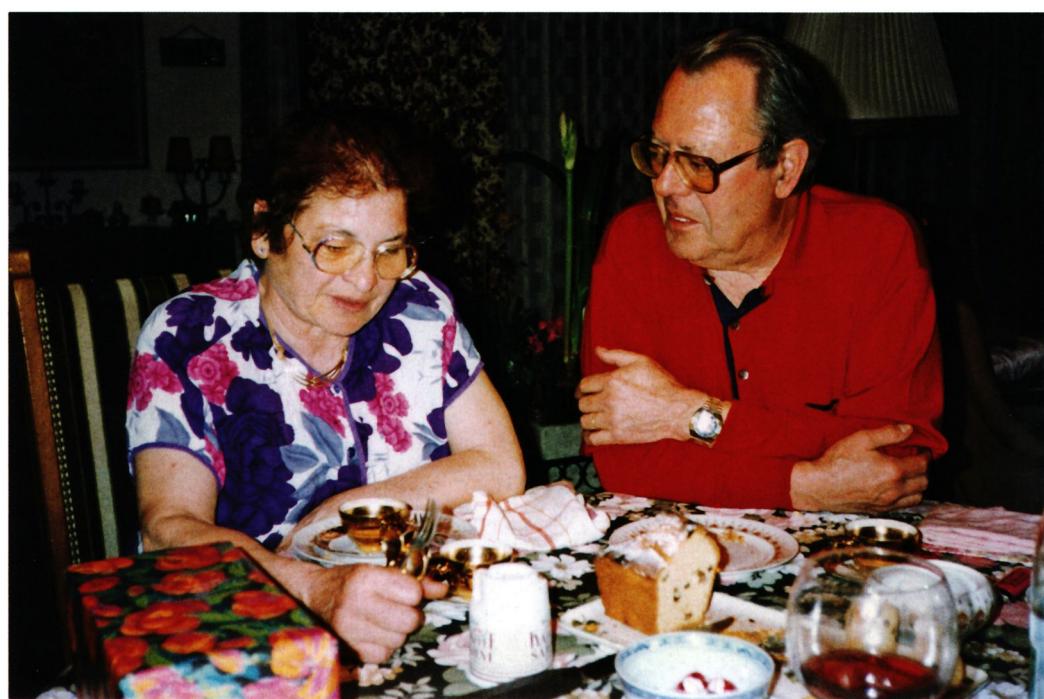
who became curious and wanted to see the balsa wood stash on Willi Streil’s balcony at Bachmattstrasse 52. They bought and worked with the unfamiliar material, which, while very light, was brittle. This required the development of new working and construction methods. Willi Streil, a model builder himself, became a member of the Zurich Model Flying Club and built English kit model airplanes out of balsa wood. He soon proved that balsa was ideally suited for model aircraft construction. At the “Langer Zingen,” he flew and demonstrated his lightweight models, where he also met Christl, whom he married on June 3, 1950.
Unfortunately, however, the business didn’t really take off. Willi parted ways with his business partner and took a job with the city administration. From then on, he continued to run the model-building business primarily as a mail-order operation, working on it together with Christl in the evenings, at lunchtime, and on weekends. More and more members
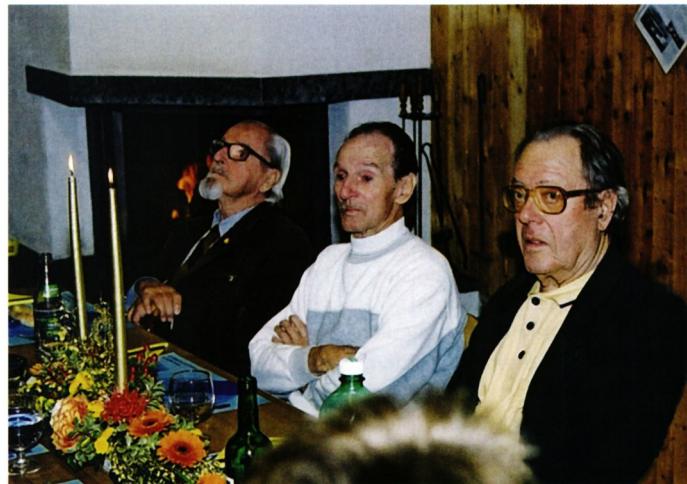
The MG Zurich supported him and valued his advisory work. Thanks to his outstanding expertise, his connections, and his command of various languages, his circle of clients and friends continued to grow. He introduced model-building products that were completely new to Switzerland. Thanks to his contacts with Zurich teachers, model-building courses were organized at his initiative. Willi Streil then, together with a few friends, built model airplanes such as the Ce-
si, Piccolo, Bye-Bye, etc., of which approximately 150,000 kits were sold to schools throughout Switzerland over the years. In addition, he imported SOLARBO balsa wood from England by the train carload, which soon made larger premises necessary. He first found such space on Nordstrasse and later on Rötelstrasse. More and more model-making items from England, the U.S., and Germany could be admired in his new store. It sometimes happened that customers would come in in stages—
had to shop in shifts because there were too many model-building enthusiasts in the store at once. People then had to wait outside the store for their turn to be let in.
In 1957, the first “CES-Kurier” newsletter was published; it appeared four to six times a year. It featured the latest model-building innovations and tools, along with instructions and tips, short reports, and information on AeCS model aircraft competitions, results, club announcements, etc. In the “CES-Kurier” No. 2 from March 1958, Willi already offered a
and he was actively involved in the model aviation movement. As a board member of the Zurich Model Aviation Group, he was deeply committed to the group’s competitive flying activities, and his efforts led to an unprecedented upswing for the Zurich Model Aviation Group, which achieved top results in many competitions and thereby influenced the entire model aviation movement. Willi also donated the Streil Challenge Trophy for multi-channel radio-controlled motor models (RCMM—now F3A) for national AeCS competitions. He was the initiator and sponsor of the paved runway for the “Chilmis” group model airfield shared by the Zurich and Bülach Model Flying Groups in Oberhasli (ZÜ-BÜ) and, later, for the model airfield in Eglisau. A major highlight for Willi was his CES anniversary flying event (celebrating 20 years of Streil model building) at the ZÜ-BÜ model airfield in Oberhasli in 1968. For the event, Willi invited all his suppliers, whose test pilots demonstrated their latest model aircraft, engines, and radio controls. Of course, the occasion wouldn’t have been complete without a CES competition featuring RC-powered models and a children’s balloon flying contest. Willi also maintained active contact with other model flying clubs.
After 40 successful years in business, the time came when Willi began thinking about retirement. In the spring of 1989, he sold his specialty store for model aircraft and boat supplies to Markus Wieser, now located at Wieslergasse 10 in Zurich Höngg.
Willi Streil will always remain in our memories—that is, those of MG Zurich—and we thank him for the time he shared with us and that we were able to spend with him.
Text: René A. Schnorf
Photos: Oskar Ledergerber,
Werner Koelliker
Werner Koelliker on Willi Streil
On December 30, relatives and friends gathered at the Steinmaur Church to say goodbye to Willibald Streil. It was a farewell to a man who had held a firm place in Swiss model-making history for decades. He founded the first specialty store for model-making in our country that truly deserved that name.
Willi and Christl were very hardworking people who, on the side, nurtured the idea of “building a business in model making,” which they sought to bring to fruition—and they succeeded! In 1955, Willi quit his job and devoted himself fully to the new store that had just opened on Nordstrasse in Zurich. Business boomed, and soon they moved both the store and their apartment to 24 Rötelstrasse—an address that countless model builders still recognize today. The “model building” business was continuously expanded with strict professional expertise. They were able to hire employees. In addition to ship and airplane models, they added car and other models, internal combustion engines, fuels, hardwood and balsa wood, pine strips, varnish, hobbyist tools, magazines, reference books, accessories of all kinds, and later the much-coveted remote controls. The Streils developed a product range comprising thousands of items, which garnered significant attention even abroad. The company earned great acclaim as a sponsor of challenge cups and prizes in kind to support model aircraft competitions. But the production of its own model aircraft kits for handicraft classes in schools also became a major success. The publication of its own newsletter, the “CES-Kurier,” which reported on the activities of the model aviators of the Aero-Club of Switzerland and announced the latest developments in model building, enjoyed great popularity. In addition to Willi’s business acumen—he was actually a “humanities major”—he also possessed great linguistic fluency: he spoke English, French, and Italian. This allowed him to converse effortlessly with customers, suppliers from all over the world, and countless friends, which is why he was always on top of things.
Even during their retirement, after nearly 60 years of marriage, their lives were fully occupied. Both had their own pursuits. She knitted for the women’s association’s bazaar and tended the vast garden on the Steinmaur hillside near the Schützenhaus. He kept their beautiful home in order, enjoyed walking in the nearby forest, and had a flair for music—he especially loved Richard Wagner’s rich, resonant operas. Together, they continued to nurture their many friendships, which endured for many years. Their home was always open to everyone. The Streils have much to be proud of for what they achieved, and the older model airplane enthusiasts who were privileged to witness this magnificent development have every reason to be grateful. The Streils were an institution and a thriving source of inspiration for the future of model building.



TEAM MANAGER "THIS" BOSSHARD
 Rodito Nussbaumer

YOU KNOW WHAT I MEAN? 125 YEARS OF THE SWISS AERO CLUB
 Emil Giezendanner

F3A EUROPEAN CHAMPIONSHIPS IN ST-MACAIRE, FRANCE
 Matthias Bosshard

News from HEBU

SUMMER FUN 2026 AT MG USTER
Martin Wunderli
TRY-OUT DAY AT MFV WETTINGEN
Urs Keller
52. 2026 ALPS CUP
Emil Giezendanner
BY YOUTH, FOR YOUTH
Lorena Betschen
ATOM, THE NEW DOUBLE-DECKER FROM CPLR
Matthias Bosshard
CORSAIR F4U – A WARBIRD WITH A MEMORABLE LOOK
Jürgen Rosenberger, Jürgen Prinz
SMALL, MODEL-LIKE SAILBOATS
Res Dauwalder
What's New at Leomotion.com

TWIN TOWN PARTNERSHIP
Wolfgang Voeller
EURO CONTEST GLIDER ACRO TOUR AUSTRIA 2026

INSIGHTS INTO THE HISTORY OF SEAPLANES

34th HAHNENMOOS ALPINE MODEL AIRPLANE CAMP
Res Dauwalder
HORIZON HOBBY/LEMACO NEWS: MICRO OV-10 BRONCO 645 MM BY E-FLITE

COUPE DES ALPES – OBSERVE AND LEARN
Rodito Nussbaumer
PRIDE AND GOOD IDEAS
 Markus Nussbaumer

FREE FLIGHT IN THE MIDDLE OF SUMMER
Urs Muntwyler
THE PC-21 STORY
Emil Giezendanner
WELCOME, NEW MEMBER!
Andrea Bolliger
NEWS FROM HEBU
 Julia Bucher

FROM 0 TO 100
Markus Nussbaumer
MEMORIES
Wolfgang Völler
NOS REGION – A HUB FOR ELECTRIC AVIATION
Emil Giezendanner
Have you almost forgotten about aircraft that take off and land vertically?
Emil Giezendanner
70 YEARS OF THE NIDWALDEN MODEL AIRPLANE CLUB
Martin Barmettler