
Retroplane 2007
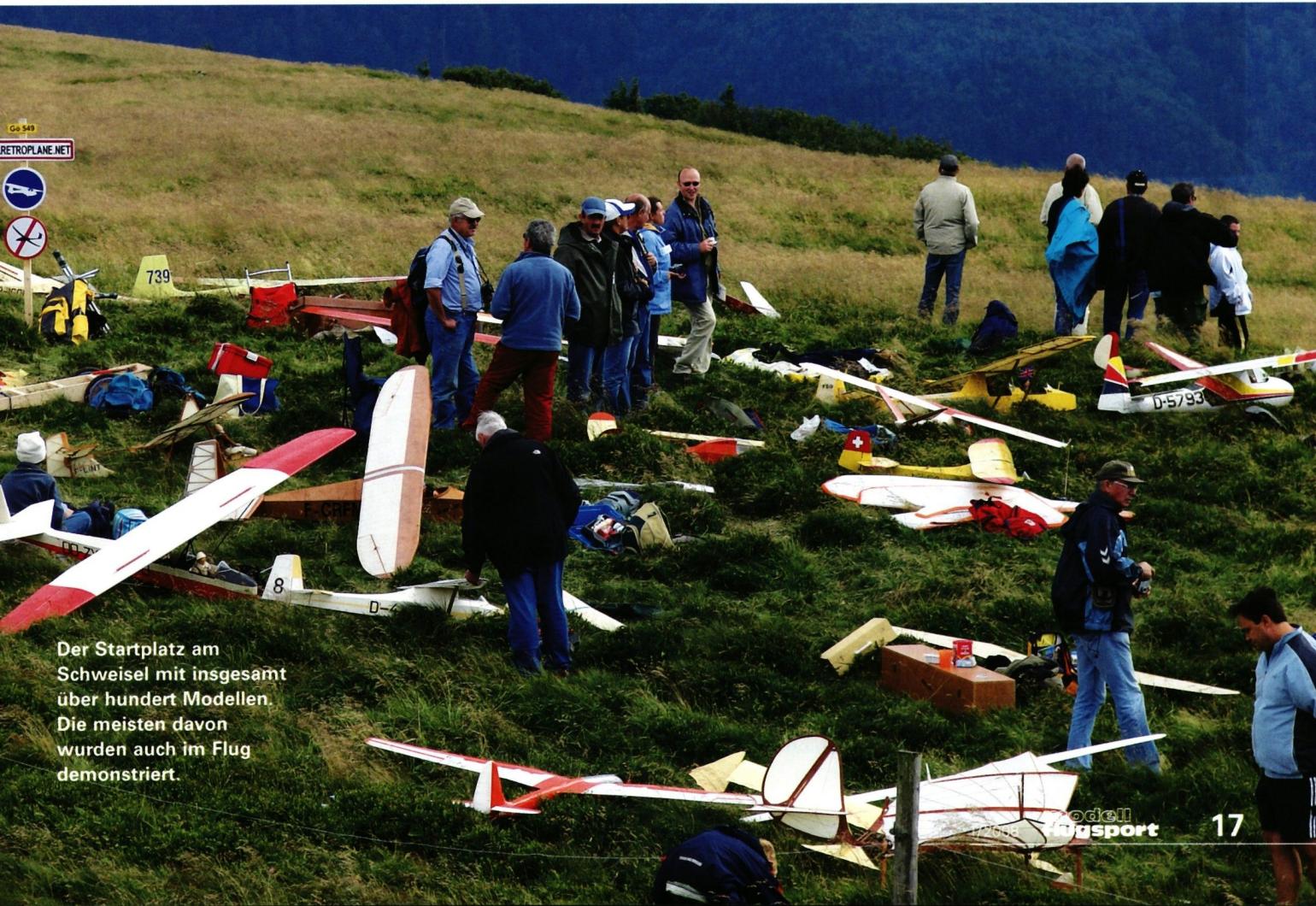
Rétroplane is a slope-soaring event for vintage glider models in France. In the summer of 2007, it took place in the Vosges Mountains. Jack Kägi, a die-hard vintage glider fan, attended the event and was absolutely thrilled. Here is his report:
What or who is Rétroplane? The answer can be found online at www.retroplane.net. It is a group of model airplane pilots who love old gliders. Its organizational structure is similar to that of the Swiss IGG. Rétroplane is about four years old, self-supporting, sponsored primarily by model shops, and operates with a minimum of effort. There is only one type of committee, consisting of three people, but without an actual president or treasurer. The website, which includes a forum, is well-designed and features many useful links.
The main difference between Rétroplane and typical glider gatherings is that participants do not fly expensive large gliders purchased as ARF or ready-to-fly models, but rather hand-built replicas of gliders of all sizes from the pre-fiberglass era. These original models were mostly made of wood, steel tubing, and fabric. This approach allows even model builders on a tighter budget to actively and successfully participate with a relatively inexpensive, wood-built scale model (maquette). The Rétroplane gathering takes place every year over a weekend at a different location in France. This year, it was held in Schweisel, Alsace. The gathering was international and attended by seventy pilots from eight countries. It provided a great opportunity to brush up on English and French language skills. Participants came from France, Ireland, England, Belgium, the Netherlands, Germany, Austria, and Switzerland (four participants), bringing over a hundred models.
At this very professionally organized event, I encountered a variety of model aircraft I had never seen before. Everything was there, from a Lilienthal glider to an American troop transport, “homebuilt” models, high-performance gliders from the 1930s and 1940s, all the way to better-known types like the K8 and ASK 13. The incredible variety of colors and shapes made today’s prevailing monotony of white fiberglass models seem boring. Wingspans ranging from one to six meters took to the air. The main thing was that it was a homemade “maquette.” Models from kit sets such as the Krick Grunau Baby, Minimoa, etc., were approved without issue, but vintage models with fiberglass fuselages and foam wings were not. The slope and the weather made it possible to admire the models—some of which were built to museum-quality standards—in their element under ideal conditions. It was also a treat for all the photographers. Despite the high turnout and the many models flying simultaneously, there were no accidents or disruptions. There was certainly no reason for disputes over landing spots or rule violations. The event, which was a success in every respect, was marred only by the rain on Sunday—though that by no means led to any boredom. We used the day to claim the sponsored prizes, take another look at the models, chat, exchange contact information, and make new plans. One thing is certain: I’ll be back again next year for this festival of vintage gliders.
Text and photo by Jack Kägi


TEAM MANAGER "THIS" BOSSHARD
 Rodito Nussbaumer

YOU KNOW WHAT I MEAN? 125 YEARS OF THE SWISS AERO CLUB
 Emil Giezendanner

F3A EUROPEAN CHAMPIONSHIPS IN ST-MACAIRE, FRANCE
 Matthias Bosshard

News from HEBU

SUMMER FUN 2026 AT MG USTER
Martin Wunderli
TRY-OUT DAY AT MFV WETTINGEN
Urs Keller
52. 2026 ALPS CUP
Emil Giezendanner
BY YOUTH, FOR YOUTH
Lorena Betschen
ATOM, THE NEW DOUBLE-DECKER FROM CPLR
Matthias Bosshard
CORSAIR F4U – A WARBIRD WITH A MEMORABLE LOOK
Jürgen Rosenberger, Jürgen Prinz
SMALL, MODEL-LIKE SAILBOATS
Res Dauwalder
What's New at Leomotion.com

TWIN TOWN PARTNERSHIP
Wolfgang Voeller
EURO CONTEST GLIDER ACRO TOUR AUSTRIA 2026

INSIGHTS INTO THE HISTORY OF SEAPLANES

34th HAHNENMOOS ALPINE MODEL AIRPLANE CAMP
Res Dauwalder
HORIZON HOBBY/LEMACO NEWS: MICRO OV-10 BRONCO 645 MM BY E-FLITE

COUPE DES ALPES – OBSERVE AND LEARN
Rodito Nussbaumer
PRIDE AND GOOD IDEAS
 Markus Nussbaumer

FREE FLIGHT IN THE MIDDLE OF SUMMER
Urs Muntwyler
THE PC-21 STORY
Emil Giezendanner
WELCOME, NEW MEMBER!
Andrea Bolliger
NEWS FROM HEBU
 Julia Bucher

FROM 0 TO 100
Markus Nussbaumer
MEMORIES
Wolfgang Völler
NOS REGION – A HUB FOR ELECTRIC AVIATION
Emil Giezendanner
Have you almost forgotten about aircraft that take off and land vertically?
Emil Giezendanner
70 YEARS OF THE NIDWALDEN MODEL AIRPLANE CLUB
Martin Barmettler