
Technology in Harmony with Nature
Every form of gliding involves a certain degree of connection with nature. This is especially true of slope soaring. When the aircraft is controlled solely by the Earth’s magnetic field, the relationship between nature and technology becomes almost holistic.
Who hasn’t stood at the edge of a gently sloping hillside after a strenuous mountain hike, gazing down into the depths of the valley and out toward the vastness of the horizon? How wonderful it would be if I could launch a gently gliding glider from here, without steering it, leaving it entirely to the interplay of thermals and wind, just to watch where it finally touches down after a long flight? In slope flying with magnetic or compass controls, the pilot determines the (general) direction and flight time, but the path the model ultimately takes and where it will land in the end can never be precisely “programmed.” The whims of nature play a major role in this competition class. Topography, sunlight, and the direction and speed of the winds are particularly unpredictable just a few meters above the ground. And yet, successful flights aren’t simply a matter of luck, but the result of expertise, smart flying tactics, and careful preparation. Once launched, there’s no turning back—all that’s left to do is wait, track the model with binoculars, and keep checking the clock. It’s incredibly exciting right up until the moment it finally touches down.
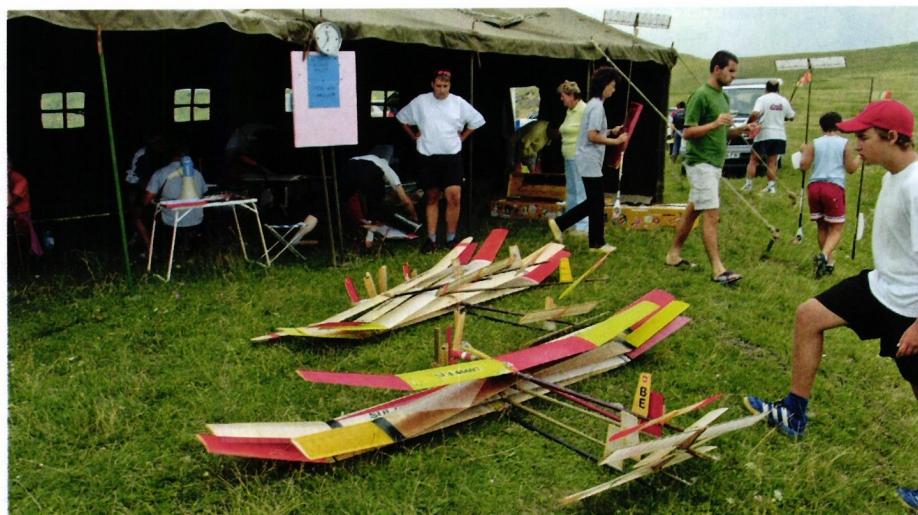
Well-protected models for any weather and any wind conditions.
F1E models from the Swiss team before the model inspection.
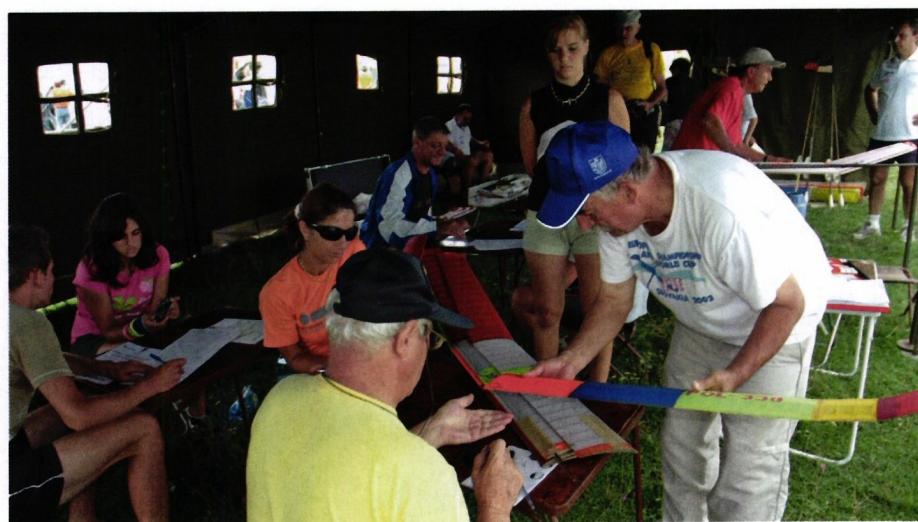
Each model is measured precisely.
The principle behind the compass has been known since ancient times. Unfortunately, I was unable to determine who invented compass navigation or when. The oldest sources suggest that at least the principle must have been known as early as between 1925 and 1930. As a student in the 1950s, I built the Cobra glider model designed by Fred Militky. Graupner published a construction plan for it; the control system—consisting of a bar magnet with an axle and bearings—was also available. During that time, I learned how this control system worked through my own experience.
Flying my Cobra on our “home slope” was also a very educational and exciting experience for me. Later, I had the honor of meeting numerous highly successful slope-flying specialists and designers: Max Moor, Werner Baumann, Maurice Bodmer, Heinz Weiss, Werner Hauenstein, Robert Haller, Fredy Bickel, Werner Heise, Francois Tapernoux, and many others. That period—it must have been the mid-1960s—could be described as the heyday of magnetic flight.
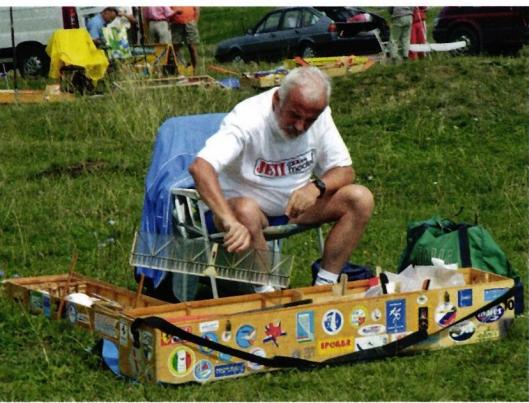
Careful selection of flight equipment is important.
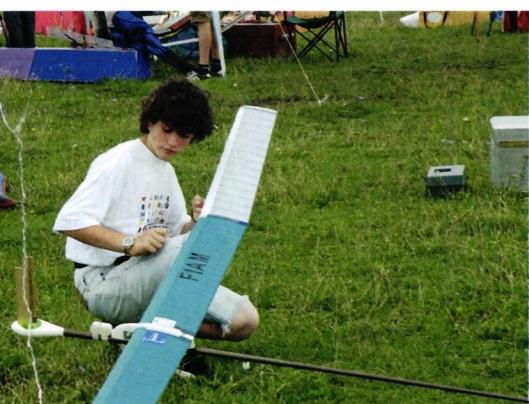
Editing.
Final adjustments before launch.
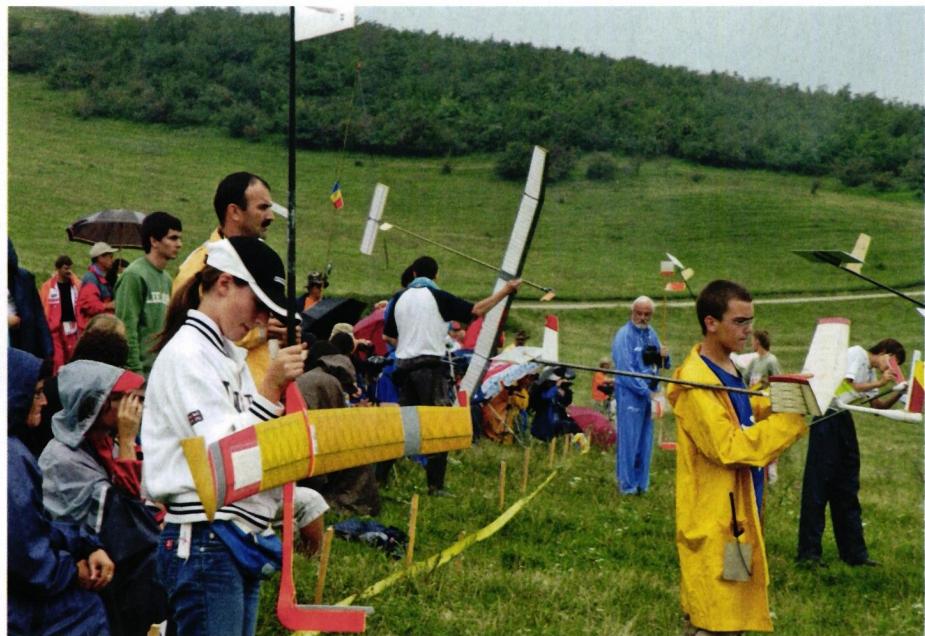
Waiting at the launch site for good conditions.
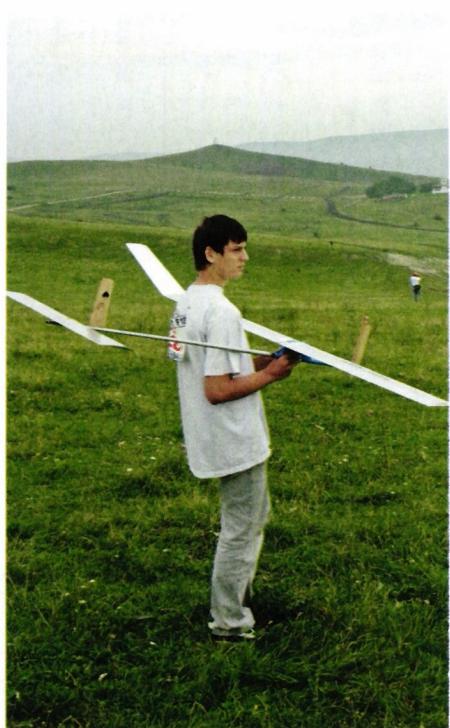
Patient observation.
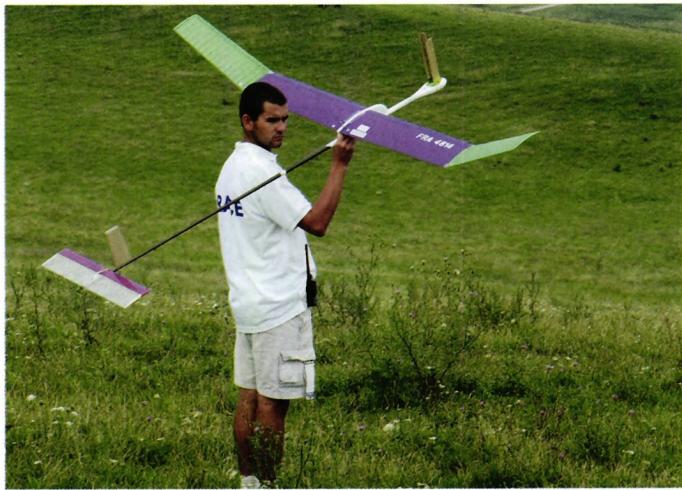
Focus is everything.
Modeling takes practice.
1. Magnetflieger are competitive pilots
Magnetflieger are typical competition pilots. They meet to train, share experiences, and gain flying experience at national and international competitions, World Cups, European and World Championships—on suitable slopes or in high mountains. A total of 5 runs are flown during a competition. The maximum flight time required in competitions—120 to 300 seconds—is set by the competition organizers depending on the terrain, weather conditions, and wind speed. If the model does not land before the required maximum flight time, a timer triggers the thermal brake. The horizontal stabilizer is raised, and the model is “braked down.”
2. Competition Success
The following factors lead to competition success:
- Absolute mastery of the model’s controls
- Selection of the right model
- Proper trim to adjust the model’s speed to the wind speed
- Assessment of wind speed
- Correct adjustment of the flight direction
- Tactics and coordination Straight-line flight time and turn time
- Assessing the terrain
- Observation of other competitors and weather conditions (meteorology)
- Model without sources of uncertainty
- Mastery of takeoff technique
- Extensive competition experience.
3. Designing and building your own models
Most F1E pilots build their own models. In many cases, they even design them themselves. Successful pilots build a light-wind model, a strong-wind model, and—for the “fly-off”—a model with extremely high performance.
4. Warp-Free Models
While thermal models in other free-flight classes are deliberately built with wing warping, the precise and warp-free construction of the magnet model is extremely important. Only then will the model fly in the set direction without significant course deviations.
5. Strong competitive element
The competitive aspect during the competition phase involves complex tactics and a wide range of skills, such as knowledge of micro-meteorology, locating thermals to determine the optimal launch time, and, last but not least, a fair competitive spirit and excellent physical conditioning.
6. An Amazing Feeling
Every pilot experiences an incredible feeling when, after launch, their model rises slowly and gracefully into the air from their hand, flies at full speed, and then descends using the thermal brake. Pure model flying!
Rainer Sperisen
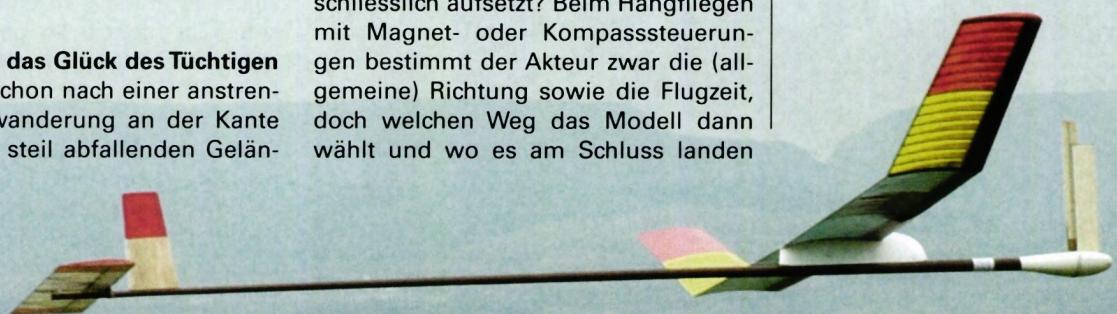
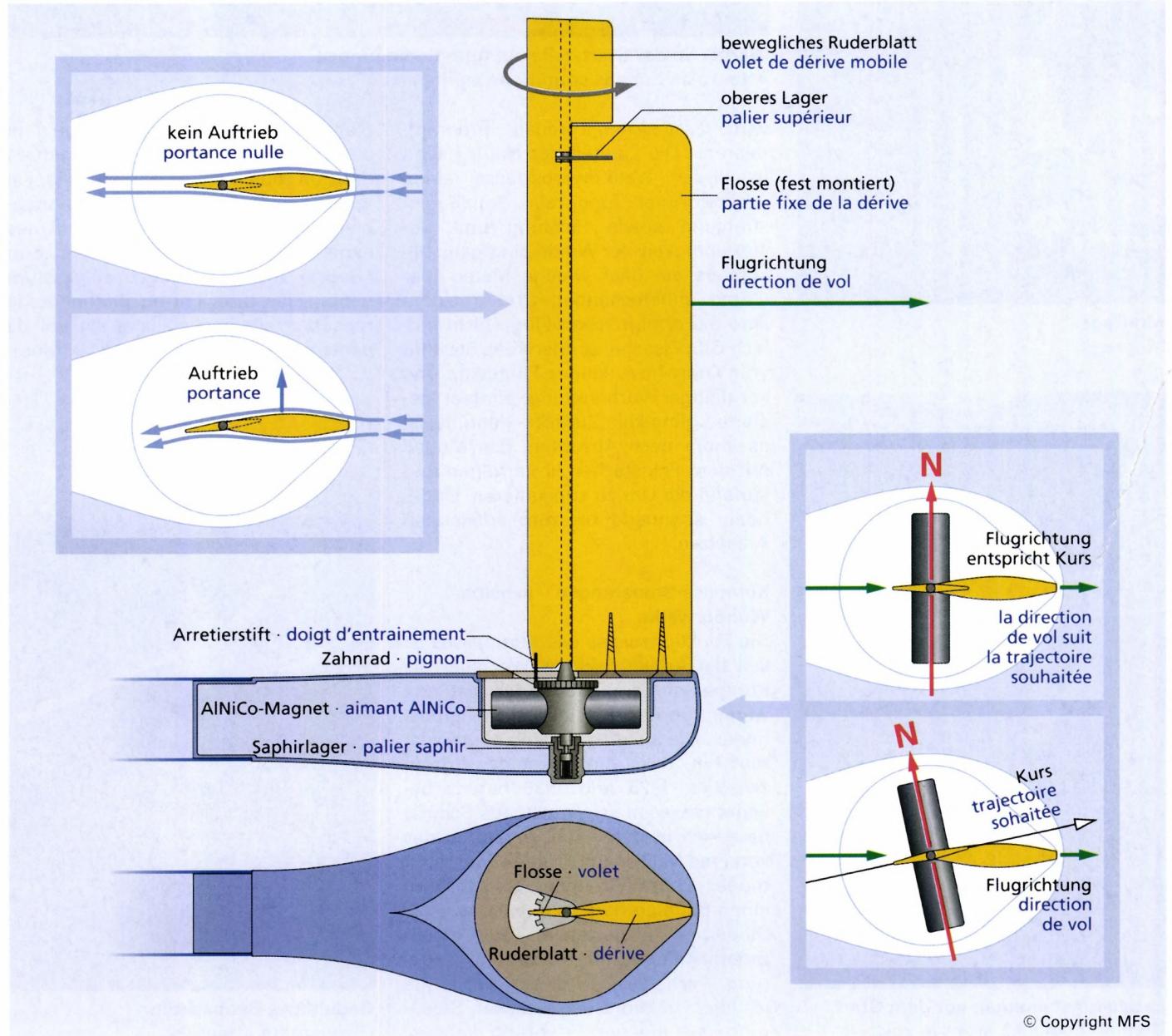
If, during flight, the model turns away from the desired direction (since the magnet—and thus the rudder—logically wants to maintain its north-south orientation), this results in a rudder deflection relative to the model. That is why most models are equipped with a nose-mounted control system, which, as is well known, operates in the opposite manner to a tail-mounted control system. Long fuselages and swept wings provide the model with the desired stability, while at the same time the long nose of the fuselage—which previously served as the seated control—generates the necessary leverage for a change in direction around the vertical axis. To match the airspeed to the wind speed, ballast is added or larger or smaller models are flown.
As in all areas of model aviation, technology is one aspect; the other is the pilot himself. Slope-flying pilots must be physically fit. While high-launch competitors run across the flat airfield before releasing their models and search for thermals, slope flyers must descend into the valley several times a day to retrieve their models with the help of colleagues who have remained above, equipped with binoculars and radios. These operations must not take too long, as the athletes must be ready for the next launch shortly thereafter. Since adjustments to the model or minor repairs—often accompanied by test launches—are frequently necessary between flights, this means the athletes must return to the launch site as quickly as possible. These athletic feats often push participants to the limits of their physical endurance. That’s model aviation for you!
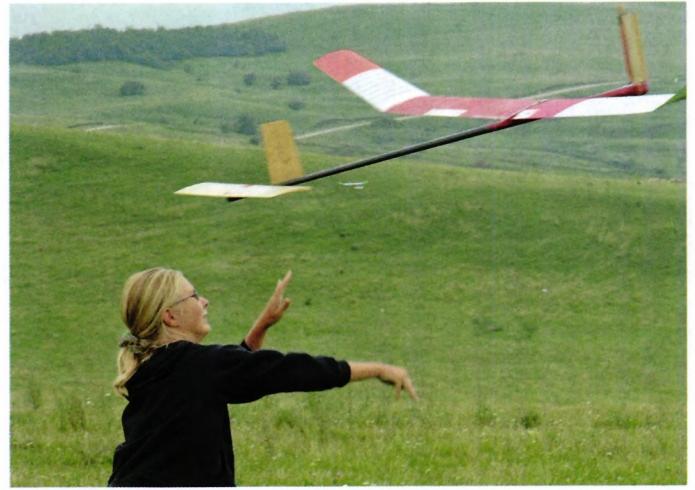
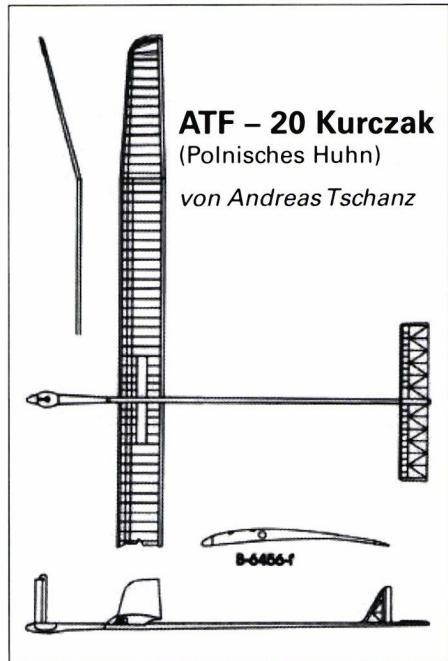
F1E is the international class designation for magnet-controlled glider models (maximum wing and tailplane area: 150 dm²; maximum wing loading: 100 g/dm²; maximum flight weight: 5 kg). F1E is a free-flight class (no use of RC systems for control). These slope-gliding models, also known as magnet gliders or self-controlled models, are controlled using a magnetic control system built into the model itself. The models have wingspans ranging from 1,600 mm to 3,000 mm. They are launched by hand from a slope, flying into the wind.


TEAM MANAGER "THIS" BOSSHARD
 Rodito Nussbaumer

52. 2026 ALPS CUP
 Emil Giezendanner

ATOM, THE NEW DOUBLE-DECKER FROM CPLR
 Matthias Bosshard

INSIGHTS INTO THE HISTORY OF SEAPLANES

34th HAHNENMOOS ALPINE MODEL AIRPLANE CAMP
Res Dauwalder
CORSAIR F4U – A WARBIRD WITH A MEMORABLE LOOK
Jürgen Rosenberger, Jürgen Prinz
SUMMER FUN 2026 AT MG USTER
Martin Wunderli
F3A EUROPEAN CHAMPIONSHIPS IN ST-MACAIRE, FRANCE
Matthias Bosshard
What's New at Leomotion.com

HORIZON HOBBY/LEMACO NEWS: MICRO OV-10 BRONCO 645 MM BY E-FLITE

PRIDE AND GOOD IDEAS
 Markus Nussbaumer

News from HEBU

BY YOUTH, FOR YOUTH
Lorena Betschen
YOU KNOW WHAT I MEAN? 125 YEARS OF THE SWISS AERO CLUB
Emil Giezendanner
SMALL, MODEL-LIKE SAILBOATS
Res Dauwalder
TRY-OUT DAY AT MFV WETTINGEN
Urs Keller
FREE FLIGHT IN THE MIDDLE OF SUMMER
Urs Muntwyler
THE PC-21 STORY
Emil Giezendanner
TWIN TOWN PARTNERSHIP
Wolfgang Voeller
EURO CONTEST GLIDER ACRO TOUR AUSTRIA 2026

WELCOME, NEW MEMBER!
Andrea Bolliger
COUPE DES ALPES – OBSERVE AND LEARN
Rodito Nussbaumer
NEWS FROM HEBU
 Julia Bucher

FROM 0 TO 100
Markus Nussbaumer
NOS REGION – A HUB FOR ELECTRIC AVIATION
Emil Giezendanner
MEMORIES
Wolfgang Völler
Have you almost forgotten about aircraft that take off and land vertically?
Emil Giezendanner
70 YEARS OF THE NIDWALDEN MODEL AIRPLANE CLUB
Martin Barmettler