
Albatros 4, a motor glider by Schneider Modell
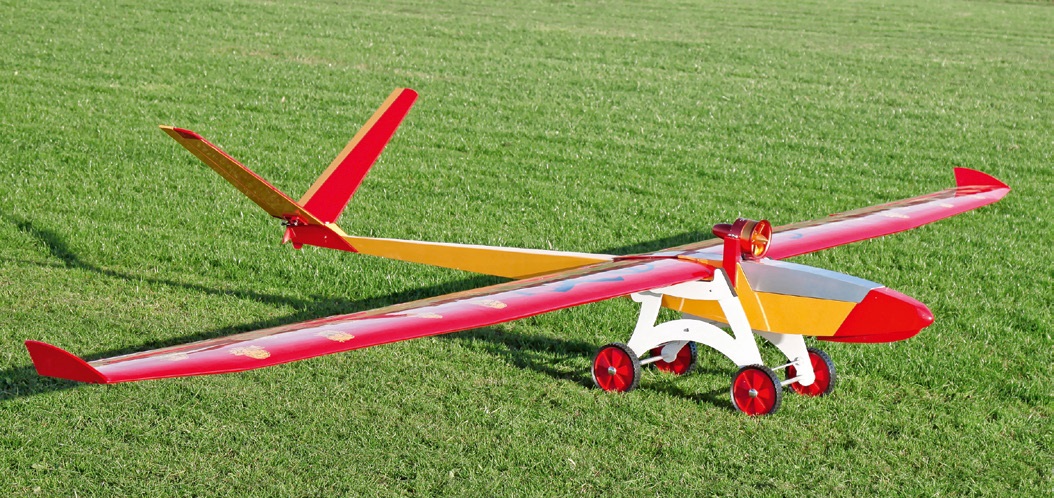
The Albatros 4 is a thermal glider designed for functionality; in the following, we will examine whether the model can also be used in forced impeller mode.
Evo 2 with a launch cart.
Jürgen Rosenberger
The kit includes milled frames, ribs, and side panels—mostly made of poplar plywood, with a few made of beech plywood—as well as a schematic drawing with numbered milled parts and, unusually for Schneider, 1:1 construction plans for the fuselage and one wing half.
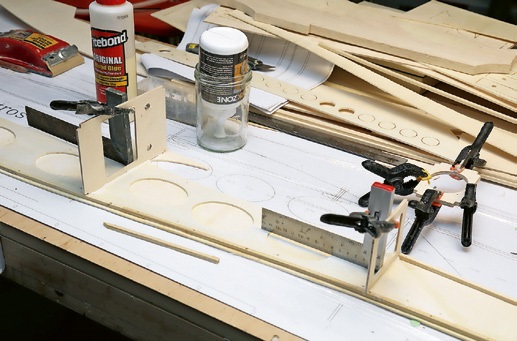
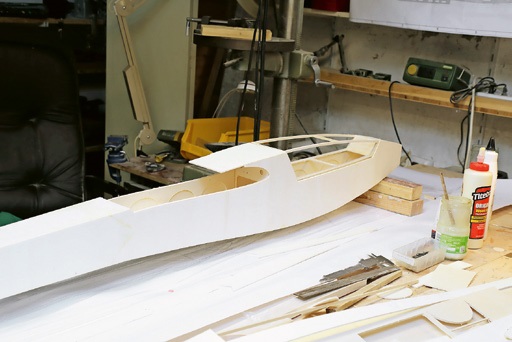
The fuselage, with a simple rectangular cross-section, tapers toward the rear; pine strips glued into the sidewalls serve as supports for the 3-mm poplar plywood boards on the top and bottom, which are inserted like a lid.
When assembling the 2.20 m-long fuselage, make sure the longitudinal axis runs straight. My method: Mark the centerline at the beginning, middle, and end of the fuselage with pins and align the fuselage using a laser.
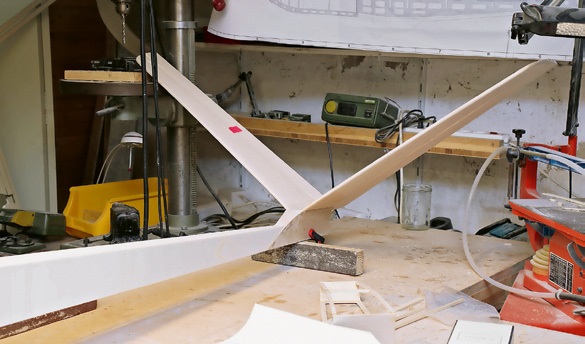
The V-tail consists of a single 3-mm poplar plywood board, which must be covered with 2.5 mm balsa on both the top and bottom. The stabilizers are joined at an angle of 108.35° and stabilized on the top by a wooden block sanded to fit. Additionally,
reinforce the tail unit—which is quite large and therefore subject to heavy loads during flight—on both sides in the support area with 160 g mat. On the fuselage, the tail unit is screwed onto a birch plywood board, onto which angled strips ($180^\circ - 108.35^\circ = 71.65:2 = 35.83^\circ$) are attached.
The wings are built in a double-trapezoidal shape with slightly flared tips on the outer sides. Poplar plywood is used throughout for the ribs, and cross-braced pine strips are intended to provide sufficient stability. After once experiencing a broken strut at the wing hinge, I’ve become wary of that
this construction method. Having learned from experience, I reinforce the trapezoidal transitions of the wings with aluminum strips. This is followed by 2.5 mm balsa wood skinning in the leading and trailing edge areas, as well as the application of the leading edge strips. The ailerons and landing flaps, held in shape internally by plywood ribs, are covered on the top and bottom surfaces. Finally, the model is covered with Oracover. Günter Schneider offers two options for servo installation on the V-tail: push-rod linkage of the control surfaces via servo units mounted in the center of the fuselage, or alternatively, direct placement in
the damping surfaces. Once again, I think I know better and choose Bowden cables from the bike shop! Quick assembly in the workshop, with a trouble-free functional test—the V-tail responds readily to all control commands.
The First Setback
Disillusionment sets in during the maiden flight—the control wires span a distance of ~2 cm from where they exit the Bowden cable tube to the rudder horn. During flight operations of the original version, it will become apparent that they
bend under pressure in the transition zone; the result: the aileron does not move to the full-up position. During the maiden flight—300 m after takeoff—there was no response to elevator input, the model veered off course, and the fuselage broke.
The fuselage design is based on the Impeller version/12 S (Evo1). We are replacing the original triangular landing gear with a Fema-EZW, whose retraction mechanism is operated by a beefy Hitec servo. A no-name impeller with an aluminum housing is mounted on two solid-wood struts at a –3.5° angle above the front third of the wing mount. A launch hook, which must withstand the forces of a rubber cord pre-tensioned to 10 kg during launch, is mounted in front of the center of gravity
Fortunately, two 6S 5000mAh LiPo batteries positioned toward the nose balance our Albatros exactly at the center of gravity.
After checking all functions, hook it onto the rope, set the impeller to half power, give the go-ahead—take off after 10 meters. Damn, the thing flies, but it lacks the desired power. Our Albatros glides through the sky just like my first little rubber-powered plane from my youth. Landing. We hoped maybe it was just the two batteries. Swapped out the LiPo batteries, new takeoff, same result—Jürgen’s exact words: “I can barely keep it in the air.” On the bright side: as a glider without motorized propulsion, the Albatros is impressive.
The Bowden cable bends under pressure.
With a low glide angle, good response to the controls, and effective landing flaps during the approach. Once I got home, I measured—which I should have done earlier—the current draw for the YEP 120 A—at 12S, it’s just 48 amps instead of the 120 A stated in the product advertisement
. My fellow pilot Andreas lends me his Hobbywing 130-HV ESC, which delivers 110 amps at 12S under full throttle—a test run in the yard blows the laundry off the line. But enough of that!
Day 2: 8 kg of rubber cord pre-tension, launch—now our Albatros is flying with significantly more
| Wingspan: | 4,170 cm |
| Length: | 2,170 cm |
| Wing area: | 138 dm², |
| Airfoil: | Original version, Evo 1 SD 7080; Evo 2: HQ 1"5-12 on HQ 1"15-9 Strak |
| Weight: | 7,150 g |
| Surface load: | 51.81 g/dm² |
| EWD: | 1.5° |
| V-shape: | 1.5° |
| SP: | 130 mm behind the leading edge of the V-tail |
| Servos: | 4x Hitec HS 7975HB 8.21 kg/cm on ailerons and landing flaps |
| Elevator: | 2x KST 215MG servos |
| Propeller: | 90 mm 12S No-Name |
| ESC: | Hobbywing 130HV |
| Battery: | 12S/5000 mAh |
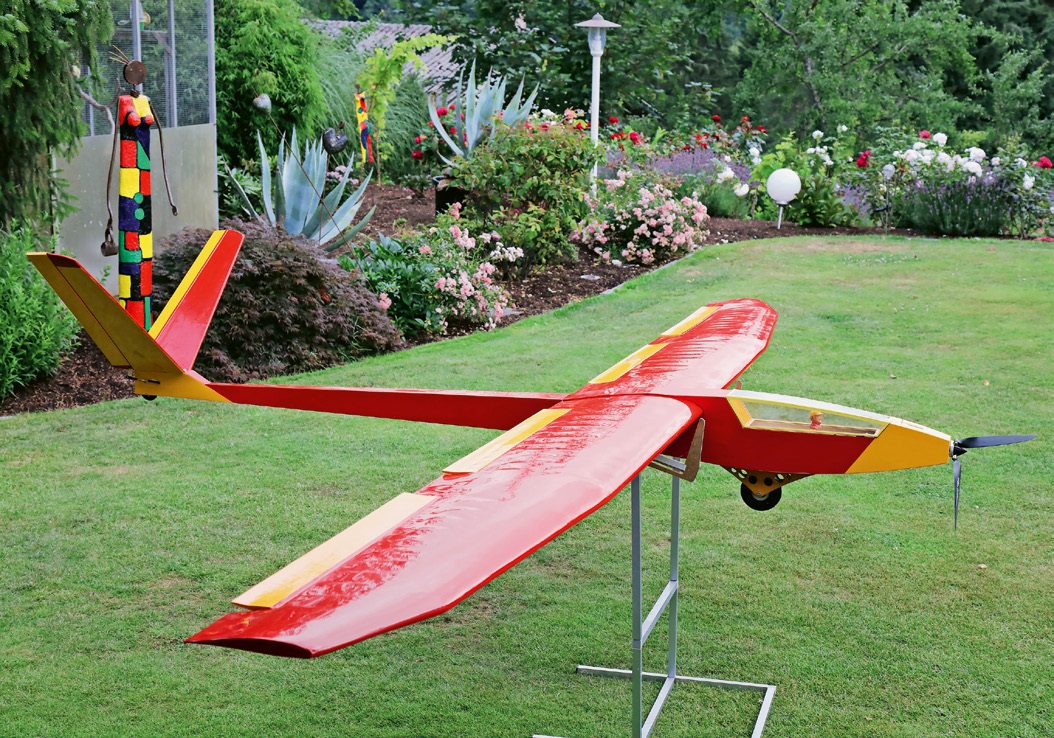
Powerful forward thrust, but a climb into the stratosphere—so eagerly hoped for during countless hours of construction—never materialized. In slow flight, it circles beautifully in the thermals, with good response to the controls. But if you go “full throttle” and pick up speed, the control response drops off significantly, and tight turns are barely flyable. It can do a loop, but that’s about it—no rolls, no aerobatics. I complete several flights with growing disappointment. With each flight, it dawns on me more and more what I really should have known. My initial concept is wrong—a glider with a thermal profile is not a high-performance aerobatic machine. Once I get home, I call Günther Schneider, and we agree: we need to design a wing with an appropriate profile. →
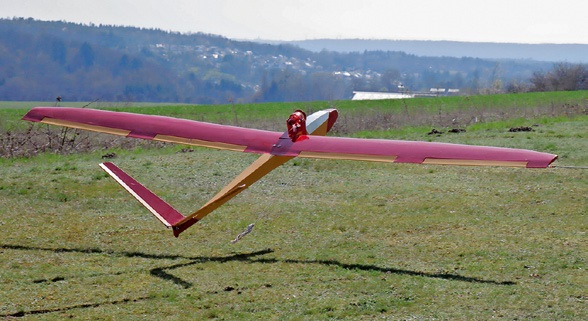
Evo 2: No sooner said than done—a new wing for the modification from HQ 1"5-12 to HQ 1»15-9 Strak is now available. The outer edges also feature winglets mounted at a slight angle. Otherwise, the wing construction corresponds to that described above. The wing attachment must be adjusted to the fuselage’s modified profile contour while maintaining an EWD of 1.5°. The V-tail remains unprofiled as before and is equipped with two KST 215 MG motors.
For convenience’s sake, we’re trying a launch cart this time. We turn on the impeller; the aircraft slowly begins to move, and after 15 m, Trossi takes off at an angle of about 30°. The Evo2 performs with agility and, compared to the previous version, is very easy to control even at higher speeds. While we once complained about
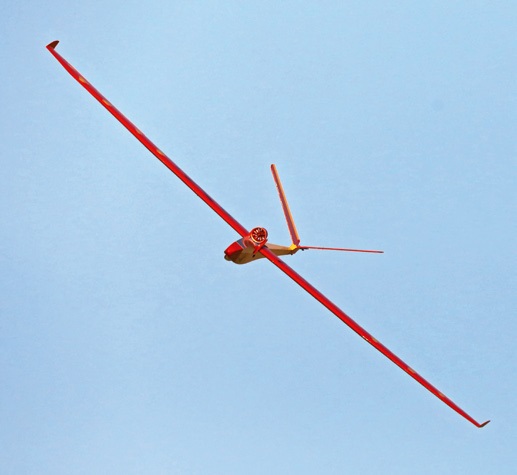
a lack of thrust, “half throttle” is now sufficient. When the impeller is turned off, the glider offers a smooth, harmonious straight-line flight that shows no tendency to stall, even at slow speeds, while remaining easy to control. This is complemented by an extremely flat glide angle. When the impeller is switched back on, both the glider and the pilot benefit from a considerable surplus of power, which definitely allows for more expansive flying. To be honest, while our model can offer a glimpse of the fascination of turbine-powered CFRP gliders that perform large-scale maneuvers in the sky, it cannot match the extent described. On future flights, we want to explore where the limit lies at full power. At “full throttle,” the Albatros picks up considerable speed. Climbing, diving, leveling off, full thrust.
“Awesome, wow!” the audience “inside me” shouts for an encore! Here we go again—but suddenly, a disturbing noise announces itself during the fastest part of the flight. The pilot calls out, “Something’s fluttering
something fluttering!” and already we see that a part has come loose. Later, our suspicion is confirmed: it’s a control surface from the V-tail. The landing, initiated immediately, is successful without further damage to the glider.
Let’s move on to the final analysis: The airfoil change meets our expectations; the configuration allows for high-speed flight and shows no tendency to stall during slow gliding. We’ve pinpointed the problem that now needs to be solved in the tail: Will a profiled V-tail allow for higher speeds due to reduced turbulence?
Are the KST-215MG servos in the tail, rated at 7.4 kg, sufficiently rated?

News from HEBU

TEAM MANAGER "THIS" BOSSHARD
 Rodito Nussbaumer
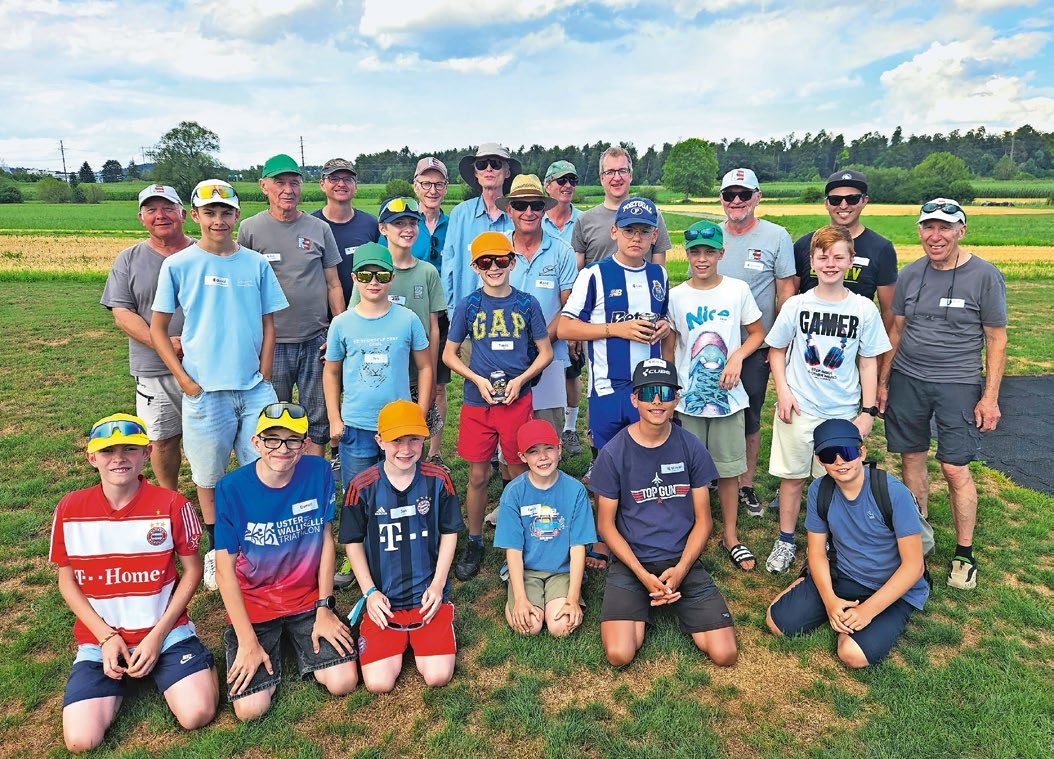
SUMMER FUN 2026 AT MG USTER
Martin Wunderli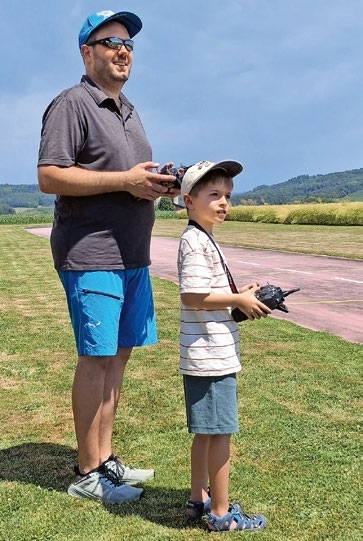
TRY-OUT DAY AT MFV WETTINGEN
Urs Keller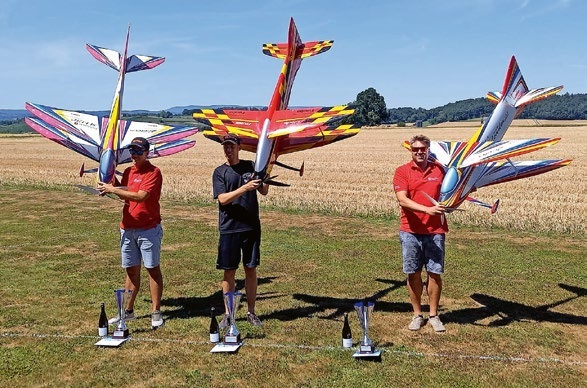
52. 2026 ALPS CUP
 Emil Giezendanner
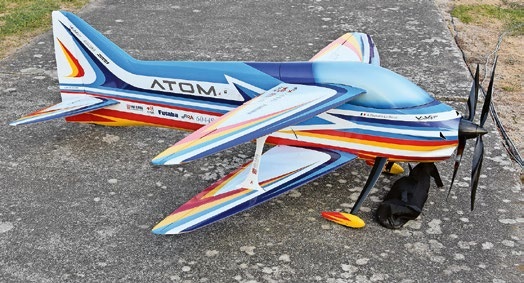
ATOM, THE NEW DOUBLE-DECKER FROM CPLR
 Matthias Bosshard
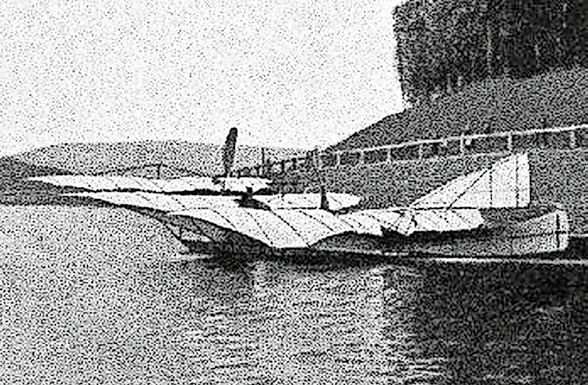
INSIGHTS INTO THE HISTORY OF SEAPLANES

YOU KNOW WHAT I MEAN? 125 YEARS OF THE SWISS AERO CLUB
Emil Giezendanner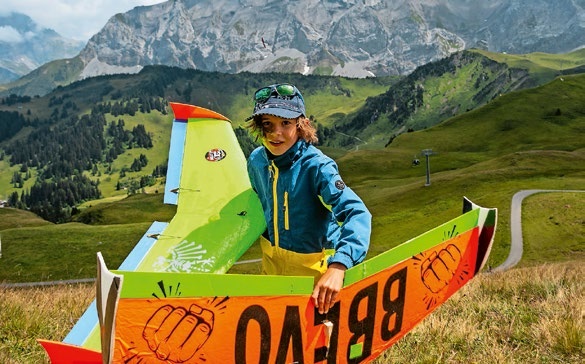
34th HAHNENMOOS ALPINE MODEL AIRPLANE CAMP
Res Dauwalder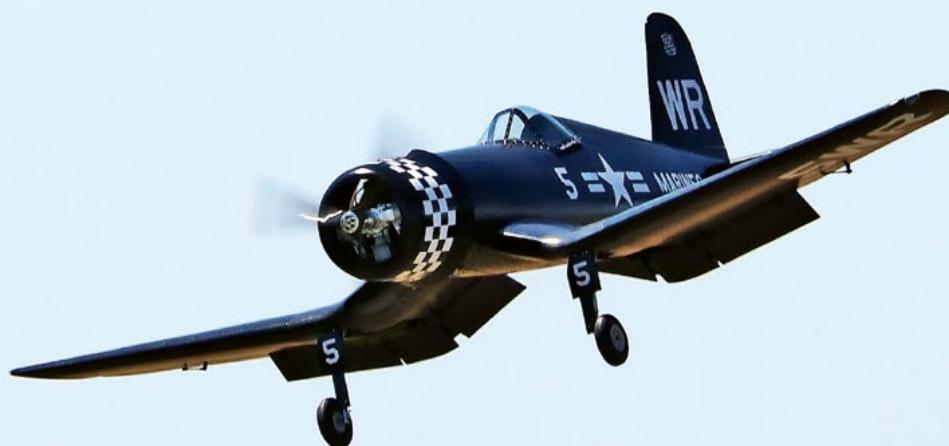
CORSAIR F4U – A WARBIRD WITH A MEMORABLE LOOK
Jürgen Rosenberger, Jürgen Prinz
SMALL, MODEL-LIKE SAILBOATS
Res Dauwalder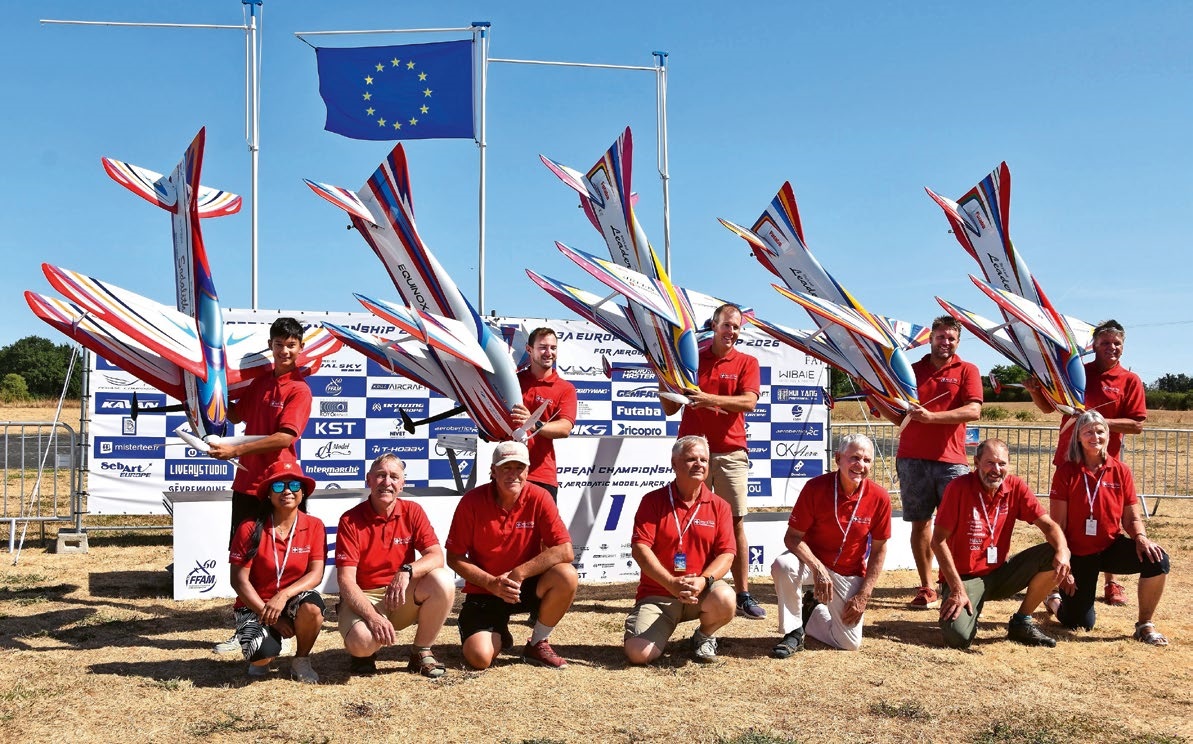
F3A EUROPEAN CHAMPIONSHIPS IN ST-MACAIRE, FRANCE
Matthias Bosshard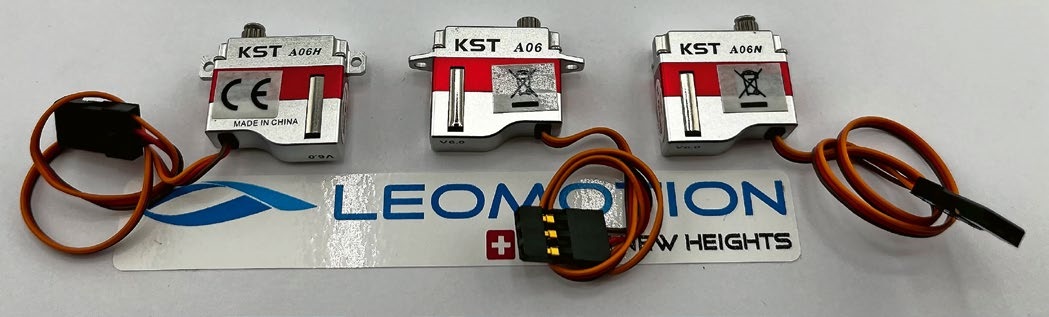
What's New at Leomotion.com
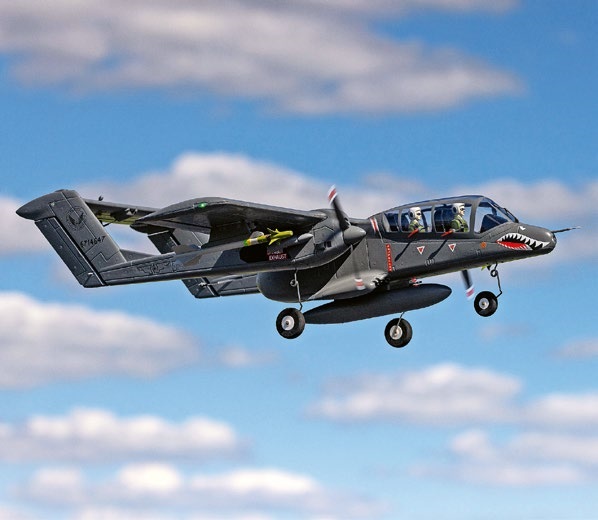
HORIZON HOBBY/LEMACO NEWS: MICRO OV-10 BRONCO 645 MM BY E-FLITE

PRIDE AND GOOD IDEAS
 Markus Nussbaumer
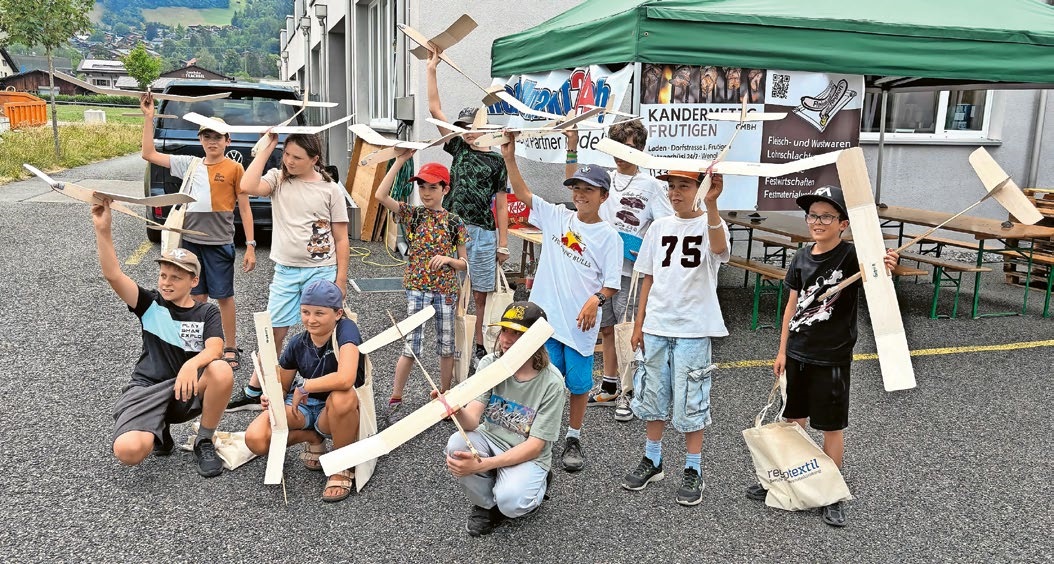
BY YOUTH, FOR YOUTH
Lorena Betschen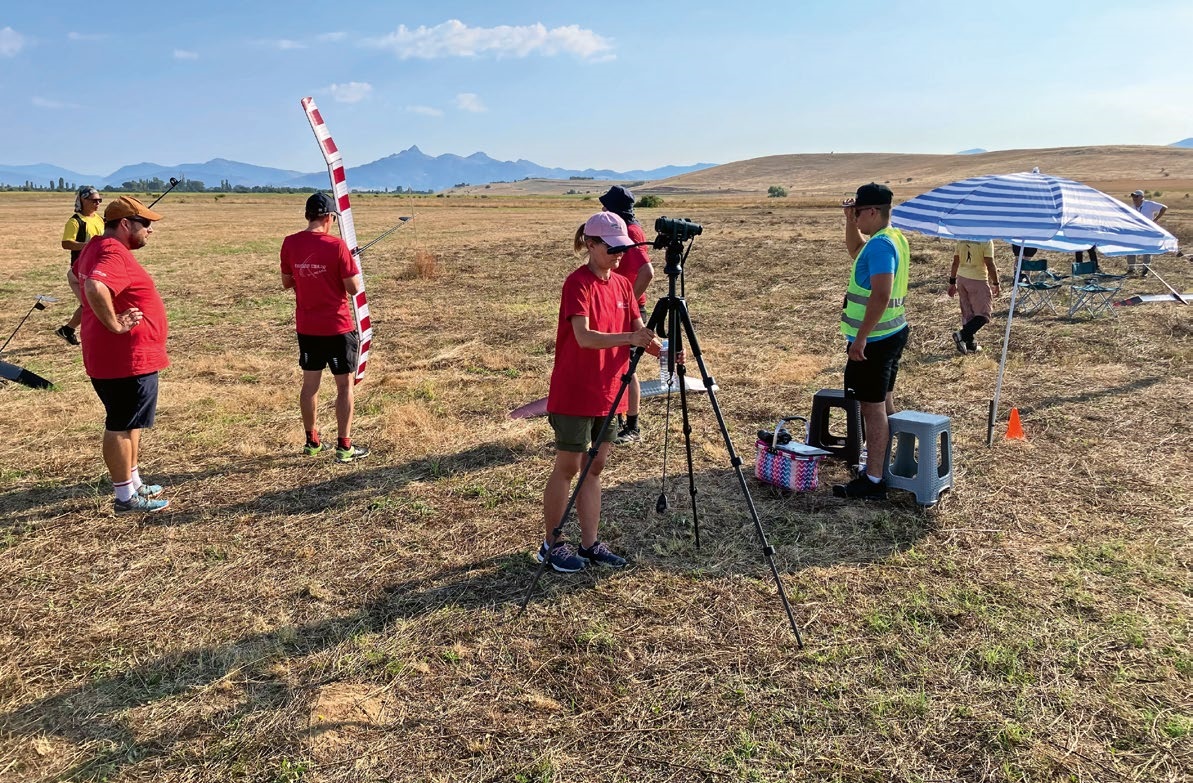
FREE FLIGHT IN THE MIDDLE OF SUMMER
Urs Muntwyler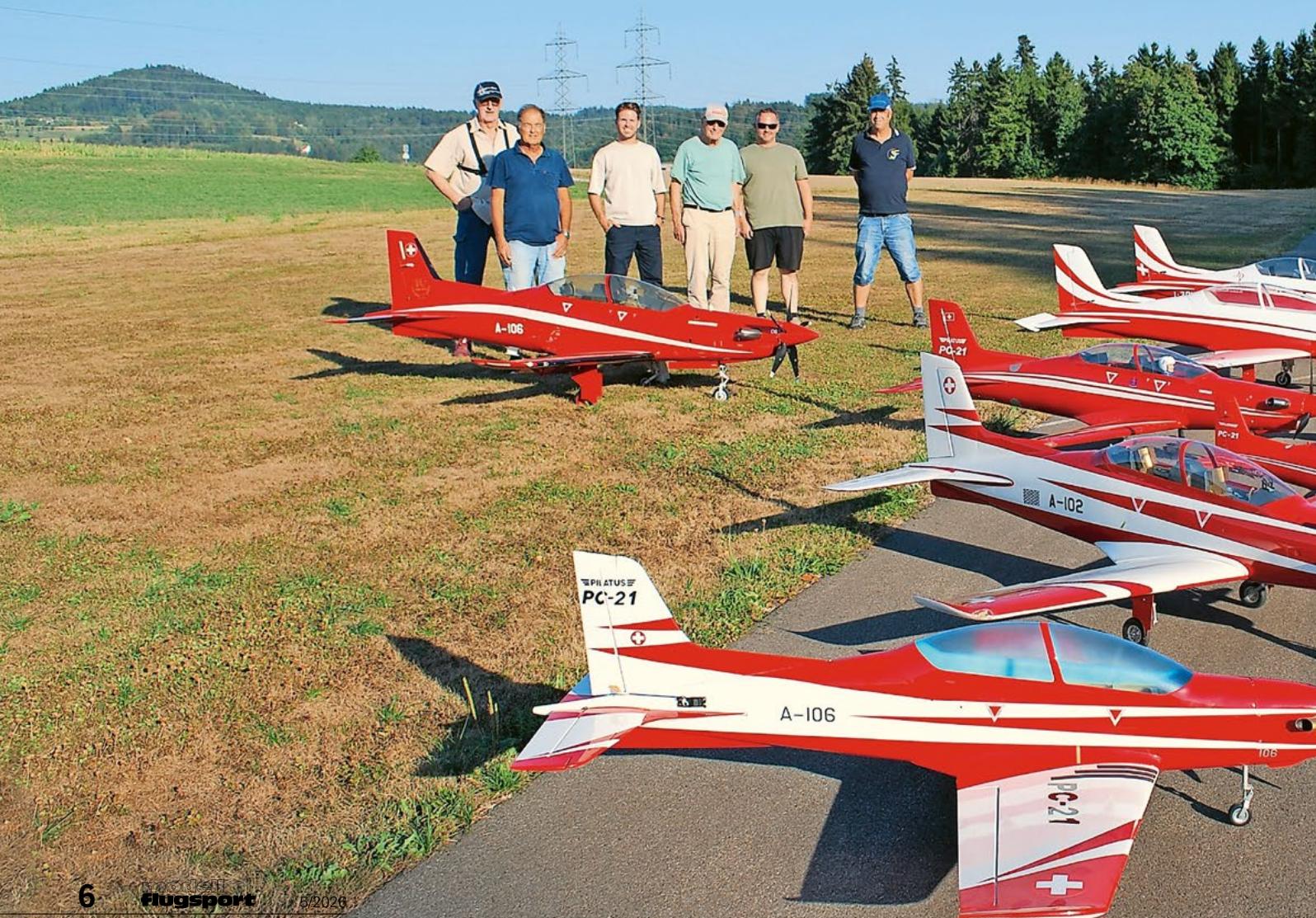
THE PC-21 STORY
Emil Giezendanner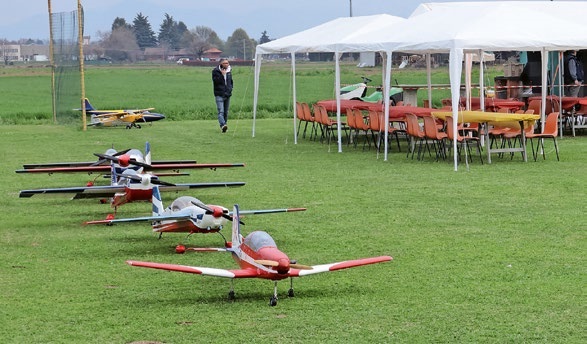
TWIN TOWN PARTNERSHIP
Wolfgang Voeller
EURO CONTEST GLIDER ACRO TOUR AUSTRIA 2026
WELCOME, NEW MEMBER!
Andrea Bolliger
COUPE DES ALPES – OBSERVE AND LEARN
Rodito Nussbaumer
NEWS FROM HEBU
 Julia Bucher
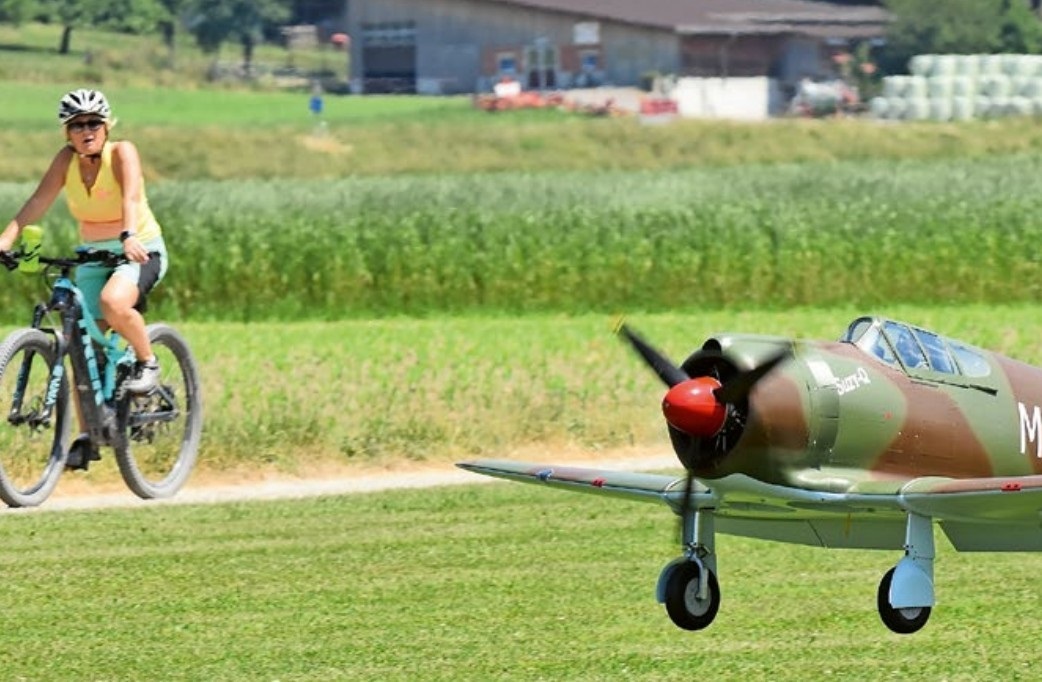
FROM 0 TO 100
Markus Nussbaumer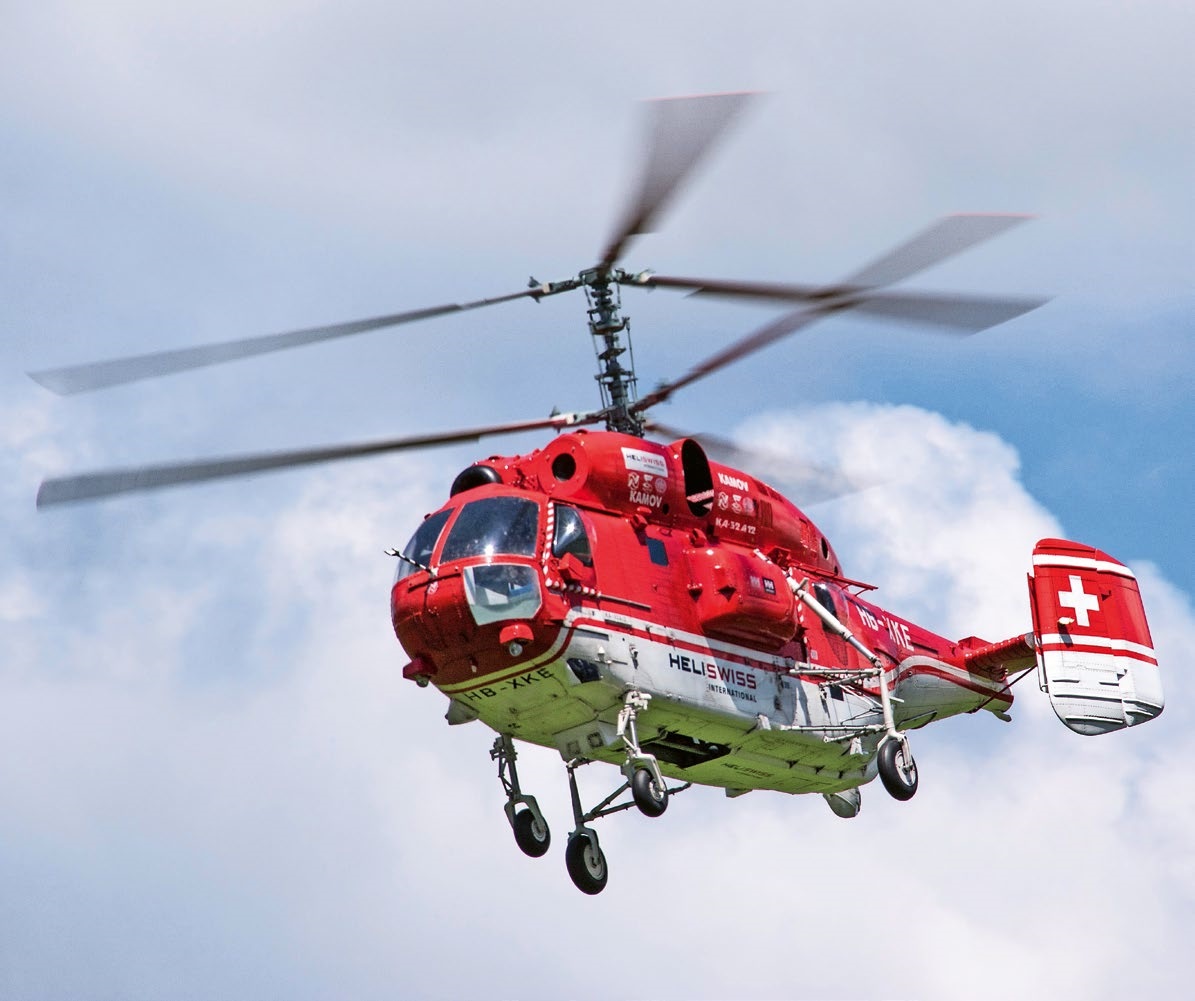
MEMORIES
Wolfgang Völler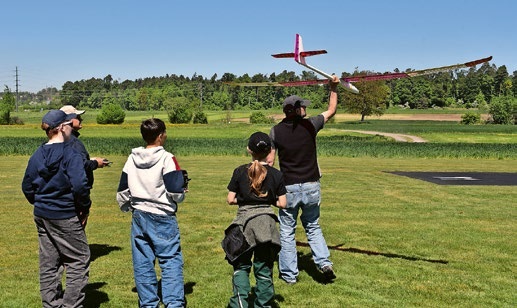
NOS REGION – A HUB FOR ELECTRIC AVIATION
Emil Giezendanner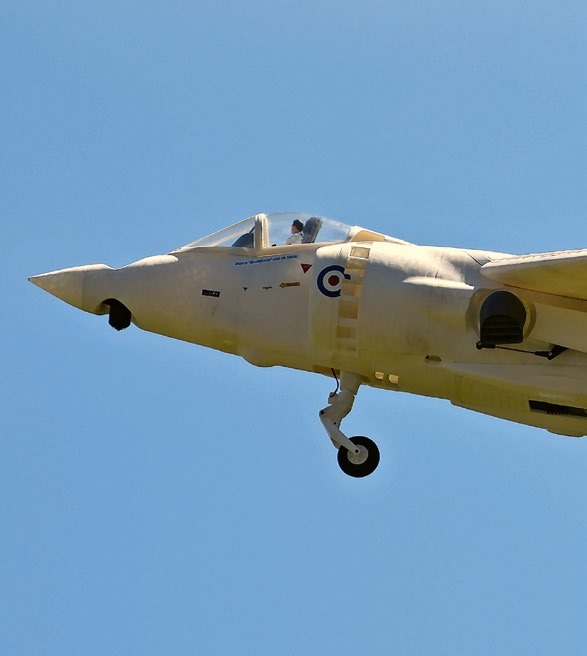
Have you almost forgotten about aircraft that take off and land vertically?
Emil Giezendanner
70 YEARS OF THE NIDWALDEN MODEL AIRPLANE CLUB
Martin Barmettler