
The Köhler Story
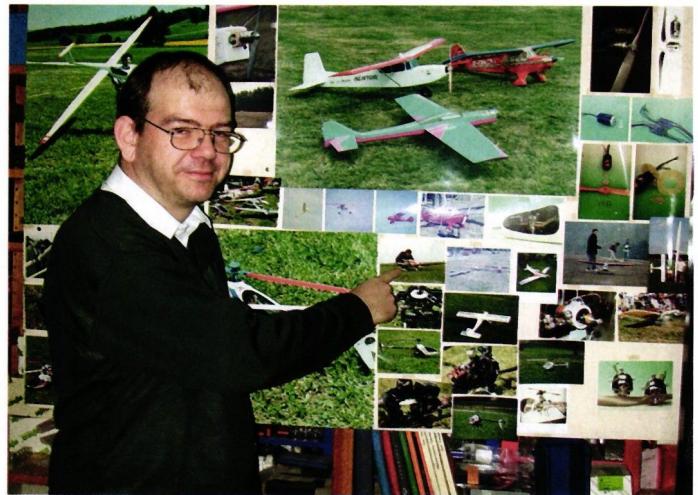
He enjoys pointing out the photo wall from the good old days, when hobby and profession were still seamlessly intertwined for the three Köhler brothers—to whom model airplane enthusiasts owe the brilliant idea of the outrunner motor.
The eldest, Frank Köhler (41), was already running an engineering firm at the time. The two younger brothers, Jochen and Reto, were still in school at the time. They had become fascinated with electric flight back when they were all still living with their parents in Pfullingen, in southern Germany, in the early 1990s. In their free time, they would go to the model airfield together and fly electric gliders, as well as electric-powered model airplanes—to the extent that this was possible with the Japanese Mabuchi motors. As luck would have it, they got their hands on an AVEOX motor early on—the top innovation from the U.S. at the time. Frank Köhler recalls that they were frustrated by how little torque it provided—
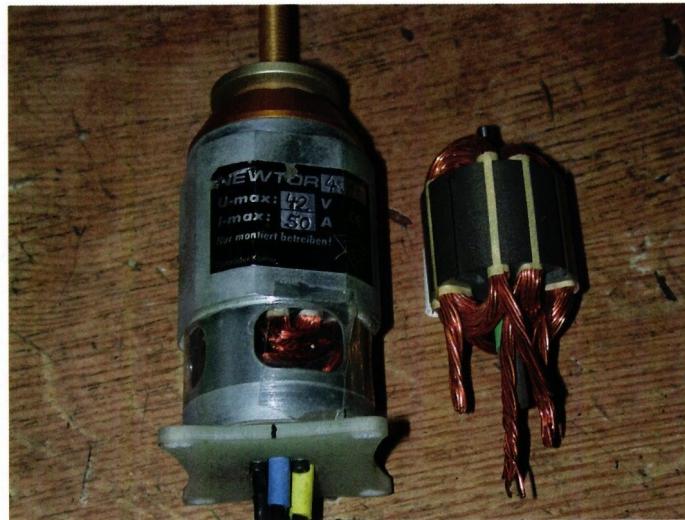
cost so many dollars (which were still really expensive even back then).
From then on, the idea started to take shape in the brothers’ minds. Shouldn’t they—no, wouldn’t they simply have to move the air gap of this motor further outward...? The best way to do that would be to just turn the whole thing around. Inside out, as the Americans would have said. The first outrunner was something like a Mabuchi with a cut-off commutator, where you simply let the housing rotate. The initial measurements,
results, of course, were sobering. They were still a long way from the 90% efficiency they’d dreamed of. Yet it was precisely this long-term percentage goal that fueled their discussions over lunch. At some point, the Köhler brothers appeared at an electric model aircraft meet in southern Germany with an electric tractor whose large propeller brought the attached glider up to altitude with surprising agility, even though there was no gearbox
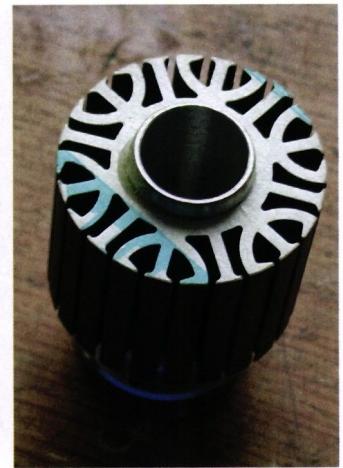
could be heard. It was one of the first major appearances of the so-called NEWTOR, an elusive 4-pole power motor that, however, was still partly based on off-the-shelf parts (e.g., commercially available 12-slot stator laminations). This was followed in 1995 by their first, highly acclaimed trade show appearance in Stuttgart.
The Köhlers continued to innovate, designing their own new stator laminate cuts and finally presenting the 8-pole ACTRO around the year 2000. A year earlier, they had teamed up with the local company Aeronaut, which from then on took over the administrative “paperwork” and, gradually, the distribution of Köhler motors as well. The plan was to focus on inventing in the future. Of course, things turned out differently! At the end of 2000, for example, the assembly instructions for the LRK motor were published. Suddenly, everyone was talking about outrunner motors. The DIY trend that followed gave wings to the entire electric aviation scene. After all, not everyone who had started such an ambitious DIY project actually saw it through to the end. Demand for motors rose considerably, not to mention the sudden need for brushless controllers. The ACTRO-C (compact) was developed as the company’s own response to the “Multipol” craze. Unfortunately, the previously successful brotherly collaboration soon became increasingly difficult, as both Jochen and Reto had to, after completing their studies in
pay tribute to professional mobility. Frank Köhler, who still runs an engineering firm near Stuttgart, now works on his own. He is pleased with the strong demand from helicopter customers for the recently developed 24- and 32-ACTRO models and is currently working on a helicopter modification for the larger 40-series model. He is equally pleased that the 60 series—with which the team has since achieved the once-elusive goal of 90 percent efficiency—is well-received by aerobatic pilots.
Nevertheless, he must also admit that the wave of Chinese competition
means that, as a German manufacturer (with in-house winding), he can only survive in the premium niche. So the company is working hard to maintain its quality standards and build on the efficiency advantage that ACTROs demonstrate, especially during “partial throttle” operation typical of helicopters. Industrial contracts also ensure the company’s continued existence.
And how often does he still get to fly models? Once again, Frank Köhler points to the photo wall in his office. Well, there don’t seem to be a striking number of new photos among them.


News from HEBU

TEAM MANAGER "THIS" BOSSHARD
 Rodito Nussbaumer

SUMMER FUN 2026 AT MG USTER
Martin Wunderli
SMALL, MODEL-LIKE SAILBOATS
Res Dauwalder
TRY-OUT DAY AT MFV WETTINGEN
Urs Keller
What's New at Leomotion.com

52. 2026 ALPS CUP
 Emil Giezendanner

ATOM, THE NEW DOUBLE-DECKER FROM CPLR
 Matthias Bosshard

INSIGHTS INTO THE HISTORY OF SEAPLANES

YOU KNOW WHAT I MEAN? 125 YEARS OF THE SWISS AERO CLUB
Emil Giezendanner
34th HAHNENMOOS ALPINE MODEL AIRPLANE CAMP
Res Dauwalder
CORSAIR F4U – A WARBIRD WITH A MEMORABLE LOOK
Jürgen Rosenberger, Jürgen Prinz
F3A EUROPEAN CHAMPIONSHIPS IN ST-MACAIRE, FRANCE
Matthias Bosshard
HORIZON HOBBY/LEMACO NEWS: MICRO OV-10 BRONCO 645 MM BY E-FLITE

PRIDE AND GOOD IDEAS
 Markus Nussbaumer

BY YOUTH, FOR YOUTH
Lorena Betschen
FREE FLIGHT IN THE MIDDLE OF SUMMER
Urs Muntwyler
THE PC-21 STORY
Emil Giezendanner
TWIN TOWN PARTNERSHIP
Wolfgang Voeller
EURO CONTEST GLIDER ACRO TOUR AUSTRIA 2026

WELCOME, NEW MEMBER!
Andrea Bolliger
COUPE DES ALPES – OBSERVE AND LEARN
Rodito Nussbaumer
NEWS FROM HEBU
 Julia Bucher

FROM 0 TO 100
Markus Nussbaumer
MEMORIES
Wolfgang Völler
NOS REGION – A HUB FOR ELECTRIC AVIATION
Emil Giezendanner
Have you almost forgotten about aircraft that take off and land vertically?
Emil Giezendanner
70 YEARS OF THE NIDWALDEN MODEL AIRPLANE CLUB
Martin Barmettler