
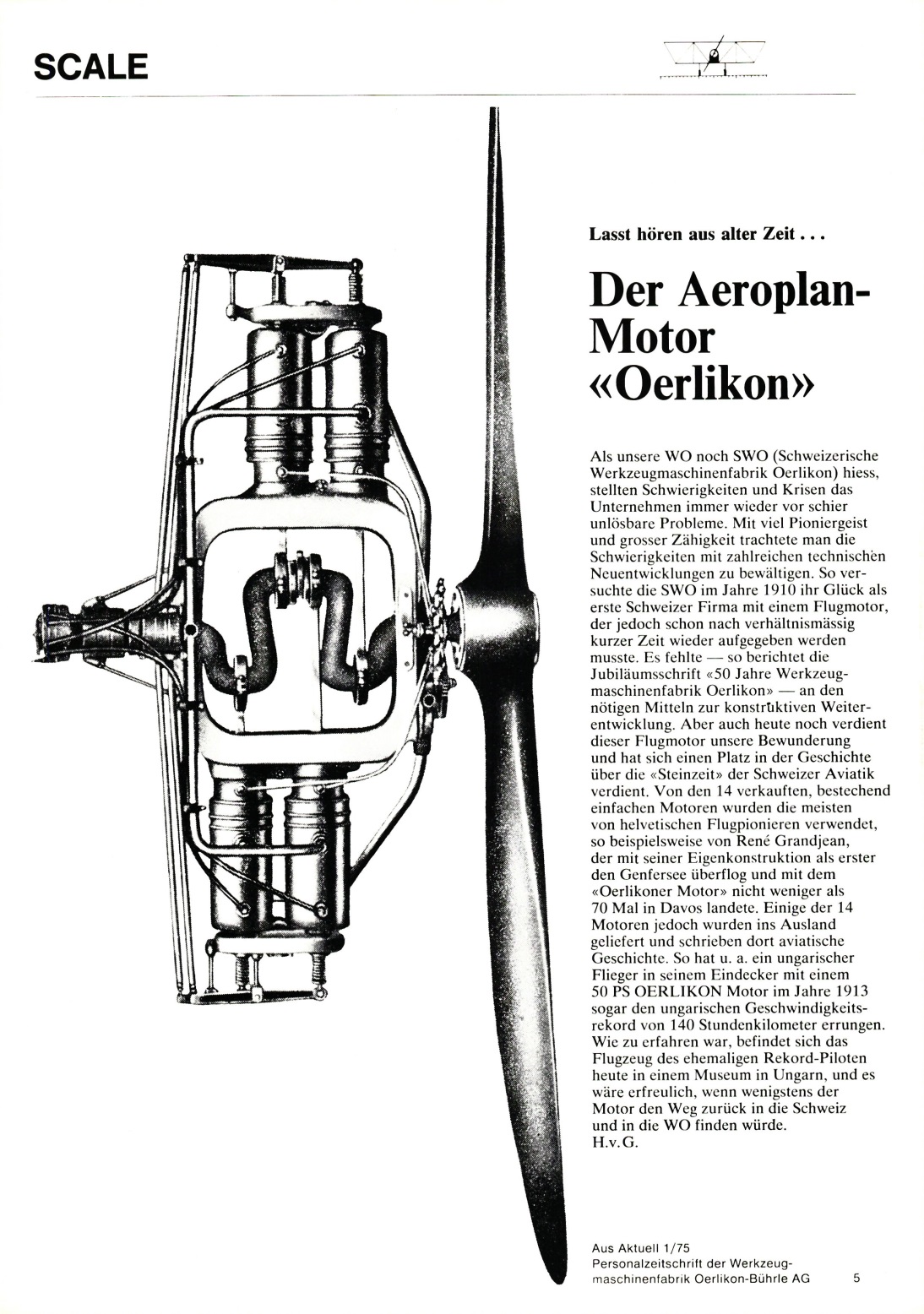
Let's hear about the old days... The "Oerlikon" Aeroplan engine
When our WO was still known as SWO (Schweizerische Werkzeugmaschinenfabrik Oerlikon), difficulties and crises repeatedly presented the company with seemingly insurmountable problems. With a pioneering spirit and great tenacity, the company sought to overcome these difficulties through numerous new technical developments. In 1910, for example, SWO became the first Swiss company to try its hand at developing an aircraft engine, though the project had to be abandoned after a relatively short time.
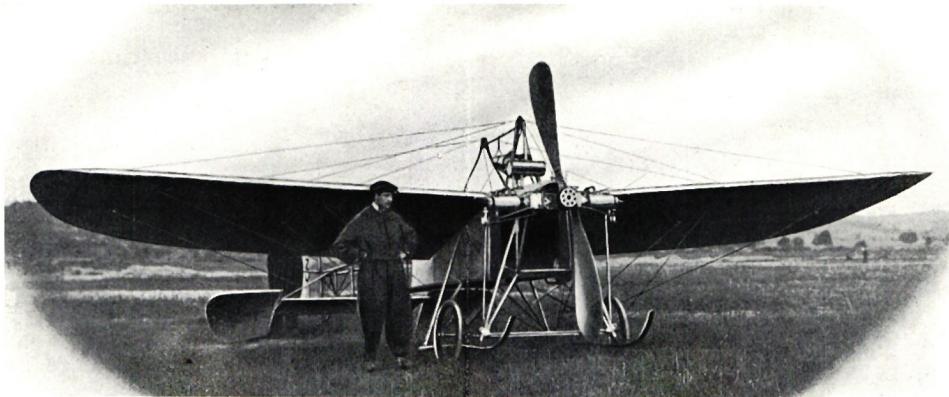
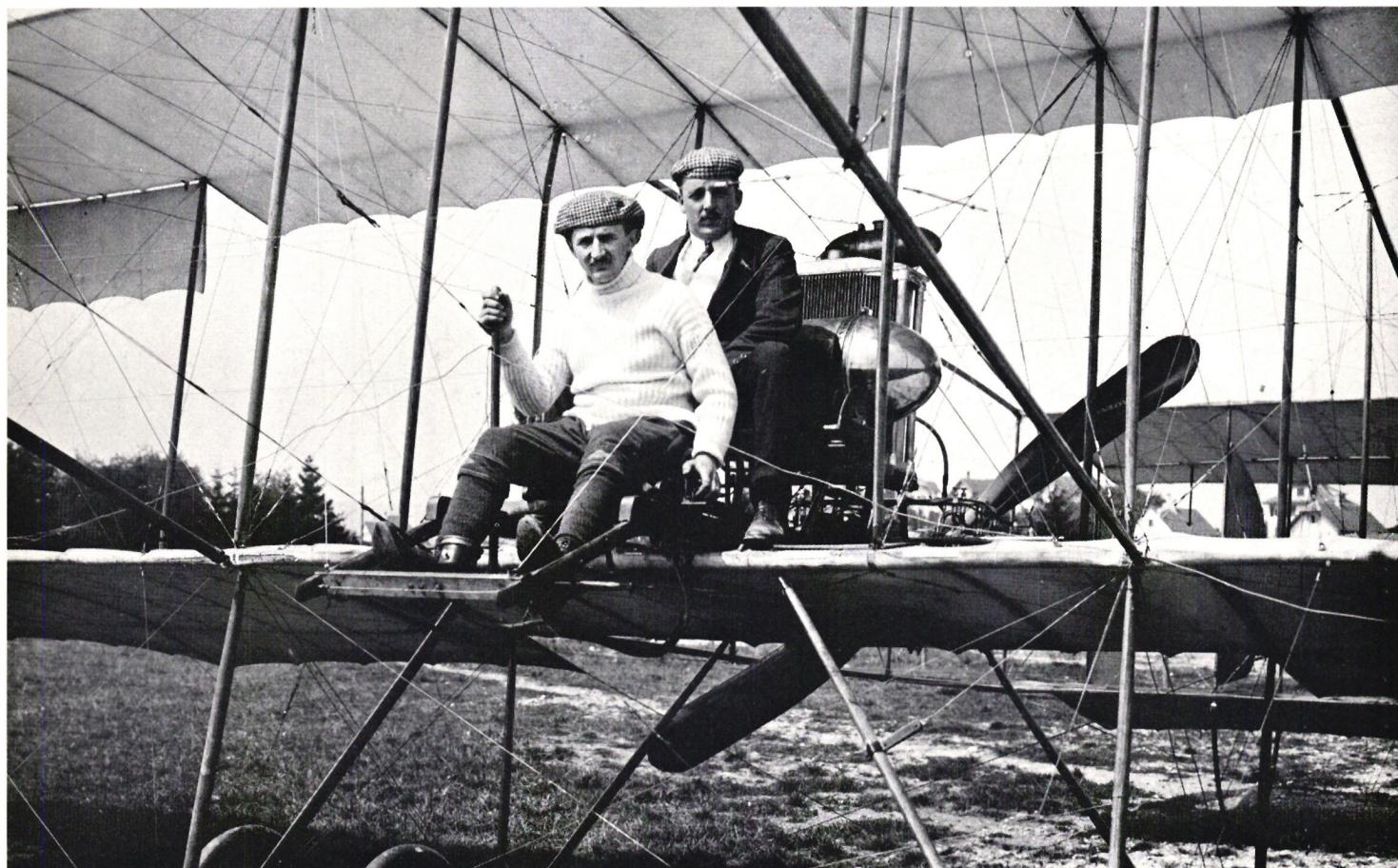
According to the anniversary publication “50 Years of the Oerlikon Machine Tool Factory,” the necessary resources for further design development were lacking. But even today, this aircraft engine deserves our admiration and has earned a place in the history of the “Stone Age” of Swiss aviation. Of the 14 engines sold—which were impressively simple in design—most were used by Swiss aviation pioneers, such as René Grandjean, who was the first to fly across Lake Geneva in an aircraft of his own design and landed in Davos no fewer than 70 times using the “Oerlikon engine.” However, some of the 14 engines were shipped abroad, where they made aviation history. For example, in 1913, a Hungarian pilot flying a monoplane powered by a 50 PS OERLIKON engine even set the Hungarian speed record of 140 kilometers per hour. As we have learned, the former record-holding pilot’s aircraft is now in a museum in Hungary, and it would be wonderful if at least the engine could find its way back to Switzerland and to the WO.
Sincerely,
50/60 HP. ~ 1,000/1,200 revolutions ~ Weight 80 kilograms.
- Simple design □ □ □ □ Maximum operational reliability
- High net power □ Low weight □ No oscillating motion □ No overheating
- Absolutely shock- and vibration-free operation □ Long service life without costly repairs
- Low-profile, flat design □ Easy installation in all aircraft
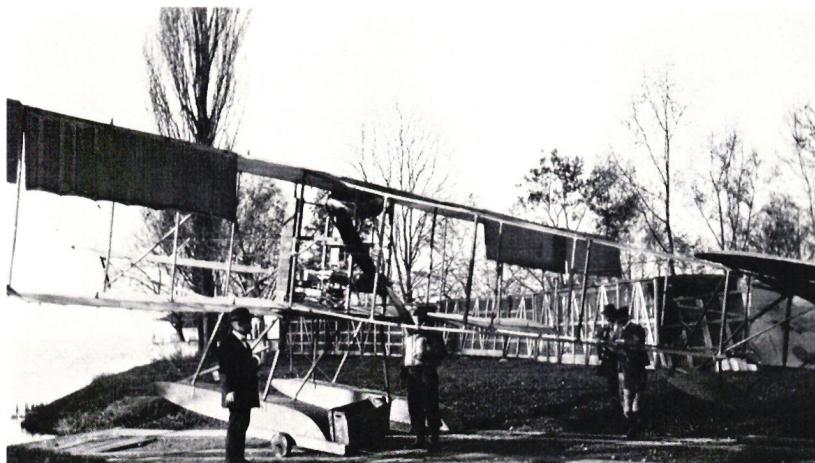
Farman biplane with an Oerlikon engine
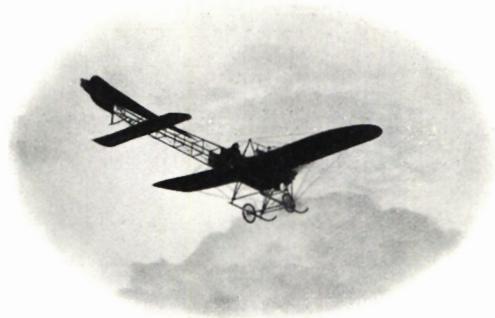
Grandjean monoplane with an Oerlikon engine
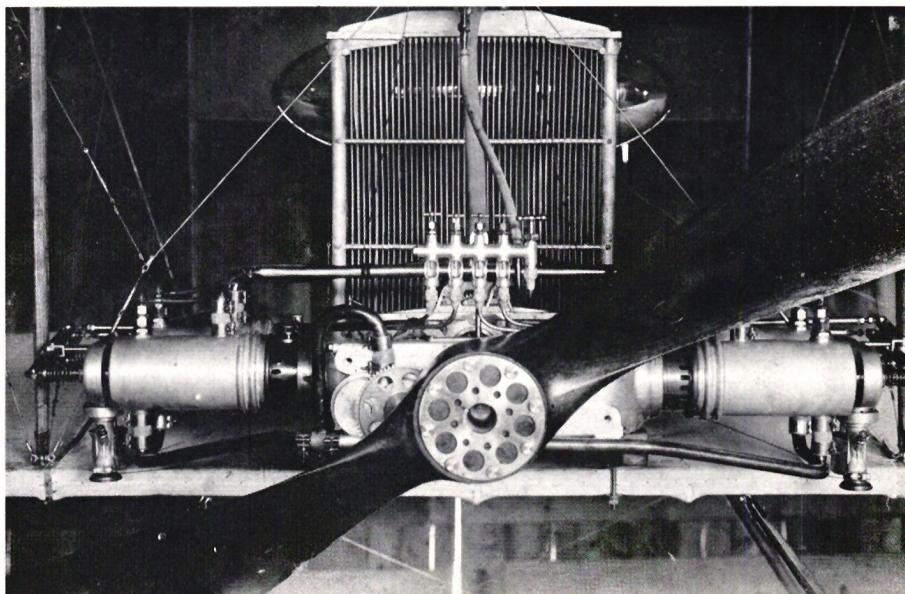
While most light engines are derived from automobile and boat engines, the “Oerlikon” engine was designed from the outset as an aircraft engine; it is a four-cylinder engine with nickel-steel cylinders arranged in pairs facing each other.
This opposed configuration achieves good balance and, as a result, very smooth operation. The smooth operation of the Oerlikon engine is further enhanced by the fact that ignition occurs in pairs of corresponding cylinders during strokes 1 and 3 or 2 and 4:
Ignition for each cylinder is provided by two diametrically opposed spark plugs via a double magnet or a dual-spark plug, which significantly increases both the engine’s power and its operational reliability.
The steel cylinder is surrounded by a cooling jacket made of copper sheet, which features expansion joints to accommodate thermal expansion. Water circulates around the entire cylinder; it enters at the bottom of the jacket and exits at the highest point, thereby preventing any harmful vapor formation in the water chamber.
Compared to the cast cylinders commonly used in other aircraft engines, the nickel-steel cylinders offer the advantages of much greater durability and explosion resistance, as well as significant weight savings.
The cylinders are perforated at the top of the stroke, allowing the exhaust gases to escape immediately and thus reducing engine heating. This design also results in a significant increase in power, as the cylinder charge is completed by the addition of air at the end of the intake stroke.
Our cylinder design owes its simplicity primarily to the innovative control system: Each cylinder has only a single valve for both intake and exhaust, which is mounted axially on the cylinder head.
The valve is manufactured as a single piece with a round slide sitting on the stem. In addition to opening and closing the valve disc via this round slider, the two-stage cams cause the intake and exhaust ports in the concentric valve chamber to alternately open and close. All harmful secondary spaces are eliminated.
The major advantage of our valve design is, first, that it has only one sealing surface, and second, that the valve never gets too hot, since the fresh gases cool the heated valve back down. This prevents warping or even burning of the valve and the resulting leaks. This is of particular importance in aircraft engines.
The two carburetors—one for each pair of cylinders—are mounted directly on the valve heads, without any piping. There is no condensation of the gasoline atomized in the carburetor within the cold fuel lines, ensuring absolutely reliable and consistent engine operation under all atmospheric conditions, as well as immediate and fail-safe engine start-up at the first rotation of the propeller.
A special feature of the magneto generates a full-strength spark with automatic re-ignition even at low engine speeds—including during startup—thereby ensuring easy and safe engine starting.
The four-stroke engine, with four cylinders whose operating cycles follow one another, delivers the highest level of torque smoothness. It is well known among experts that the long-stroke internal combustion engine offers the best efficiency; in the new Oerlikon engine, this is further enhanced by the elimination of the significant friction losses associated with the slide bearings used in other designs: therefore, the Oerlikon engine’s gasoline and oil consumption is also lower than that of other engines of the same power rating.
In addition to the outstanding advantage of the engine’s unprecedentedly low weight, there is also the reduction in the weight of the fuel and oil supplies that must be carried. The aircraft’s weight, including several hours’ worth of fuel, is therefore lower than that of the lightest engine known to date, and the aircraft’s range is correspondingly greater.
The open design, achieved by eliminating the conventional crankcase, has also greatly improved the engine’s cooling, as the cylinders—which are open at the front—are very effectively ventilated and cooled by the movement of the pistons themselves. The open design also makes it possible to take full advantage of the long stroke and all its benefits.
The triple-cranked crankshaft is bent from round nickel steel; two opposing connecting rods engage the middle, wider crank. This arrangement provides complete compensation for the oscillating masses and allows the engine to be balanced in every direction.
The characteristic shape of the crankshaft has the advantage that the ball bearings can be easily slid over the shaft or across the cranks, and that dangerous cross-sections—such as those found in crankshafts with machined-in bearing seats—are avoided.


TEAM MANAGER "THIS" BOSSHARD
 Rodito Nussbaumer

ATOM, THE NEW DOUBLE-DECKER FROM CPLR
 Matthias Bosshard

INSIGHTS INTO THE HISTORY OF SEAPLANES

34th HAHNENMOOS ALPINE MODEL AIRPLANE CAMP
Res Dauwalder
CORSAIR F4U – A WARBIRD WITH A MEMORABLE LOOK
Jürgen Rosenberger, Jürgen Prinz
SUMMER FUN 2026 AT MG USTER
Martin Wunderli
F3A EUROPEAN CHAMPIONSHIPS IN ST-MACAIRE, FRANCE
Matthias Bosshard
What's New at Leomotion.com

HORIZON HOBBY/LEMACO NEWS: MICRO OV-10 BRONCO 645 MM BY E-FLITE

PRIDE AND GOOD IDEAS
 Markus Nussbaumer

News from HEBU

YOU KNOW WHAT I MEAN? 125 YEARS OF THE SWISS AERO CLUB
 Emil Giezendanner

SMALL, MODEL-LIKE SAILBOATS
Res Dauwalder
TRY-OUT DAY AT MFV WETTINGEN
Urs Keller
52. 2026 ALPS CUP
Emil Giezendanner
THE PC-21 STORY
Emil Giezendanner
TWIN TOWN PARTNERSHIP
Wolfgang Voeller
EURO CONTEST GLIDER ACRO TOUR AUSTRIA 2026

BY YOUTH, FOR YOUTH
Lorena Betschen
WELCOME, NEW MEMBER!
Andrea Bolliger
FREE FLIGHT IN THE MIDDLE OF SUMMER
Urs Muntwyler
COUPE DES ALPES – OBSERVE AND LEARN
Rodito Nussbaumer
NEWS FROM HEBU
 Julia Bucher

FROM 0 TO 100
Markus Nussbaumer
NOS REGION – A HUB FOR ELECTRIC AVIATION
Emil Giezendanner
MEMORIES
Wolfgang Völler
Have you almost forgotten about aircraft that take off and land vertically?
Emil Giezendanner
70 YEARS OF THE NIDWALDEN MODEL AIRPLANE CLUB
Martin Barmettler