
The arduous search for a new airfield for the MG Rigi
The Rigi Model Aircraft Club was founded in 1977 and had its “home base” in Fänn near Küssnacht am Rigi. Finding this airfield had been the result of an intensive search and was anything but easy. With increasing construction activity, the runway has come to lie close to an industrial zone, and it is only a matter of time before model flying can no longer be conducted at Fänn due to space and safety concerns.
At the 2006 general meeting, the need to find a new airfield was discussed for the first time. A full 12 years would pass before a new airfield was found near Stockeri (Risch, ZG) and regular flight operations could begin.
Starting in 2007, dedicated members began an initial phase of searching the entire region between Lake Zug and Eschenbach for suitable airfields. An initial project had to be abandoned after four years of work, even though it was already in an advanced stage of evaluation, because the airfield site was located near community gardens and a nature reserve, and the municipality did not grant permission. This project came to an abrupt end in early 2011 when the landowner refused to provide the signature required for the reconsideration request.
Finally, in 2012, a supportive and committed farmer was found in Stockeri near Risch, ZG. An initial building permit application was rejected by the municipality and the canton in 2015, even though we had selected the site in accordance with the SMV’s “Recommendations for the Site Evaluation of New Model Airfield Sites.” We believed that this provided a certain degree of legal certainty and therefore decided to seek legal support from the SMV.
We abandoned our original goal of being able to fly all types of model aircraft on a paved runway in favor of a grass runway and electric-powered aircraft. However, a second building permit application was again rejected by the canton at the end of 2015. In addition, we faced fierce opposition from those opposed to the airfield.
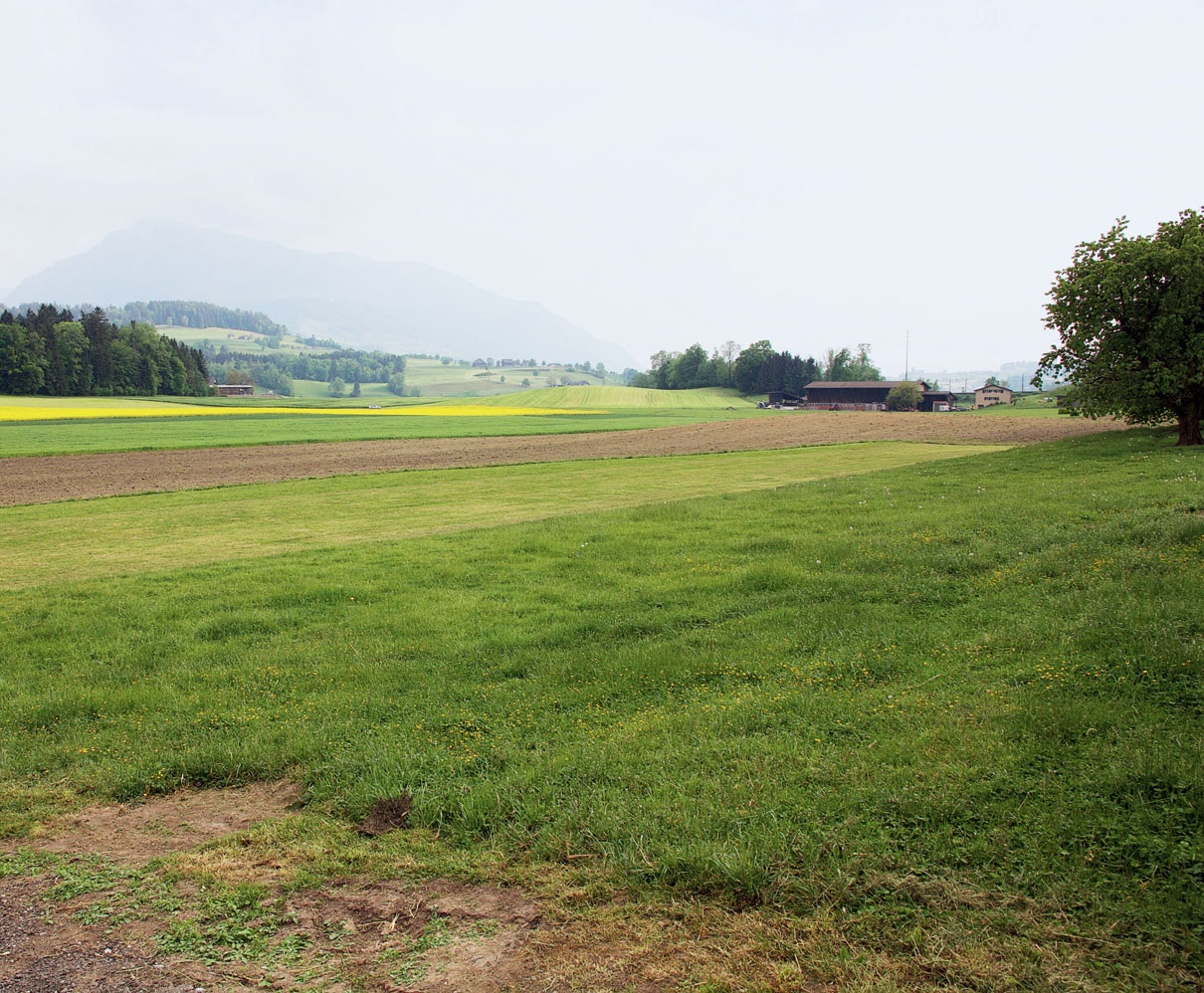
The municipality did not conduct a site inspection or attend a flight demonstration until the Administrative Court finally ordered it to do so in the summer of 2016. The discussion regarding emissions went in our favor. Meteorological data was obtained to show the actual flight capacity of the airfield.
The authorities proposed an out-of-court settlement. In the canton of Zug, there was a proposal to establish a model aircraft hub at a single location in collaboration with MFG Zugerland, but this proved unfeasible and would have meant the dissolution of MG Rigi. This additional complication led to a suspension of the ongoing proceedings and further delays.
In early 2017, an appeal was filed with the Zug Administrative Court. On March 28, 2017, the court finally confirmed that we are permitted to operate a model aircraft field in Stockeri. Additional restrictions on operating hours are due to wildlife movements during twilight hours. This is not a building permit in the traditional sense. Permission was granted to operate model aircraft on the designated grass runway and in designated parking areas. No structures of any kind may be erected. Equipment may be stored at the adjacent farm. All future changes are subject to approval. Operations began very cautiously, which is why it wasn’t until 2018 that we could speak of a flying season.
But that wasn’t all; once the rights to the land had been clarified, the focus shifted to airspace rights. Part of our flight zone is located within a no-fly zone. Therefore, an agreement had to be reached with the operator of this heliport. While this wasn’t a problem, it was a necessary step.
Finding a site for a model airfield is a real challenge. To “pull off” a project like this, above all, it takes tremendous dedication from individuals and ironclad perseverance—and it always requires a leader who “pulls the cart.”
It’s advisable to contact the SMV early on. We were able to count on the SMV’s help, especially from Adi Eggenberger and Markus Dormann. Being able to rely on experienced people is an enormous help. Moreover, you can feel very isolated when dealing with the authorities. That’s why it’s so important to know you belong to an association that’s there to support you with advice and practical help. We’re very grateful for that. Without legal support, we never could have pulled off the project. It would have failed due to the legal fees. CAP’s legal protection insurance covered all legal fees, and we never saw a single bill.
It’s important for us to emphasize that legal support alone isn’t enough. Time-consuming, meticulous work is constantly required to gather documents and evidence. Time and again, we have to meet deadlines set by others. You’re always in a position of asking for favors, and you can’t be too proud to do anything. We consider this the hardest part of the work, and it requires a great deal of patience.
*Daniel Marty, President
of MG Rigi*


TEAM MANAGER "THIS" BOSSHARD
 Rodito Nussbaumer

SUMMER FUN 2026 AT MG USTER
Martin Wunderli
52. 2026 ALPS CUP
 Emil Giezendanner

ATOM, THE NEW DOUBLE-DECKER FROM CPLR
 Matthias Bosshard

INSIGHTS INTO THE HISTORY OF SEAPLANES

34th HAHNENMOOS ALPINE MODEL AIRPLANE CAMP
Res Dauwalder
CORSAIR F4U – A WARBIRD WITH A MEMORABLE LOOK
Jürgen Rosenberger, Jürgen Prinz
SMALL, MODEL-LIKE SAILBOATS
Res Dauwalder
F3A EUROPEAN CHAMPIONSHIPS IN ST-MACAIRE, FRANCE
Matthias Bosshard
What's New at Leomotion.com

HORIZON HOBBY/LEMACO NEWS: MICRO OV-10 BRONCO 645 MM BY E-FLITE

PRIDE AND GOOD IDEAS
 Markus Nussbaumer

News from HEBU

BY YOUTH, FOR YOUTH
Lorena Betschen
YOU KNOW WHAT I MEAN? 125 YEARS OF THE SWISS AERO CLUB
Emil Giezendanner
TRY-OUT DAY AT MFV WETTINGEN
Urs Keller
FREE FLIGHT IN THE MIDDLE OF SUMMER
Urs Muntwyler
THE PC-21 STORY
Emil Giezendanner
TWIN TOWN PARTNERSHIP
Wolfgang Voeller
EURO CONTEST GLIDER ACRO TOUR AUSTRIA 2026

WELCOME, NEW MEMBER!
Andrea Bolliger
COUPE DES ALPES – OBSERVE AND LEARN
Rodito Nussbaumer
NEWS FROM HEBU
 Julia Bucher

FROM 0 TO 100
Markus Nussbaumer
MEMORIES
Wolfgang Völler
NOS REGION – A HUB FOR ELECTRIC AVIATION
Emil Giezendanner
Have you almost forgotten about aircraft that take off and land vertically?
Emil Giezendanner
70 YEARS OF THE NIDWALDEN MODEL AIRPLANE CLUB
Martin Barmettler