
VERTI 4+: "Semi-scale" VTOL
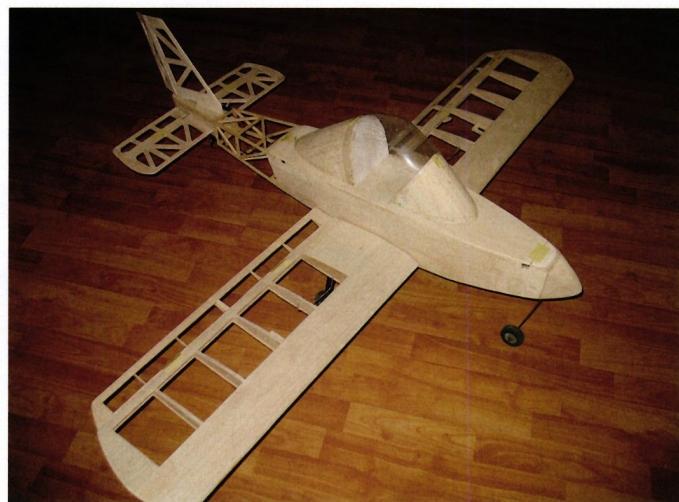
In January 2009, your favorite magazine published an article about the VERTI4, which was the first operational VTOL I had developed after more than 10 years of work. After a few years of testing, I am pleased to present the VERTI4+, which undoubtedly has a more eye-catching design and features a number of improvements.
It features four identical motors, arranged around the center of gravity, and thus four propellers, which ensure good stability along the pitch and roll axes. Since the propellers are small, it can take off and land “normally.”
Yaw control is achieved through differential thrust from the side engines. The transition from vertical flight to forward flight is accomplished by rotating the engines forward. As for stability
in hover, it relies on throttle control of the two forward engines for pitch and on differential control of the two rear engines for roll. Two gyroscopes are installed for roll stability (one per motor), and one gyroscope controls the two front motors for pitch stability. There is no gyroscope for yaw, as this axis is naturally well damped by the rudder. The system requires 9 channels (2 + 1 for the motors, 2 for the aileron servos, 1 for the elevator, 1 for the ailerons, 1 for the rudder, and 1 for the gyro gains).
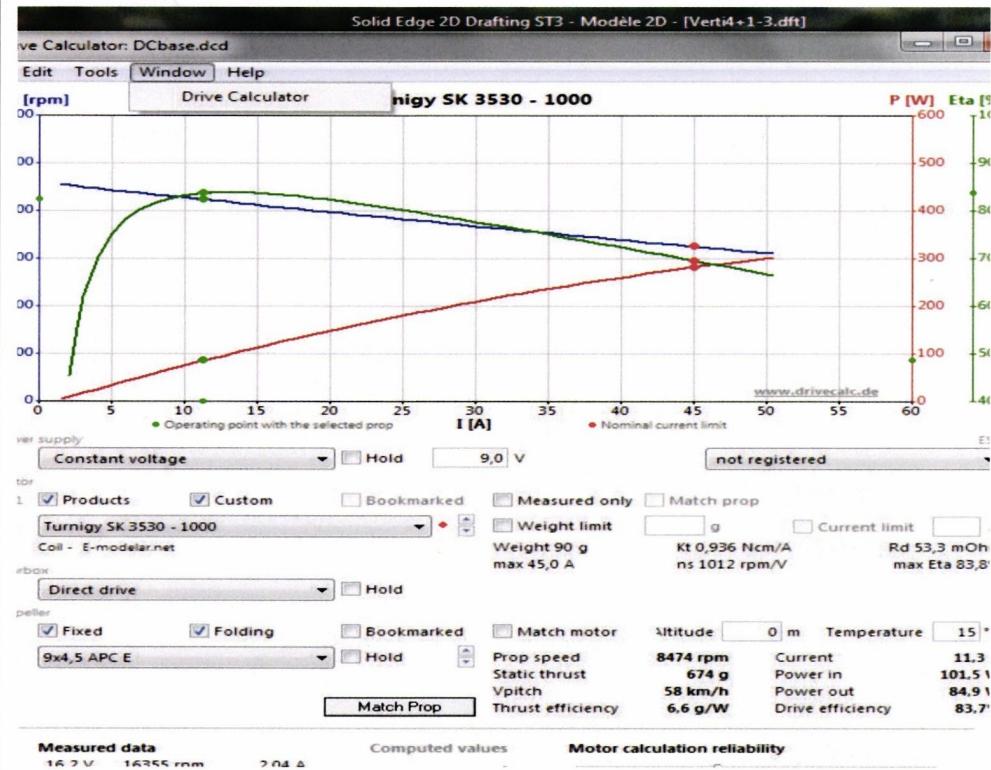
I have been using the free Drive Calc software for a long time. The following figure shows the results of the calculations for a single engine at steady-state operation. The 9×4.5 APC propeller rotates at 8,474 rpm, producing a thrust of 674 g (¼ of the static thrust per engine), with a fuel consumption of
100 W. The efficiency is 83%, close to the maximum efficiency. The required voltage is 9V, which is easily
achieved with a 6S battery. A quick calculation shows that with a 2200 mAh battery, you can fly the Verti 4+ in hover mode for about 6 minutes, which is exactly what I observed during my tests.
| Weight | 2,600 g |
| Wingspan | 1,500 mm |
| Radio | 9-channel 2.4 GHz receiver |
| Servos | Ailerons, elevator: 10 g ; 4 flaperons: Waypoint W-150MG, 15.6 g, metal gears |
| Motors | 4 SK-3530-1100 |
| Speed controllers | 4 Mystery 40 A |
| Propellers | Two 9×4.5 propellers, two 9×4.5 P propellers |
| Batteries | 6S 2200 mAh LiPo |
| Gyros | 2 GWS PG-02 (gain switching) |
The three gyros, which were replaced by PG-02 units with switchable gain.
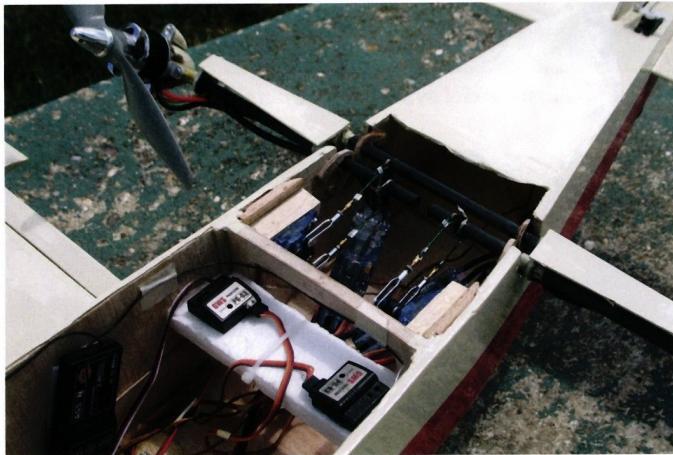
View of the forward/reverse cable-operated engine tilt mechanisms. Note the "housing" for mounting the servos.
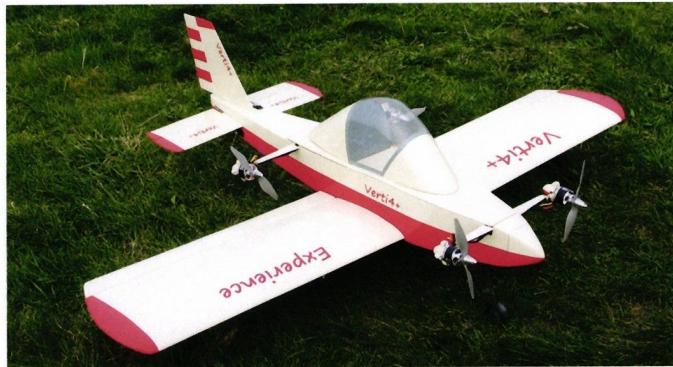
The aircraft certainly stands out on the tarmac; it sits high on its landing gear, which gives it a striking appearance. Note the fuselage's substantial size.
The most important adjustment is that of the center of gravity, which is achieved
by positioning the LiPo battery
in the fuselage. It is located
exactly midway between
the front and rear motor axes.
The motor
deflections must be 90 degrees between the
hover position and
horizontal flight position. For yaw control
, make sure to
achieve a differential
deflection of 15 degrees between the
left and right motors.
Gain 1 is set to 100% and is identical
on all three gyros. For
the mixes, see
the diagram below. →
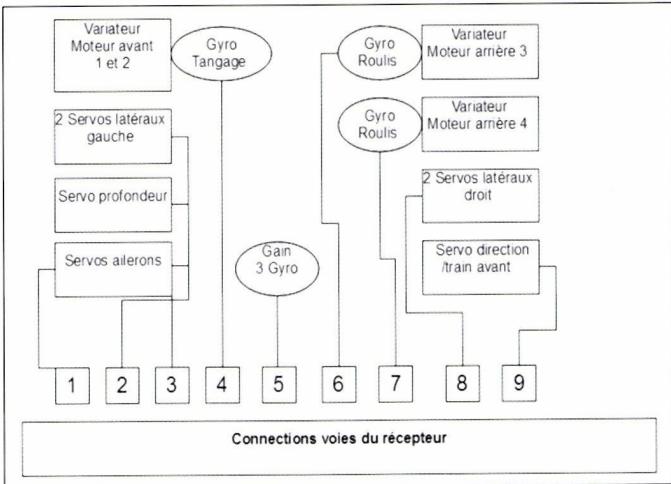
| Throttle lever | 100% channels 4, 6, and 7 |
| Aileron stick | 30% channels 6 and 7 , 100% channel 1 |
| Elevator stick | 100% channel 2 35% channels 3 and 8 5% channels 4, 6, and 7 |
| Rudder stick | 100% channel 9 15% channels 8 and 3 |
| Engine switch | 100% channels 3 and 8 100% channel 5 |
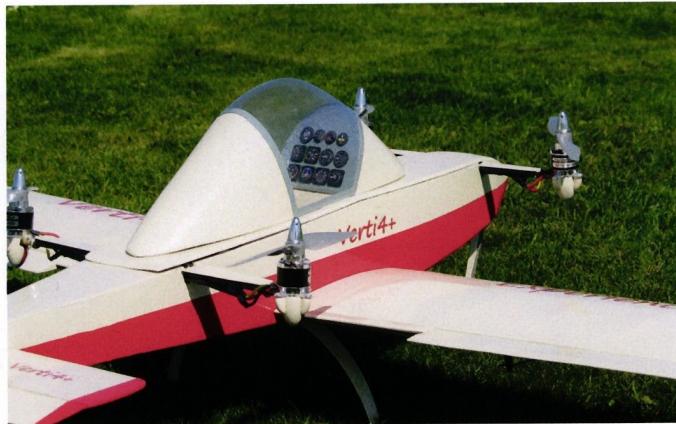
View from the cockpit. The instrument panel is made from off-the-shelf instruments.
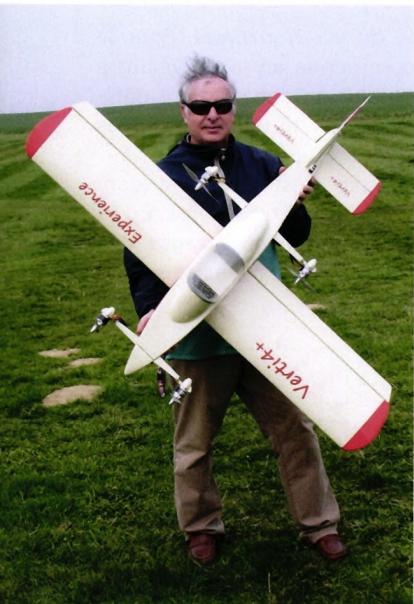
Serge, the designer, is proud of his machine.
Before heading out for flight tests, it’s a good idea to make a few minor adjustments.
First, apply throttle while hovering (about half throttle) and, while holding the aircraft, check that it remains roughly horizontal; if not, adjust the front or side motor control settings. Also adjust the yaw if necessary.
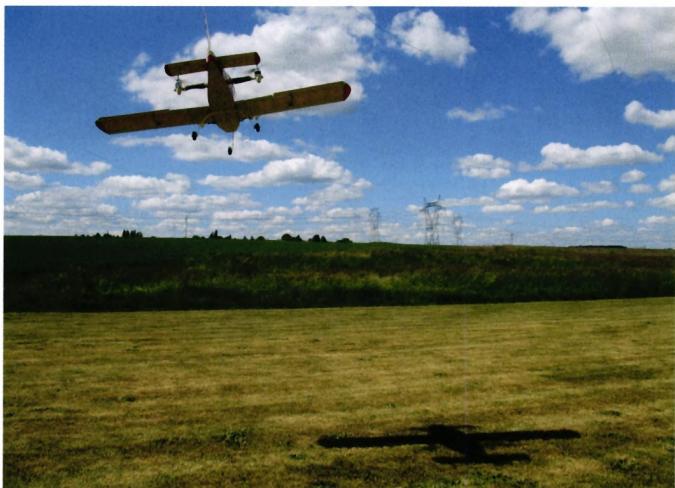
Flying this aircraft requires knowing how to perform a basic hover with a helicopter, as the controls work the same way. Throttle setting in hover: It points straight ahead and is very stable, even in strong winds with gusts. The next step was to fly it in normal airplane mode, switching the engines to forward thrust upon takeoff from the runway. It responds smoothly to the controls, and you can fly comfortably with low throttle. You can still feel the drag from the large canopy, though. Then you’re ready for a transition: climb to a hover at 15 m and tilt the engines forward. It immediately picks up speed, and you’ll need to reduce throttle. The transition from horizontal to vertical flight is seamless; the plane decelerates very quickly, and you’ll need to remember to increase throttle to regain control while hovering.
It was showcased at the model aircraft show in Paris in June 2011—in hover only, of course. You can find it on YouTube by searching for the keyword VERTI4+. Well then, I wish you safe flights and the joy of discovering a new aircraft.
Serge Encaoua


TEAM MANAGER "THIS" BOSSHARD
 Rodito Nussbaumer
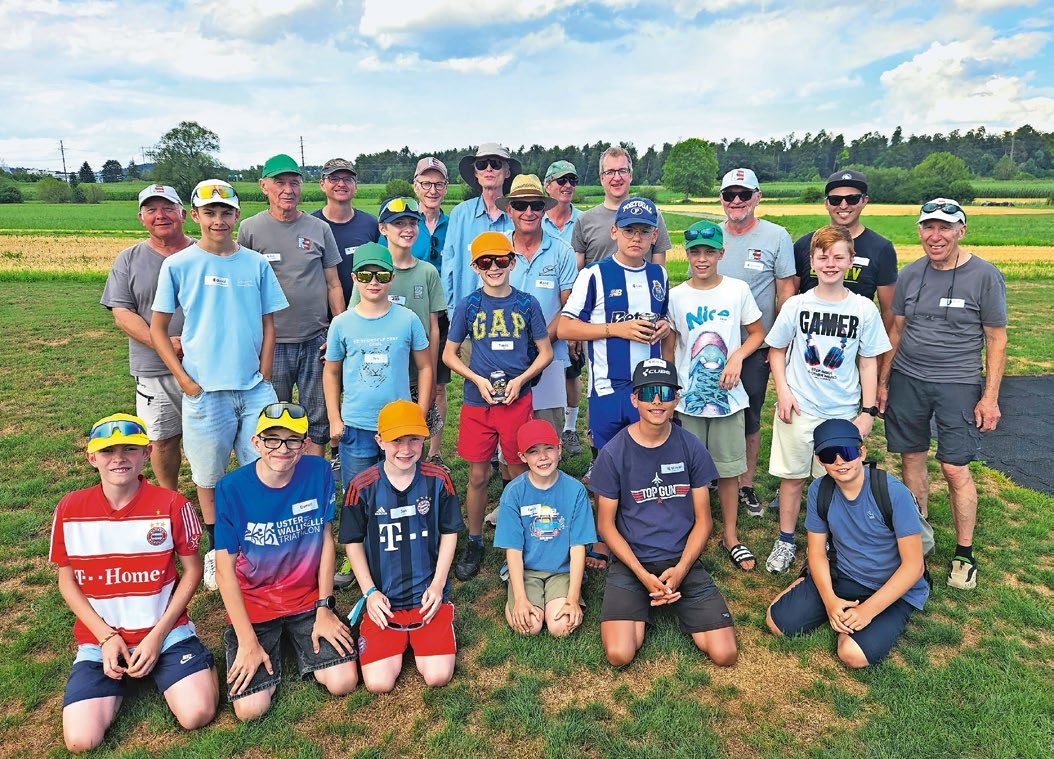
SUMMER FUN 2026 AT MG USTER
Martin Wunderli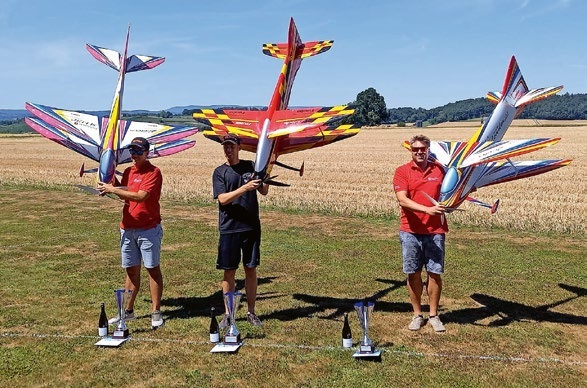
52. 2026 ALPS CUP
 Emil Giezendanner
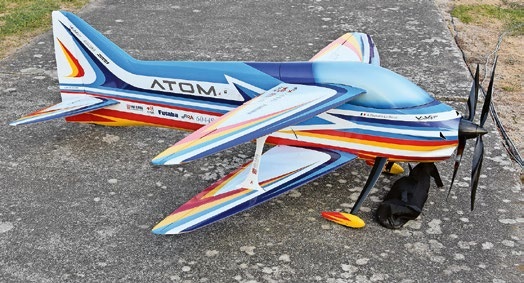
ATOM, THE NEW DOUBLE-DECKER FROM CPLR
 Matthias Bosshard
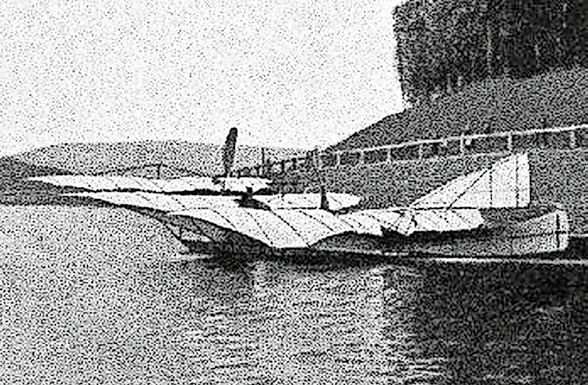
INSIGHTS INTO THE HISTORY OF SEAPLANES
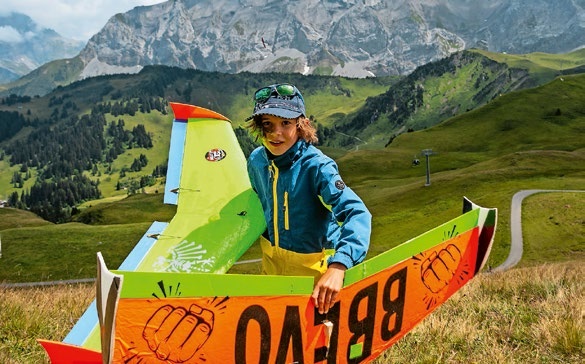
34th HAHNENMOOS ALPINE MODEL AIRPLANE CAMP
Res Dauwalder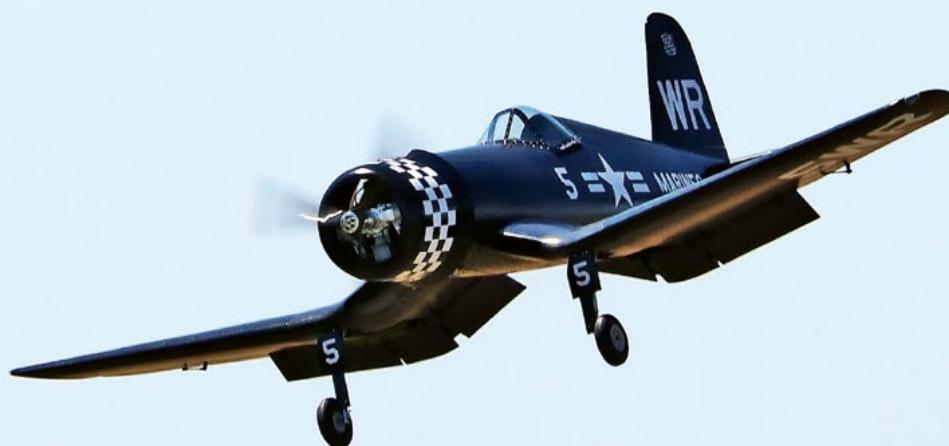
CORSAIR F4U – A WARBIRD WITH A MEMORABLE LOOK
Jürgen Rosenberger, Jürgen Prinz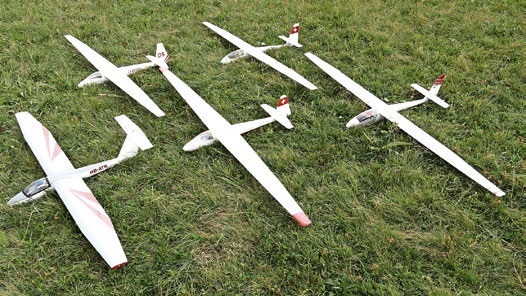
SMALL, MODEL-LIKE SAILBOATS
Res Dauwalder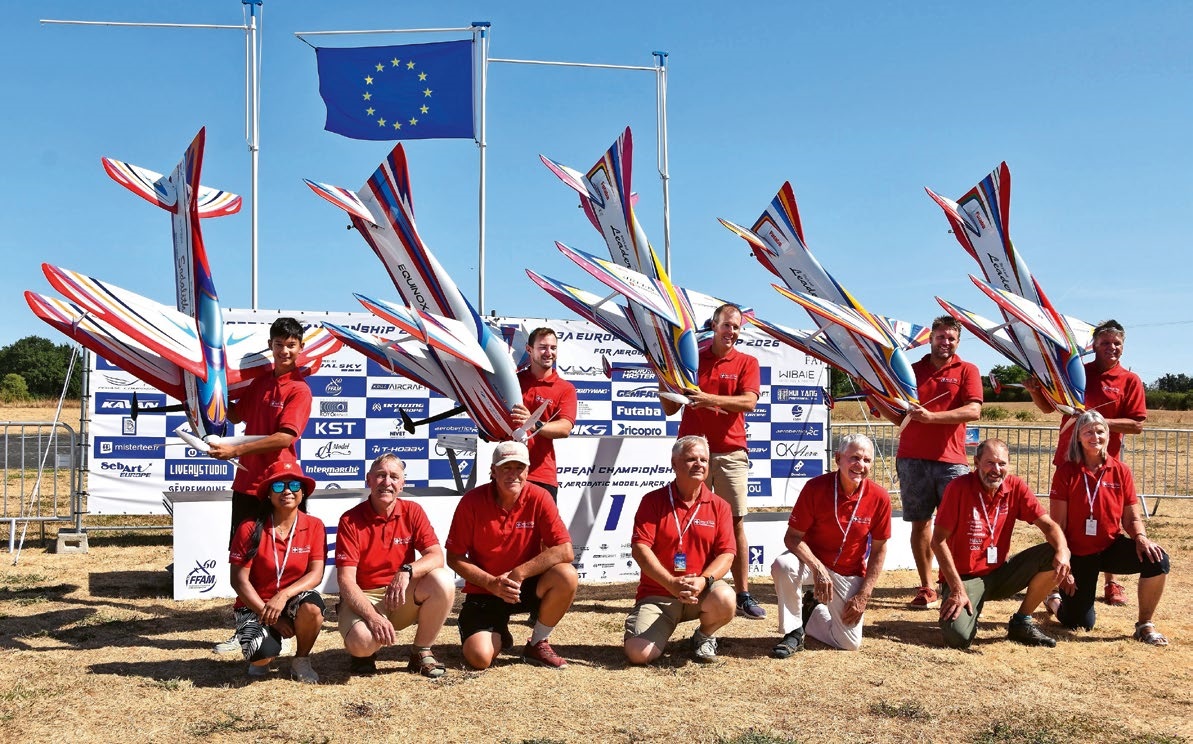
F3A EUROPEAN CHAMPIONSHIPS IN ST-MACAIRE, FRANCE
Matthias Bosshard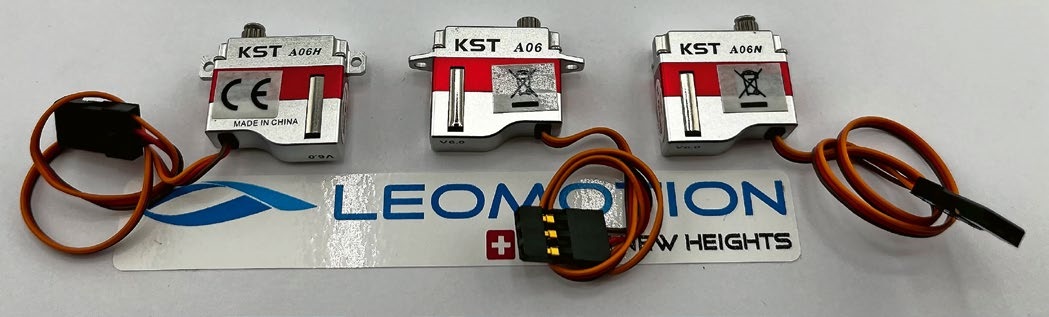
What's New at Leomotion.com
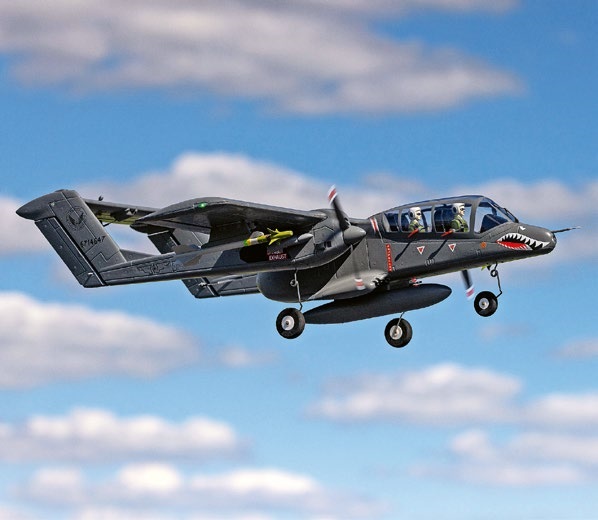
HORIZON HOBBY/LEMACO NEWS: MICRO OV-10 BRONCO 645 MM BY E-FLITE

PRIDE AND GOOD IDEAS
 Markus Nussbaumer

News from HEBU
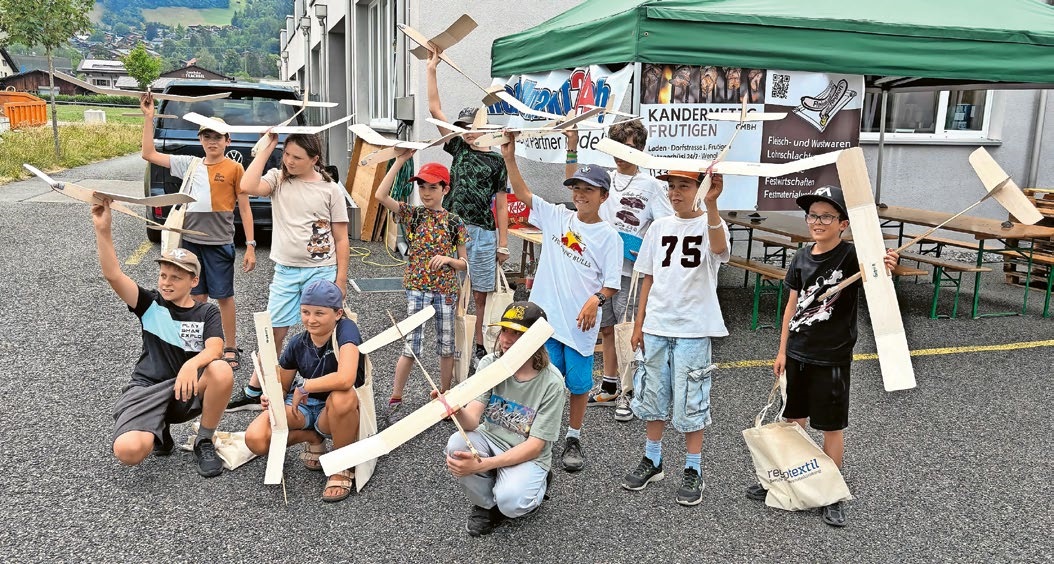
BY YOUTH, FOR YOUTH
Lorena Betschen
YOU KNOW WHAT I MEAN? 125 YEARS OF THE SWISS AERO CLUB
Emil Giezendanner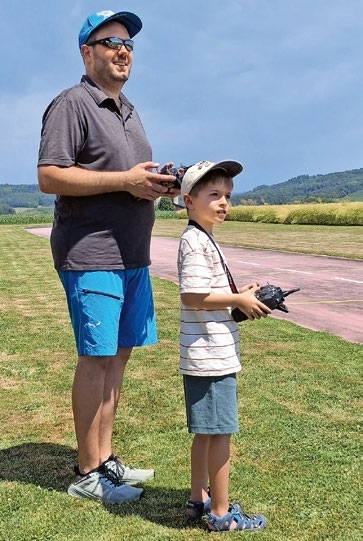
TRY-OUT DAY AT MFV WETTINGEN
Urs Keller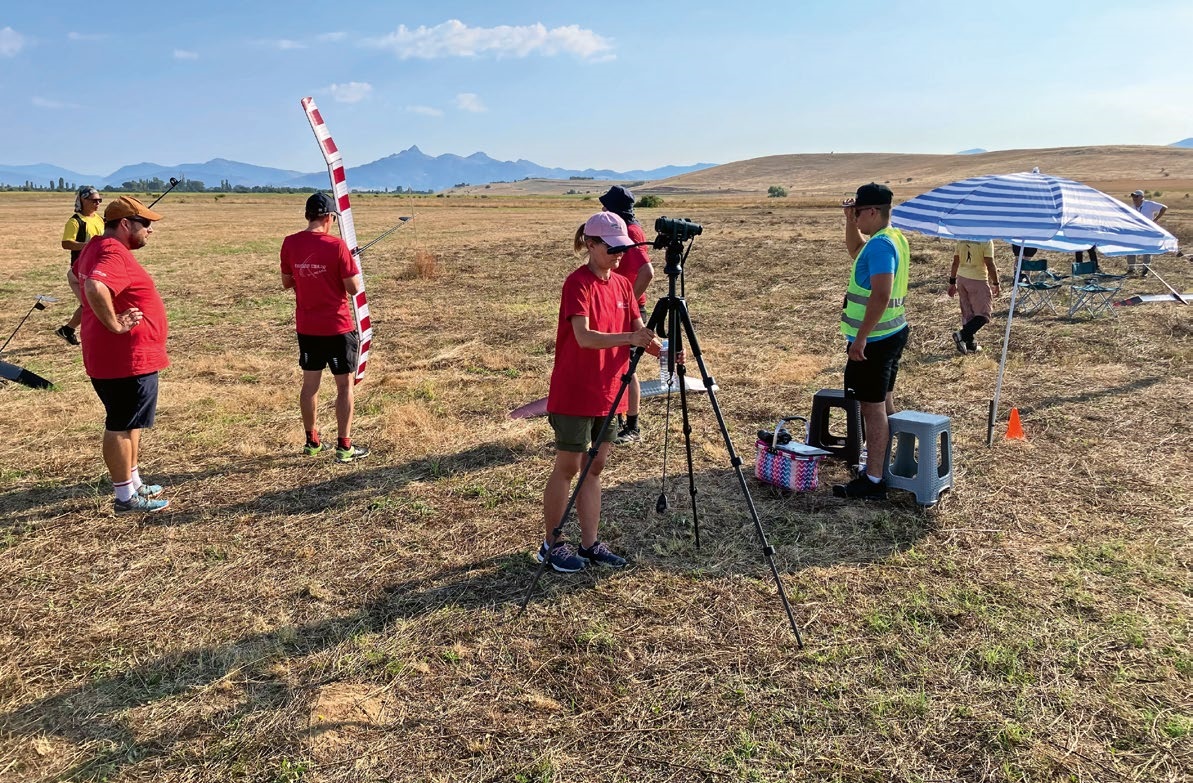
FREE FLIGHT IN THE MIDDLE OF SUMMER
Urs Muntwyler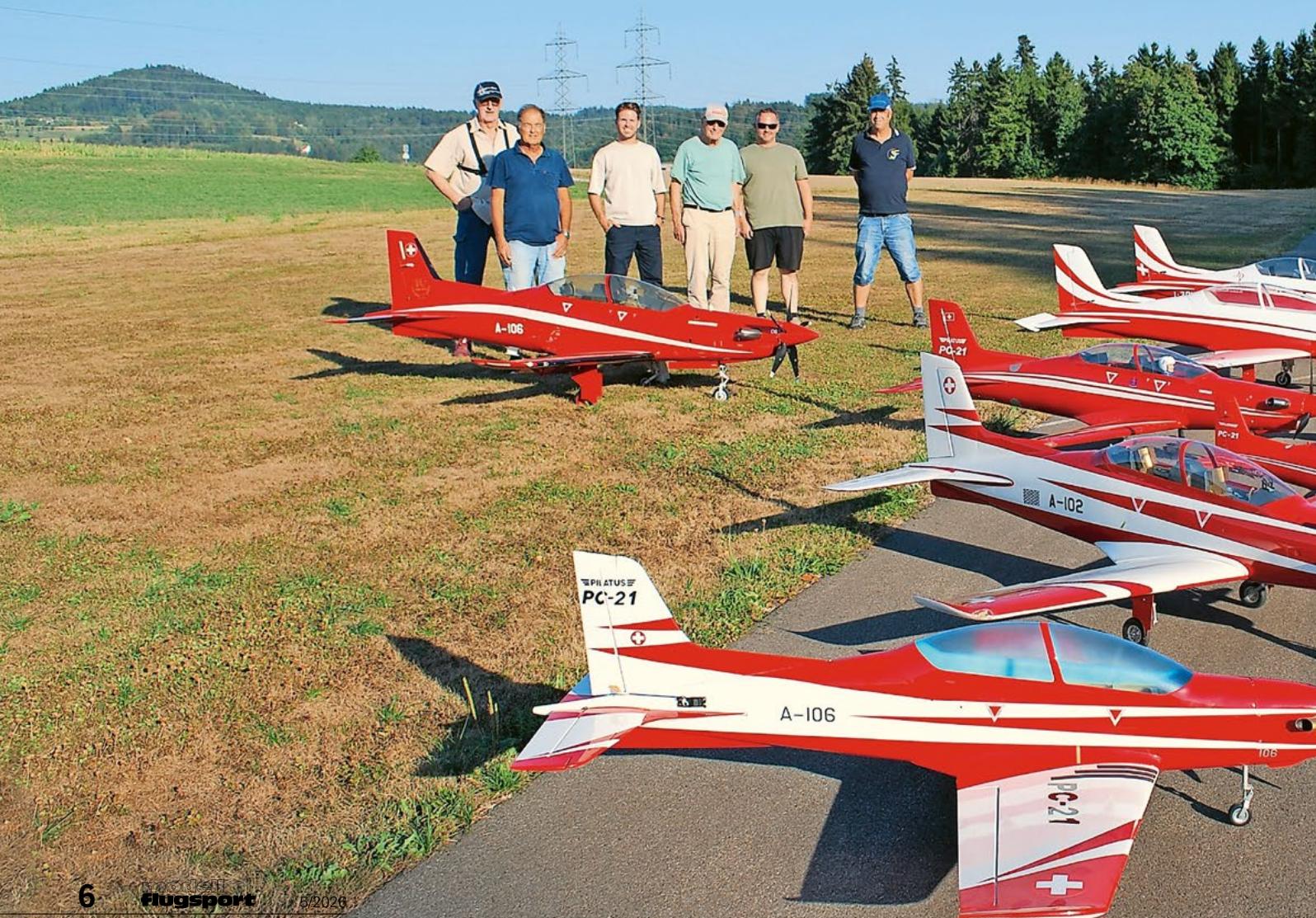
THE PC-21 STORY
Emil Giezendanner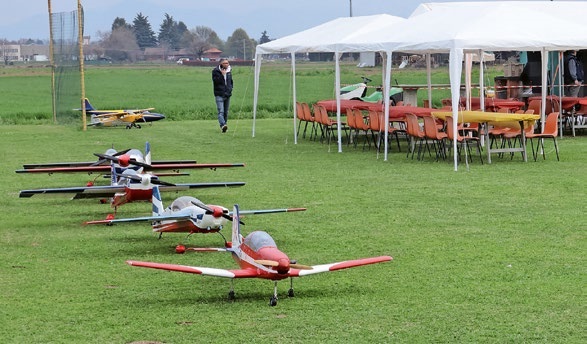
TWIN TOWN PARTNERSHIP
Wolfgang Voeller
EURO CONTEST GLIDER ACRO TOUR AUSTRIA 2026
WELCOME, NEW MEMBER!
Andrea Bolliger
COUPE DES ALPES – OBSERVE AND LEARN
Rodito Nussbaumer
NEWS FROM HEBU
 Julia Bucher
FROM 0 TO 100
Markus Nussbaumer
MEMORIES
Wolfgang Völler
NOS REGION – A HUB FOR ELECTRIC AVIATION
Emil Giezendanner
Have you almost forgotten about aircraft that take off and land vertically?
Emil Giezendanner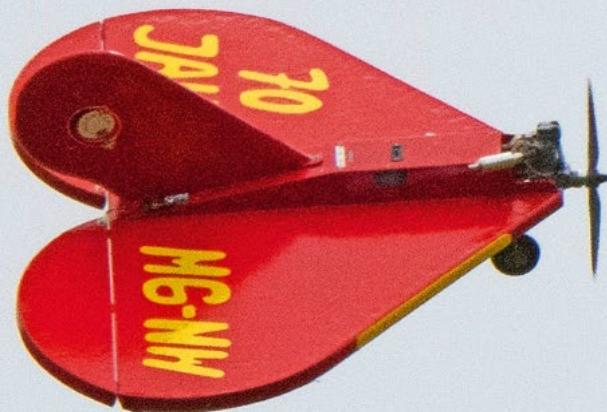
70 YEARS OF THE NIDWALDEN MODEL AIRPLANE CLUB
Martin Barmettler