
Winter Adventure
Dear Reader
When winter really started to make its presence felt recently, I was reminded of an equally cold Sunday afternoon in January. Electric flight hadn’t really taken off yet, but there was the wonderful OS Wankel engine, in whose development the Graupner company played a key role. As the proud owner of one of these little rotary engines and the matching NSU car, I was undecided for a long time about where I could put this —I mean the OS Wankel—until I happened to come across the Robbe kit for the Polish motor glider SZD-45 Ogar. “It’s as if it were made for my Wankel engine,” I thought to myself, and built the model (these kits still contained real wooden ribs and spars, and of course I knew that the airfoil was designed by Wortmann
, etc.). Otherwise, however, the motor glider looked quite exotic. True love, however, rarely pays attention to aesthetics, and so it came to pass that on the Sunday in question, I trudged proudly through the deep snow to the airfield with Ogar and a bottle of “Most.” The field, which we mostly use for slope soaring, is quite hilly, which was just right for my endeavor, since the wide, tadpole-like fuselage seemed to me to be ideally suited for a takeoff on snow. The landing gear bay was taped shut, and I could begin attempting to start the engine. It was clear to me that this wouldn’t be an easy task in such bitter cold. So I kept turning the propeller undaunted, though this didn’t seem to impress my Wankel in the least. As I gradually warmed up during this exercise, my brainwaves finally seemed to
, and I realized that the engine might be having starting difficulties due to its suspended installation. So, after removing the cowl and disconnecting the throttle linkage—after all, I wanted to fly, not throttle—I rotated the engine 180 degrees, and lo and behold, the thing ran right away and roared so loudly that the wolves of Abruzzo would have been in their element. Finally, I was ready to go. I placed the model in the snow track I’d prepared earlier and gave it a little push. It waddled through the snow like a lame duck and seemed to accelerate only barely. Pulling didn’t help; it just pushed the Ogar’s tail into the powder—it was enough to drive me to despair! Since the flying fields in my area are pretty short, the inevitable happened: The model finally staggered down a slope, howling, and vanished from my sight
. “False start!” I thought to myself, “Every beginning is hard,” set the transmitter down in the snow, and headed toward the slope where I suspected the model was. I’d been trudging through the deep snow for a good twenty meters when I suddenly saw my Ogar streaking toward the sky with a wail. No Iron Man could have run back to the transmitter any faster than I did. Still, I was too late. The model performed a few rapid spirals—first up and then down... and then disappeared behind the hill again—but this time for good—before I could get my hand on the control stick. And the moral of the story: Never let go of the transmitter until you know exactly what the plane is up to.
Best regards
Emil Ch. Giezendanner
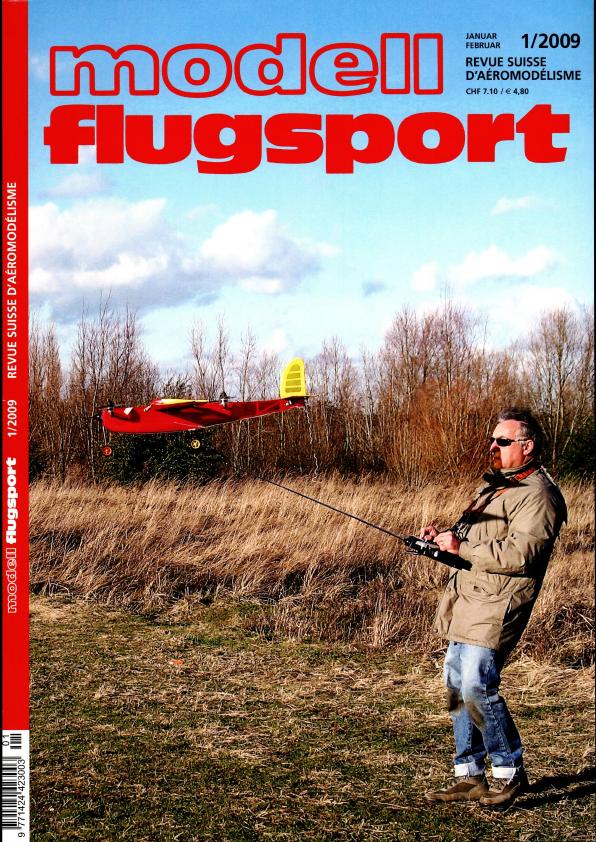

TEAM MANAGER "THIS" BOSSHARD
 Rodito Nussbaumer

YOU KNOW WHAT I MEAN? 125 YEARS OF THE SWISS AERO CLUB
 Emil Giezendanner

F3A EUROPEAN CHAMPIONSHIPS IN ST-MACAIRE, FRANCE
 Matthias Bosshard

News from HEBU

SUMMER FUN 2026 AT MG USTER
Martin Wunderli
TRY-OUT DAY AT MFV WETTINGEN
Urs Keller
52. 2026 ALPS CUP
Emil Giezendanner
BY YOUTH, FOR YOUTH
Lorena Betschen
ATOM, THE NEW DOUBLE-DECKER FROM CPLR
Matthias Bosshard
CORSAIR F4U – A WARBIRD WITH A MEMORABLE LOOK
Jürgen Rosenberger, Jürgen Prinz
SMALL, MODEL-LIKE SAILBOATS
Res Dauwalder
What's New at Leomotion.com

TWIN TOWN PARTNERSHIP
Wolfgang Voeller
EURO CONTEST GLIDER ACRO TOUR AUSTRIA 2026

INSIGHTS INTO THE HISTORY OF SEAPLANES

34th HAHNENMOOS ALPINE MODEL AIRPLANE CAMP
Res Dauwalder
HORIZON HOBBY/LEMACO NEWS: MICRO OV-10 BRONCO 645 MM BY E-FLITE

COUPE DES ALPES – OBSERVE AND LEARN
Rodito Nussbaumer
PRIDE AND GOOD IDEAS
 Markus Nussbaumer

FREE FLIGHT IN THE MIDDLE OF SUMMER
Urs Muntwyler
THE PC-21 STORY
Emil Giezendanner
WELCOME, NEW MEMBER!
Andrea Bolliger
NEWS FROM HEBU
 Julia Bucher

FROM 0 TO 100
Markus Nussbaumer
MEMORIES
Wolfgang Völler
NOS REGION – A HUB FOR ELECTRIC AVIATION
Emil Giezendanner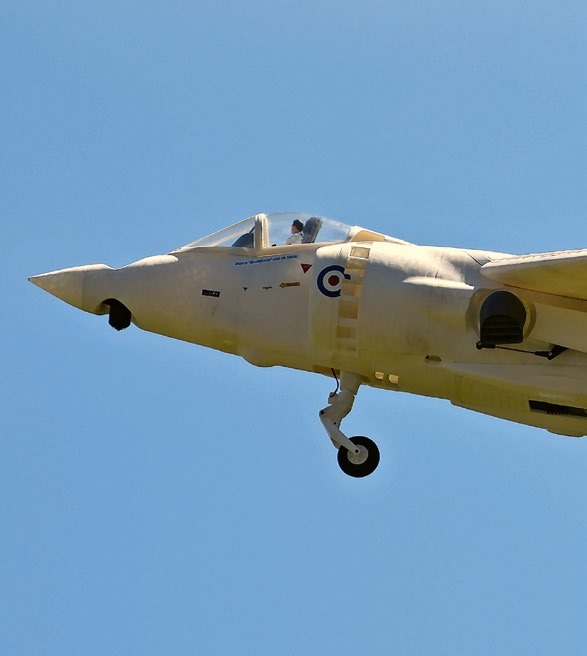
Have you almost forgotten about aircraft that take off and land vertically?
Emil Giezendanner
70 YEARS OF THE NIDWALDEN MODEL AIRPLANE CLUB
Martin Barmettler