
1981 World Championships in RC Aerobatics (F3A) in Mexico
A thoroughly subjective account—based on personal experience—in words and pictures by Emil Giezendanner.
The 1981 World Model Aerobatics Championship in Acapulco, Mexico, left some questions unanswered from a sporting perspective. Hanno Prettner of Austria won for the second time, ahead of Dave Brown of the U.S. and W. Matt of Liechtenstein. The team competition, however, was won by the Americans, ahead of West Germany and Japan. Bruno Giezendanner was once again by far the best Swiss competitor, finishing in 13th place.
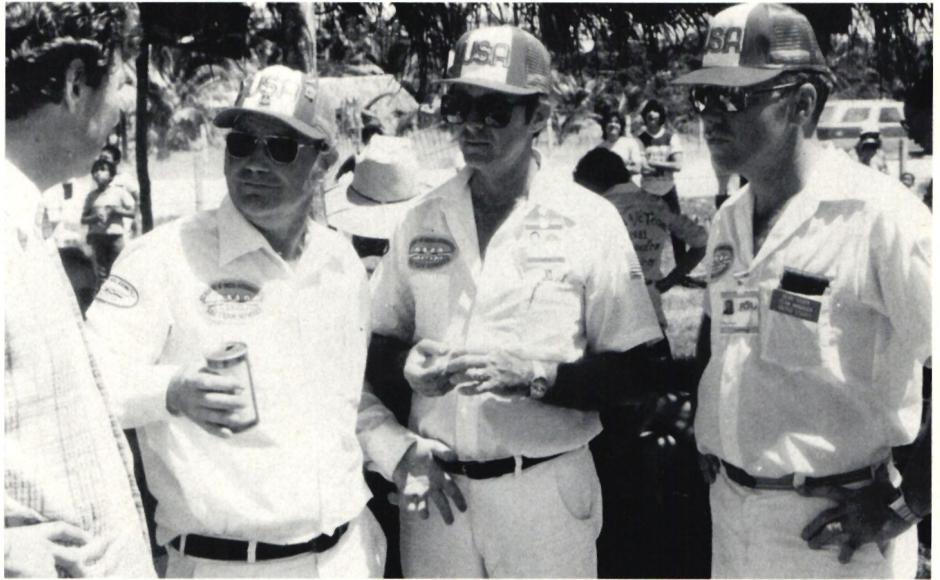
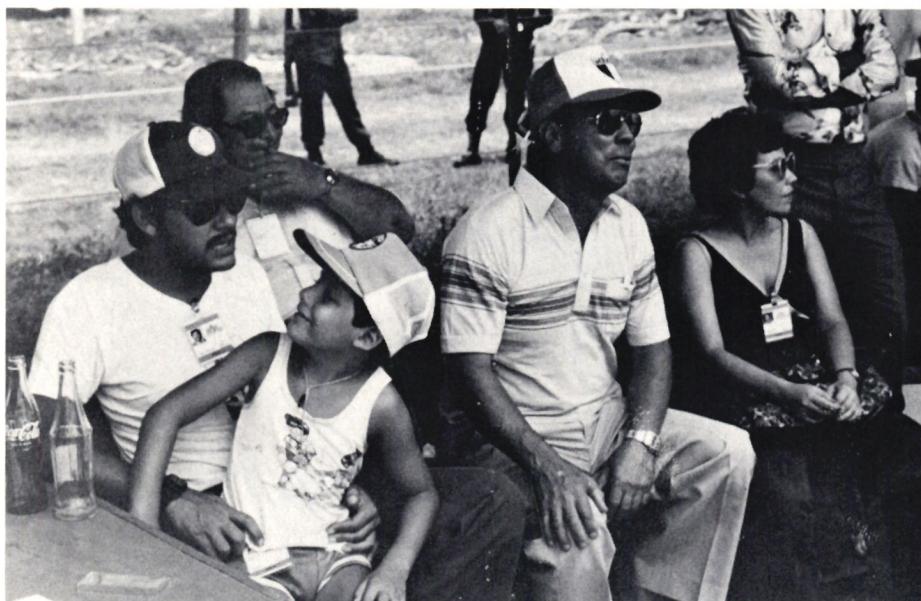
Since each country can send only three participants to model aircraft world championships, the event is preceded in virtually all industrialized nations by numerous rigorous national qualifying and selection flights. Those who have cleared all these hurdles and are participating in a World Championship as well-prepared as possible naturally expect a well-organized event. Although most teams were certainly braced for some challenges given the inexperience of the Mexican Aero Club, the actual organization fell far short of expectations—exceeding even their worst fears. Any expert familiar with these countries would understand that there might be a lack of state-of-the-art technical equipment for radio monitoring, noise measurement, etc.—or at least a lack of expertise in operating such equipment. But when a World Championship organizer is unable to issue an official final standings list—neither for the individual nor the team classifications—by the time the teams depart, one cannot blame the athletes for their disappointment and anger. The only thing that was executed perfectly—right on the minute—was the opening and closing ceremonies, although to Europeans, the military marching in parade formation seemed more comical than solemn.
This World Championship is certain to lead to heated disputes at the annual conference of the FAI’s highest model aviation organization (CIAM). Serious accusations against the Mexicans are inevitable; after all, this time it wasn’t just the athletes who were affected. International officials, such as the jury, judges, and others, were equally dissatisfied, and it is an open secret that these people had threatened to go on strike if their airfare wasn’t reimbursed on time.
Although more than sixty pilots from thirty countries were on the starting line, an exorbitant entry fee—by model aviation standards—was charged, which had already led to various protests and withdrawals beforehand. In the end, the inevitable happened: The 1981 World Model Aircraft Championships fell through—not just symbolically, but literally— since, in the middle of the $40 closing banquet in the Grand Hall on the 19th floor of a massive hotel complex, after a five-liber feast, the venue had to be evacuated within minutes due to an alleged bomb threat...
While in the early 1970s Webra was a leader in engine manufacturing and consistently accounted for the largest share of all brands competing in world championships and other major aerobatics competitions, today only the very conservative or financially and commercially dependent F3A pilots —and, it must be emphasized here, with very mixed results. Webra also suffered similar losses in pylon racing. The reasons behind this significant loss of market share, but also—and this, in my opinion, carries even greater weight—in prestige among competition pilots, is naturally not apparent to outsiders, since changes in management can have an impact on ongoing research and development and thus, ultimately, on today’s extremely fierce competitive conditions.
The real debacle for Webra had begun around 1976, when crankshafts broke en masse at the European Championships and other competitions (and this was significant because it happened in public), prompting some helpful folks from the factory to show up immediately with a mobile repair shop. By that time, we had already switched to Super Tigre…
Even the two top drivers, Prettner and Matt, didn’t escape that European Championship without a setback. No one and no brand is immune to such incidents; the crucial thing is what lessons are learned from them. Unfortunately, the response has essentially been limited to giving the writers and their magazines—which report on such incidents—a good scolding. Logically, this does little to improve the engine itself, and it casts the management in an even stranger light. It’s not just the writers who have felt this pressure, but also “retired” drivers. It may be that, aside from this rather “business-oriented development,” little has been left for the actual development of the engine—I can’t judge that and must therefore limit myself to the technical aspects. Since then, the Webra engine has seen only minor improvements in terms of performance and quality. When compared to other engine brands, such as Rossi, Super Tigre, or OS, one might even say there has been a standstill. Originally, a great deal of innovation took place at Webra, which proved highly successful. Today, the focus is on copying, though in most cases the technical prerequisites—and, above all, the know-how—are lacking. Here’s an example: Italian engines were already running on hard-chromed cylinder liners a good twenty years ago. The results were excellent, particularly in terms of these engines’ service life. The Italians have, of course, continued to refine the hard-chroming technology and are now world leaders in this field. About eight years ago, Webra also introduced hard-chromed cylinder liners. But the whole process isn’t as easy to copy as people in Austria had imagined back then: If the materials and hardness of the piston rings and cylinder liners aren’t carefully matched, wear will be greater than before. At the time, I wrote to Webra to point out this unfortunate fact. Well, the reply took quite some time to arrive, but it did come eventually, and in that letter they explained to me that the terribly black gunk splattered all over the model was “normal,” since it was burnt oil, which is important for cooling. Strictly speaking, I could have told myself that black models after every flight weren’t normal for me, but what bothered me was that said “sauce” contained an abnormally high amount of metal! This was evident in the models’ lifespan: competition pilots always have a box full of Webra spare parts—cylinder kits, crankshafts, and, in particular, a lot of ball bearings. The latter is still true today. When you talk to Webra pilots, they always say they just replaced all the bearings last week or installed a new cylinder kit—almost like in a racing class: one race—one engine. More recently, Webra also experimented with ABC engines. Well, given their experience with hard chrome plating, they should have stayed away from that: ABC running gear sets place the very highest demands in terms of material selection and precision—both of which have proven to be weak points for Webra. At this year’s World Championships in Mexico, the stagnation compared to other products became clearly evident:
1. World Champion Prettner has switched to Super Tigre!
2. Wolfgang Matt had a mechanical failure.
3. The only Webra in the Swiss team (Schumacher) ran more than poorly.
4. Only one Webra remains in the top five of the final standings!
These four points—which could be expanded upon—speak for themselves. If you aren’t born with that innate talent for engines, as is sometimes the case with the Italians, you have to compensate with quality. For example, Bruno Giezendanner flew the same OS in Mexico as he did two years ago in South Africa—without changing a single bearing or other part and with an enormous number of flight hours; to me, these are practical examples of how it should be done.
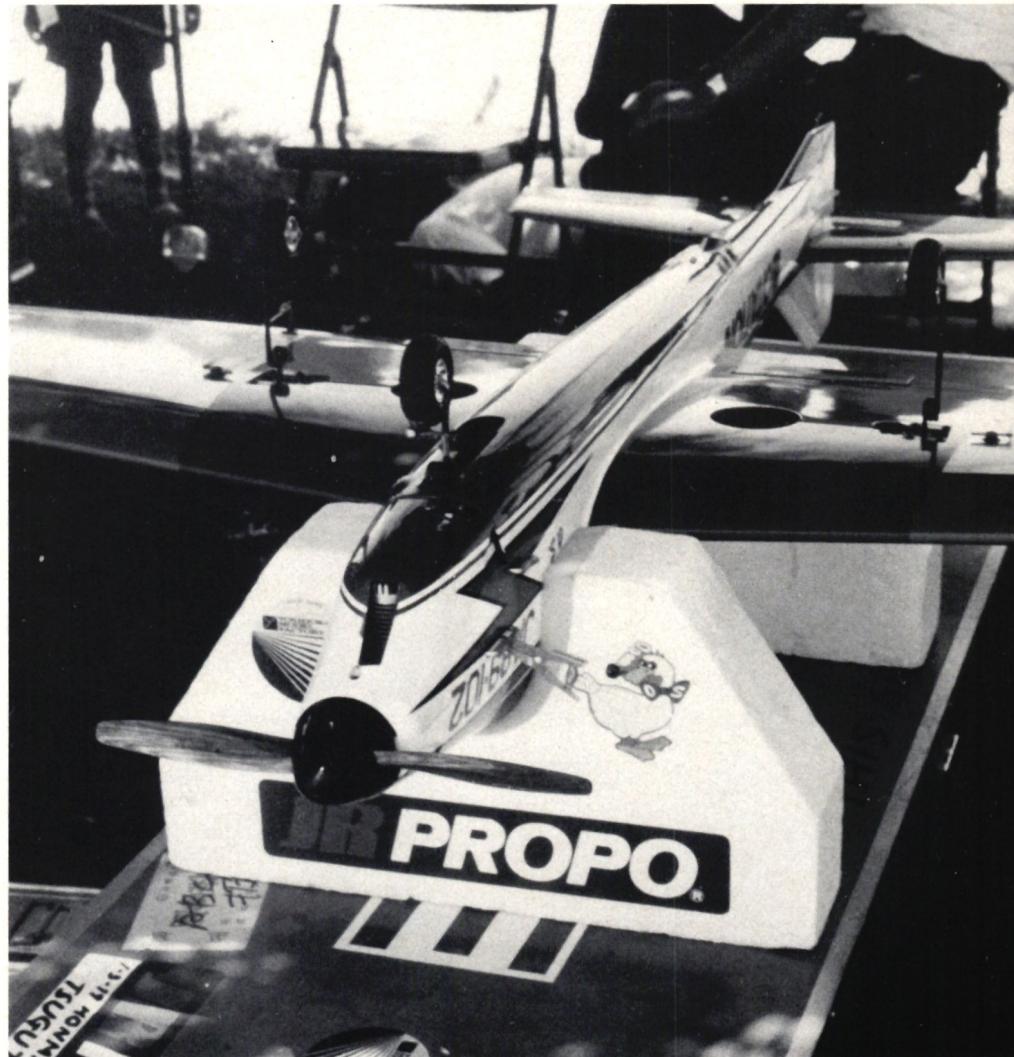
Hanno Prettner of Klagenfurt, Austria, has been the undisputed world’s best RC aerobatic pilot for about five years. Various parties—obviously his rivals—repeatedly accuse him of all sorts of underhanded schemes. Among these accusations, there are certainly some that cannot be denied as having some truth to them. However, the vast majority must clearly be regarded as negative whisper campaigns, psychological warfare, attempts to influence the judges, lame excuses for one’s own incompetence, and, to a large extent, an expression of envy.
In terms of technical design, Prettner is not much further ahead than the majority of the world’s top pilots. His MAGIC model can be considered an advanced design with a fully integrated motor and muffler, which certainly represents an aerodynamic improvement over cylinder heads that protrude into the air. But at the same time, it must be clearly stated here that in certain circuit flying categories, this configuration is traditional. As early as 1977, a Norwegian pilot used such an RC model at the F3A World Championships in Springfield.
There is no doubt that Prettner’s MAGIC exhibits excellent flight characteristics. Prettner’s maneuvers are smoother and more consistent than those of most other competitors. The balance between weight, wing area, control surfaces, and lever arms strikes me as particularly well-executed and is a testament to Prettner’s many years of experience. (The design of RC aerobatic aircraft is often underestimated; nevertheless, only a few manage to produce a viable design.)
In terms of flying ability, I believe Prettner is currently unrivaled. The talk leading up to the World Championships about an alleged slump in form, etc., proved to me—after I watched a training flight—to be wishful thinking on the one hand, but on the other hand, it also made it clear to me that many so-called F3A specialists (including some judges) lack the feel for aerobatics needed to properly appreciate the sophisticated subtleties of Prettner’s maneuvers—though the use of the KATO variable-pitch propeller as a dive brake in vertical sections of the maneuvers should be explicitly excluded from this discussion. Of course, the model maintains the same speed along the line of descent as in the other parts of the maneuver, but, based on my observations, it loses a bit of stability as a result.
*Left: One of the most beautiful models at this year's World Championship was flown by T. Yoshioka of Japan (1973 World Champion).*
Once again, the entire Swiss team was perfectly prepared, both technically and in terms of flying skills. Team leader Hansruedi Pfister from Worb was thus able to send his men into the competition with confidence. We knew that, with a little luck, top finishes were within reach—especially for Bruno. But a top team finish should also have been well within reach. This time, however, luck wasn’t on our side. Even the start numbers didn’t bode well: Bruno had to fly three times early in the morning, when statistics show that the judges’ scores tend to be lower. Bruno was also one of the very first pilots in the World Championships to take off—which isn’t exactly ideal, even in downhill skiing. For a long time, however, things looked quite good for him, and a spot in the finals seemed likely:
The fourth round threw everything into disarray and, in particular, held us Swiss back excessively overall. I see no objective reasons for this. I believe that these peculiar “shifts” in the rankings are largely attributable to the scoring system. A system that summarily eliminates 50% of the entire competition—the judges’ discretion! So half of all that effort went down the drain. Another unpleasant fact was that there were only four judges available per starting position. This left us at the mercy of both malicious and simply downright stupid evaluations. A sort of balancing justice through the majority of the judges could therefore no longer come into play. Once again, the highest and lowest scores were not eliminated! This fact greatly disappointed us Swiss, even though the team spirit, the cooperation, and—as mentioned—the flying and technical aspects were nearly perfect. Our performance, which didn’t quite meet expectations, had little to do with the alarmingly poor organization. “What matters isn’t what or how you fly, but that you get the points.” This is a common slogan among RC aerobatic pilots. Unfortunately, we didn’t get any points. To illustrate this better, here is the scoring for my decisive third flight:
| Judges | Country | Points |
|---|---|---|
| Freund | Austria | 294 |
| Franklin | England | 274 |
| Gérard | Luxembourg | 267 |
| Hofer | Switzerland | 239 |
The third flight is crucial because it marks the second time you’ll face the same panel of judges, and there would be an opportunity to improve your score.
**SCORPION III**
designed by
Bruno & Emil Giezendanner
Switzerland
wingspan : 160 cm
weight : 4300 g
integrated engine and
exhaust pipe
drawing by this bosshard
When you look at the overall standings, which include all pilots and all points, this question practically begs to be asked. Virtually all pilots were able to improve in their third and fourth flights—as is to be expected. The Swiss wouldn’t even have needed to compete in the second half of the World Championship; they would have been ranked exactly the same. The second half of the World Championship clearly set us back, even though we learned a great deal, especially regarding the peculiarities of the terrain.
We certainly didn’t fly any worse than the scores might suggest. The reason for this drop in points for the Swiss will likely never be fully understood. What is clearly underestimated to this day is certainly the role of one’s own judge. Not only because the team may ultimately be missing important points or not, but also because, based on my experience so far, when judges are extremely lenient, other countries could take revenge—and as is the case everywhere, an extreme stance is only harmful here as well. This requires the judge to coordinate tactically with his colleagues so that he does not become an outsider and his own team has to suffer as a result.
After a good start—Bruno was in 5th to 7th place for a long time, René around 20th, and the reporter in 14th—such a slump, which is unusual in this sport, was simply baffling. All pilots and teams can improve, but not us Swiss!
We didn’t protest because of this, but instead came to terms with our inevitable fate. Based on my observations, the entire team behaved impeccably, in the spirit of sportsmanship, fairly, and with integrity.
Aside from the World Championship, which ended early in the afternoon, there was at least enough time this time around to foster camaraderie. Of particular interest to us Europeans, of course, was the conversation with the pilots from Japan, which opened up dimensions that we can only barely comprehend. When it comes to model aviation, one might almost speak of “unlimited possibilities.”
*The Giezendanner brothers’ Scorpion model was flown in Johannesburg as early as 1969 in the same version. – Today, fully integrated engines and mufflers are considered modern. The suspended engine is also experiencing a renaissance.*
Left: The Swiss National RC Aerobatics Team (F3A) with an alphorn. Of course, the men would have liked to take a few Unspunnen stones with them—but these were too heavy and not very easy to handle. In the foreground are mechanic and alphorn player Markus Wyss and, from left to right: Emil Giezendanner, pilot; Matthias Bosshard, mechanic; Hansruedi Pfister, team leader; Christine Pfister, mechanic; René Schumacher and Bruno Giezendanner, pilots.
| 1. H. Prettner, Austria | 2841 + 2893 |
| 2. D. Brown, USA | 2790 + 2820 |
| 3. W. Matt, Liechtenstein | 2733 + 2836 |
| 4. B. Lossen, Federal Republic of Germany | 2656 + 2911 |
| 5. M. Radcliffe, USA | 2629 + 2758 |
| 6. G. Hoppe, Federal Republic of Germany | 2615 + 2727 |
| 7. I. Kristensen, Canada | 2602 |
| S. Helms, USA | 2602 |
| 9. V. Akiba, Japan | 2581 |
| 10. G. Naruke, Japan | 2533 |
| 11. W. Schweiker, Federal Republic of Germany | 2524 |
| 12. B. Bertolani, Italy | 2511 |
| 13. B. Giezendanner, Switzerland | 2508 |
| 14. T. Yoshioka, Japan | 2499 |
| 15. G. Marsen, Canada | 2466 |
| 16. G. Werrion, Belgium | 2465 |
| 17. J. Gagnon, Canada | 2409 |
| 18. H. Kowarz, Austria | 2366 |
| 19. R. Pasqualini, Italy | 2362 |
| 20. G. Bertolozzi, Italy | 2351 |
| 21. D. Fritz, Austria | 2345 |
| 22. P. Ardonneau, France | 2336 |
| 23. T. Prosser, Australia | 2320 |
| 24. A. Degotte, Belgium | 2314 |
| 25. R. Schumacher, Switzerland | 2310 |
| 26. K. Binks, Great Britain | 2298 |
| 27. E. Giezendanner, Switzerland | 2295 |
| 28. P. Stevens, Great Britain | 2284 |
| 29. J. Van Vliet, Netherlands | 2283 |
| 30. P. Malfait, France | 2279 |
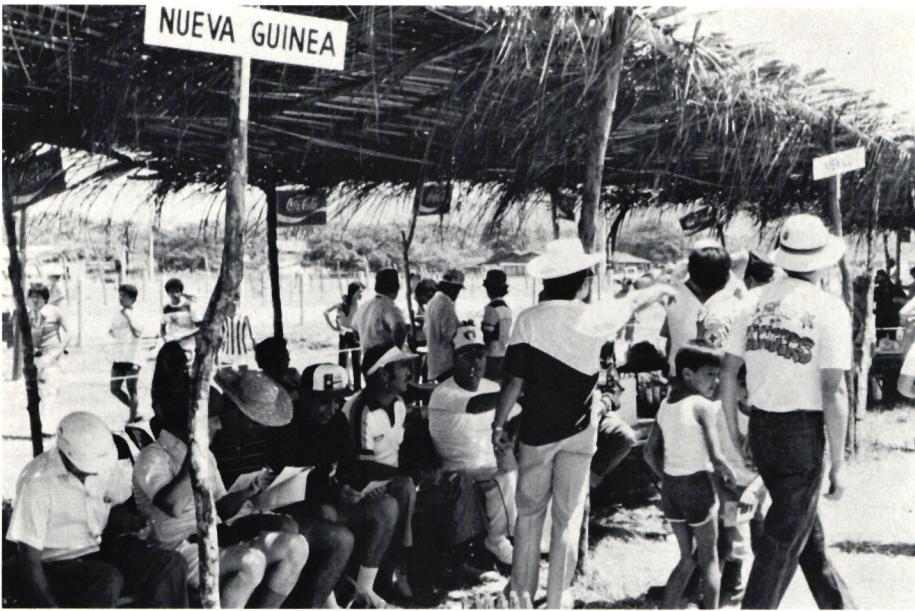
| 31. G. Stowell, Papua New Guinea | 2268 |
| 32. B. Brotherton, Great Britain | 2255 |
| 33. H. Dekkers, Netherlands | 2242 |
| 34. G. Marxer, Liechtenstein | 2232 |
| 35. A. Bemitez, Mexico | 2195 |
| 36. T. Revett, Australia | 2157 |
| 37. F. Lenearts, Belgium | 2118 |
| 38. E. Lumsdain, Australia | 2101 |
| 39. M. Davila, Mexico | 2100 |
| 40. P. Behm, Luxembourg | 2076 |
| 41. L. Gerrard, Luxembourg | 2076 |
| 42. J. Cerdan, Spain | 2040 |
| A. Kirmann, France | 2040 |
| 44. M. Lynch, New Zealand | 2011 |
| 45. P. Andreasen, Denmark | 1963 |
| 46. S. Pompei, Brazil | 1942 |
| 47. D. Falco, Argentina | 1929 |
| 48. L. Castaneda, Mexico | 1915 |
| 49. P. Romano, Brazil | 1872 |
| 50. A. Malsonado, Argentina | 1833 |
Total of 62 pilots classified
| 1. United States | 8021 |
| 2. Federal Republic of Germany | 7795 |
| 3. Japan | 7,613 |
| 4. Austria | 7,552 |
| 5. Canada | 7,477 |
| 6. Italy | 7,224 |
| 7. Switzerland | 7,113 |
| 8. Belgium | 6,907 |
| 9. Netherlands | 6,839 |
| 10. United Kingdom | 6,837 |
| 11. France | 6,655 |
| 12. Australia | 6,578 |
Total: 27 teams


News from HEBU

TEAM MANAGER "THIS" BOSSHARD
 Rodito Nussbaumer

SUMMER FUN 2026 AT MG USTER
Martin Wunderli
BY YOUTH, FOR YOUTH
Lorena Betschen
SMALL, MODEL-LIKE SAILBOATS
Res Dauwalder
TRY-OUT DAY AT MFV WETTINGEN
Urs Keller
What's New at Leomotion.com

52. 2026 ALPS CUP
 Emil Giezendanner

ATOM, THE NEW DOUBLE-DECKER FROM CPLR
 Matthias Bosshard

INSIGHTS INTO THE HISTORY OF SEAPLANES

YOU KNOW WHAT I MEAN? 125 YEARS OF THE SWISS AERO CLUB
Emil Giezendanner
34th HAHNENMOOS ALPINE MODEL AIRPLANE CAMP
Res Dauwalder
CORSAIR F4U – A WARBIRD WITH A MEMORABLE LOOK
Jürgen Rosenberger, Jürgen Prinz
F3A EUROPEAN CHAMPIONSHIPS IN ST-MACAIRE, FRANCE
Matthias Bosshard
HORIZON HOBBY/LEMACO NEWS: MICRO OV-10 BRONCO 645 MM BY E-FLITE

PRIDE AND GOOD IDEAS
 Markus Nussbaumer

EURO CONTEST GLIDER ACRO TOUR AUSTRIA 2026

FREE FLIGHT IN THE MIDDLE OF SUMMER
Urs Muntwyler
THE PC-21 STORY
Emil Giezendanner
TWIN TOWN PARTNERSHIP
Wolfgang Voeller
WELCOME, NEW MEMBER!
Andrea Bolliger
COUPE DES ALPES – OBSERVE AND LEARN
Rodito Nussbaumer
NEWS FROM HEBU
 Julia Bucher

FROM 0 TO 100
Markus Nussbaumer
MEMORIES
Wolfgang Völler
NOS REGION – A HUB FOR ELECTRIC AVIATION
Emil Giezendanner
Have you almost forgotten about aircraft that take off and land vertically?
Emil Giezendanner
70 YEARS OF THE NIDWALDEN MODEL AIRPLANE CLUB
Martin Barmettler