
Take off using your own power
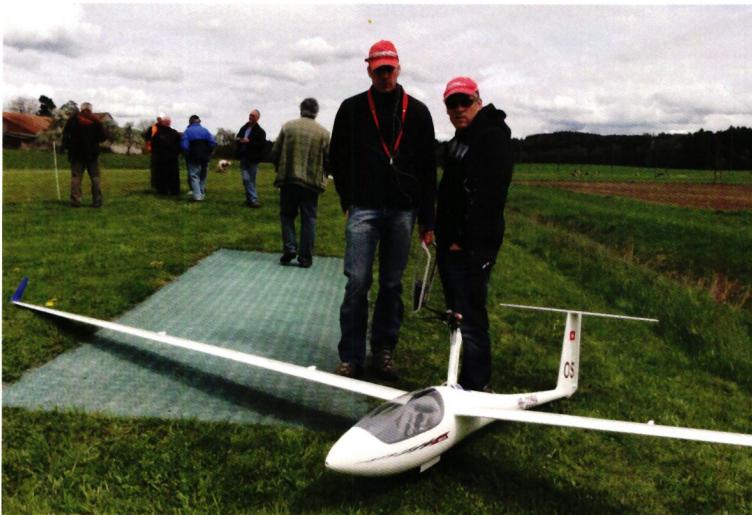
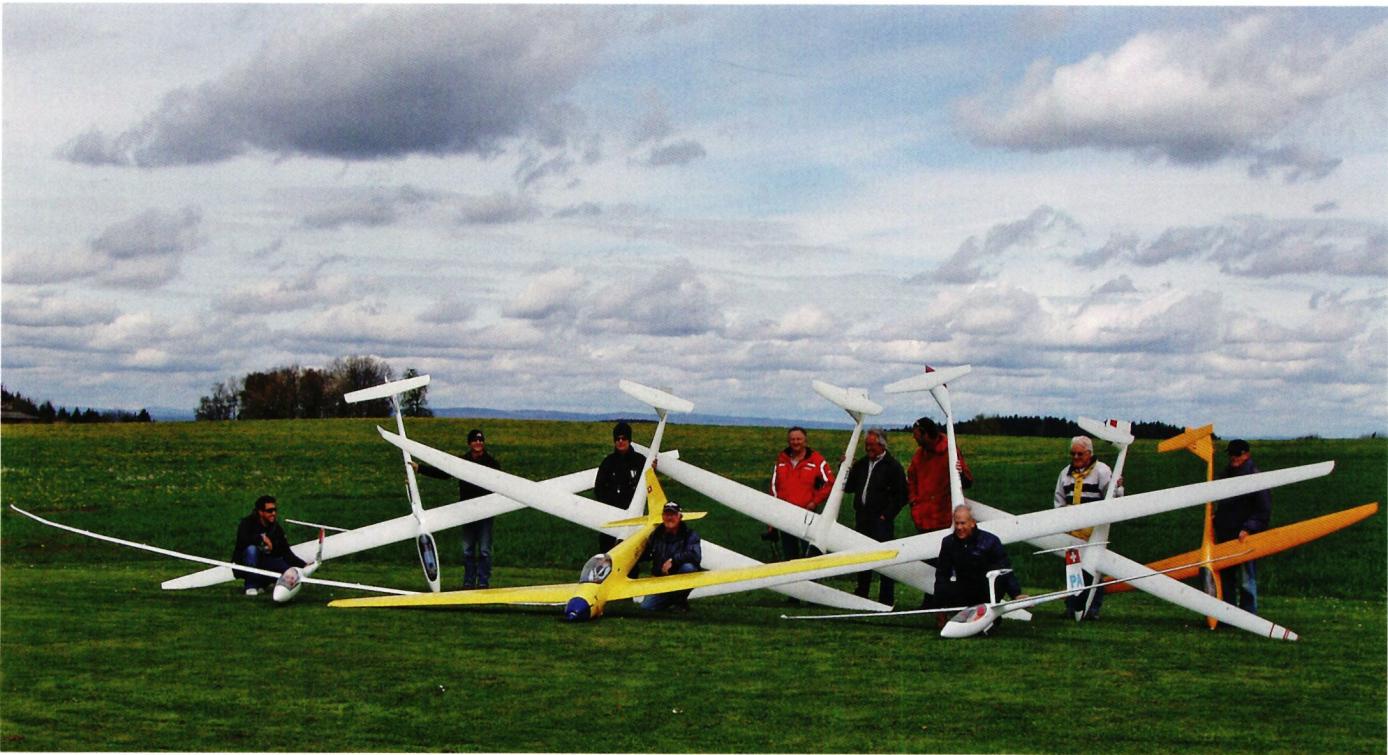
A dozen large glider pilots gathered with their gliders at the MG Winterthur airfield in Ricketwil near Räterschen. For once, there wasn’t a single tow plane on the field. However, this was not an organizational oversight, but rather an essential part of the program. Each glider had to be capable of taking off and gaining altitude using its own propulsion.
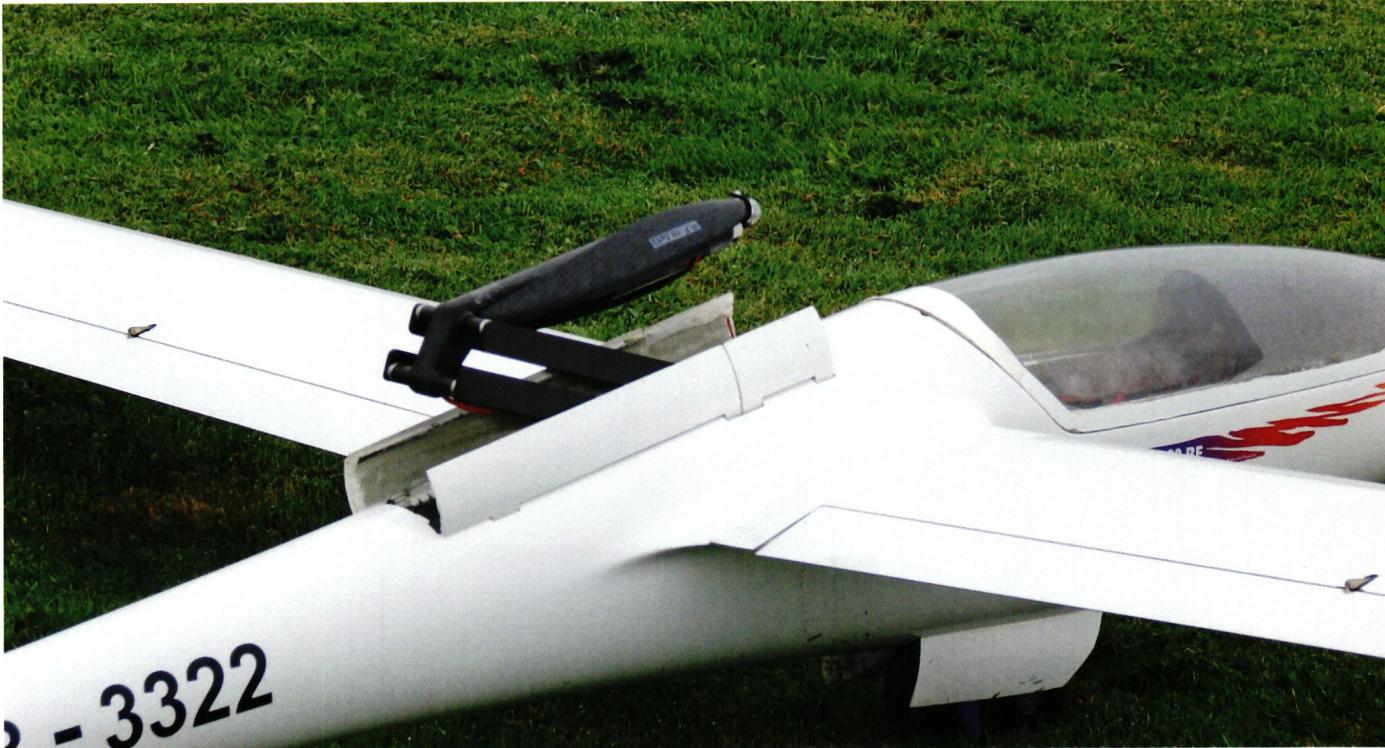
After a prolonged period of rain, the weather forecasters had predicted anything but perfect weather for this day as well. At least, however, dry conditions were expected until the arrival of the next rain front later that afternoon. The welcome coffee in the cozy dining room of the nearby Landhaus restaurant was therefore kept rather brief. The first flights followed shortly thereafter. The gusty crosswind at the start made takeoffs challenging, as the gliders threatened to veer off course during the run-up and there was a risk of collision with the safety net. Thanks to their experience, however, all pilots managed to get their gliders off the ground and land safely again. All the familiar propulsion variants were on display. About half of the gliders—primarily in 1:3 or 1:3.5 scale—were equipped with retractable engines from Schambeck, Ritzmann, and JK. Some pilots of folding-engine gliders also used a rubber cord, which helped accelerate the takeoff and reduced the effect of crosswinds. Several aircraft featured the
They featured a classic front-engine layout. They were primarily launched into the air using a rubber catapult, after which the engine was started. An ASK 14 (1:2.5, 17 kg) equipped with just 10 LiPo batteries demonstrated clean ground launches from the grass runway, even though the low-mounted front propeller occasionally brushed the tips of the grass. Lighter gliders were launched into the air using classic hand launches. The Chocofly system with a rigid motor pylon also proved impressive. The advantage here is that the powerplant can be removed in just a few simple steps and transferred to another model. The flights of a Scheibe SF 33 were also impressive; as the only motor glider powered by a gasoline engine, it took to the skies more quietly than many “electric” models. Unfortunately, one interesting experiment could only be viewed from inside a trunk: a glider with (still)
non-retractable electric impeller. This could present development potential for another variant of the folding engine. Fortunately, the crosswind subsided as the day went on. Despite a cloud cover that was almost completely overcast at times, all the pilots got their money’s worth. The thermals—mostly fragmented but clearly marked by birds of prey—carried the gliders hundreds of meters upward in a single rise on more than one occasion. Flight operations were suspended just in time before the arrival of the forecast rain front. Visibly satisfied, everyone gathered again afterward at the Landhaus restaurant. It was unanimously decided that this should not be the last motor glider meet. Many thanks to MG Winterthur, represented by René Koblet and Herbert Niederer, who spontaneously made their beautiful airfield available for this event, and to Peter Aeberli, who organized the gathering.
Georg Staub


What's New at Leomotion.com

PRIDE AND GOOD IDEAS
 Markus Nussbaumer

News from HEBU

TEAM MANAGER "THIS" BOSSHARD
 Rodito Nussbaumer

ATOM, THE NEW DOUBLE-DECKER FROM CPLR
 Matthias Bosshard

INSIGHTS INTO THE HISTORY OF SEAPLANES

34th HAHNENMOOS ALPINE MODEL AIRPLANE CAMP
Res Dauwalder
CORSAIR F4U – A WARBIRD WITH A MEMORABLE LOOK
Jürgen Rosenberger, Jürgen Prinz
SUMMER FUN 2026 AT MG USTER
Martin Wunderli
F3A EUROPEAN CHAMPIONSHIPS IN ST-MACAIRE, FRANCE
Matthias Bosshard
52. 2026 ALPS CUP
 Emil Giezendanner

HORIZON HOBBY/LEMACO NEWS: MICRO OV-10 BRONCO 645 MM BY E-FLITE

TWIN TOWN PARTNERSHIP
Wolfgang Voeller
EURO CONTEST GLIDER ACRO TOUR AUSTRIA 2026

BY YOUTH, FOR YOUTH
Lorena Betschen
YOU KNOW WHAT I MEAN? 125 YEARS OF THE SWISS AERO CLUB
Emil Giezendanner
SMALL, MODEL-LIKE SAILBOATS
Res Dauwalder
TRY-OUT DAY AT MFV WETTINGEN
Urs Keller
WELCOME, NEW MEMBER!
Andrea Bolliger
FREE FLIGHT IN THE MIDDLE OF SUMMER
Urs Muntwyler
THE PC-21 STORY
Emil Giezendanner
COUPE DES ALPES – OBSERVE AND LEARN
Rodito Nussbaumer
NEWS FROM HEBU
 Julia Bucher

FROM 0 TO 100
Markus Nussbaumer
NOS REGION – A HUB FOR ELECTRIC AVIATION
Emil Giezendanner
MEMORIES
Wolfgang Völler
Have you almost forgotten about aircraft that take off and land vertically?
Emil Giezendanner
70 YEARS OF THE NIDWALDEN MODEL AIRPLANE CLUB
Martin Barmettler