
Certification of a glider weighing more than 30 kg
A glider weighing more than 30 kilograms requires certification by the Federal Office of Civil Aviation in Bern. Certification is a two-step process carried out by individuals approved by the aforementioned office: it consists of an electrical certification and a mechanical certification.
The radio system is inspected by the importer of Futaba radios in Switzerland. The components used are thoroughly checked, including servos, batteries, wiring, connectors, and receivers. In my case, this initial test was successful; I just need to replace the extension connectors with green Multiplex connectors with a larger cross-section.
Structural integrity checks are performed by a model engineer who inspects and tests the model from every angle. The first elimination test involves assessing the wings’ behavior under load. According to the OFAC, the wings must be able to withstand a load of 5 g (five times the weight of the complete fuselage), which on my model represents a total weight of 122 kg distributed across the wingspan. For this test, I built a special stand to mount my wings upside down so I could place sandbags on them. I first conducted this test at home to get a sense of what it actually entails and, above all, to see if the wings could withstand this load. The wings bend like reeds but do not break. Each one flexes by 24 centimeters, which is perfectly acceptable. Once the weights are removed, a measurement is taken
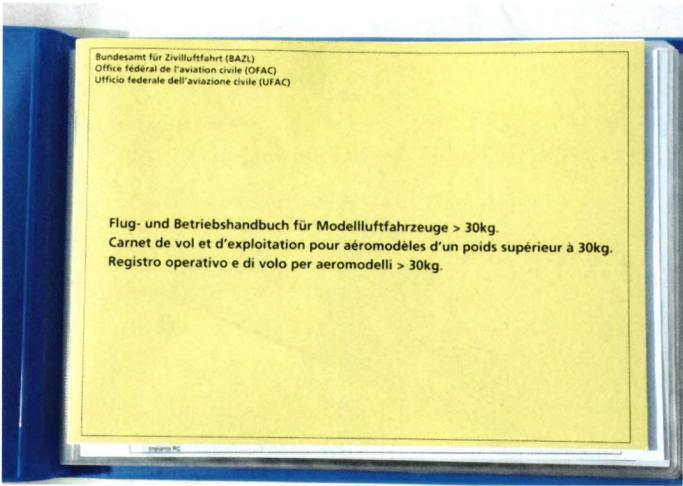
from the ground to the salmon position to check for any permanent deformation. This test is performed because the spars are not designed to withstand the same loads as those on full-scale gliders. All control surfaces are then inspected for structural integrity, control response, and servo strength. The wing and horizontal stabilizer are also inspected and certified as compliant. The bonded joints are also tested for tensile strength and deformation, particularly at the fin root. Let’s not forget that this test is conducted by a modeler who is thoroughly familiar with the field and its challenges. During the test, you really wonder when something is going to break, but in my case, everything held up perfectly.
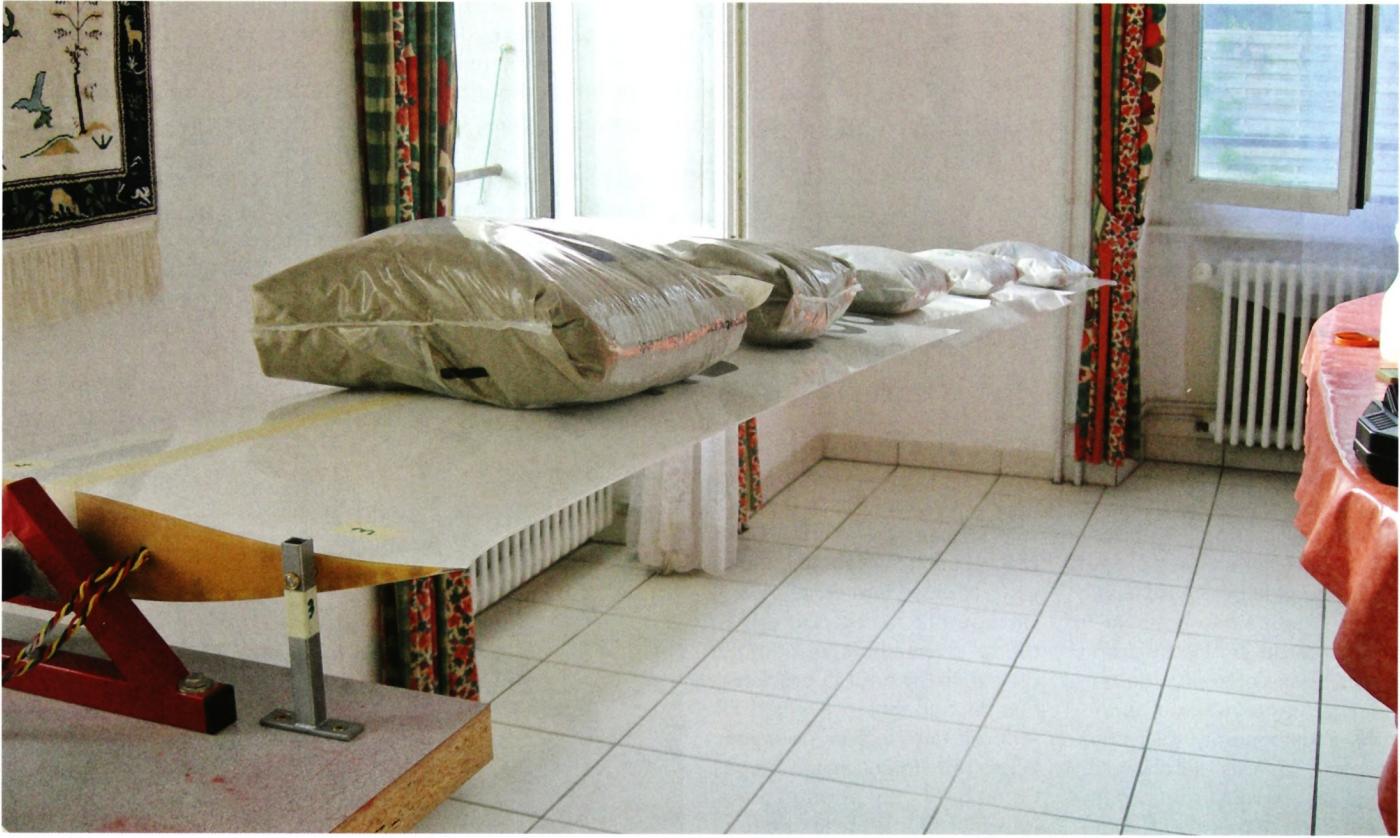
One month after these inspections, I received a flight logbook at my home along with authorization from the Federal Office of Aviation in Bern to conduct my first flights. Special liability insurance for the model must also be purchased, with coverage of at least 1,000,000 francs. The flight logbook is very comprehensive in its sections, which include the number of flights, the location, the takeoff and landing times, and the pilot’s observations during the flight. All maintenance work performed on the model must be recorded in it. For more significant changes, such as modifications to the radio system or other components, a notification must be submitted to the OFAC. A serious approach is required to prevent accidents and to set limits to avoid excesses and reckless behavior. A flight log can also demonstrate the modeler’s professionalism and the condition of the aircraft, allowing the insurance company to cover the modeler in the event of a mishap. However, these procedures can seem surprising the first time you go through them.
| I | II | III | IV | V | VI–VII | VIII | IX |
|---|---|---|---|---|---|---|---|
| Calum Date Date | Flight No. No. vol No. volo | Pilot's Name Nom du Pilote Nome di Pilot | Airport Aeroporto | Type of Flight Genere del volo | Departure Time Time of Departure Time of Landing Time of Landing Time of Arrival Time of Arrival | Flight Duration Flight Duration | Total Flight Time Tempo du vol Tempo di volo |
| April 16, 2008 | Stephane Driand | Cantelony | 4:05 p.m. 4:10 p.m. | ||||
| April 16, 2008 | Stephane Driand | Cantelony | 4:30 PM 4:40 PM | ||||
| April 16, 2008 | Stephane Driand | Cantelony | 5:30 PM 5:20 PM |
Recording the first flight in the flight log.


News from HEBU

TEAM MANAGER "THIS" BOSSHARD
 Rodito Nussbaumer

SUMMER FUN 2026 AT MG USTER
Martin Wunderli
BY YOUTH, FOR YOUTH
Lorena Betschen
SMALL, MODEL-LIKE SAILBOATS
Res Dauwalder
TRY-OUT DAY AT MFV WETTINGEN
Urs Keller
What's New at Leomotion.com

52. 2026 ALPS CUP
 Emil Giezendanner

ATOM, THE NEW DOUBLE-DECKER FROM CPLR
 Matthias Bosshard

INSIGHTS INTO THE HISTORY OF SEAPLANES

YOU KNOW WHAT I MEAN? 125 YEARS OF THE SWISS AERO CLUB
Emil Giezendanner
34th HAHNENMOOS ALPINE MODEL AIRPLANE CAMP
Res Dauwalder
CORSAIR F4U – A WARBIRD WITH A MEMORABLE LOOK
Jürgen Rosenberger, Jürgen Prinz
F3A EUROPEAN CHAMPIONSHIPS IN ST-MACAIRE, FRANCE
Matthias Bosshard
HORIZON HOBBY/LEMACO NEWS: MICRO OV-10 BRONCO 645 MM BY E-FLITE

PRIDE AND GOOD IDEAS
 Markus Nussbaumer

EURO CONTEST GLIDER ACRO TOUR AUSTRIA 2026

FREE FLIGHT IN THE MIDDLE OF SUMMER
Urs Muntwyler
THE PC-21 STORY
Emil Giezendanner
TWIN TOWN PARTNERSHIP
Wolfgang Voeller
WELCOME, NEW MEMBER!
Andrea Bolliger
COUPE DES ALPES – OBSERVE AND LEARN
Rodito Nussbaumer
NEWS FROM HEBU
 Julia Bucher

FROM 0 TO 100
Markus Nussbaumer
MEMORIES
Wolfgang Völler
NOS REGION – A HUB FOR ELECTRIC AVIATION
Emil Giezendanner
Have you almost forgotten about aircraft that take off and land vertically?
Emil Giezendanner
70 YEARS OF THE NIDWALDEN MODEL AIRPLANE CLUB
Martin Barmettler