
Tour of the Bayer CNC Model-Making Technology Workshops
Since the advent of computer-aided CNC (Computer Numerical Control) cutting, there has been a resurgence in all-wood model kit construction, particularly in the fields of vintage gliders and large motorized aerobatic models. For the past ten years, Hans Jürg Bayer has devoted himself to the development and construction of vintage gliders, generally on a 1:3 scale, made entirely of wood cut by CNC milling using computer-aided design (CAD) software that he developed himself.
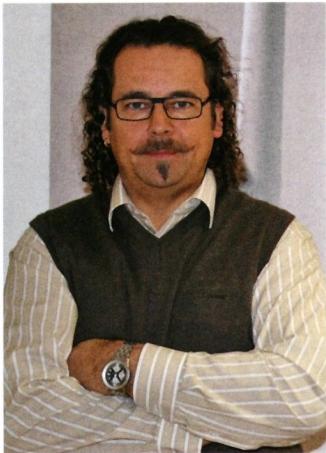
I had already come to appreciate the quality of his models while building his Ka6-CR, Minimoa, and Lo-100. Intrigued by the Condor IV with a 6-meter wingspan—the company’s new release for 2007—I decided to pick up the kit myself after being invited by Mr. Bayer to visit his workshops. He spent over two hours with me one Saturday morning, answering my questions and explaining his approach
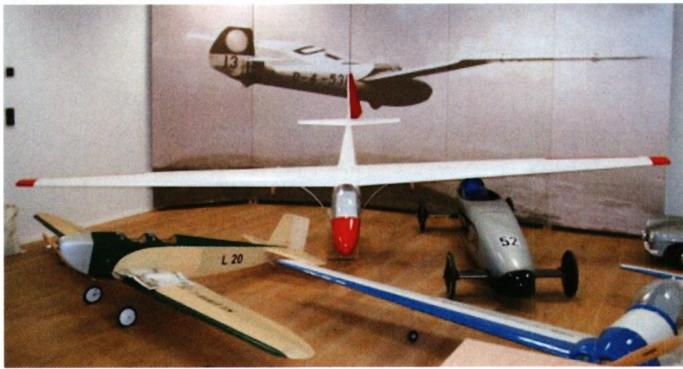
in developing his models. In Wettstetten, a small town north of Ingolstadt about 250 km from the Swiss border, there is a modern building that houses the workshops, development office, and apartments of CNC-Bayer (www.cnc-modellbautechnik.de). On the ground floor, in a spacious showroom, you can admire the models already created before entering the lair of free electrons.
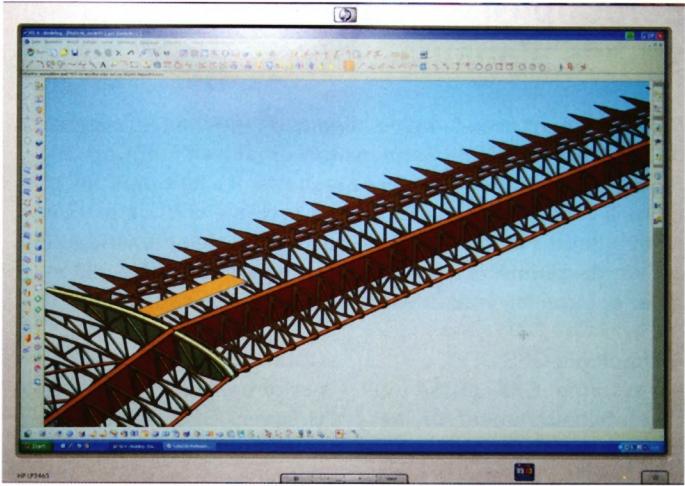
Mr. Bayer welcomed me into the design and development office for new models. Here, computer screens have replaced drawing boards, and 3D images scroll by at the designer’s command; using a three-view drawing, he can create any
model thanks to his highly sophisticated software. During construction, special care is taken in sizing the stringers and selecting the wood. After calculating the various bending moments, the stringers are sized to withstand a load factor
But the quality of the wood used obviously plays a crucial role in the strength of the spars. To that end, H.J. Bayer, a full-scale glider pilot, sought out a supplier who could provide him with wood selected according to the criteria used for vintage gliders. After numerous break tests and extensive research, he found the rare gem of a supplier who could provide him with wood that met his exacting standards and, above all, was of consistent quality. The wood is first dried for 7 to 8 weeks until it reaches a residual moisture content of about 11%, then cut and dried again. The stringers must have at least 7 annual growth rings per centimeter at their ends, and their orientation must not deviate by more than 35° from the vertical. The wood must therefore be taken from near the center of the trunk, which leaves much more firewood than spars available! These very strict criteria for selecting wood are obviously reflected in the price of the kit. Other manufacturers of
CNC-cut kits do not share these standards: they deliver only the cut parts, leaving it up to the modeler to source the material for the stringers.
Another hallmark of H.J. Bayer models is its patented FrameLock® construction technology—“often copied, never equaled”! This assembly method could be described as a 3D puzzle in which the precision of the cuts is such that one would have to try very hard to assemble it incorrectly. This method also makes it possible to build a 3-meter-long all-wood fuselage as a
single piece, without resorting to the traditional two separate halves that must be assembled afterward—thereby avoiding the risk of building a “banana-shaped fuselage” with a non-straight axis. The time saved with this type of construction is considerable, especially since there is no need for a 1:1 scale plan to be pinned to the work surface for either the construction of the wings or the fuselage; a few 3D exploded views are sufficient to explain the more complex assemblies.
The basement of the building houses the workshops and the CNC milling machine, which was developed entirely by H. J. Bayer himself
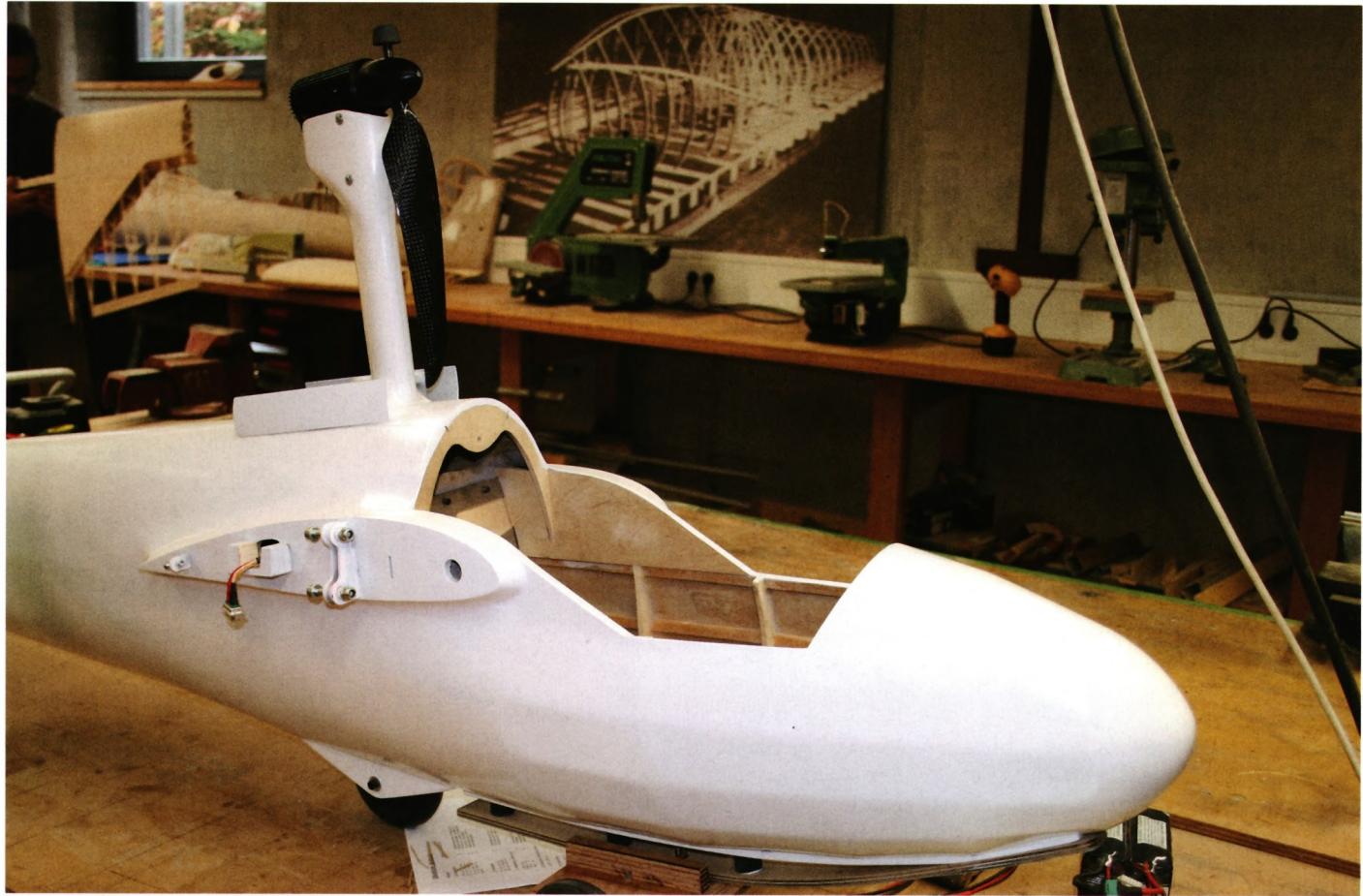
. A maximum of three layers of plywood are cut at a time and then smoothed by light sanding. It takes about a week to complete a single construction kit for a large wing with a 6-meter wingspan. Next to the wood storage room is another large, well-equipped workshop for woodworking. There are also models under construction there, intended for “lazy” customers—those who would love to build… but don’t have the time, lucky enough to be able to ignore the saying: “Time is money.” One last surprise: a Minimoa equipped with an electric motor mounted on a retractable pylon. Purists will cry foul, while active modelers will envy the audacity of H.J. Bayer, who dared to introduce this anachronism to compensate for the chronic lack of a tugboat—a recurring problem in Germany as well! Finally, it’s worth noting that H.J. Bayer can also fulfill the wishes of any modeler who wants to acquire a model that isn’t available on the market. All you need to do is provide him with period blueprints or a set of three accurate views. But such a project requires about two weeks of research and development, not including cutting out the parts. I’ll leave it to the curious to request a quote themselves—after buckling up!
A glider weighing more than 30 kilograms requires certification of the model by the Federal Office of Civil Aviation in Bern. Certification is a two-step process carried out by individuals authorized by the aforementioned office: it consists of an electrical certification and a mechanical certification.
Electrical
Certification: The radio system is inspected by the Swiss importer of Futaba radios. The components used are thoroughly examined, including servos, batteries, wiring, connectors, and receivers. In my case, this initial test was successful; I just need to replace the extension connectors with green Multiplex connectors with a larger cross-section.
Mechanical
Certification: Strength tests are conducted by a model engineer
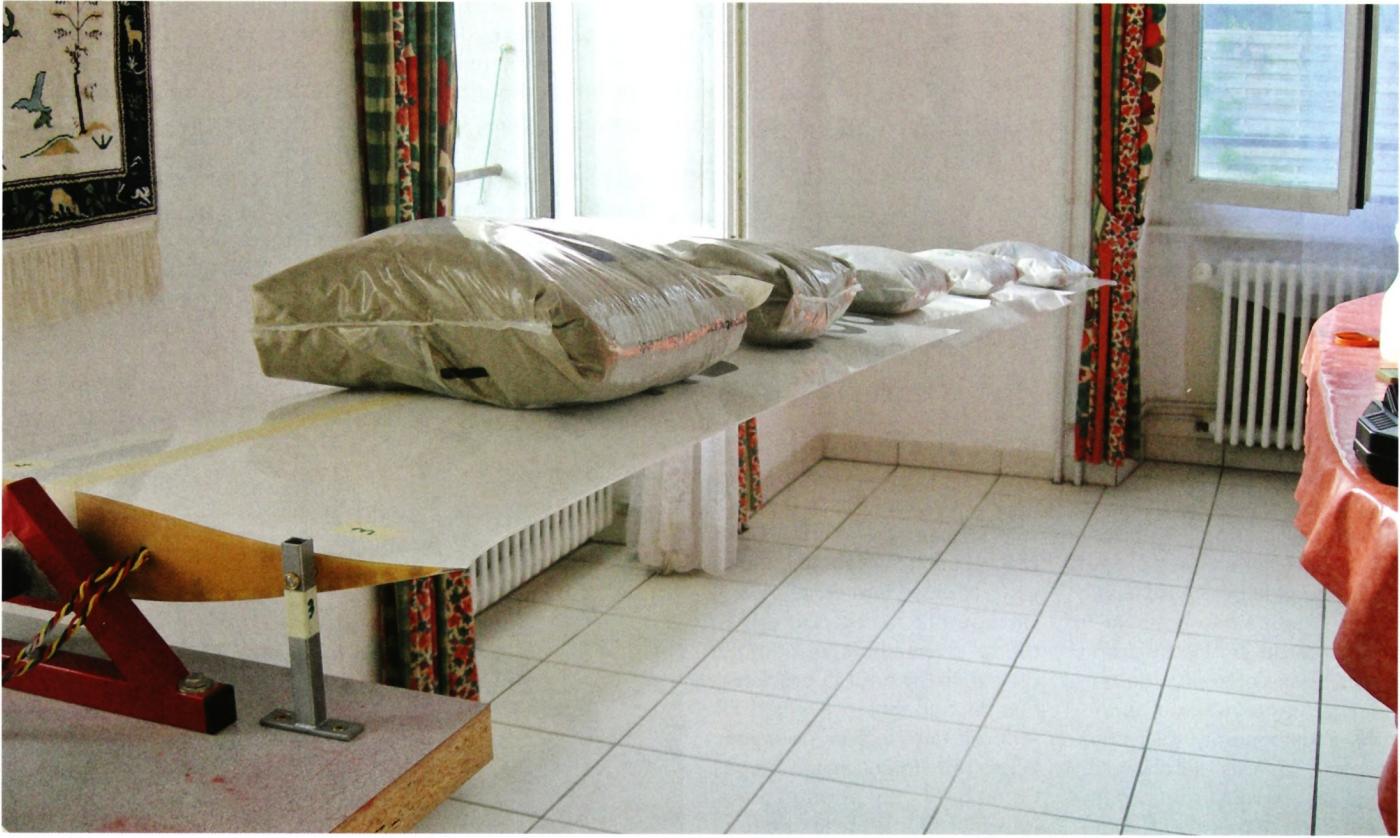
who inspects and tests the model from every angle. The first qualifying test is the wings’ behavior under load. According to the OFAC, the wings must be able to withstand a load of 5 g (five times the weight of the complete fuselage), which on my model represents a total weight of 122 kg distributed across the wingspan. For this test, I built a special stand to mount my wings upside down so I could place sandbags on them. I first conducted this test at home to get a sense of what it actually entails and, above all, to see if the wings could withstand this load. The wings bend like reeds but do not break. Each one flexes by 24 centimeters, which is perfectly acceptable. Once the weights are removed, a measurement is taken
from the ground to the salmon position to check for any permanent deformation. This test is performed because the spars are not designed to withstand the same loads as those on full-scale gliders. All control surfaces are then inspected for structural integrity, control response, and servo strength. The wing and horizontal stabilizer joints are also inspected and
certified as compliant. The bonded joints are also tested for tensile strength and deformation, particularly at the rudder root. Let’s not forget that this test is performed by a modeler who is thoroughly familiar with the field and its challenges. During the test, you really wonder when something is going to break, but in my case, everything held up perfectly.
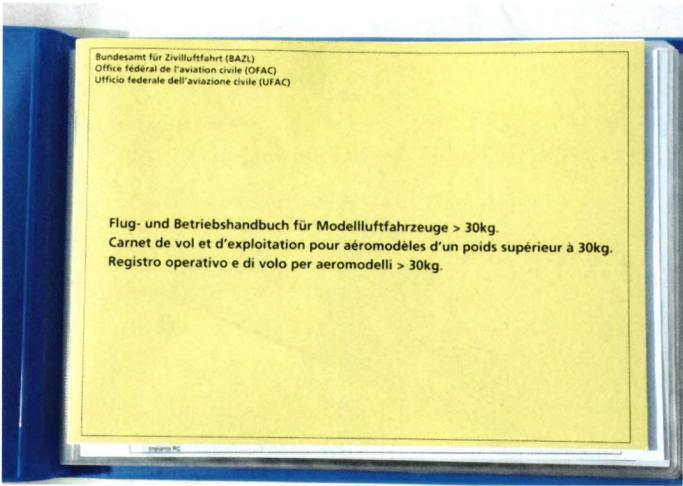
One month after these inspections, I received a flight logbook at my home along with authorization from the Federal Office of Aviation in Bern to conduct my first flights. Special liability insurance for the model must also be purchased, with coverage of at least 1,000,000 francs. The flight logbook is very comprehensive in its sections, which include the number of flights, the location, the takeoff and landing times, and the pilot’s observations during the flight. All maintenance work
maintenance performed on the model. For more significant changes, such as modifications to the radio system or other components, a report must be filed with the FOCA. A serious approach is required to prevent accidents and to set limits to avoid excesses and reckless behavior. A flight log can also demonstrate the modeler’s professionalism and the condition of the aircraft, allowing the insurance company to cover it in the event of a mishap. These procedures can be surprising, however, the first time you undertake them.
Jean Lüthi


TEAM MANAGER "THIS" BOSSHARD
 Rodito Nussbaumer

YOU KNOW WHAT I MEAN? 125 YEARS OF THE SWISS AERO CLUB
 Emil Giezendanner

F3A EUROPEAN CHAMPIONSHIPS IN ST-MACAIRE, FRANCE
 Matthias Bosshard

News from HEBU

SUMMER FUN 2026 AT MG USTER
Martin Wunderli
TRY-OUT DAY AT MFV WETTINGEN
Urs Keller
52. 2026 ALPS CUP
Emil Giezendanner
BY YOUTH, FOR YOUTH
Lorena Betschen
ATOM, THE NEW DOUBLE-DECKER FROM CPLR
Matthias Bosshard
CORSAIR F4U – A WARBIRD WITH A MEMORABLE LOOK
Jürgen Rosenberger, Jürgen Prinz
SMALL, MODEL-LIKE SAILBOATS
Res Dauwalder
What's New at Leomotion.com

TWIN TOWN PARTNERSHIP
Wolfgang Voeller
EURO CONTEST GLIDER ACRO TOUR AUSTRIA 2026

INSIGHTS INTO THE HISTORY OF SEAPLANES

34th HAHNENMOOS ALPINE MODEL AIRPLANE CAMP
Res Dauwalder
HORIZON HOBBY/LEMACO NEWS: MICRO OV-10 BRONCO 645 MM BY E-FLITE

COUPE DES ALPES – OBSERVE AND LEARN
Rodito Nussbaumer
PRIDE AND GOOD IDEAS
 Markus Nussbaumer

FREE FLIGHT IN THE MIDDLE OF SUMMER
Urs Muntwyler
THE PC-21 STORY
Emil Giezendanner
WELCOME, NEW MEMBER!
Andrea Bolliger
NEWS FROM HEBU
 Julia Bucher

FROM 0 TO 100
Markus Nussbaumer
MEMORIES
Wolfgang Völler
NOS REGION – A HUB FOR ELECTRIC AVIATION
Emil Giezendanner
Have you almost forgotten about aircraft that take off and land vertically?
Emil Giezendanner
70 YEARS OF THE NIDWALDEN MODEL AIRPLANE CLUB
Martin Barmettler