
Safety: Everyone's Responsibility
Accidents don't just happen—they're caused!
With warmer weather on the way, the model aircraft season will once again be in full swing. Now is a good time to review safety. With the rise in popularity of foam models, these aircraft may seem less dangerous—but that is not the case. The sharp rise in the number of minor incidents is proof of this. The FSAM, through its working group (WG) on safety and infrastructure, is actively working to improve flight safety. This effort centers on three main points:
1. Technology
2. Infrastructure
3. The pilot
Let’s take a closer look at these points.
We enjoy a hobby where a single mistake can have serious consequences. A thorough inspection of each model is essential at the start of the season. A quick check of the aircraft’s key components (control surfaces, engine and fuel, assembly, charged batteries, etc.) should be performed before every flight. Who hasn’t seen an airplane take off with the control surfaces reversed or the wrong program loaded into the transmitter? These are “minor” mistakes, but they can have serious consequences.
Before taking off, make sure you are familiar with the location and its specific features (trees, stakes, etc.), as well as the authorized flight zone and clear zones in case of an emergency. If you’re not familiar with the area, ask for help. Also, be mindful of spectators and other pilots. When flying in a group, gather the pilots in one place so they can communicate with each other (e.g.,
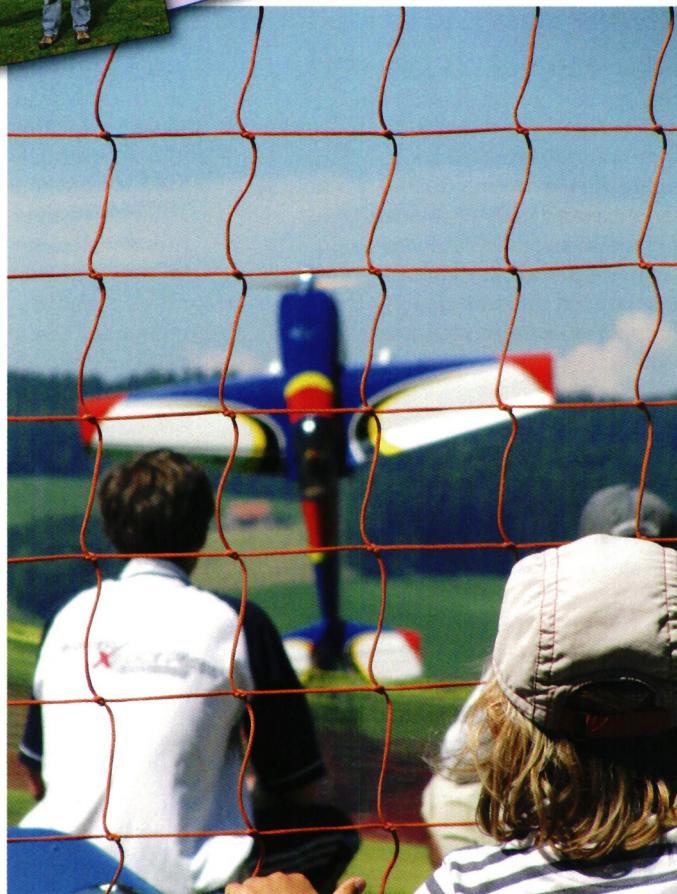
"I'm going to look for a model on the runway—there's no low-level passage on this one" is a phrase that can save you from having to say the following: "Dear Mobilière ...")
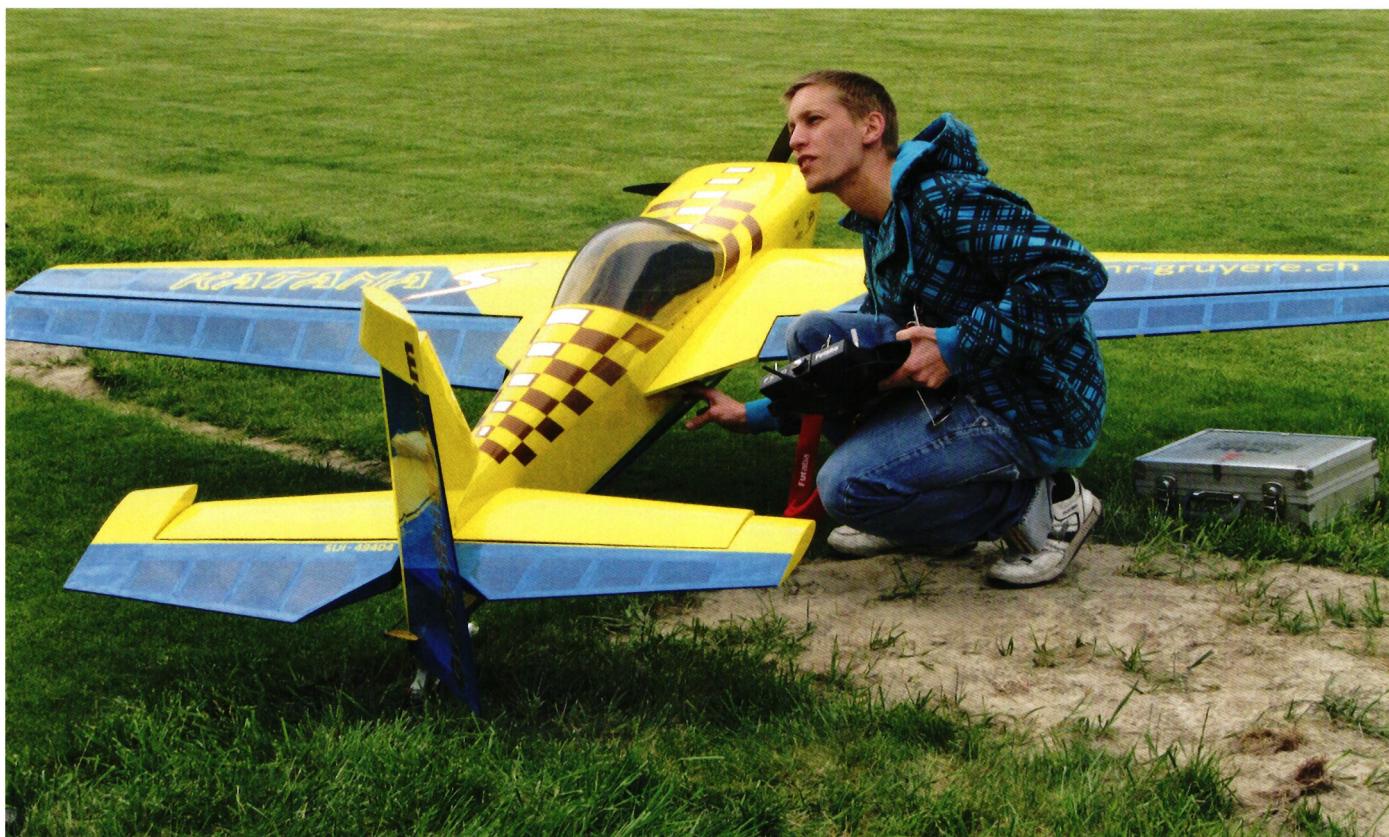
He must be confident but not overestimate his abilities. If there’s any doubt whatsoever (weather, ability, etc.), avoid taking risks and go help support the cafeteria’s bottom line. It’s also the responsibility of those on the runway to stop a pilot (who’s drunk, for example) from flying. Similarly, in the event of dangerous behavior, those present must make the pilot aware of the risks he’s taking and the risks he’s putting others in his vicinity in. Likewise, always ask for help when starting a combustion engine and when positioning the glider on the launch slope; otherwise, at best you’ll end up with a broken finger, and at worst, you’ll lose a finger. Always be aware of what you’re doing and your next steps. Unfortunately, I’ve already seen a glider launched from a slope without its engine running, and a model pilot flying someone else’s model.
Safety is everyone's responsibility. The points mentioned are by no means exhaustive, but I hope I have drawn your attention to this issue. These aspects are covered in greater detail in the FSAM checklists (www.modellflug.ch/index.php?option=com_docman&task=cat_view&gid=136&Itemid=116&lang=fr).
These checklists are currently being translated into French and Italian. Every responsible pilot and every club committee should take a look at them—even if it seems like stating the obvious. Remember that a chain is only as strong as its weakest link. If you have any questions, I’m of course here to help, and I wish you all safe and enjoyable flights.
Aéro Delegate to the Infrastructure Working Group: Aurélien Jordan (aurelien.jordan@gmail.com)


What's New at Leomotion.com

PRIDE AND GOOD IDEAS
 Markus Nussbaumer

News from HEBU

TEAM MANAGER "THIS" BOSSHARD
 Rodito Nussbaumer

ATOM, THE NEW DOUBLE-DECKER FROM CPLR
 Matthias Bosshard

INSIGHTS INTO THE HISTORY OF SEAPLANES

34th HAHNENMOOS ALPINE MODEL AIRPLANE CAMP
Res Dauwalder
CORSAIR F4U – A WARBIRD WITH A MEMORABLE LOOK
Jürgen Rosenberger, Jürgen Prinz
SUMMER FUN 2026 AT MG USTER
Martin Wunderli
F3A EUROPEAN CHAMPIONSHIPS IN ST-MACAIRE, FRANCE
Matthias Bosshard
52. 2026 ALPS CUP
 Emil Giezendanner

HORIZON HOBBY/LEMACO NEWS: MICRO OV-10 BRONCO 645 MM BY E-FLITE

TWIN TOWN PARTNERSHIP
Wolfgang Voeller
EURO CONTEST GLIDER ACRO TOUR AUSTRIA 2026

BY YOUTH, FOR YOUTH
Lorena Betschen
YOU KNOW WHAT I MEAN? 125 YEARS OF THE SWISS AERO CLUB
Emil Giezendanner
SMALL, MODEL-LIKE SAILBOATS
Res Dauwalder
TRY-OUT DAY AT MFV WETTINGEN
Urs Keller
WELCOME, NEW MEMBER!
Andrea Bolliger
FREE FLIGHT IN THE MIDDLE OF SUMMER
Urs Muntwyler
THE PC-21 STORY
Emil Giezendanner
COUPE DES ALPES – OBSERVE AND LEARN
Rodito Nussbaumer
NEWS FROM HEBU
 Julia Bucher

FROM 0 TO 100
Markus Nussbaumer
NOS REGION – A HUB FOR ELECTRIC AVIATION
Emil Giezendanner
MEMORIES
Wolfgang Völler
Have you almost forgotten about aircraft that take off and land vertically?
Emil Giezendanner
70 YEARS OF THE NIDWALDEN MODEL AIRPLANE CLUB
Martin Barmettler