
DOUBLE COUNTER-ROTATING PROPELLER ELECTRIC MOTORS
Today I'd like to introduce you to an electric motor that is very commonly used in the F3A class.
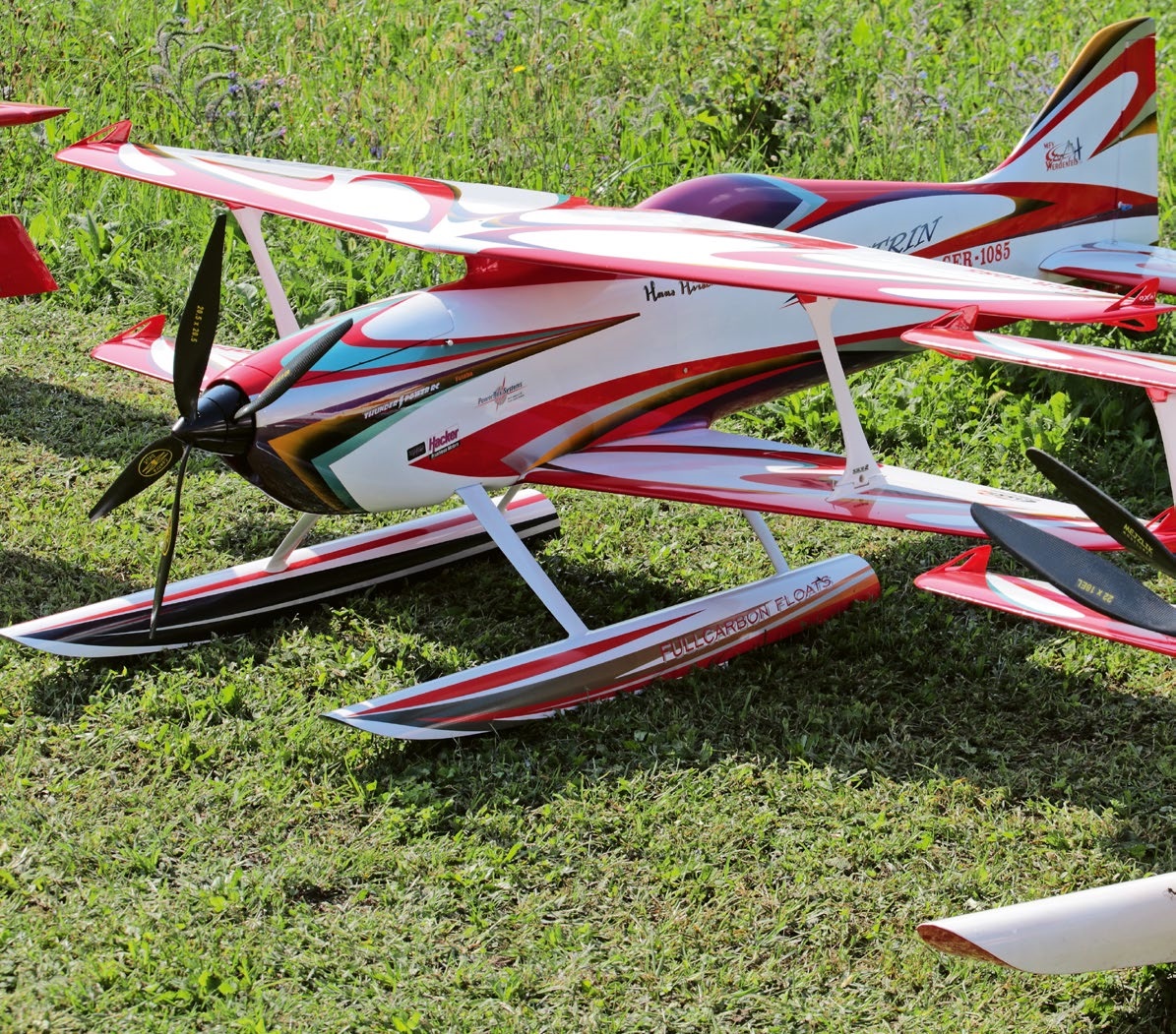
It is an engine with two counter-rotating propellers on the same axis.
Here is a brief explanation of the aircraft engine: when an engine is running, it produces what is known as torque, and the propeller generates a spiral airflow.
Both elements must be controlled so that the aircraft remains controllable.
This is achieved through “Sturz,” which means the engine is tilted downward relative to the longitudinal axis—by just a few degrees.
“Seitenzug” is a shift of the engine axis to the left in the direction of flight. Again, just a few degrees.
If the engine is installed parallel to and horizontal with respect to the longitudinal axis, this can result in increased lift when air strikes the wing.
Since the airflow moves in a rotational direction along the fuselage, this can affect elevator and rudder control in short-fuselage aircraft. This is prevented by the offset.
With a twin-propeller engine, torque is eliminated and the airflow should be straight.
This ensures more stable flight performance and better control of the aircraft.
Those who feel at home in the F3A scene might want to give some thought to purchasing this engine.
Text and photos of model airplanes: Wolf Völler
Engine photos: Internet

What's New at Leomotion.com

PRIDE AND GOOD IDEAS
 Markus Nussbaumer

News from HEBU

TEAM MANAGER "THIS" BOSSHARD
 Rodito Nussbaumer

ATOM, THE NEW DOUBLE-DECKER FROM CPLR
 Matthias Bosshard

INSIGHTS INTO THE HISTORY OF SEAPLANES

34th HAHNENMOOS ALPINE MODEL AIRPLANE CAMP
Res Dauwalder
CORSAIR F4U – A WARBIRD WITH A MEMORABLE LOOK
Jürgen Rosenberger, Jürgen Prinz
SUMMER FUN 2026 AT MG USTER
Martin Wunderli
F3A EUROPEAN CHAMPIONSHIPS IN ST-MACAIRE, FRANCE
Matthias Bosshard
52. 2026 ALPS CUP
 Emil Giezendanner

HORIZON HOBBY/LEMACO NEWS: MICRO OV-10 BRONCO 645 MM BY E-FLITE

TWIN TOWN PARTNERSHIP
Wolfgang Voeller
EURO CONTEST GLIDER ACRO TOUR AUSTRIA 2026

BY YOUTH, FOR YOUTH
Lorena Betschen
YOU KNOW WHAT I MEAN? 125 YEARS OF THE SWISS AERO CLUB
Emil Giezendanner
SMALL, MODEL-LIKE SAILBOATS
Res Dauwalder
TRY-OUT DAY AT MFV WETTINGEN
Urs Keller
WELCOME, NEW MEMBER!
Andrea Bolliger
FREE FLIGHT IN THE MIDDLE OF SUMMER
Urs Muntwyler
THE PC-21 STORY
Emil Giezendanner
COUPE DES ALPES – OBSERVE AND LEARN
Rodito Nussbaumer
NEWS FROM HEBU
 Julia Bucher

FROM 0 TO 100
Markus Nussbaumer
NOS REGION – A HUB FOR ELECTRIC AVIATION
Emil Giezendanner
MEMORIES
Wolfgang Völler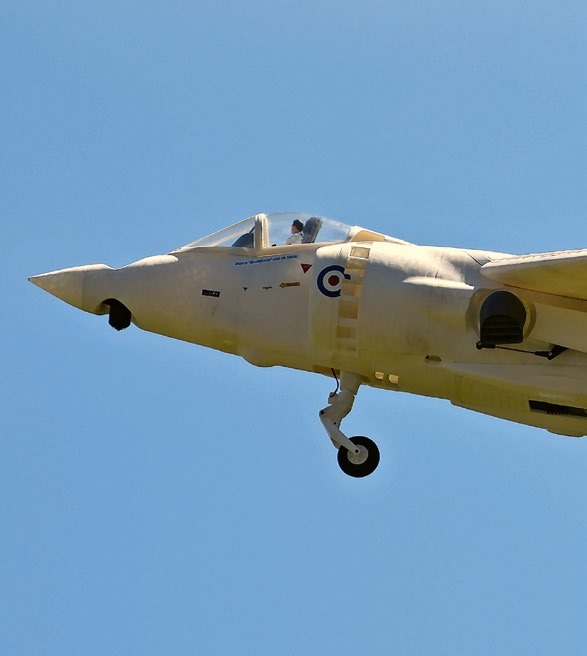
Have you almost forgotten about aircraft that take off and land vertically?
Emil Giezendanner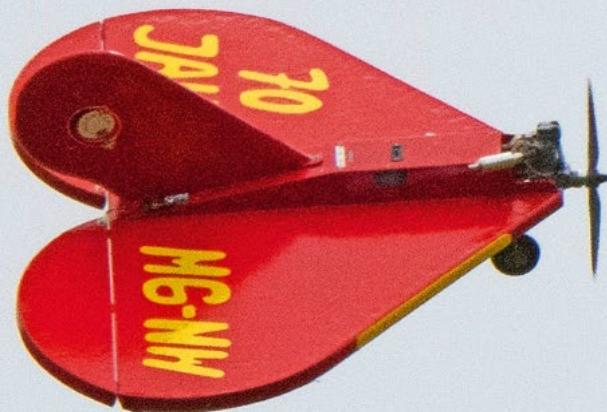
70 YEARS OF THE NIDWALDEN MODEL AIRPLANE CLUB
Martin Barmettler