
Obituary: Peter Aeberli
July 14, 1950 – December 28, 2021
On December 28, 2021, Peter Aeberli passed away at the age of 71 following a serious illness. Along with his family, countless friends and fellow model aviators mourn the loss of a beloved man who devoted himself wholeheartedly to model gliding for decades.
Peter grew up in Erlenbach on Lake Zurich. At the age of 14, he joined the Erlenbach Model Flying Club (now the Erlenbach-Herrliberg Model Flying Club, MGEH). Since affordable radio-controlled systems were not yet available at that time, Peter built free-flight models, with which he successfully competed in contests. His father, Eugen, was a passionate glider pilot and was a strong advocate for the production of fiberglass-reinforced plastic gliders, a field that was still in its pioneering phase at the time. In March 1964, Eugen Aeberli piloted the H-301 Libelle on its maiden flight. It was later mass-produced by the company Glasflügel. The entire Aeberli family regularly spent their weekends at the Spreitenbach airfield. There, little Peter was allowed to ride along in the back seat of the De Havilland Chipmunk in the afternoons while it towed gliders. It is therefore not surprising that the aviation bug took deep root in Peter and would never let him go for the rest of his life.
During the Sturm und Drang phase of his young adulthood, model flying temporarily took a back seat. Peter now passionately tinkered with mopeds and cars in his father’s auto body shop. Model airplanes were only fun if they were motorized. The Marabu, a tried-and-true aerobatic model at the time, was flown on a rarely used—

They started out on a road near Wetzwil at Pfannenstil, since the MGEH didn’t yet have its own airfield.
When the F3B category emerged in the 1970s, Peter returned to gliding. He began training seriously and tinkered with his own designs. Among other things, this led to the creation of the “Attacco,” which Peter equipped with a remote-controlled center-of-gravity shift. Peter successfully competed in regional, national, and even international competitions. A third-place finish at the Oktoberfest Cup in Munich in 1978 and the Swiss championship title in 1980 were among his top results. In 1981, Peter was nominated for the F3B national team—and turned it down! This marked the sudden and definitive end of his successful competitive career. The increasing costs of equipment and training, as well as the high emotional stress of competition, were likely the reasons for this. Peter lacked the temperament of an ambitious, tenacious competitor.
While Peter was still competing, some of his club colleagues had discovered flying large gliders. As early as 1975, the Mosquito 1:4—a glass wing fully laminated in molds using fiberglass-reinforced plastic (FRP) technology—had been developed. After retiring from the F3B scene, Peter was immediately hooked and set about building large gliders. He consistently and skillfully implemented his own ideas, which greatly advanced the development of this model gliding discipline, which was still in its infancy at the time. As a trained FEAM technician, he knew how to skillfully combine electronics with mechanics. His construction speed was legendary, yet the quality never suffered. Peter’s true passion was the sheer joy of flying large, scale-model—
He discovered his favorite sailboat models and remained loyal to them until the very end.
In 1977, while still competing as a pilot, Peter was persuaded to take over as president of the MGEH. Shortly before that, the club had finally succeeded in leasing its own airfield in Schmideneich, above Herrliberg. During the 13 years of Peter’s dedicated presidency, the club experienced a tremendous upswing. Every spring, new, homemade gliders appeared on the airfield. They became increasingly true to their real-world counterparts, and their flight performance steadily improved. Many innovations bore Peter’s signature. Thanks to his competition experience, for example, F3B airframes with low airfoil camber were used, which significantly improved glide performance and dynamics. On weekends, the airfield was teeming with pilots, family members, and large gliders. The only way to launch the gliders was via the ingenious winch with a cable retrieval system, which sent the aircraft into the sky virtually every minute. Even the club’s own young members made their
First steps—first crawling across the meadow, and soon at the helm. Among them was Peter’s son Daniel, born in 1982, who was allowed to steer his father’s tall ships even as a little tot.
At that time, there were neither competitions nor gatherings for large glider enthusiasts. Peter and his colleagues missed the opportunity to exchange ideas with like-minded people. That’s why, in 1982, Peter initiated the founding of the Large Glider Enthusiasts’ Association (IGG), whose goals include annual flying gatherings on the plains and on slopes—free from the stress of competition, but with plenty of time for technical discussions and long, enjoyable group flights in the thermals. The IGG benefited from Peter’s organizational and communication skills as well as his extensive network of contacts, which he had built up during his career in field sales. The IGG, which was led primarily by Peter during its first 20 years, still exists today. It is very active and has served as a model for the establishment of many sister organizations abroad.
When Dani began competing in windsurfing regattas around 1998, Peter selflessly cut back on his flying. Together with his wife Isa, he accompanied his son to competitions at home and abroad for years and provided him with professional guidance.
Even when Dani set out to gain a foothold in the model aircraft industry with his company Chocofly, he could count on Peter’s support. The young company scored its first major success right away with its first large glider, the SB-14 on a 1:3.5 scale. This design had already proven itself in club use and was Peter’s favorite—
It became a glider. To enable his SB-14 to take off autonomously, he developed a pylon-mounted electric propulsion system that could be assembled in just a few simple steps. After his early retirement, Peter became even more actively involved in his son’s thriving company. Many technical improvements—such as those to concealed rudder drives and retractable landing gear—can be attributed to Peter’s persistent development work.
Unfortunately, Peter was not spared health setbacks. In the prime of his life, he suffered a retinal detachment that significantly impaired his vision
and constantly hindered him. From then on, he lived in constant fear of suddenly losing sight of his plane. Since Peter was a very cautious person, he only flew for short periods and no longer flew high. As long as other model planes were in the air, he refrained from taking off. Although this visual impairment hindered him and made him feel insecure, Peter never complained, which I greatly admired.
Unfortunately, Peter was not granted the chance to enjoy many more beautiful and carefree years in the third stage of his life. An insidious, unstoppable illness be-
began to take hold of him. A shadow that grew steadily darker settled over him more and more, eventually swallowing him whole. His progressive mental and physical decline was almost unbearable for his family and friends.
His family and countless fellow hobbyists, who had shared their passion with Peter over many years, miss a man who was always friendly, courteous, kind, helpful, and selfless. He leaves behind a great void.
Georg Staub

TEAM MANAGER "THIS" BOSSHARD
 Rodito Nussbaumer

SUMMER FUN 2026 AT MG USTER
Martin Wunderli
52. 2026 ALPS CUP
 Emil Giezendanner

ATOM, THE NEW DOUBLE-DECKER FROM CPLR
 Matthias Bosshard

INSIGHTS INTO THE HISTORY OF SEAPLANES

34th HAHNENMOOS ALPINE MODEL AIRPLANE CAMP
Res Dauwalder
CORSAIR F4U – A WARBIRD WITH A MEMORABLE LOOK
Jürgen Rosenberger, Jürgen Prinz
SMALL, MODEL-LIKE SAILBOATS
Res Dauwalder
F3A EUROPEAN CHAMPIONSHIPS IN ST-MACAIRE, FRANCE
Matthias Bosshard
What's New at Leomotion.com

HORIZON HOBBY/LEMACO NEWS: MICRO OV-10 BRONCO 645 MM BY E-FLITE

PRIDE AND GOOD IDEAS
 Markus Nussbaumer

News from HEBU

BY YOUTH, FOR YOUTH
Lorena Betschen
YOU KNOW WHAT I MEAN? 125 YEARS OF THE SWISS AERO CLUB
Emil Giezendanner
TRY-OUT DAY AT MFV WETTINGEN
Urs Keller
FREE FLIGHT IN THE MIDDLE OF SUMMER
Urs Muntwyler
THE PC-21 STORY
Emil Giezendanner
TWIN TOWN PARTNERSHIP
Wolfgang Voeller
EURO CONTEST GLIDER ACRO TOUR AUSTRIA 2026

WELCOME, NEW MEMBER!
Andrea Bolliger
COUPE DES ALPES – OBSERVE AND LEARN
Rodito Nussbaumer
NEWS FROM HEBU
 Julia Bucher

FROM 0 TO 100
Markus Nussbaumer
MEMORIES
Wolfgang Völler
NOS REGION – A HUB FOR ELECTRIC AVIATION
Emil Giezendanner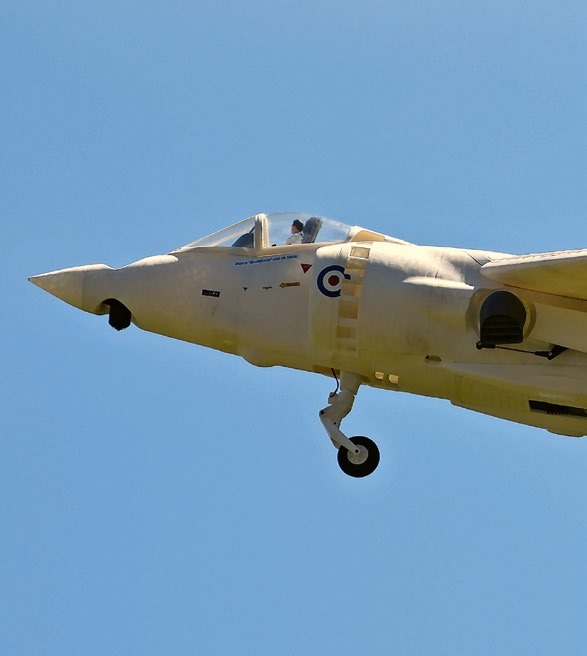
Have you almost forgotten about aircraft that take off and land vertically?
Emil Giezendanner
70 YEARS OF THE NIDWALDEN MODEL AIRPLANE CLUB
Martin Barmettler