
Small but mighty
With their wings hanging slightly, the two models fly spectacularly at increased speed, making a beautiful sound...—wait, stop: That's the wrong beginning...!
Back to the beginning of the text: With their wings hanging slightly, accompanied by the barely audible hum of the gear motors, the two little models circle together. Although controlled only by the motor, ailerons, and elevator, formation flying is possible under favorable conditions; with a flight weight of just under 60 g, it can’t handle any wind—which is understandable...!
The models described below have become increasingly popular at the MG Münchenbuchsee; possible reasons for this will be discussed later in the report.
The first indoor flying event took place at the MG Münchenbuchsee in 2001; commercially available models made it possible to participate on the spur of the moment—after all, everyone wanted to be there...! The success was modest, as the models were either too heavy and therefore too fast, or too delicate. People tried to get the aircraft airborne using gear motors and NiCd batteries—with mixed results...! In any case, the awful sound of models crashing into the wall bars was impossible to ignore, and the amount of glue used must have had adhesive manufacturers cheering inwardly...! And there was one rule you had to follow: never fly along the hall’s diagonals toward a corner; anyone who broke this rule would see the inevitable crash coming for their model...!
Documenting the entire history of indoor flying would go beyond the scope of this article; but it quickly became clear that within our club, the prevailing desire was for homemade, scale-model aircraft—acrobatic flying never really gained a serious following among us, though it certainly would have been a fascinating development as well!
The search for suitable models led us to rubber-powered and CO₂ models as early as 2010. Based on a Hacker kit, we built a replica of a Piper J-3 using split Depron, which was soon ready to take to the skies after a coat of paint and the addition of skis. These little models quickly found their fans; they allowed for enjoyable model-building in the club’s own workshop, the demands on model-building—and later on flying skills—remained manageable, and ultimately, we were doing something meaningful: The RC components salvaged from leftover ARF models found a new purpose—recycling; who could possibly object to that...! Besides, one or two of these little models were probably built simply because they weren’t expensive, success was almost guaranteed with careful model-building, and in the already crammed hangar, all that was needed was a bit of rearranging—there was always room for such a tiny thing.
Various similar ideas were successfully brought to life: the little Wilga—Bruno even built a thermoforming mold for the model’s fuselage and then added lots of details—very nice. That little thing still flies surprisingly well today, but it was probably a bit too specialized—it remained a one-of-a-kind model.
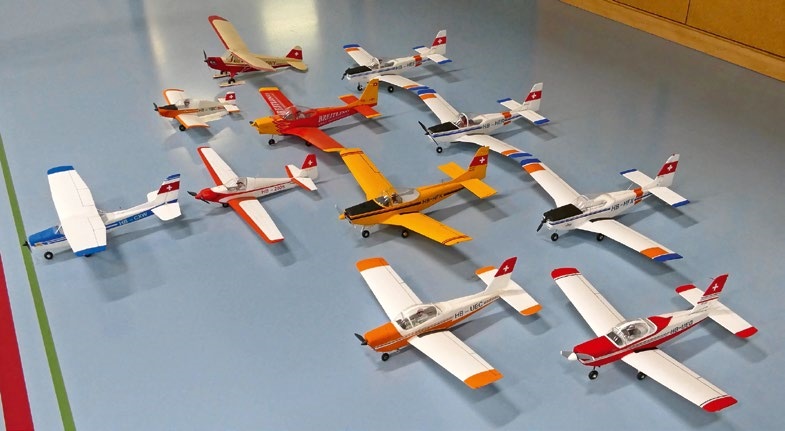
Various similar ideas have been successfully brought to life: The little Wilga—Bruno even built a thermoforming mold for the model’s fuselage and then added lots of details—it’s very nice. That little thing still flies surprisingly well today, but it was probably a bit too unique—so it remained a one-of-a-kind model.
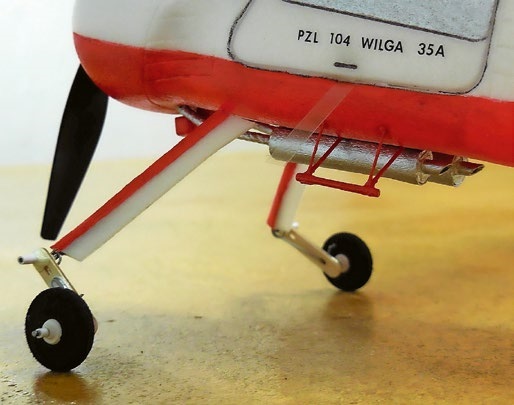
The little MU-Trainerli was a scaled-down version of the very popular MU-Trainer; this small model is very easy to build from 3-mm Depron and flies very well. But even in this case, hardly any models were built—it would obviously have to be simple and, if possible, still true to the original...! There were quite a few attempts to build more model replicas, but the models were often too heavy and, as a result, too risky for indoor flying because they were too fast—and therefore not suitable for mass production. They certainly brought joy to their builders, especially because they were built with such great attention to detail. However, it remained a personal pleasure, and a sense of community never really took hold.
Things took a new turn in 2022: At the homebuilder’s meet in Huttwil, Bruno and I each purchased a kit for the Graupner retro model BO-209 Monsun. In the fall, our gliding camp took place amid disastrous weather: 8 days of rain...! As an alternative activity, we first built the balsa wood model of the Monsun and then the much lighter Depron model based on the same design. The small model flew excellently right from the start and was subsequently finished off with a few small details: footrests made from 400-grit sandpaper, takeoff aids made from thin packing tape, and position lights made from very fine glass beads completed the model. It looked really sharp and certainly whetted my appetite for more—whether in the form of additional Monsun replicas or even new projects!
Even while the Monsun was under construction, the idea of converting it into an AS-202 Bravo was discussed; however, the compromises involved were too great. For this reason, a Bravo was built from 3-mm Depron at a scale of almost exactly 1:15. The build is simple and allows for different approaches—depending on the modeler’s skills or preferences; a basic plan for this model is available from the trade journal FMT. A small cowl block was made from Styrofoam, and a cowl was formed from 0.2 mm thick thermoforming film; later, I even made a block from cast ceramic because interest in the model was growing. The shell already looked quite appealing. With a little paint and placed next to its smaller predecessors, the whole thing already looked very good. Everyone was thrilled...!
The Bravo model flew excellently right from the start; on windless days, flying outdoors is a pleasure, and of course, flying it indoors is also perfectly possible. It’s even capable of impressive formation flights.
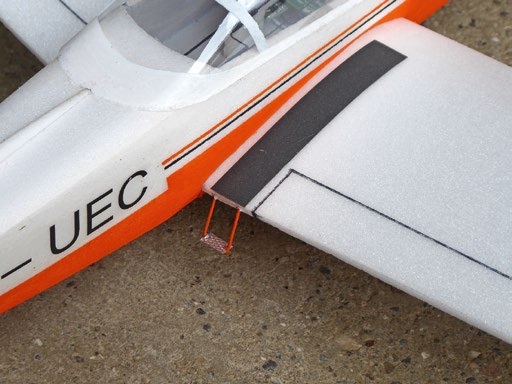
The Bravo model flew superbly right from the start; on windless days, flying it outdoors is a real pleasure, and of course, it’s also perfectly suitable for indoor flying. It can even perform impressive formation flights.
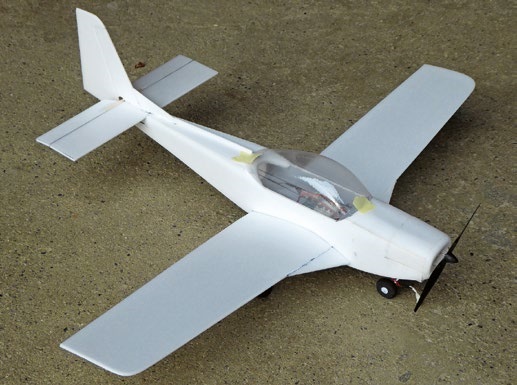
As we all know, model builders never run out of ideas, and as the saying goes, “The more you do, the more you want to do!” It didn’t take long for follow-up projects to emerge, and the replica of the Fournier RF-3 flies very well, too. The model is built practically the same way as its predecessors. The only new feature in this replica was the addition of ailerons. These small, scale-accurate model airplanes are fun—both to build and to fly! And the best part of the whole project, in my opinion, is that you can share the joy with fellow model aviators—shared joy is double the joy—that saying really rings true! Both building and flying are pure pleasure and relaxation; that’s what model flying is all about, isn’t it? In any case, I’m looking forward to the next ideas in this model aircraft category; there are sure to be more—we’ve already heard some ideas...!


TEAM MANAGER "THIS" BOSSHARD
 Rodito Nussbaumer

ATOM, THE NEW DOUBLE-DECKER FROM CPLR
 Matthias Bosshard

INSIGHTS INTO THE HISTORY OF SEAPLANES

CORSAIR F4U – A WARBIRD WITH A MEMORABLE LOOK
Jürgen Rosenberger, Jürgen Prinz
SUMMER FUN 2026 AT MG USTER
Martin Wunderli
F3A EUROPEAN CHAMPIONSHIPS IN ST-MACAIRE, FRANCE
Matthias Bosshard
What's New at Leomotion.com

HORIZON HOBBY/LEMACO NEWS: MICRO OV-10 BRONCO 645 MM BY E-FLITE

PRIDE AND GOOD IDEAS
 Markus Nussbaumer

News from HEBU

YOU KNOW WHAT I MEAN? 125 YEARS OF THE SWISS AERO CLUB
 Emil Giezendanner

34th HAHNENMOOS ALPINE MODEL AIRPLANE CAMP
Res Dauwalder
SMALL, MODEL-LIKE SAILBOATS
Res Dauwalder
TRY-OUT DAY AT MFV WETTINGEN
Urs Keller
52. 2026 ALPS CUP
Emil Giezendanner
TWIN TOWN PARTNERSHIP
Wolfgang Voeller
EURO CONTEST GLIDER ACRO TOUR AUSTRIA 2026

BY YOUTH, FOR YOUTH
Lorena Betschen
WELCOME, NEW MEMBER!
Andrea Bolliger
FREE FLIGHT IN THE MIDDLE OF SUMMER
Urs Muntwyler
THE PC-21 STORY
Emil Giezendanner
COUPE DES ALPES – OBSERVE AND LEARN
Rodito Nussbaumer
NEWS FROM HEBU
 Julia Bucher

FROM 0 TO 100
Markus Nussbaumer
NOS REGION – A HUB FOR ELECTRIC AVIATION
Emil Giezendanner
MEMORIES
Wolfgang Völler
Have you almost forgotten about aircraft that take off and land vertically?
Emil Giezendanner
70 YEARS OF THE NIDWALDEN MODEL AIRPLANE CLUB
Martin Barmettler