
MULTIPLEX – a name that resonates in the model aviation community
Multiplex was founded in 1958 in Niefern, Baden, by Siegfried Kussmaul and manufactures radio-controlled systems and accessories for model sports. Milestones included legendary RC systems such as the MULTIPLEX 101, the first fully proportional radio control system, and the ROYAL mc with a microprocessor. MULTIPLEX has also consistently led the way with innovative products in the field of model aircraft. Classics such as the “ALPHA,” “BIG LIFT,” and “ALPINA” are still well known among model aircraft enthusiasts today and are sought-after collector’s items.
The kit models, made primarily of wood and fiberglass-reinforced plastic (FRP), were followed by ready-to-fly models made of high-tech particle foam. Today, MULTIPLEX is the market leader in this segment and currently employs approximately 80 people.
Since 2002, MULTIPLEX has been part of the South Korean HiTEC Group. HiTEC has been producing components for the RC model sports market since 1973. Through the merger of the two brands and the resulting synergies, HiTEC/MULTIPLEX has developed into one of the world’s leading manufacturers of model sports equipment. Sales offices are located in Germany, South Korea, Japan, the Philippines, China, and the U.S.
In 2007, MULTIPLEX relocated to Bretten-Gölshausen. Many successful model sports enthusiasts and industrial users rely on quality “Made by MULTIPLEX”!
Sustainability means reliability, functionality, and durability. These qualities have been the defining characteristics of MULTIPLEX products for years.
Founding of the S. Kussmaul company, which later became MULTIPLEX. Production of components for radio-controlled systems (e.g., for the Engel company in Knittlingen). The company’s first single- and multi-channel push-button radio-controlled systems soon followed.
For the first remote control produced by MULTIPLEX, a bread box served as the “housing”!
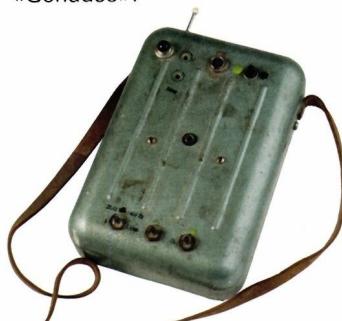
Introduction of the MULTIPLEX 10, a proportional radio-controlled system that operated on the basis of “Vielton” technology.
Driving a prototype of the 101, Kurt Bauerheim achieved an impressive 4th-place finish at the RC 1 World Championship in Corsica.
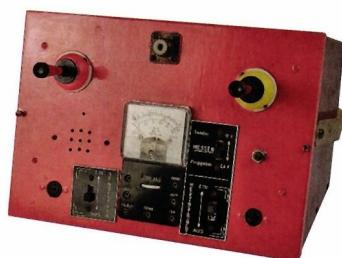
Introducing the MULTIPLEX 101. It was the first radio-controlled transmitter in the typical "belly-mounted" design to be mass-produced in Germany
and operated according to the so-called PPM system (Pulse-Position Modulation).
Introduction to the Digitron series of devices, featuring 2- to 6-channel remote controls. Reliable and durable, these units were in use for many years at numerous locations.
Launch of the ALPHA series. Key features:
- High-performance glider with a fiberglass fuselage
- Ribbed wings
- Wingspan 2.80 m
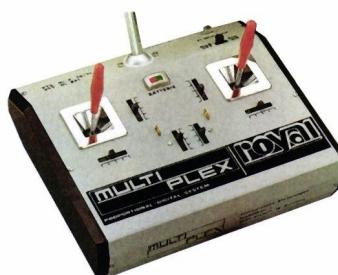
Introducing the legendary MULTIPLEX ROYAL. Back then, it set the standard for remote-control technology. Special features:
- Handheld and console transmitters in one
- A combination of plastic and metal
- Iconic design, compact form factor
- First teacher/student system (patented)
Filius—the entry-level RC model of its time. Special features:
- Beginner glider with a wooden fuselage
- Jedelski wings
- Wingspan: 1.80 m
- Features: Elevator, rudder
E1: Your Introduction to Electric Aviation.
One of the very first electric model airplanes ever built. Developed by Helmut Schenk. Special features:
- Pressure-driven propulsion with 2 electric motors and folding winglets
- Wingspan: 2.20 m
Big-LIFT, the workhorse. Special features:
- Sailboat towing model—originally equipped with a piggyback attachment for sailboats
- Wingspan 2.22 m
- Engines starting at 10 cm³
Introducing the MULTIPLEX ROYAL 5+2 with FM technology.
First MPX remote control with FM technology.
A unique feature was 20 different channels within 35 MHz thanks to narrowband technology (10 kHz channel spacing).
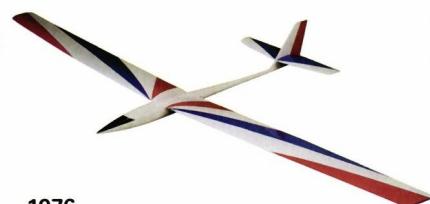
Super-alpha. Special features:
- First large sailboat with a fiberglass hull
- Laminated wings
- Wingspan: 3.50 m
- Controls: Ailerons, rudder, and elevator
Flamingo, a standout model featuring a fiberglass/balsa construction. Special features:
- FRP fuselage
- Ribs/balsa construction, wings fully planked
- Wingspan 2.20 m
Introduction to the MULTIPLEX-Professional with FM narrowband technology.
Introduction to MULTIPLEX Europa-Sport. An Introduction to Expansion Technology.
A unique feature is its expandability via modular technology, e.g., from a 2-channel to a 6-channel system. All-plastic housing.
Introduction of the MULTIPLEX Professional 434 MHz. First UHF system with interchangeable crystals.
Alpina—a legend among large-scale glider models. Special features:
- Fiberglass fuselage
- Sandwich wings with Abachie wood skin
- Wingspan 4.00 m
Introduction of the MULTIPLEX PROFI 2000. The first cassette system, representing the cutting edge of technology at the time. Special features:
- Optional “automatic recovery” (aerobatics module)
- Optional tachometer
- Optional hand rest
Amphi – an amphibious vehicle with an electric drive. Features:
- Length: 48 cm
- PERMAX 60 motor for propulsion and propeller
Hai – The first electric racing boat developed by MULTIPLEX. Special features:
- Length: 70 cm
- 550 motor for propulsion
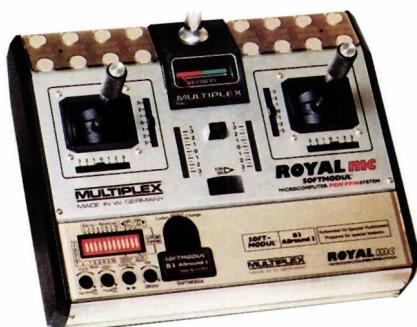
Introduction to the MULTIPLEX ROYAL mc, a pioneering microcomputer system based on PPM/PCM technology. Special features:
- Unlimited model storage through storage in “memory modules”
- Various setup templates
Introducing the PROFI mc 3030. The quintessential MULTIPLEX RC classic. Special features:
- Freely programmable RC system via keyboard and display
- Up to 30 model memory slots
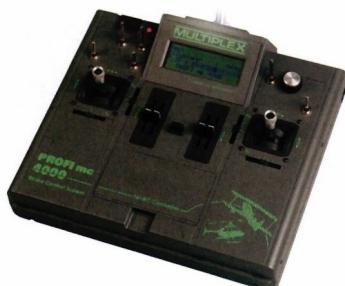
Introducing the PROFI mc 4000. Featuring “x” model memories and a wide variety of mixing options. Still in use at many venues today. Special features: A new, open programming system. All functions can be freely combined with one another. Cascading mixers can be configured.
Smiley, the first MPX model with surfaces made of particle foam, without paneling.
MC Servos—the world's first digital servos.
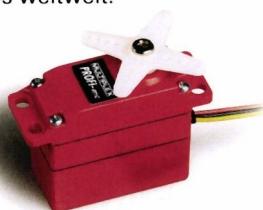
EinStein, the 5-channel receiver servo unit (2), suitable for almost all model airplanes.
PROFI Car. Special Features:
- Consistent ergonomics
- 5-channel system
- 40 MHz
Teddy, an entry-level electric glider with a pusher motor. The predecessor to the EasyStar. Special features:
- EPS fuselage and wings
- Wingspan 1.25 m
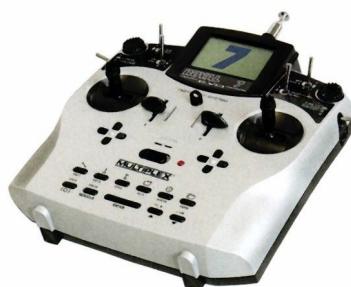
Introducing the ROYAL evo. The fusion of design and function.
EasyStar I, the most successful and most-copied entry-level glider with a pusher engine.
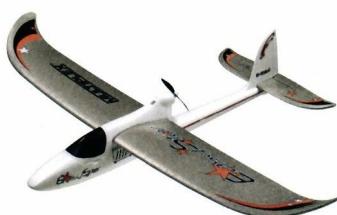
First model made from ELAPOR. Special features:
- ELAPOR fuselage and wings
- Wingspan 1.37 m
Introduction of M-LINK: the 2.4-GHz transmission system with telemetry capability. The first transmission system with a return channel to the transmitter.
**M-LINK**

FunJet ULTRA; comes standard with a top speed of over 200 km/h.
EasyStar II – the “training aircraft” for today’s model pilots.
SMART SX, automatic model recognition via the ID system.
PROFITX, the future of MPX RC technology.

Company building in Bretten (Gölshausen Industrial Park) since 2002.


TEAM MANAGER "THIS" BOSSHARD
 Rodito Nussbaumer

ATOM, THE NEW DOUBLE-DECKER FROM CPLR
 Matthias Bosshard

INSIGHTS INTO THE HISTORY OF SEAPLANES

CORSAIR F4U – A WARBIRD WITH A MEMORABLE LOOK
Jürgen Rosenberger, Jürgen Prinz
SUMMER FUN 2026 AT MG USTER
Martin Wunderli
F3A EUROPEAN CHAMPIONSHIPS IN ST-MACAIRE, FRANCE
Matthias Bosshard
What's New at Leomotion.com

HORIZON HOBBY/LEMACO NEWS: MICRO OV-10 BRONCO 645 MM BY E-FLITE

PRIDE AND GOOD IDEAS
 Markus Nussbaumer

News from HEBU

YOU KNOW WHAT I MEAN? 125 YEARS OF THE SWISS AERO CLUB
 Emil Giezendanner

34th HAHNENMOOS ALPINE MODEL AIRPLANE CAMP
Res Dauwalder
SMALL, MODEL-LIKE SAILBOATS
Res Dauwalder
TRY-OUT DAY AT MFV WETTINGEN
Urs Keller
52. 2026 ALPS CUP
Emil Giezendanner
TWIN TOWN PARTNERSHIP
Wolfgang Voeller
EURO CONTEST GLIDER ACRO TOUR AUSTRIA 2026

BY YOUTH, FOR YOUTH
Lorena Betschen
WELCOME, NEW MEMBER!
Andrea Bolliger
FREE FLIGHT IN THE MIDDLE OF SUMMER
Urs Muntwyler
THE PC-21 STORY
Emil Giezendanner
COUPE DES ALPES – OBSERVE AND LEARN
Rodito Nussbaumer
NEWS FROM HEBU
 Julia Bucher

FROM 0 TO 100
Markus Nussbaumer
NOS REGION – A HUB FOR ELECTRIC AVIATION
Emil Giezendanner
MEMORIES
Wolfgang Völler
Have you almost forgotten about aircraft that take off and land vertically?
Emil Giezendanner
70 YEARS OF THE NIDWALDEN MODEL AIRPLANE CLUB
Martin Barmettler