
Scale – The Scale Modelers (F4C) in Altenrhein
Held over two days for the first time, the Swiss Championship for scale model aircraft took place on August 27–28 at the Altenrhein Airfield (organizer: MG Thal), in conjunction with a Swiss “Stand-Off” Scale competition. The main difference between the two categories is that scale models are measured directly, whereas “Stand-Off” scale models are compared to reference documents from a distance.
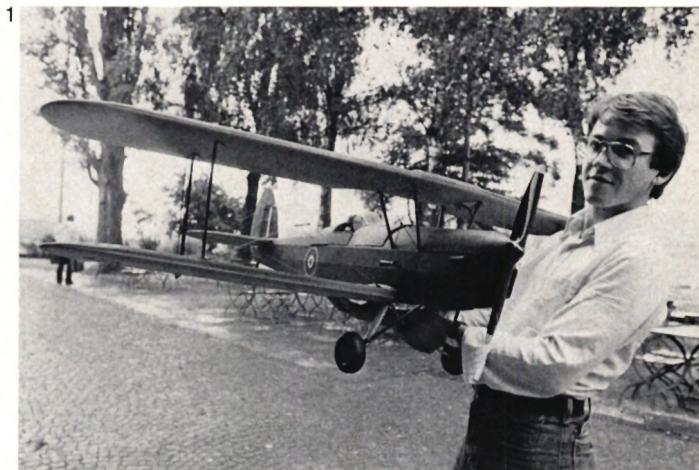
1 The new Swiss champion in F4C is Hansueli Gautschi from Reinach, Aargau. The original version of his Stampe S.V.4.B biplane trainer is still flying in Belgium. The fact that he didn’t receive even more points in the construction evaluation is due to his documentation being almost too thorough. Several details visible in the photos—which were, in principle, unimportant—were missing from the model, costing him a few points. Less can often be more.
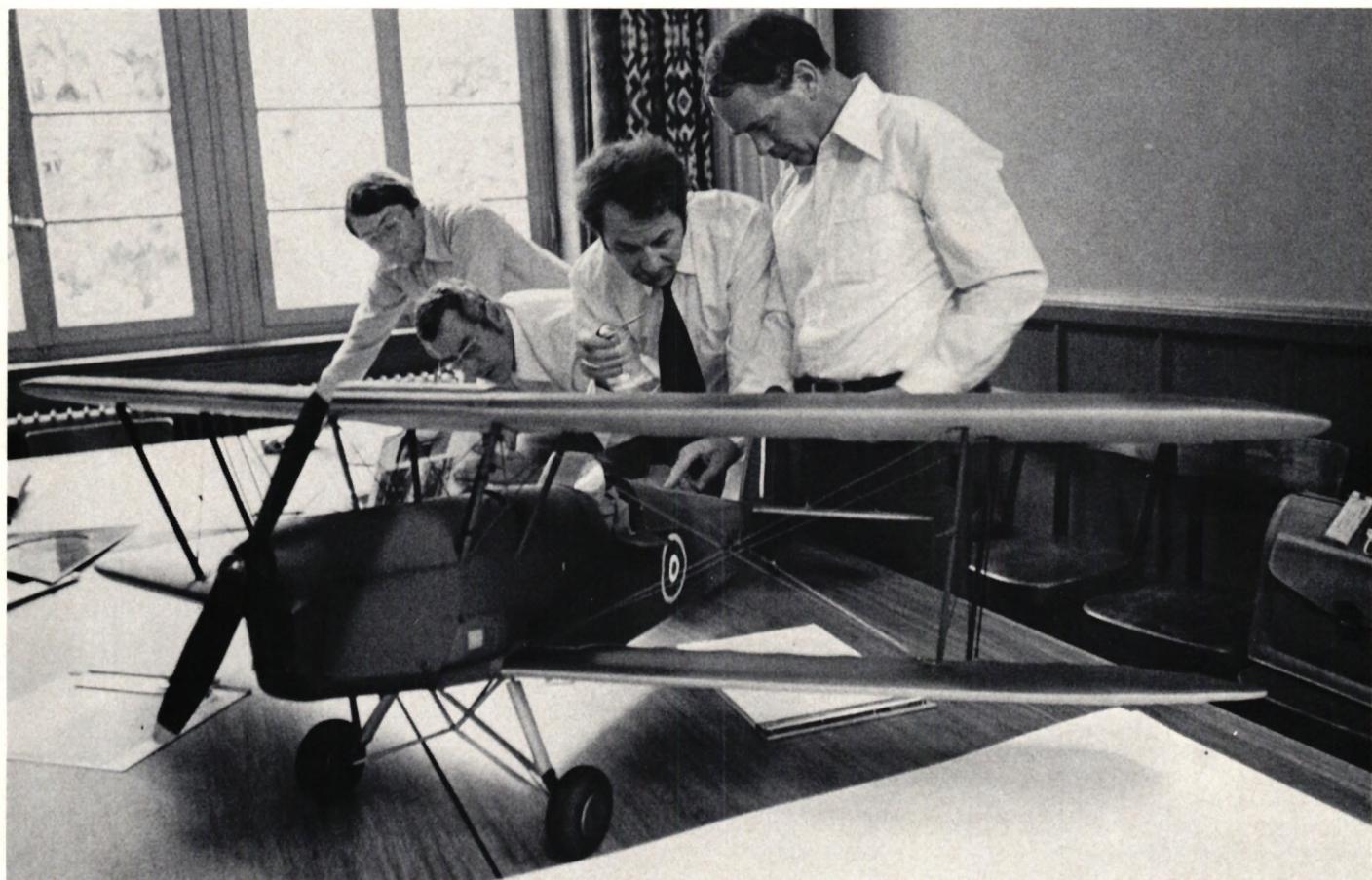
2 One group of judges at work: From right to left, Dr. Helmut Ziegler, Werner Oegerli, Ruedi Hadorn. The model being judged is the championship-winning Stampe S.V.4.B.
3 The model of the English single-seat fighter SE 5a by second-place finisher Hansruedi Zeller from Thal. Thanks to by far the best flight performance, he finished only very slightly behind the new Swiss champion in the overall standings.
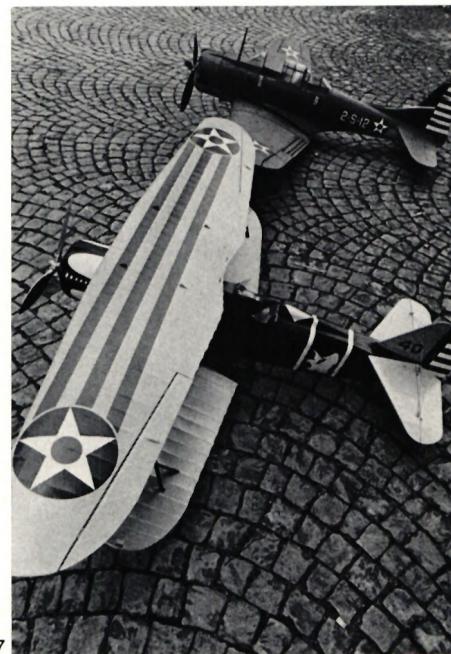
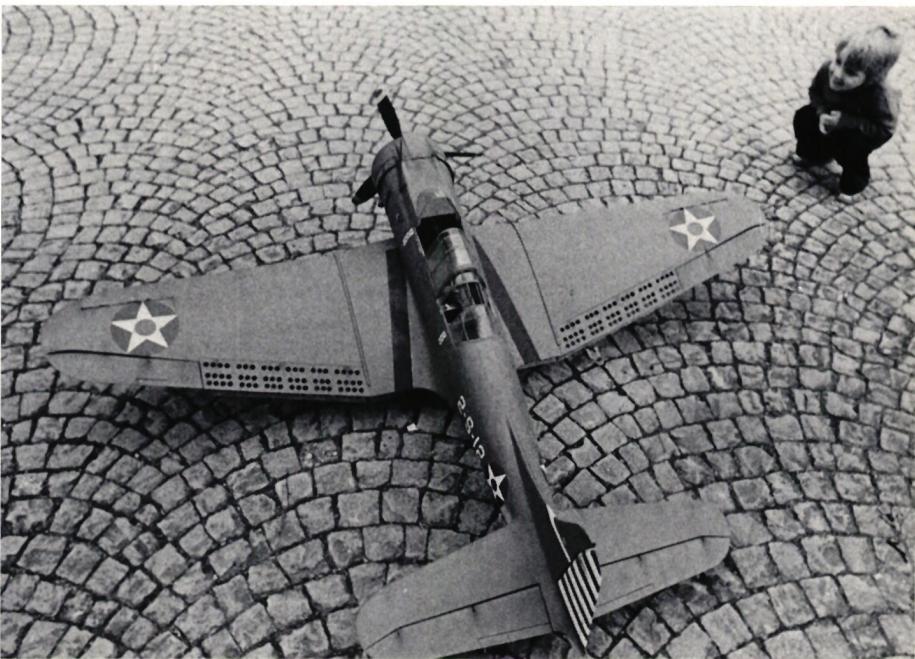
6 Peter Müller won by a wide margin in the Swiss “Stand-Off” Scale competition. His model: the Douglas SBD-3 “Dauntless.”
The “Stand-Off” category saw a welcome increase in overall participation, but only three competitors (plus one competing outside the official competition) vied for the title in the “Scale” category. Regardless of the performance of these three, it seems a bit odd that each received a medal and a Swiss champion was crowned. Extending the competition to two days allowed the judges to devote more time to evaluating the models. The flight evaluation on Sunday was somewhat hampered by rain. The format of the flight evaluation is interesting. In addition to five required horizontal maneuvers, five optional maneuvers must be flown that are suited to the aircraft’s characteristics. Given the value of the models, it’s also reasonable that only the best of three flights counts, with two takeoff attempts allowed for each flight.
(F4C) 1. Hansueli Gautschi, 2943.05 points (including 1696.75 for construction); 2. Hansruedi Zeller, 2936.45 (1412.95); 3. Peter Müller, 2,872.27 (1,815.97!); not in competition: Werner Rüegger, 2,853.00 (1,531.00).
Swiss Stand-Off-Scale Competition: 1. Peter Müller, 2,001 (1,425); 2. Georg Zeller, 1,834.5 (877.5); 3. Peter Gafner, 1,570 (675); 4. Marcel Gacond, 1,495 (1,105); 5. Frank Zülsdorf, 1,402 (540); 6. Willi Höhener, 1,337.5 (487.5); 7. Adrian Märklin, 1,093.5 (377.5); 8. Peter Froideveaux, 597.5 (597.5); 9. Paul Hildebrand, 492.5 (492.5); 10. Hansruedi Zeller, 280 (280).
On August 27–28, the Scale SM, combined with a “Stand-Off” Scale competition, was held at the Altenrhein airfield. There were four participants in the Scale category and ten in the “Stand-Off” Scale category. This low turnout is understandable in the Scale category, but not entirely clear in the “Stand-Off” category. Why isn’t “Stand-Off” Scale attractive enough for model aviators? It can’t be due to a lack of interest in or enjoyment of lifelike models—just look at the models on display at various exhibitions. But then again, where have all those models gone?
Is the level of craftsmanship in “Stand-Off” Scale perhaps overestimated? Do model builders find the risks of flying and the competition conditions too daunting, or was the travel distance to this competition too long? In my opinion, a kit model—built neatly according to the provided instructions (3-view drawings and/or color prints)—still has a chance to take one of the top spots.
But now to the competition. The model construction judging took place on Saturday. During the judging period, there was an opportunity to get to know the participants and their models. Additional models that did not participate in the competition rounded out the display.
Flying on Sunday was made difficult by rainy weather. Understandably, some participants chose not to launch their models and thus accepted a lower placement. The fairly large crowd of spectators was rewarded for their patience with some beautiful flights. An exhibition flight rounded out the competition. For the 78th Swiss Championships, I hope for a central, suitable venue and a larger turnout of model airplane pilots.
P. M.
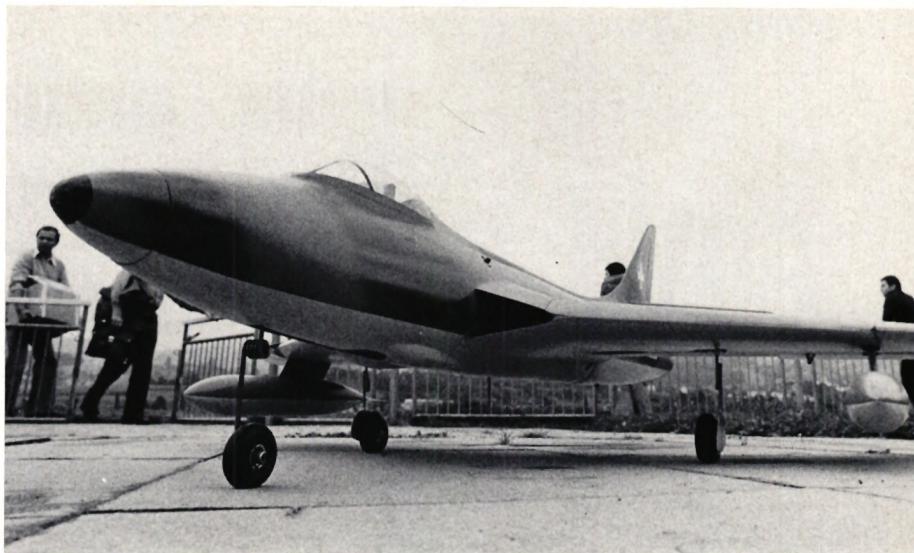
9 The “Stand-Off” Hunter belonging to second-place finisher Georg Zeller of Bellach.
10 The cockpit of the Northrop T-28 by Peter Gafner, Fehraltorf (3rd place in “Stand-Off”).
11 Werner Rüegger of Herrliberg likely had the most consistent interpretation of “scale.” On his Druine “Turbulent,” not only the visible parts but also the invisible ones are faithfully reproduced. As a result, the model weighs about six kilograms—one kilogram too much for championship participation, according to the rules. Despite being out of competition, it still achieved the third-highest construction score.
12 Scale: appealing to spectators, even young ones (model: Douglas SBD-3 “Dauntless” by Peter Müller).


What's New at Leomotion.com

PRIDE AND GOOD IDEAS
 Markus Nussbaumer

News from HEBU

TEAM MANAGER "THIS" BOSSHARD
 Rodito Nussbaumer

INSIGHTS INTO THE HISTORY OF SEAPLANES

34th HAHNENMOOS ALPINE MODEL AIRPLANE CAMP
Res Dauwalder
CORSAIR F4U – A WARBIRD WITH A MEMORABLE LOOK
Jürgen Rosenberger, Jürgen Prinz
SUMMER FUN 2026 AT MG USTER
Martin Wunderli
F3A EUROPEAN CHAMPIONSHIPS IN ST-MACAIRE, FRANCE
 Matthias Bosshard

52. 2026 ALPS CUP
 Emil Giezendanner

TWIN TOWN PARTNERSHIP
Wolfgang Voeller
EURO CONTEST GLIDER ACRO TOUR AUSTRIA 2026

BY YOUTH, FOR YOUTH
Lorena Betschen
ATOM, THE NEW DOUBLE-DECKER FROM CPLR
Matthias Bosshard
YOU KNOW WHAT I MEAN? 125 YEARS OF THE SWISS AERO CLUB
Emil Giezendanner
SMALL, MODEL-LIKE SAILBOATS
Res Dauwalder
TRY-OUT DAY AT MFV WETTINGEN
Urs Keller
WELCOME, NEW MEMBER!
Andrea Bolliger
HORIZON HOBBY/LEMACO NEWS: MICRO OV-10 BRONCO 645 MM BY E-FLITE

FREE FLIGHT IN THE MIDDLE OF SUMMER
Urs Muntwyler
THE PC-21 STORY
Emil Giezendanner
COUPE DES ALPES – OBSERVE AND LEARN
Rodito Nussbaumer
NEWS FROM HEBU
 Julia Bucher

FROM 0 TO 100
Markus Nussbaumer
NOS REGION – A HUB FOR ELECTRIC AVIATION
Emil Giezendanner
MEMORIES
Wolfgang Völler
Have you almost forgotten about aircraft that take off and land vertically?
Emil Giezendanner
70 YEARS OF THE NIDWALDEN MODEL AIRPLANE CLUB
Martin Barmettler