
1979 European F1E Championships
Probably no Swiss competitor in these championships would have believed in advance that they could achieve such success, even though we faced the competition with confidence. René Pfister, Roland Pfister, Maurice Bodmer, and Walter Spatny took the top four spots in the individual standings, in that order. The “former” European champion Robert Haller finished in 7th place. They had all prevailed in the playoff, which included 34 competitors. In the team standings, Switzerland took an outstanding 2nd place behind Czechoslovakia and ahead of Austria.
Of course, a result like this also requires a bit of luck, which favored some competitors more than others in this competition. However, it was not luck that laid the foundation for this success—rather, it was the thorough preparation of the individual participants. The national team had already begun training in July. A voluntary training session at Melchsee-Frutt kicked things off; the Arosa Eagle competition and the Bern Group Competition provided further ideal training opportunities. The main focus was on becoming familiar with the models—that is, their handling—as well as analyzing the specific operational possibilities dictated by the model’s design. This, in turn, requires as accurate an assessment as possible of the prevailing meteorological conditions. This assessment was always made in consultation between the pilots and the team manager, and the mission was planned accordingly.
To familiarize themselves with the conditions on site, most of the Swiss team members arrived at Hesselberg in Germany 3–4 days in advance. The Hesselberg is located in the Ansbach district between Wassertrüdingen and Dinkelsbühl, and at 689 meters above sea level, it is the only significant elevation within a radius of several kilometers. It was therefore only reasonable that the jury decided to hold this European Championship as an open competition, as originally announced.
Consequently, on Saturday, October 13, 1979, 94 competitors vied for the European Individual Championship title, and 5 teams competed for the team title. As on previous days, the wind was blowing from the south-southeast, so the jury selected starting point 1 as the venue. Walter Spatny was the first to start at 8:45 a.m. Visibility was quite good at first, but it deteriorated as the first round progressed, which already proved to be the downfall of some competitors. This was the case, among others, for Werner Oeggerli and François Tapernoux, whose models were either no longer visible to the timekeepers in the haze or were mistaken for others. As a result, the national team—composed of Maurice Bodmer, Roland Pfister, and François Tapernoux—lost 78 seconds to Czechoslovakia, which, as it turned out later, already sealed their fate in second place. As the race progressed, visibility improved again, but it was still difficult to keep track of the models. It soon became clear that a tiebreaker would be unavoidable unless the weather changed: late-summer warmth prevailed, and the wind was barely blowing. The entire competition proceeded at a brisk pace, though we Swiss never found ourselves pressed for time, as mutual assistance was a top priority.
After five rounds, 34 competitors had qualified for the tiebreaker. It was a close call, and a few more could have qualified as well. For example, the Austrian Salzer fell just 2 seconds short of the maximum score, and Werner Hauenstein braked a flight 10 seconds too early.
After the excellent organizer, Anton Frieser, and his tireless helpers had moved the launch site to a lower elevation, the competition began shortly before dusk. From Monday through Wednesday, the Swiss team trained on a lower slope; this was primarily to avoid flying above the summit elevation, since the Hesselberg is located in a low-altitude flight zone—a fact we can only confirm. Starting on Thursday, the launch sites were marked by the organizer. Due to the prevailing foehn conditions with winds from the south-southeast, we trained at launch site 1. Dense, thorny underbrush lay ahead of us, interspersed with shrubs and trees growing in a line across the slope. Therefore, we decided to fly beyond the slope into the plain and not to brake after just 30 seconds, as the German competitors did; the risk of sustaining a fracture was too great
.*The new 1979 European Slope Flying Champion (Cat. F1E), René Pfister, Glattal.*
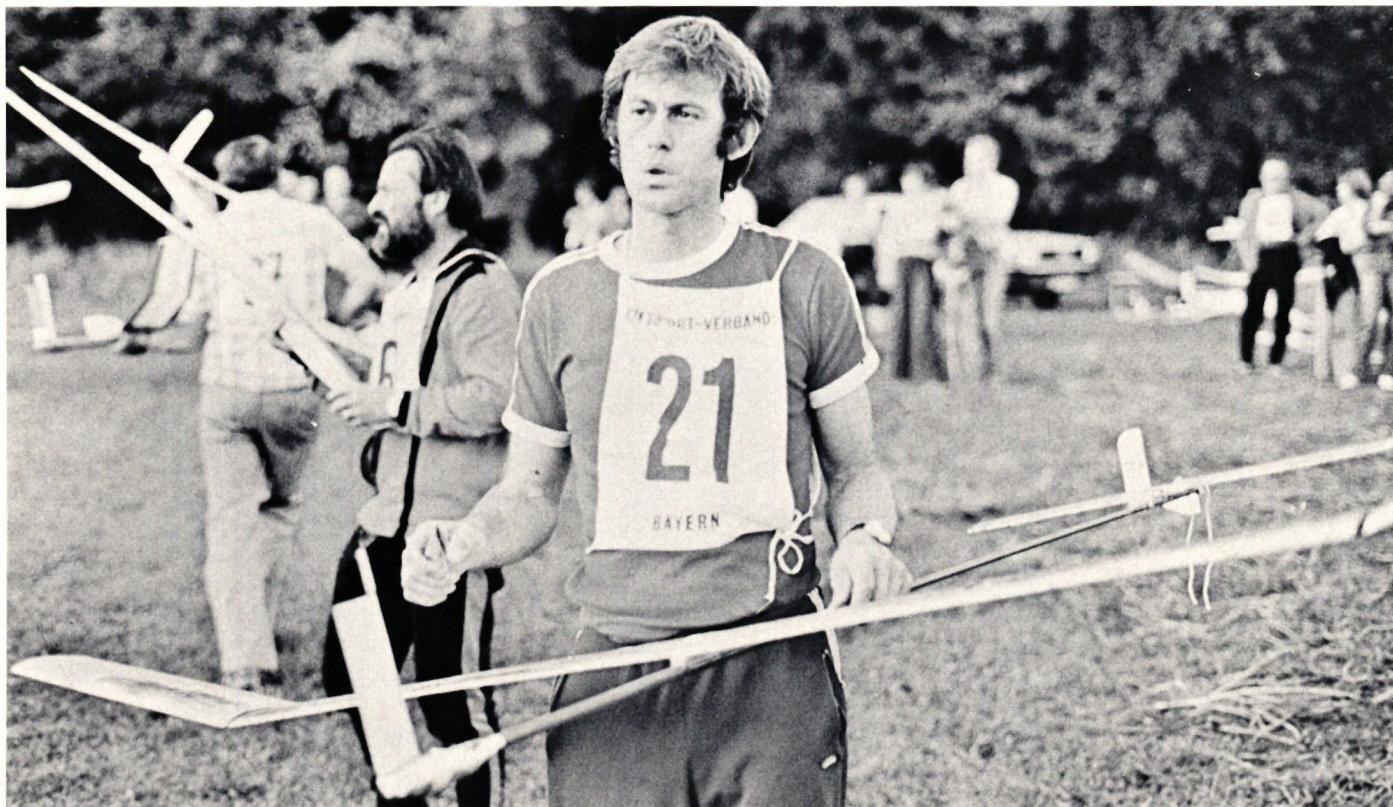
Little by little, more competitors arrived, including, for the first time, a Frenchman, Jean Wanzenriether, from Alsace. After a nine-year absence, we were also able to welcome the Czechs. They were joined by the Italians, the Austrians, and the host Germans. The English were not there this time.
Before long, the old debates began about who could become the European Individual Champion—whether, according to the competition rules, any participant was eligible, or only those registered as national team members by their national Aero Club in accordance with the Code Sportif. It is obvious to me that this FAI regulation cannot apply to the F1E class. This is because the F1E class is still a young discipline within free flight, practiced to this day by only 6–7 European nations. If the aforementioned rule were to be applied, I could hardly imagine an organizer hosting continental championships for only about 20 competitors. Only when open championships become so oversubscribed that an organizer can no longer cope with the flood of participants is a rule limiting the number of participants per nation justified. But even in this case, the quorum of 3 must be exceeded as long as only about 10 nations are participating. The competition began in three heats. The only tactic we could advise our Swiss competitors to follow was to choose a course so that the model would fly over fields as much as possible, since these were still giving off heat; dew had already formed on the meadows. The tension grew steadily. No one knew what their time was worth until the very last landing. The tension then suddenly dissolved and turned into great joy in the Swiss camp when it was first unofficially announced: four Swiss pilots were in the lead. Who would have thought it!
That evening at the awards ceremony, this result was officially confirmed, and all the trophies and medals were accepted by overjoyed winners. The hours that followed flew by in the blink of an eye, and once again, friendship was the true winner in the F1E category.
As team manager, it’s not hard for me to sum up this success. The effort of every single participant paid off not only in material terms; I’m firmly convinced that it also paid off on a personal level—we spent some wonderful days together as friends.
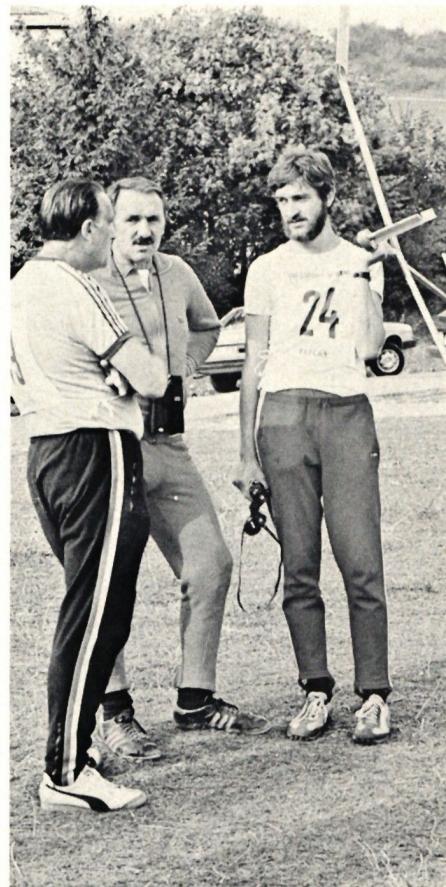
| 1. René Pfister | CH | 1,500 + 262 |
| 2. Roland Pfister | CH | 1,500 + 260 |
| 3. Maurice Bodmer | CH | 1,500 + 245 |
| 4. Walter Spatny | CH | 1,500 + 237 |
| 5. Viri Kalina | CS | 1,500 + 235 |
| 6. Karl Höhenberger | D | 1,500 + 230 |
| 7. Robert Haller | CH | 1500 + 225 |
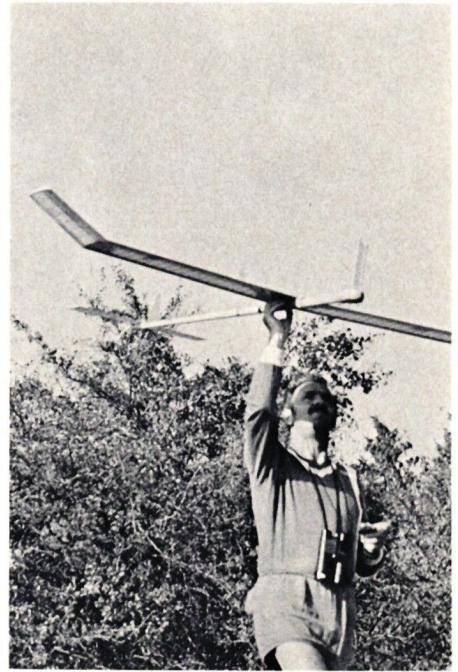
| 1. J. Nohel | CS | 4500 |
| 2. M. Bodmer | CH | 4422 |
| 3. K. Lintner | A | 4380 |


TEAM MANAGER "THIS" BOSSHARD
 Rodito Nussbaumer

ATOM, THE NEW DOUBLE-DECKER FROM CPLR
 Matthias Bosshard

INSIGHTS INTO THE HISTORY OF SEAPLANES

34th HAHNENMOOS ALPINE MODEL AIRPLANE CAMP
Res Dauwalder
CORSAIR F4U – A WARBIRD WITH A MEMORABLE LOOK
Jürgen Rosenberger, Jürgen Prinz
SUMMER FUN 2026 AT MG USTER
Martin Wunderli
F3A EUROPEAN CHAMPIONSHIPS IN ST-MACAIRE, FRANCE
Matthias Bosshard
What's New at Leomotion.com

HORIZON HOBBY/LEMACO NEWS: MICRO OV-10 BRONCO 645 MM BY E-FLITE

PRIDE AND GOOD IDEAS
 Markus Nussbaumer

News from HEBU

YOU KNOW WHAT I MEAN? 125 YEARS OF THE SWISS AERO CLUB
 Emil Giezendanner

SMALL, MODEL-LIKE SAILBOATS
Res Dauwalder
TRY-OUT DAY AT MFV WETTINGEN
Urs Keller
52. 2026 ALPS CUP
Emil Giezendanner
THE PC-21 STORY
Emil Giezendanner
TWIN TOWN PARTNERSHIP
Wolfgang Voeller
EURO CONTEST GLIDER ACRO TOUR AUSTRIA 2026

BY YOUTH, FOR YOUTH
Lorena Betschen
WELCOME, NEW MEMBER!
Andrea Bolliger
FREE FLIGHT IN THE MIDDLE OF SUMMER
Urs Muntwyler
COUPE DES ALPES – OBSERVE AND LEARN
Rodito Nussbaumer
NEWS FROM HEBU
 Julia Bucher

FROM 0 TO 100
Markus Nussbaumer
NOS REGION – A HUB FOR ELECTRIC AVIATION
Emil Giezendanner
MEMORIES
Wolfgang Völler
Have you almost forgotten about aircraft that take off and land vertically?
Emil Giezendanner
70 YEARS OF THE NIDWALDEN MODEL AIRPLANE CLUB
Martin Barmettler