
Up to 15 meters in span
First, a clarification: This was not a gathering for seniors, where only pilots over a certain age were allowed to participate. Nevertheless, it was noticeable that many of the participants were born around the same time as the original glider they had built.
It’s an interesting fact that, apparently, a vintage glider usually goes hand in hand with a “vintage pilot.” One exception is Markus Frey, who did such a great job organizing this wonderful gathering with the Müswangen group and the IG Albatros. Without any fuss or stress, it turned into an air show featuring vintage gliders from the history of gliding. For once, size was less important than the quality and selection of the models on display. The focus was on a true feast for the eyes for anyone who had ever delved into the history of gliding. Highlights for this reporter included the flights of no fewer than five Austria “Elephant” gliders, all in various sizes, with the largest—built by Markus Frey on a 1:2 scale—boasting a wingspan of no less than 15 meters (!). Other highlights included fantastic models built to nearly museum-quality standards by some participants, including Michael Ohlwein, the participant who had traveled the farthest,
from Bremen. Placing a scale-accurate pilot in period clothing in the fully equipped Rhineland cockpit would be one thing. But this pilot was also able to control the aircraft’s movements with the control stick and turn his head while operating the rudder—simply astonishing. Some of these other colorful birds also featured excellent details, such as lifelike replicas of the panel joints—details that really make all the difference. The flight performance of such models is also impressive and is hardly inferior to that of a modern fiberglass glider. Of course, the only area where compromises must be made is in speed flying. However, the differences in performance are unlikely to be as great as those seen in manned gliders. Conclusion: Vintage gliders are just as much fun as monocoque gliders and look at least as good—if not better—in the air. The reporter isn’t the only one hoping that there will be another event of this kind next year. Jack Kägi
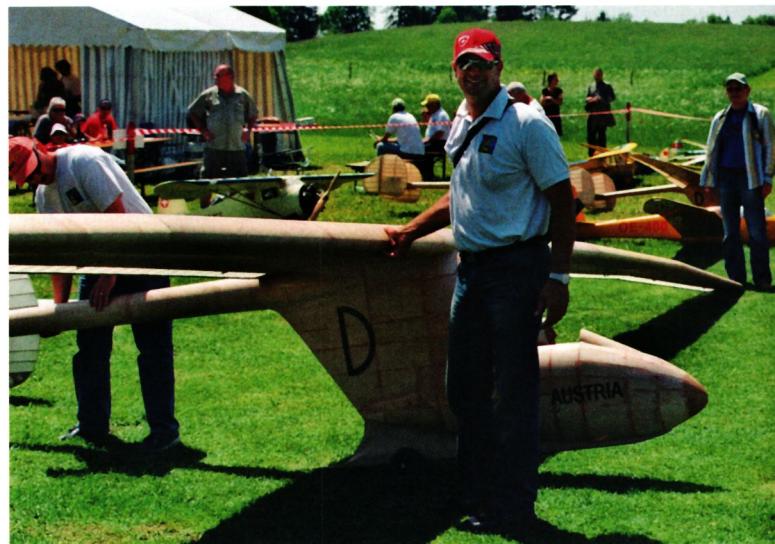
Another rarity: the Fauvel 221 by Michael Ohlwein. Monsieur Fauvel has designed several very interesting “flying-board” aircraft and has also built a museum-quality replica of the 221.
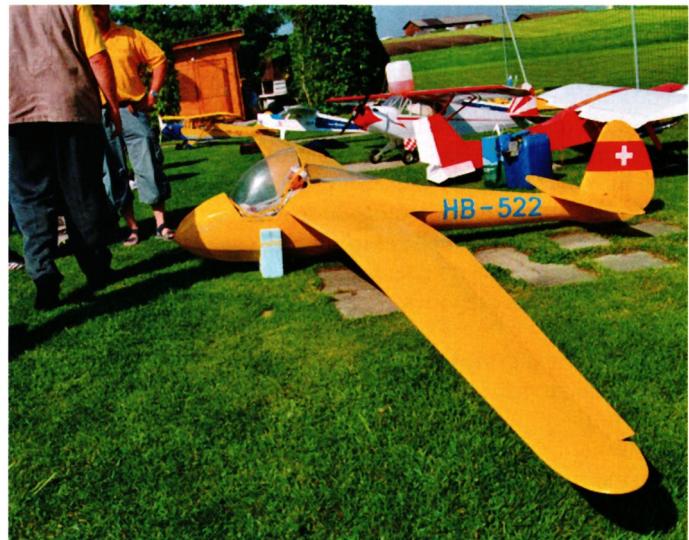
Ka 4 “Rhönlerche,” the training glider for thousands of glider pilots.
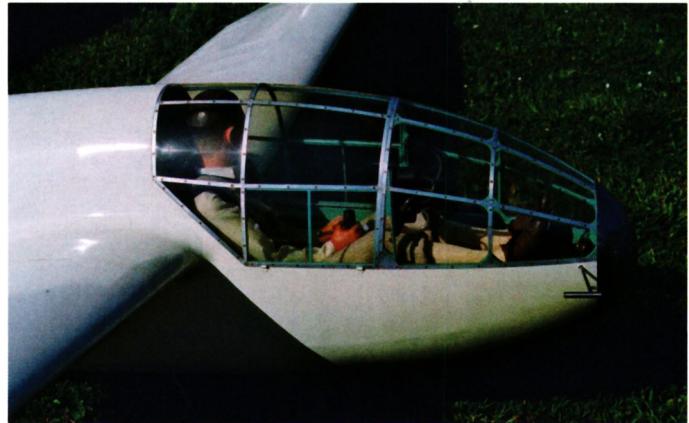
"Austria" as it lands. You could almost run alongside it.
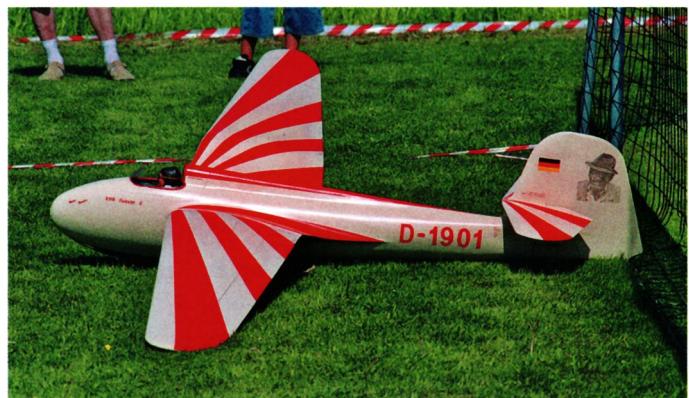
The "Habicht" is a very well-known aerobatic glider.


News from HEBU

TEAM MANAGER "THIS" BOSSHARD
 Rodito Nussbaumer

YOU KNOW WHAT I MEAN? 125 YEARS OF THE SWISS AERO CLUB
 Emil Giezendanner

F3A EUROPEAN CHAMPIONSHIPS IN ST-MACAIRE, FRANCE
 Matthias Bosshard

52. 2026 ALPS CUP
Emil Giezendanner
PRIDE AND GOOD IDEAS
 Markus Nussbaumer

ATOM, THE NEW DOUBLE-DECKER FROM CPLR
Matthias Bosshard
CORSAIR F4U – A WARBIRD WITH A MEMORABLE LOOK
Jürgen Rosenberger, Jürgen Prinz
SUMMER FUN 2026 AT MG USTER
Martin Wunderli
TRY-OUT DAY AT MFV WETTINGEN
Urs Keller
TWIN TOWN PARTNERSHIP
Wolfgang Voeller
BY YOUTH, FOR YOUTH
Lorena Betschen
SMALL, MODEL-LIKE SAILBOATS
Res Dauwalder
What's New at Leomotion.com

HORIZON HOBBY/LEMACO NEWS: MICRO OV-10 BRONCO 645 MM BY E-FLITE

COUPE DES ALPES – OBSERVE AND LEARN
Rodito Nussbaumer
EURO CONTEST GLIDER ACRO TOUR AUSTRIA 2026

INSIGHTS INTO THE HISTORY OF SEAPLANES

34th HAHNENMOOS ALPINE MODEL AIRPLANE CAMP
Res Dauwalder
WELCOME, NEW MEMBER!
Andrea Bolliger
FREE FLIGHT IN THE MIDDLE OF SUMMER
Urs Muntwyler
THE PC-21 STORY
Emil Giezendanner
NEWS FROM HEBU
 Julia Bucher

FROM 0 TO 100
Markus Nussbaumer
MEMORIES
Wolfgang Völler
NOS REGION – A HUB FOR ELECTRIC AVIATION
Emil Giezendanner
Have you almost forgotten about aircraft that take off and land vertically?
Emil Giezendanner
DO YOU KNOW WHAT I MEAN IN THE LAND OF SMILES?
Emil Giezendanner