
80-meter runway in the Altmatt marshland
Most model airplane pilots in the Zurich area are very familiar with the Altmatt airfield. This is largely because the Einsiedeln group is probably one of the few—if not the only—group that allows pilots from outside the group to fly at its airfield for a fee.
The site was leased 10 years ago for the same period, and a 9 x 90 m rink was constructed there using 25-kg slabs mounted on posts. However, these 50 x 50 cm slabs had the disadvantage that one-third of them (about 30 metric tons!) had to be replaced every spring, as the snow—which can reach depths of up to 2 meters in this area—continued to wreak havoc.
The old lease expired at the end of 1972. We were quite surprised when, in August 1972, a one-year contract was presented. Although we knew that this area was not overlooked by nature conservation authorities, the chairman and secretary made an appeal to the responsible land cooperative, the Genossame Binzen. We had to build a new trail for accident prevention reasons. However, with a contract that carried the sword of Damocles in the form of an annual termination clause, we could neither submit a funding application nor persuade anyone to construct such a trail.
So the secretary submitted a corresponding request to the Genossame Binzen. Meetings and phone calls between its president, our chairman, and our secretary followed in quick succession until, by the end of November 1972, a modified lease agreement valid through 1982 was finalized.
At this point, special credit is due to the president, Mr. Bingisser, for recognizing the educational value of model aviation and therefore granting us a lease extension. We would also like to extend our special thanks to all other members of the cooperative. Given these encouraging developments, the very existence of the Einsiedeln group was no longer in jeopardy. Equally important, however, was the continuation of the long-standing practice of allowing pilots from outside the area to fly there as well.
Once again, the chairman, the secretary, and—newly added to the group—the flight director met. This was because the latter has extensive experience in groundwater engineering and was able to provide us with information about the future conditions of a new runway in the marshy terrain.
They discussed the limited options, their financing, and the difficulties of transporting materials across marshy terrain. At the 1972 general meeting, three options were then presented. The secretary presented a rather pessimistic budget and explained the possibilities for raising the necessary funds, as well as the repayment terms. Thanks to voluntary contributions from various members, the total amount—combined with the group’s assets—allowed us to announce a loan of 22,000 Swiss francs. This effectively determined the only feasible option presented within this cost range: namely, a floating runway.
The flight director submitted his proposal in the form of 16-centimeter-thick, reinforced slabs measuring 50 x 350 centimeters. To construct the 8 x 80-meter runway, 368 slabs with a total weight of 88 metric tons were required.
Next came the vote among the members on whether or not to approve the construction. An absolute majority demonstrated the members’ enthusiasm, and the board, too, had every reason to be proud of this result. Without the members, such a construction project would never be conceivable.
After this 5-hour general meeting, the guesswork began as to how these 88 metric tons of slabs could be transported from the road approximately 500 meters through the swamp. It soon became clear that no vehicle could handle this load without sinking hopelessly into the swamp itself. It was determined that the ideal means of transport would be a helicopter—and at the same time, everyone shuddered at the thought...
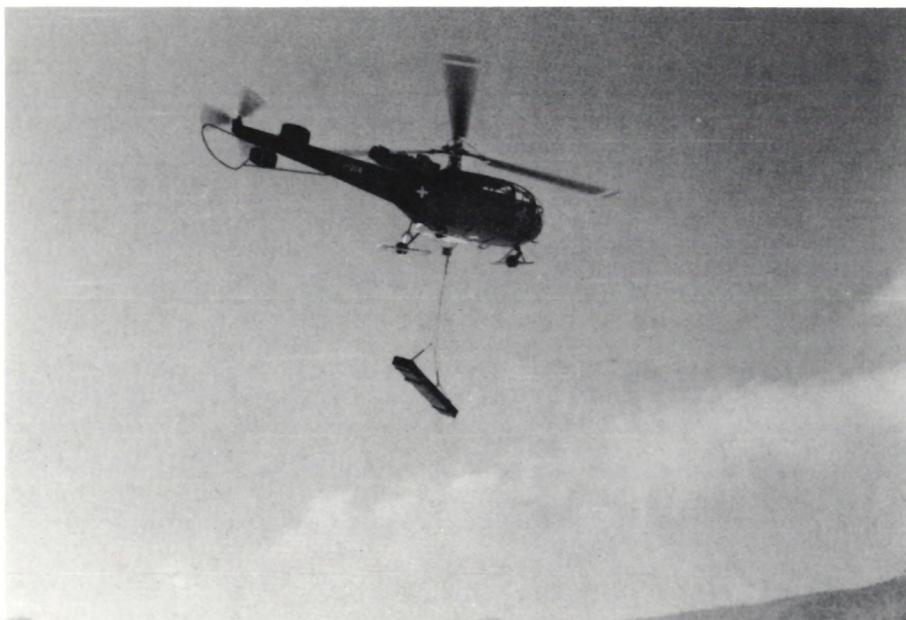
Having to come up with 70,000 francs for that without actually having the money. With mixed feelings, they nevertheless toyed with the idea, which, if put into practice, would likely involve the least amount of physical strain.
Once again, the secretary drafted a subtly worded request, which had to be sent via Dübendorf to the Federal Military Administration in Bern. A helicopter mission for training purposes was conceivable, though the chances of success were like finding a needle in a haystack. The fact that certain people called us dreamers didn’t bother us in the least, since we were well aware of the odds. Four weeks later, the news arrived from Bern: “...we hereby grant, as an exception under the circumstances described, permission for the use of military helicopters!”
It’s not hard to imagine the joy with which we assisted with these transport flights.
We would like to take this opportunity to extend our special thanks to Colonel Burkhard of Bern, Major Kolb of Dübendorf, Adjutant Frei of Dübendorf, and all the other pilots and military personnel who helped out.
This was not a matter of course, but rather the goodwill of army leadership, which made a decision that recognized model aviation not as a mere pastime, but as a valuable recreational activity. The relevant Army officials knew full well that many military pilots began their careers with this hobby and, in some cases, still pursue it today. Self-discipline, patience—a great deal of patience, in fact—and discipline are just a few of the qualities that lead to success in this field.
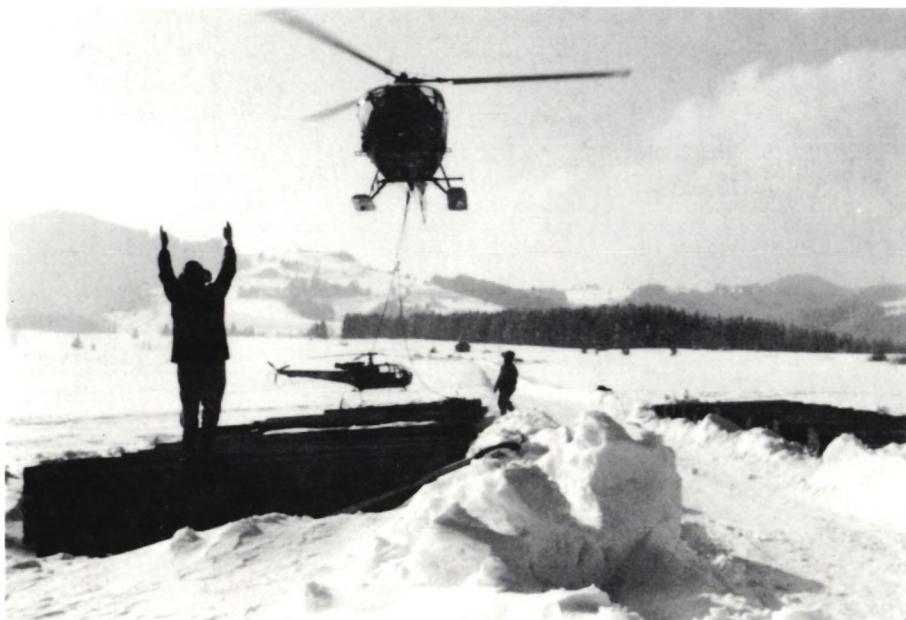
The army has thus given us the key to making our project a reality. Various members (albeit always the same active pilots!) sacrificed many weekends to lay the 88 metric tons of slabs, fill 1,200 meters of joints with cement, and redesign the entire area. New tables, new spectator benches, and many square meters of the old slabs had to be moved to their new locations so that everyone could stand or sit with dry feet.
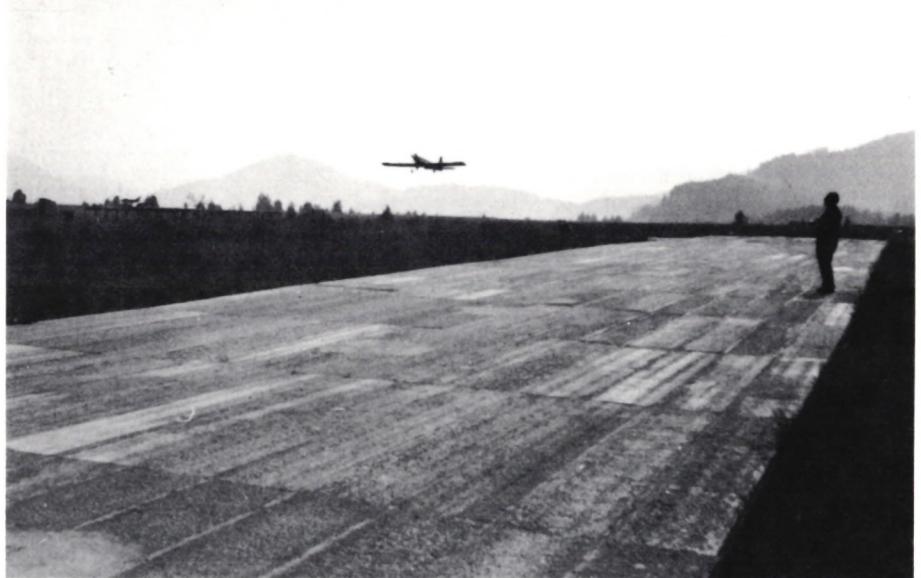
Today, we’re ready to unveil a new slope with a smooth surface. A runway at 940 meters above sea level, in the midst of unspoiled nature. Even though the walkways aren’t quite the way we’d like them to be yet, next spring will give us the strength to close this small gap as well.
Now let’s fly! W. Bachmann


What's New at Leomotion.com

PRIDE AND GOOD IDEAS
 Markus Nussbaumer

News from HEBU

TEAM MANAGER "THIS" BOSSHARD
 Rodito Nussbaumer

ATOM, THE NEW DOUBLE-DECKER FROM CPLR
 Matthias Bosshard

INSIGHTS INTO THE HISTORY OF SEAPLANES

34th HAHNENMOOS ALPINE MODEL AIRPLANE CAMP
Res Dauwalder
CORSAIR F4U – A WARBIRD WITH A MEMORABLE LOOK
Jürgen Rosenberger, Jürgen Prinz
SUMMER FUN 2026 AT MG USTER
Martin Wunderli
F3A EUROPEAN CHAMPIONSHIPS IN ST-MACAIRE, FRANCE
Matthias Bosshard
52. 2026 ALPS CUP
 Emil Giezendanner

HORIZON HOBBY/LEMACO NEWS: MICRO OV-10 BRONCO 645 MM BY E-FLITE

TWIN TOWN PARTNERSHIP
Wolfgang Voeller
EURO CONTEST GLIDER ACRO TOUR AUSTRIA 2026

BY YOUTH, FOR YOUTH
Lorena Betschen
YOU KNOW WHAT I MEAN? 125 YEARS OF THE SWISS AERO CLUB
Emil Giezendanner
SMALL, MODEL-LIKE SAILBOATS
Res Dauwalder
TRY-OUT DAY AT MFV WETTINGEN
Urs Keller
WELCOME, NEW MEMBER!
Andrea Bolliger
FREE FLIGHT IN THE MIDDLE OF SUMMER
Urs Muntwyler
THE PC-21 STORY
Emil Giezendanner
COUPE DES ALPES – OBSERVE AND LEARN
Rodito Nussbaumer
NEWS FROM HEBU
 Julia Bucher

FROM 0 TO 100
Markus Nussbaumer
NOS REGION – A HUB FOR ELECTRIC AVIATION
Emil Giezendanner
MEMORIES
Wolfgang Völler
Have you almost forgotten about aircraft that take off and land vertically?
Emil Giezendanner
70 YEARS OF THE NIDWALDEN MODEL AIRPLANE CLUB
Martin Barmettler