
Landed safely
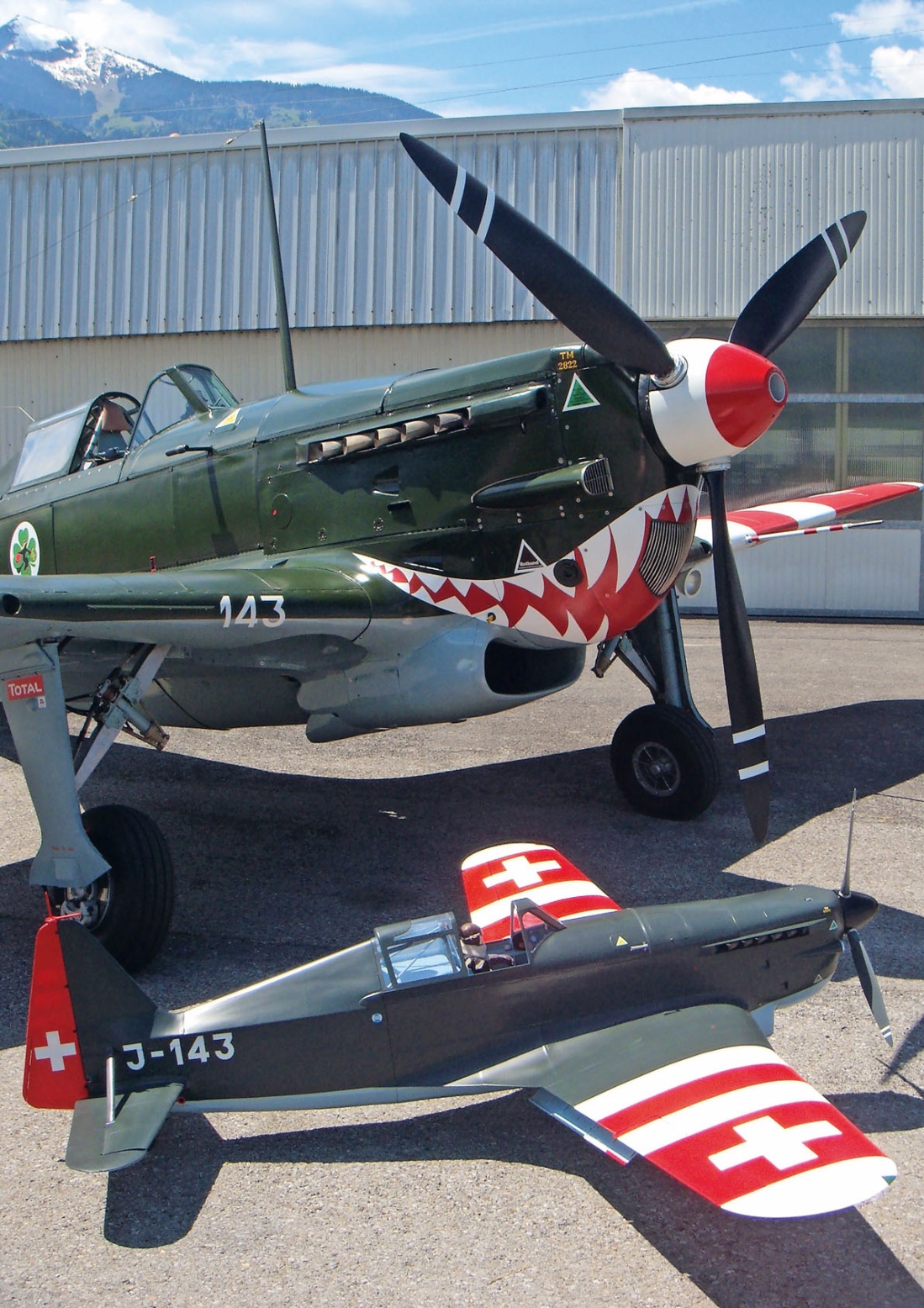
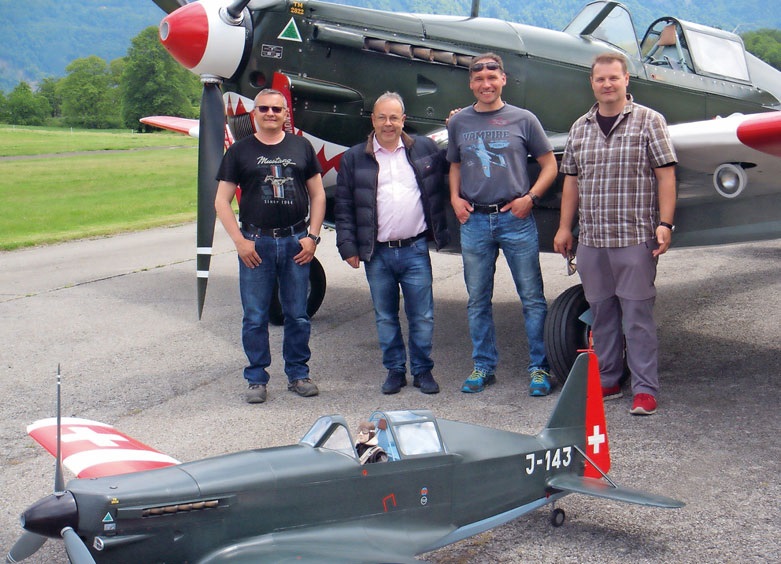
A great deal of passion has gone into building the replica of the only Morane D-3801 (HB-RCF) still in flight. That’s why the builder was all the more excited about a meeting between the model and the original!
On a cool late-summer day, I’m standing at the Bleienbach recreational airfield with my brother and his son. The sun is already warming us with its first rays of the day; there’s no wind. We perform the final checks before the maiden flight of my Morane D-3801 and then start the engine. The takeoff procedure is successful on the first try, and the Fiala FM120i2 idles for a few minutes afterward. These are the final moments to go over the maiden flight in my mind one last time. Then the time has come: We line up the model on the large runway and let the engine run at full throttle one last time. Everything’s okay! My brother releases the model, and I quickly open the throttle. The Morane accelerates surprisingly quickly and needs only a slight right rudder input to stay on course. Then the plane takes off and climbs steadily into the morning sky. As planned, I leave the landing gear extended and begin trimming the controls. Two notches of elevator trim and one notch of aileron trim to the left. After 2–3 turns, I can confirm that the rudder trim is also correct.
I level off and retract the landing gear. Hopefully the replicated retraction mechanism won’t cause any problems! The landing gear retracts smoothly into the wing, and I begin to enjoy the flight. My Morane flies very smoothly and handles beautifully. After a few more laps and a test of its low-speed flight characteristics at a safe altitude, I begin my approach for landing. The landing gear extends without a hitch, and after the crosswind approach, I turn onto the runway. I throttle back the
I cut the engine and give myself plenty of time to glide out on the long runway. The Morane touches down gently on the runway and rolls out slowly. A successful landing!
In the 1930s, the French aircraft manufacturer Morane-Saulnier developed the single-engine MS.406 fighter. The aircraft was part of the first generation of modern planes with retractable landing gear and unstrung wings. In Switzerland, the model was manufactured under license as the Morane D-3801—
and was used extensively during World War II. Of all the aircraft of this type, only the HB-RCF—which was flown for many years by Daniel Koblet and is now owned by Eric Chardonnens—remains airworthy worldwide.
A few years ago, I had the pleasure of admiring Daniel Koblet flying his Morane D-3801 at an airshow. I had just
I had finished my Pilatus P-2 and was looking for a new project. The Morane’s unique flight profile had impressed me, so the decision was made quickly!
I gathered the necessary materials (pictures from the internet, three-view drawings) and found an excellent plan by Jerry Bates, which I immediately
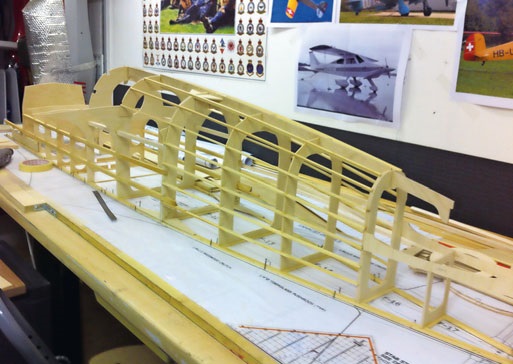
I ordered it. I enlarged the plan to the desired scale of 1:3.5 and began cutting out the parts...
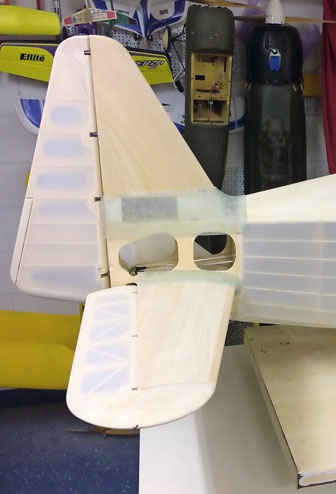
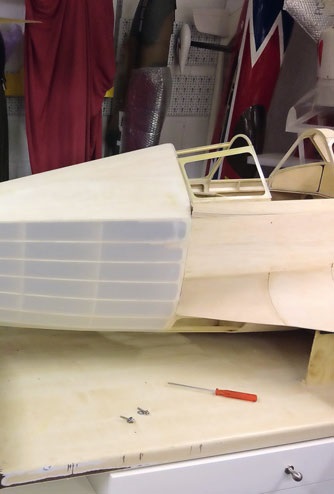
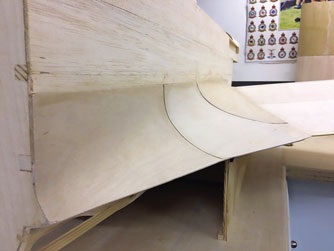
Since the model is quite large, with a wingspan of over 3 meters and a length of 2.34 meters, I decided to make the tail section removable and the outer wings detachable.
As with the original, the tail section is partially covered. Here I used fabric film, on which I imitated the reinforcement seams using adhesive tape and zigzag tape. The canopy is constructed from individual Plexiglas elements set in a wood/fiberglass frame.
For the surface finish, I used fiberglass mesh with floor sealer. I then applied a spray-on filler, which was sanded down almost completely. For the engine cowling, the landing gear covers, and individual areas at the tail, I fabricated GRP parts. I laminated some of these directly onto the already-built structure, or onto a simple positive mold made of Styrofoam, which was covered with iron-on film.
Right from the start of the project, it was clear that I would use a Fiala FM120i2 as the powerplant. It is a 2-cylinder, 4-stroke engine with a displacement of 120 cm². The inline arrangement of the cylinders works to my advantage when installing it into the model. I made the matching muffler out of car oil filter housings and matching
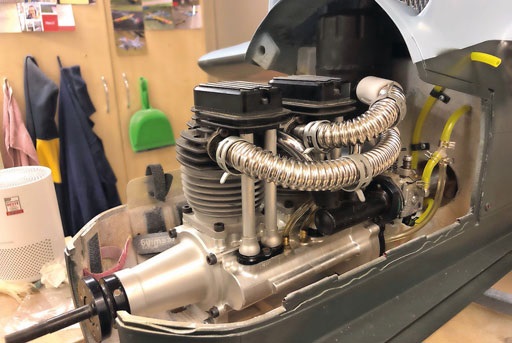
Soldered together from steel tubes. The original Warbirds feature many small details, sheet metal seams, rivets, and irregularities. I wanted to reproduce at least some of these features on the model. For the sheet metal seams, I used masking tape and a putty knife to create the edges and steps. For rivets, screws, and smaller covers, I used self-adhesive elements. For certain typical features, I created special silicone molds. I then cast the required number of parts using PU casting resin in these molds.
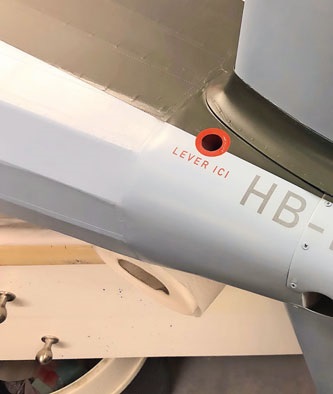
Once the surface finish was complete and the RC components, as well as the motor and landing gear, had been fitted, I was able to begin painting the model. I based my approach on the paint scheme of the HB-RCF and procured the necessary paints. I was able to apply the various coats of paint in my brother’s paint booth. Light blue, dark—
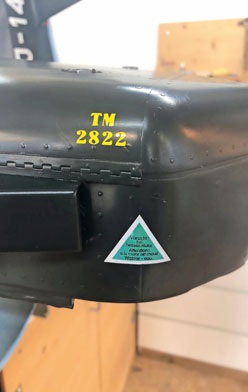
The green, red, and white were applied relatively quickly, and I was as excited as a little kid about the result! I created lettering—such as informational signs and the license plate—using water-slide decals that I printed myself. To seal and protect the model, I then coated the entire model with a two-component clear coat in a satin finish.
On May 29, 2021, the meeting with the original took place. My colleague Marc Küpfer had coordinated the visit with Eric Chardonnens and the Morane’s pilot, Laurent Calame. It was a once-in-a-lifetime experience featuring lively conversation and the opportunity to take some great photos.
For me, this project was only possible thanks to the support of my brother and my—
my father’s. They’ve stood by me with professional advice and supported me with materials and equipment. A big thank you goes to Marc Küpfer for arranging the meeting with the original; his network has once again
paid off once again! Many thanks also to Eric and Laurent for the warm welcome during my visit to Bex. Last but not least, I’d like to thank my wife for the great understanding she shows toward my time-consuming hobby.
| Original Morane D-3801 | Model by Markus Kindler | |
|---|---|---|
| Scale: | 1:3.5 | |
| Wingspan: | 10.61 m | 3,031 mm |
| Length: | 8.17 m | 2,334 mm |
| Height: | 3.25 m | 929 mm |
| Wing area: | 16 m² | 139.6 dm² |
| Takeoff weight: | 2,540 kg | 23 kg |
| Powerplant: | 735 kW | Fiala FM120i2 with 7.5 kW |


News from HEBU

TEAM MANAGER "THIS" BOSSHARD
 Rodito Nussbaumer

YOU KNOW WHAT I MEAN? 125 YEARS OF THE SWISS AERO CLUB
 Emil Giezendanner

F3A EUROPEAN CHAMPIONSHIPS IN ST-MACAIRE, FRANCE
 Matthias Bosshard

52. 2026 ALPS CUP
Emil Giezendanner
CORSAIR F4U – A WARBIRD WITH A MEMORABLE LOOK
Jürgen Rosenberger, Jürgen Prinz
SUMMER FUN 2026 AT MG USTER
Martin Wunderli
TRY-OUT DAY AT MFV WETTINGEN
Urs Keller
BY YOUTH, FOR YOUTH
Lorena Betschen
ATOM, THE NEW DOUBLE-DECKER FROM CPLR
Matthias Bosshard
SMALL, MODEL-LIKE SAILBOATS
Res Dauwalder
What's New at Leomotion.com

HORIZON HOBBY/LEMACO NEWS: MICRO OV-10 BRONCO 645 MM BY E-FLITE

COUPE DES ALPES – OBSERVE AND LEARN
Rodito Nussbaumer
TWIN TOWN PARTNERSHIP
Wolfgang Voeller
PRIDE AND GOOD IDEAS
 Markus Nussbaumer

EURO CONTEST GLIDER ACRO TOUR AUSTRIA 2026

INSIGHTS INTO THE HISTORY OF SEAPLANES

34th HAHNENMOOS ALPINE MODEL AIRPLANE CAMP
Res Dauwalder
WELCOME, NEW MEMBER!
Andrea Bolliger
FREE FLIGHT IN THE MIDDLE OF SUMMER
Urs Muntwyler
THE PC-21 STORY
Emil Giezendanner
NEWS FROM HEBU
 Julia Bucher

FROM 0 TO 100
Markus Nussbaumer
MEMORIES
Wolfgang Völler
NOS REGION – A HUB FOR ELECTRIC AVIATION
Emil Giezendanner
Have you almost forgotten about aircraft that take off and land vertically?
Emil Giezendanner
DO YOU KNOW WHAT I MEAN IN THE LAND OF SMILES?
Emil Giezendanner