
2011 International Model Aircraft Symposium
For the 27th time, the Northeast Switzerland region hosted its international symposium. Winterthur, a hub for technology home to Technorama, ZHAW, and numerous technology companies, is an ideal venue for these events. The themes change from year to year: 2007—jets; 2008—helicopters; 2009—scale models; 2010—RC gliders; and 2011—aerobatics.
As in the past, the invitation to this event arrived in the form of a rather unassuming email from the club president. As a member who isn’t particularly ambitious when it comes to model flying, one feels compelled in this case to first consider whether an average model pilot even belongs to the intended target audience of this international congress. After all, the terminology used alone suggests that the participants have a higher level of education. But the term “symposium” is really just another word for a conference or a gathering. And “international” is the
It’s called a “meeting” because the speakers and participants sometimes come from the neighboring state of Baden-Württemberg or the Principality of Liechtenstein. So, we’re really dealing with neighbors here, and certainly no foreign language is spoken. Except
one were to consider Alemannic—which is also spoken in the neighboring country—as such. Since participants don’t have to register, anyone interested can simply show up at the event this Saturday in mid-December. And once there, Emil Giezendanner is always relieved when there are enough seats in the hall for all the participants who show up. After all, if even more model builders knew about the often top-notch content of the announced presentations, it would be easy to imagine a completely overcrowded lecture hall with a severe shortage of seating.
Well, the weather was perfect that day, which, as we all know, is always very important for model aircraft activities. It was
It was cold and wet outside, and at times it was pouring rain. So there was no way we could miss even the slightest opportunity to fly at the airfield. Incidentally, the topics at these symposia alternate from year to year, so that a different branch of model aviation is featured each time. As a result, there are always different speakers—with one notable exception. This will be discussed in a later section. This year, the topic was aerobatics.
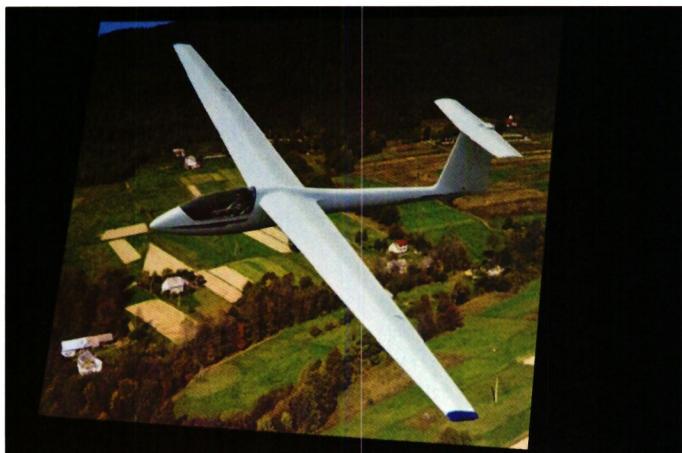
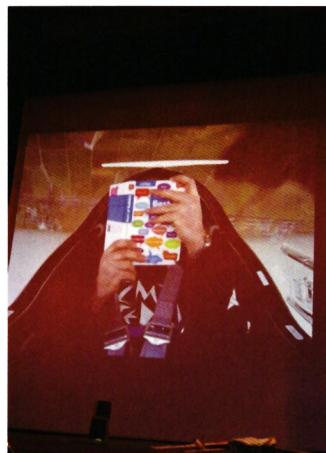
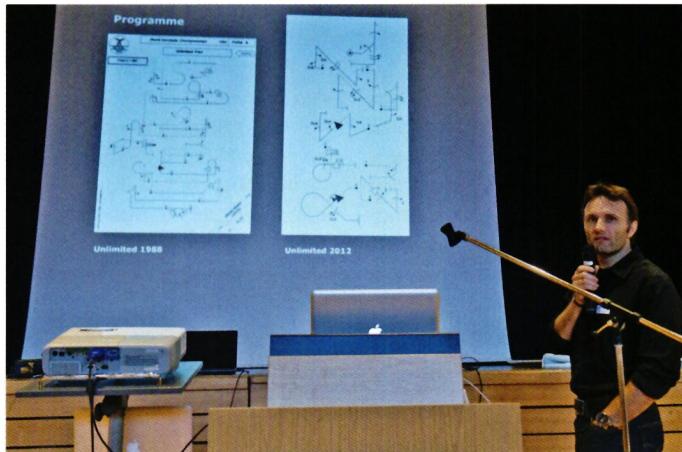
Martin Götz kicked off his presentation right away with a pretty wild video of human-carrying aerobatics. It was all filmed in a real-world setting—no fake stunts—and the video quality was astonishingly good. At that moment, no one was thinking about catching up on the sleep they’d missed that early morning. The facial expressions of the passengers—captured by multiple onboard cameras during the high-G maneuvers—were simply too spectacular to ignore. Thanks to a book, some of the unintentional grimaces were still hidden from the camera. Afterward, the numerous aircraft types used for the competition flight were discussed along with their characteristics. The information on the man-carrying gliders and their specific characteristics was for the
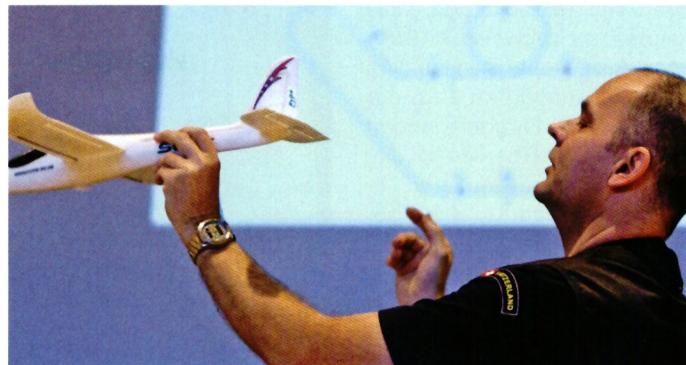
Model aircraft owners also found it very interesting. Martin then used a small model to clearly demonstrate the flight maneuvers that pilots must perform with their gliders in order to score as many points as possible in a competition. Whether manned or model, the competitions have a great many similarities. And some aircraft differ from one another only in scale (1:1 or slightly smaller).
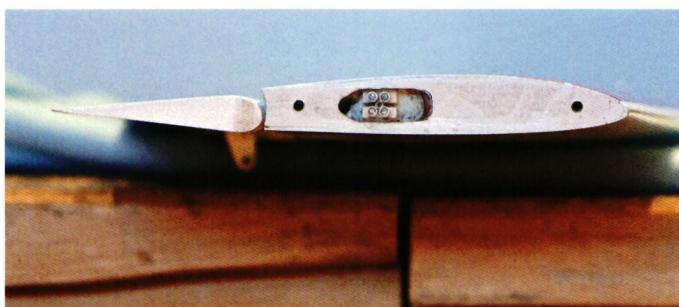
It was at this very point that Thomas Hoffmann continued with the topic “Design of Sail Aerobatic Models.” Some models are based on man-carrying aircraft. The airfoils used in aerobatic models, however, differ significantly. Among other things, Thomas demonstrated the influence that the airfoils used have on the aerobatic characteristics—
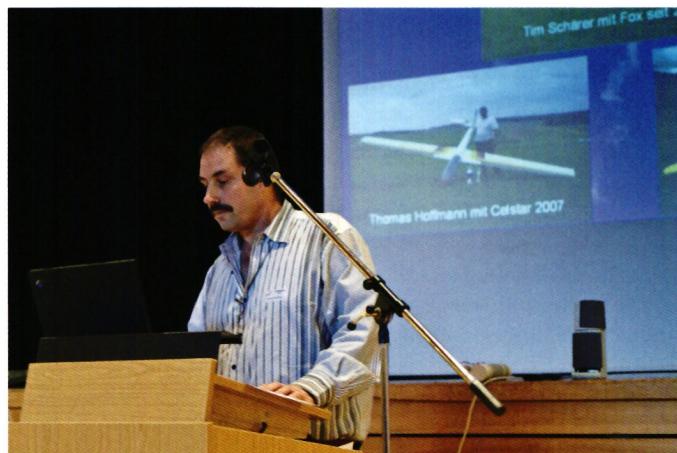
He even had the perfect demonstration objects with him—used wings. Using these, he was able to illustrate the discussed characteristics very clearly.
This topic, too, was presented in a very engaging and entertaining manner. And at the end, this speaker set the stage perfectly for the next lecturer’s topic.
As usual, he was extremely well prepared. Perhaps a little too well. After all, with the material he had, he could easily have filled the entire afternoon. Dr. Helmut Quabeck is known for developing numerous airfoil profiles that have been used very successfully in model aviation. Since such profiles are relevant for almost all fixed-wing aircraft, he has naturally become a regular speaker. He likes to take up an issue
the issues raised by the speakers before him, and then demonstrates a theoretically sound solution using an HQ profile developed specifically for that purpose. Unfortunately, he’s always assigned the time slot before lunch for this. As a result, he soon finds himself under considerable time pressure and can only show a portion of the PowerPoint presentation he’s brought with him. At least he brings along the theory book he authored for those listeners who are truly interested, which he then offers at a special price. And those participants who return next year will certainly hear the continuation of the topic that wasn’t fully covered. However, anyone who wants to design a competition-ready sail themselves will find a great selection of HQ profiles in his reference book, with their corresponding properties and the necessary data described in detail.
In addition, the book covers the basics of aerodynamics and the design of model airplanes. For a modest price, you get a wealth of formulas and tables. However, to really put your own computer to work with this material, you’ll need to have some familiarity with more advanced mathematics (e.g., integral calculus and trigonometry). The author of this article has not verified whether Helmut actually worked as a professor in the past. He would certainly have deserved that title for his theoretically sound foundational work.
practical solutions come
into play. Many listeners find Helmut's presentation very impressive, but what they really want, instead of a lot of
Basically, they receive just one solution for their specific project. And they’ve discovered a much more convenient way to do this. Referring to his presentation, they now simply send Helmut an email explaining their construction project in a few short sentences, along with the necessary design data. Helmut now has so much experience with such requests that he is able to send back a solution—in the form of profile polars and other useful information—pretty quickly. In this way, the practical-minded model builder elegantly saves himself a lot of calculation work and arrives at a very useful result—even without ever having understood the fundamentals.
After dinner, we took the passenger—
aircraft capable of performing aerobatics. As an active competition pilot, Dominic Andres explained the requirements he has for a well-powered aircraft that is fully capable of performing aerobatics. He then described, in an equally clear and accessible manner, the current aircraft types and their specific flight characteristics. He rounded out his presentation with some beautiful photos from Spain, where he completed the training necessary for his competitions.
Following the same pattern as in the morning, Dani Koch and Patrick Drack gave another presentation on large F3M-class aerobatic models. They also discussed the requirements and the development of—
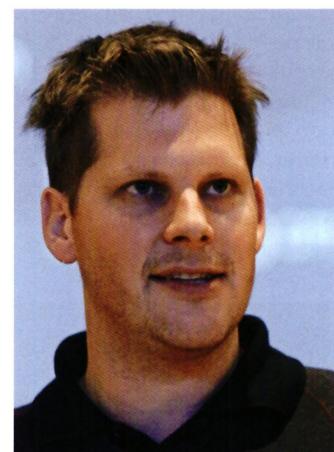
the development of new models. In doing so, they also referred to the competition regulations. They also spoke very knowledgeably about their own flying experience. In addition, they displayed a typical competition engine, which every audience member was allowed to hold in their hands. Interestingly, there were also some similarities here with piloted aerobatics—and not just in the names of the aircraft.
Peter Uhlig then presented the new F3A flight programs, P13 and F13, for 2012 using a PowerPoint presentation that he had designed to be very clear and easy to understand. He also explained the criteria and challenges from a judge’s perspective, with the aim of ensuring a fair evaluation of the flight demonstrations at the competition for all participants.
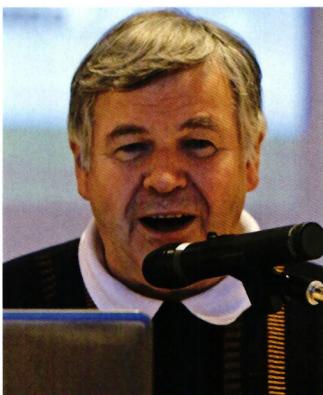
Next up was a topic of widespread interest. The well-known author and expert Ludwig Retzbach explained the latest developments in battery technology—a topic that is in high demand at many model airfields and is therefore often the subject of heated debate. Ludwig first addressed the well-known characteristics of nickel-cadmium batteries, then the unique properties of the new nickel-metal hydride (NiMH) batteries, before moving on to a detailed discussion of the very specific characteristics of lithium-polymer cells. He also used examples to illustrate how to interpret the C-rates, which are so important in advertising. This is because not everything manufacturers promise their customers about these highly touted energy storage devices actually holds true in practice. Rates of up to 60 C are often achievable during operation only for a brief moment. And the higher the temperature inside a battery becomes, the fewer charge cycles it will withstand over its lifetime. This simple relationship—along with several other very useful rules of thumb—is rarely presented in such a concise and easy-to-understand manner.
Raimund Wehrli wrapped up the event with information about the jet aerobatics of the
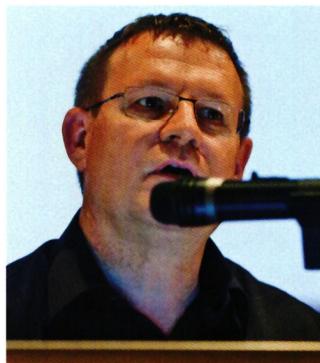
Class F3S. He sacrificed a significant portion of the time allotted for his presentation in order to wrap up the symposium on schedule. For some attendees, however, it was quite informative to get a good overview of the various types of aerobatics in the jet category from an expert in the field.
Most of the very carefully prepared presentations were certainly tailored to the interests of model pilots who are enthusiastic about aerobatics. But even attendees with less experience in this field were able to learn a great deal about the latest technology thanks to the highly practical presentations. Thus, the symposium was also a good opportunity for this smaller group to broaden their horizons in model aviation. The topic of rechargeable batteries was certainly of interest to every model pilot. They will be able to benefit greatly from the knowledge shared, both at the time of purchase and during subsequent use. The topic of airfoils, on the other hand, requires a bit more in-depth study to fully grasp all aspects. However, this speaker apparently visits Winterthur regularly. This allows regular attendees to gradually deepen their understanding of this complex subject. Thanks to the breaks between the individual presentations, many questions could also be easily discussed in person with the speaker or with other participants. Although presumably not all of the speakers had previously completed training in public speaking or teaching, almost all of the presentations were very entertaining and clearly structured. The explanations were often spiced with a healthy dose of humor, which elicited cheerful smiles or even hearty applause from the audience. As a result, despite considerable fatigue, it was nearly impossible to doze off even for a second. Emil Giezendanner, the tireless organizer of these continuing education events, deserves great praise once again. Thanks to his excellent contacts in the model-building community, he consistently manages to secure highly capable speakers for the topics at hand.
Text and photo: Hermann Mettler
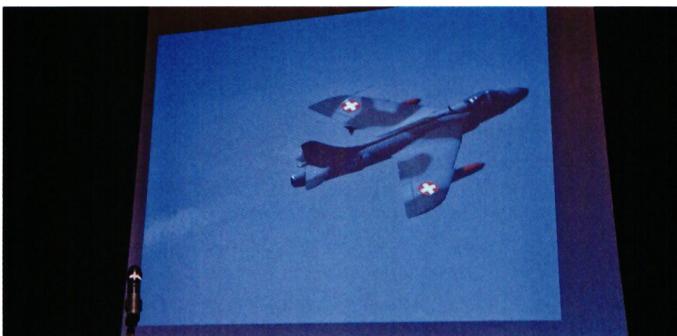
Aerobatics with jet models—a very appealing new FAI class.


What's New at Leomotion.com

PRIDE AND GOOD IDEAS
 Markus Nussbaumer

News from HEBU

TEAM MANAGER "THIS" BOSSHARD
 Rodito Nussbaumer

ATOM, THE NEW DOUBLE-DECKER FROM CPLR
 Matthias Bosshard

INSIGHTS INTO THE HISTORY OF SEAPLANES

34th HAHNENMOOS ALPINE MODEL AIRPLANE CAMP
Res Dauwalder
CORSAIR F4U – A WARBIRD WITH A MEMORABLE LOOK
Jürgen Rosenberger, Jürgen Prinz
SUMMER FUN 2026 AT MG USTER
Martin Wunderli
F3A EUROPEAN CHAMPIONSHIPS IN ST-MACAIRE, FRANCE
Matthias Bosshard
52. 2026 ALPS CUP
 Emil Giezendanner

HORIZON HOBBY/LEMACO NEWS: MICRO OV-10 BRONCO 645 MM BY E-FLITE

TWIN TOWN PARTNERSHIP
Wolfgang Voeller
EURO CONTEST GLIDER ACRO TOUR AUSTRIA 2026

BY YOUTH, FOR YOUTH
Lorena Betschen
YOU KNOW WHAT I MEAN? 125 YEARS OF THE SWISS AERO CLUB
Emil Giezendanner
SMALL, MODEL-LIKE SAILBOATS
Res Dauwalder
TRY-OUT DAY AT MFV WETTINGEN
Urs Keller
WELCOME, NEW MEMBER!
Andrea Bolliger
FREE FLIGHT IN THE MIDDLE OF SUMMER
Urs Muntwyler
THE PC-21 STORY
Emil Giezendanner
COUPE DES ALPES – OBSERVE AND LEARN
Rodito Nussbaumer
NEWS FROM HEBU
 Julia Bucher

FROM 0 TO 100
Markus Nussbaumer
NOS REGION – A HUB FOR ELECTRIC AVIATION
Emil Giezendanner
MEMORIES
Wolfgang Völler
Have you almost forgotten about aircraft that take off and land vertically?
Emil Giezendanner
70 YEARS OF THE NIDWALDEN MODEL AIRPLANE CLUB
Martin Barmettler