
Get a Taste of the World of Aviation
In 2012, the Pro Aero Youth Camp in the Engadin will celebrate its 30th anniversary. It is one of the most versatile and successful multi-aviation youth development programs in the world. The basic concept has remained the same: hands-on experience building an aircraft, aircraft theory, flight training and test flights, presentations on careers in aviation, as well as a “maiden flight” in a tethered balloon and a sightseeing flight with the local powered flight group.
Organizing and running the Pro Aero Youth Camp are now among the core tasks of the Aero Club of Switzerland. That wasn’t always the case. The camp was founded long before that by the Model Flying Commission (MFK) of the time, under President Werner Koelliker. Following a resolution by the
MFK in 1982 and thanks to the early support of the Swiss Pro Aero Foundation, I was able to plan and run the camp for many years—together with the leaders of the various sections. From the very beginning, we received administrative support from Marco Schnyder of the AeCS. Nevertheless, the entire leadership team and I were always faced with a huge amount of work. The whole endeavor pushed the limits of our volunteer-based organization. The first six camps were held at the St. Moritz Youth Hostel; later, the Pontresina Youth Hostel was added, until we were finally able to move the entire operation to the Flablager S-chanf in 1989 due to space constraints in St. Moritz. For me, the youth camp always ended with the final accounting! When the AeCS today presents its youth camp with justified pride—a camp that far outshines all of its other youth development programs—those in charge must not forget that this institution came about through the initiative and great dedication of many model aircraft enthusiasts—
has arrived. The model airplane enthusiasts have given the AeCS a great gift that also benefits the other divisions.
Unfortunately, this realization only gained traction at the AeCS after several personnel changes had taken place on the Executive Board and in the Central Secretariat. For me, the entire transition period of the JuLa from the Model Aircraft Commission to the AeCS is, unfortunately, one of the darker memories I have associated with our umbrella aviation organization. But there was no time to dwell on the past: As early as 1993, I founded what was likely the world’s first solar-powered flying camp together with Dani Bucher.
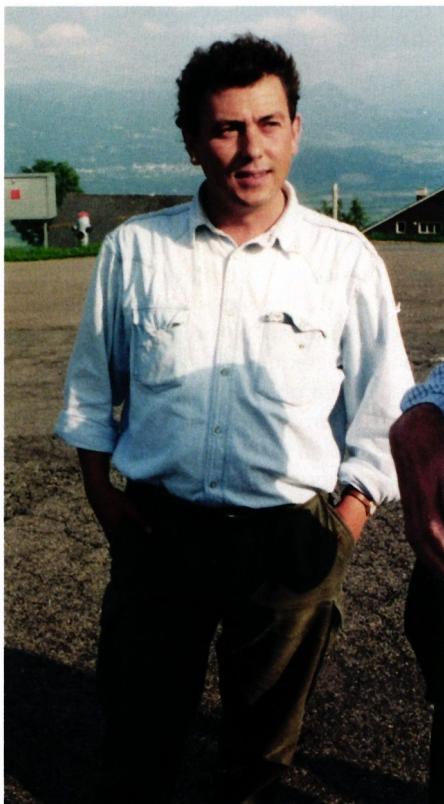
The project was called “Flying with Solar Energy” (almost 20 years before Piccard). For a week, about 20 young people built and flew solar-powered model airplanes in the Appenzell region. This project even received coverage in the trade press for renewable energy. We received tremendous support from the electricity industry. For example, NOK donated hundreds of valuable solar cells to us. The camp was held five times until Dani Bucher’s tragically untimely death.
Following the model aviation commission’s unanimous decision, I was free to begin developing the concept. I began by seeking out partners from schools, vocational training programs, and the aviation sports community. While the initial idea was for a model aircraft camp—the precursors being the well-known construction supervisor seminars at Melchsee-Frutt (previously in Arosa and later in Hahnenmoos)—but in close collaboration with our two educators and teachers, Joseph Eugster and Roland Schnyder, the idea emerged to build not only model airplanes but also other types of flying machines. Joseph Eugster was a leading kite specialist (author of several textbooks for teachers—which is why he was also known as “Drachen-Sepp”)—and Roland Schnyder brought a wealth of experience with hot-air balloons from his physics classes. So it was only natural to include these two types of aircraft—in addition to airplanes—in the program from the very beginning. For the construction of balsa gliders, we were able to enlist Werner Heise, an experienced free-flight pilot and course instructor. For the camp, he designed his own model, the “Grashüpfer.” In addition, a significant portion of the program was dedicated to professional and recreational aviation. However, this earned me anything but praise from model aviation circles. “They should look out for their own interests,” they said. Furthermore, I was able to leverage my good relationships with the training managers at Swissair, Swisscontrol, Rega, and the Air Force, allowing these organizations to present their career paths and requirements during evening lectures—whenever possible, in three languages.
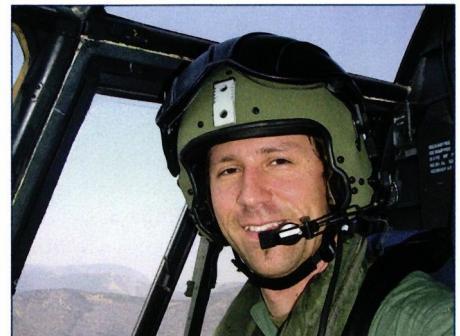
In addition, there were flight demonstrations by the parachute infantry, delta wing pilots, the Air Force, and others. Among the truly unique highlights were conversations the young people had with glacier pilot Fredy Wysel and with Max Lamm, the Swiss gliding champion at the time. We fondly remember the flyovers by the Mirage—the pilot was a model airplane enthusiast—which reportedly resulted in a few angry phone calls to the Samedan airfield.
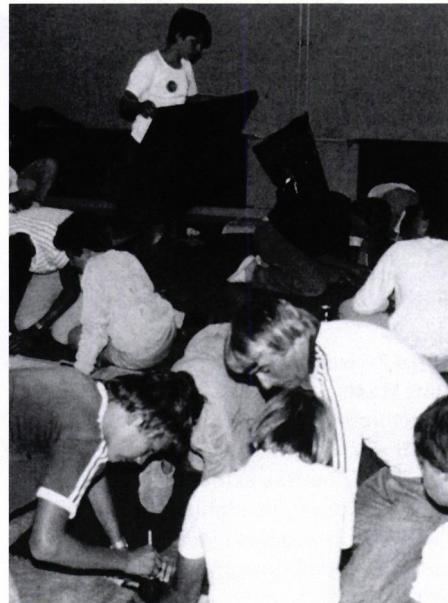
The Pro Aero Youth Camp has lost none of its popularity or appeal to this day. The basic concept has remained the same. Today, planning and organization are largely handled by the Central Secretariat of the Aero Club of Switzerland. Marco Schnyder has been leading the effort for about 20 years with great dedication and skill. Months before the camp, there is a great deal of preparation to be done: answering hundreds of inquiries, making arrangements, procuring materials, and so on. Many model aircraft enthusiasts and colleagues from other disciplines support him not only during the camp itself but also during the preparatory phase. In my estimation, the vast number of inquiries and contacts from broad segments of the public give the AeCS a far higher—and likely more favorable—level of public recognition than its other, so-called communication activities. This is also well known to the Swiss pro Aero Foundation, which has provided extremely generous financial support for the camp from the very beginning to the present day. This allows participation fees to be kept at a reasonable level.
Concepts that are developed not in the office but in practice are usually the most successful. With the Pro Aero Youth Camp, the AeCS has filled a gap in the promotion of young talent. While model aircraft clubs sow the first seeds of an interest in aviation at the elementary school level through their model-building and introductory courses, the regions can help deepen that interest at the high school level through workshops and flight camps. The Pro Aero Youth Camp broadens young people’s horizons regarding the entire field of aviation as they approach the age of choosing a career. Aside from the U.S. Model Flying Association, I am not aware of a single organization that promotes youth development on such a broad scale. Another important step in the world of aviation is Sphair, which aims to identify and nurture aviation talent among young people. The numerous gliding and powered flight schools, paragliding courses, etc., must also be mentioned as further steps, and finally, the wide range of vocational training and continuing education programs in aircraft engineering, cockpit operations, cabin crew, and management. Model aircraft training programs for teenagers and young adults—which could follow the JuLa program—would unfortunately be few and far between if it weren’t for the many members of our model aircraft clubs who support “learning by doing” at the airfields almost every day; they do so voluntarily and unassumingly, as a matter of course.
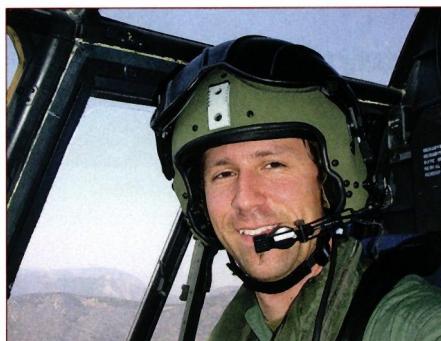
In my opinion, the youth camp is the highlight of the AeCS’s youth development program. It offers young people interested in aviation a unique opportunity to learn more about how they can make their dreams come true. The young people can exchange ideas with many like-minded peers and get information from professionals. It’s the perfect preparation for SPHAIR! We greatly appreciate the Aeroclub’s professional organization and the financial support from the PRO AERO Foundation.
When nearly 200 young people are presented with a rich and tightly scheduled program for a week, there is only very limited room for individualized support—such as in the context of a model-building course. Breadth always comes at the expense of depth. In JuLa, everyone faces the same challenges and has the same opportunities. The goal is to give participants a taste of as many areas of aviation as possible, and the desired outcome is to provide a solid foundation for future aviation careers—whether professional or recreational. Even if participants no longer engage in any aviation activities later in life, they will hopefully retain a positive attitude toward aviation. After all, practical and honest information has always proven its worth. Perhaps one day a university research team will want to investigate such questions in connection with our Pro Aero youth camp. That would certainly be interesting. In general, there is too much focus on takeoff and flight itself, and not enough on the preparation involved. The JuLa is the best preparation for getting started in aviation. If those in charge succeed in continuing to incorporate new developments and trends—and, in doing so, repeatedly sparking fresh interest and curiosity among young people—then this program will live on. We wish everyone involved the best of luck.


TEAM MANAGER "THIS" BOSSHARD
 Rodito Nussbaumer

SUMMER FUN 2026 AT MG USTER
Martin Wunderli
52. 2026 ALPS CUP
 Emil Giezendanner

ATOM, THE NEW DOUBLE-DECKER FROM CPLR
 Matthias Bosshard

INSIGHTS INTO THE HISTORY OF SEAPLANES

34th HAHNENMOOS ALPINE MODEL AIRPLANE CAMP
Res Dauwalder
CORSAIR F4U – A WARBIRD WITH A MEMORABLE LOOK
Jürgen Rosenberger, Jürgen Prinz
SMALL, MODEL-LIKE SAILBOATS
Res Dauwalder
F3A EUROPEAN CHAMPIONSHIPS IN ST-MACAIRE, FRANCE
Matthias Bosshard
What's New at Leomotion.com

HORIZON HOBBY/LEMACO NEWS: MICRO OV-10 BRONCO 645 MM BY E-FLITE

PRIDE AND GOOD IDEAS
 Markus Nussbaumer

News from HEBU

BY YOUTH, FOR YOUTH
Lorena Betschen
YOU KNOW WHAT I MEAN? 125 YEARS OF THE SWISS AERO CLUB
Emil Giezendanner
TRY-OUT DAY AT MFV WETTINGEN
Urs Keller
FREE FLIGHT IN THE MIDDLE OF SUMMER
Urs Muntwyler
THE PC-21 STORY
Emil Giezendanner
TWIN TOWN PARTNERSHIP
Wolfgang Voeller
EURO CONTEST GLIDER ACRO TOUR AUSTRIA 2026

WELCOME, NEW MEMBER!
Andrea Bolliger
COUPE DES ALPES – OBSERVE AND LEARN
Rodito Nussbaumer
NEWS FROM HEBU
 Julia Bucher

FROM 0 TO 100
Markus Nussbaumer
MEMORIES
Wolfgang Völler
NOS REGION – A HUB FOR ELECTRIC AVIATION
Emil Giezendanner
Have you almost forgotten about aircraft that take off and land vertically?
Emil Giezendanner
70 YEARS OF THE NIDWALDEN MODEL AIRPLANE CLUB
Martin Barmettler