
1977 European Hang Gliding Championships (F1E)
This Persian proverb applies to us model builders from time to time as well. In the age of electronic radio controls, the death knell is sounded for free flight—which includes magnet-controlled slope flying—at every opportunity, whether appropriate or not. Admittedly, it’s much more convenient to buy performance with the money you’ve earned than to achieve it yourself. Still, I don’t think it makes much sense to start a model-building career this way. What’s left, then, of the much-vaunted educational value of model aircraft building?
Who knows them all—those ingenious minds who have made a lasting name for themselves through the development of autopilots or by advancing magnetically controlled gliding? The list would be a long one. I’ll therefore take the liberty of mentioning just a few of the most prominent figures, such as Professors Fritschi (Teacher Training College in Rorschach) and Vettorazzo (Scuola media statale “Paolo Orsi” Rovereto/Trento), the “tinkerers” Kurt Sempert and Heiri Anner, and, last but not least, our very own Mr. Gremmer. After all, it was he who, nearly 25 years ago, ushered in the major turning point in the development of magnetic autopilots. Even today, he remains a leading figure in this field at the European level. That’s the kind of teacher or career counselor we should all aspire to be!
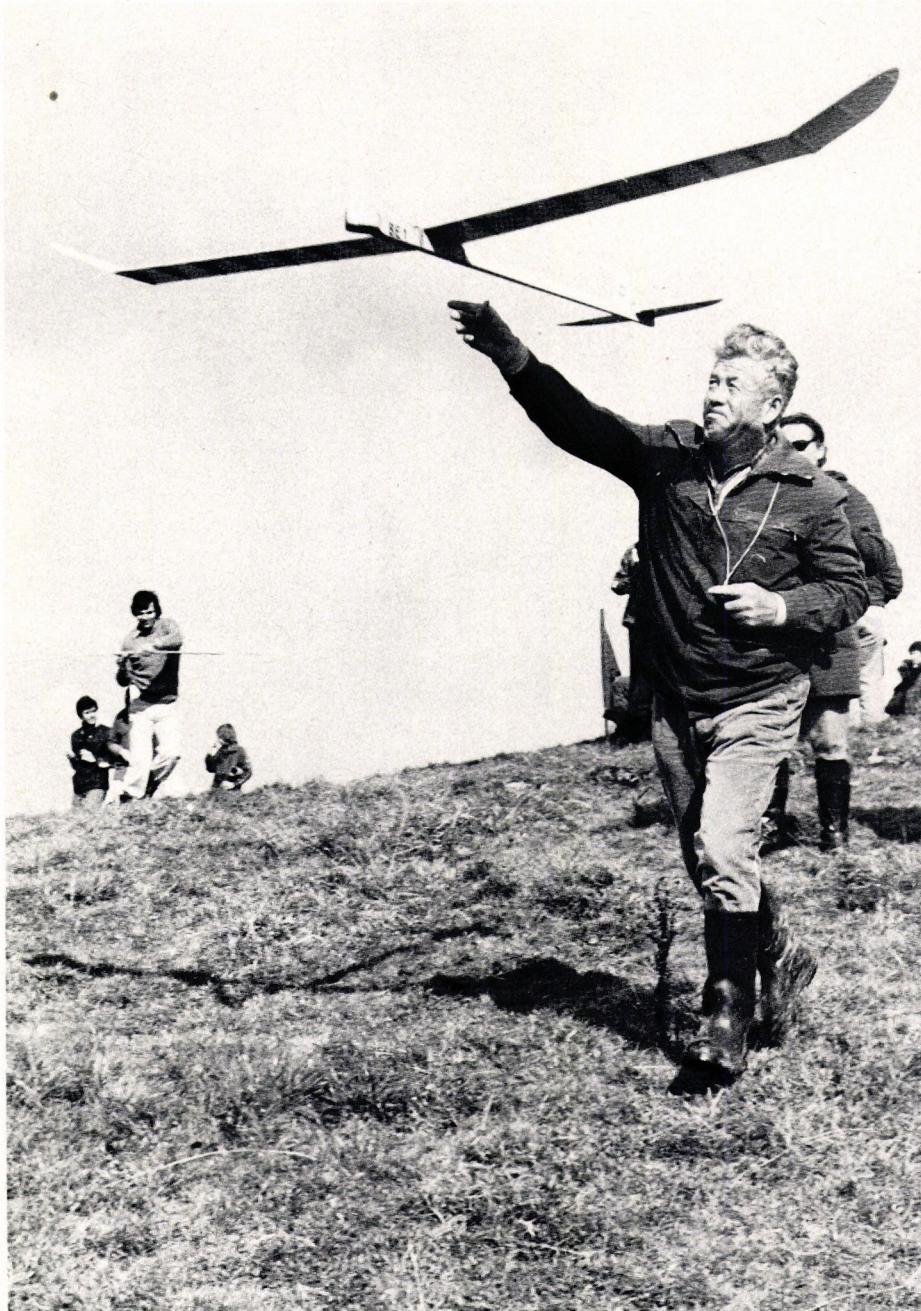
Credit is also due to the FAI representatives from Germany, Austria, and Switzerland at that time. They managed the remarkable feat of successfully motivating their colleagues to create a new model aircraft category, Class F1E. Without wishing to sound overly enthusiastic, it can be said in retrospect that the proposal from Switzerland (i.e., Region 5) that was accepted at the time led to a gratifying development in slope flying. Unfortunately, it seems impossible to resolve certain tensions between proactive individuals or model-building groups and their respective national aero-clubs. What a shame!
True to the motto, “The better is the enemy of the good,” in recent years even some modelers have abandoned the magnetic control system—which they considered too weak and therefore too simple—and have enthusiastically revived the electric autopilot system, which had fallen into obscurity not too long ago. This (step backward) was, however, made easier by new electronic components. Certainly a tempting challenge!
Even the most accomplished experts in the field of model aviation have finally been won over by the compelling advantages of magnet-controlled slope flying:
- The relatively weak magnetic field of Mother Earth is sufficient for controlling slope-gliding models.
- Air movements, such as slope lift, thermals, etc., are also available to us free of charge.
- Our dear, noise-sensitive fellow citizens are not startled by the noise of high-performance model aircraft engines. This may change once uniform, permissible decibel limits are finally established at the higher levels, as has long been standard practice—or rather, a requirement—in industry.
- There is no need for expensive, straight, or circular runways; a natural slope is sufficient.
- Slope flyers do not use toxic fuels and do not pollute the environment with exhaust fumes.
- Concerns about mechanics, frequencies, or even external interference are foreign to the slope flyer.
- In times of recession, the favorable ratio of financial outlay to flight time achieved in slope flying suddenly becomes relevant again.
- And if we also show a reasonable amount of consideration for crops, there won’t even be any trouble with landowners!
No, Kö really didn’t say that—but someone else did; someone who also knows a thing or two about sports. It was the president of the German Sports Federation, Willi Daume. In the foreword to the program for the 1961 F1A World Championship, he wrote the following:
“The true essence of sport must lie in that activity in which the personality unfolds most freely, in which the imagination engages in its joyful, creative play, and in which one has the inspiring feeling that skill can become art. This is why model aircraft flying is a sport par excellence.” Such beautiful—and perhaps also accurate—words simply do not pass the lips of our Swiss leaders...
It was only natural that new applications for magnet-controlled gliders were constantly being developed. No sooner had the designers mastered straight-line flight—the original design goal—than they began searching for techniques that would allow magnet-controlled slope-gliding models to fly as long as possible in slope updrafts or in suspected thermal areas. This gradually led to the development of the flying techniques listed below:
- Hovering
- Delayed hover
- Turning flight following an interruption of straight flight, with repetition
- Circling against the wind
- Flying figure eights
These flight techniques are described in more detail in the article “Walkringen Was Worth the Trip”¹ and in the report “Magnetic Steering—A Real Asset”².
The legendary full-balsa hang glider with head control, known as the “Kö C,” along with its many variations—such as the winning model from the 1974 European Championships at Himmelberg (West Germany) by Karl Meier of MG Bern—hardly needs any introduction3. In his treatise “Trente ans de pilotage à la boussole,” Dr. Ing. Bodmer comprehensively discussed the advantages and disadvantages of head control and reverse transmission, respectively4. Unfortunately, only a few in Switzerland have so far ventured to build reverse-steering models—despite the superiority of this model type, especially in turning flight. Based on my own experience, the somewhat greater construction effort required for such models is certainly justified.
Who among us hasn’t suddenly realized, while flying in Altmatt, on the Aspi, or in Ebeländ, that the wind had shifted to the “wrong side”? In such cases, good advice has always been hard to come by—in more ways than one. The combination of flying straight and circling was often no longer very promising, and despite the most carefully planned course for flying straight, we frequently lost our models. Unfortunately, we in Switzerland aren’t as fortunate as our friends from the big canton, who have a suitable slope right on their doorstep for every wind direction.
But is there really no way to fly the model out onto the plain—for example, with a crosswind or even a slight tailwind—and let it turn into the wind once there? Yes, there is. Thanks to the
We can now fly without any trouble even in such wind conditions. However, the idea behind the device described below is neither new nor my own invention. As far as I know, a device of this kind—in an ironic twist of fate—was first used in Switzerland in 1965 during the European Championships held at Melchsee-Frutt. It was, of all people, the winner at the time, E. Berger of MG Zurich, who used this turn-course control system, which was not yet fully technically mature. Those were still the glory days for MG Zurich! It will be interesting to see what kind of racing technique will be employed this year at the European Championships, held at the same venue. Unfortunately, however, people soon lost interest in this control system. It wasn’t until several years later that this issue was revisited during the search for further applications of the MAMO magnetic control system. After a few setbacks and thanks to a lively exchange of ideas with Mr. Gremmer, Phoenix rose from the ashes. At the “Hottwiler” in 1976, I used this control system for the first time, completely unnoticed by the “evil” competition.
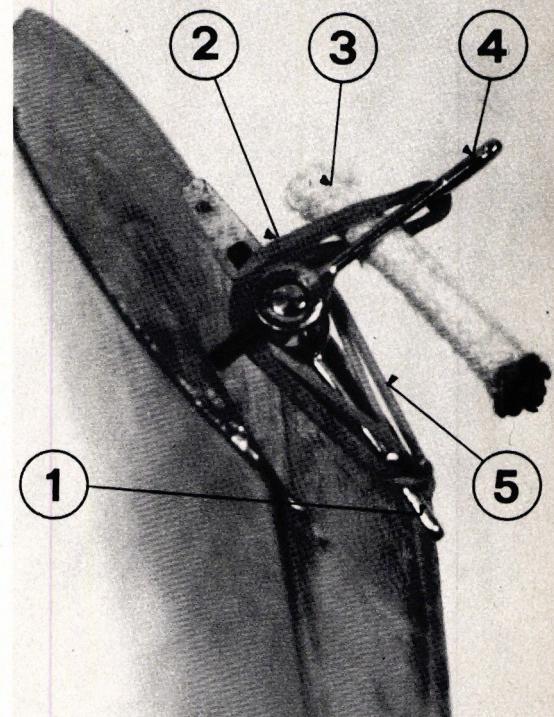
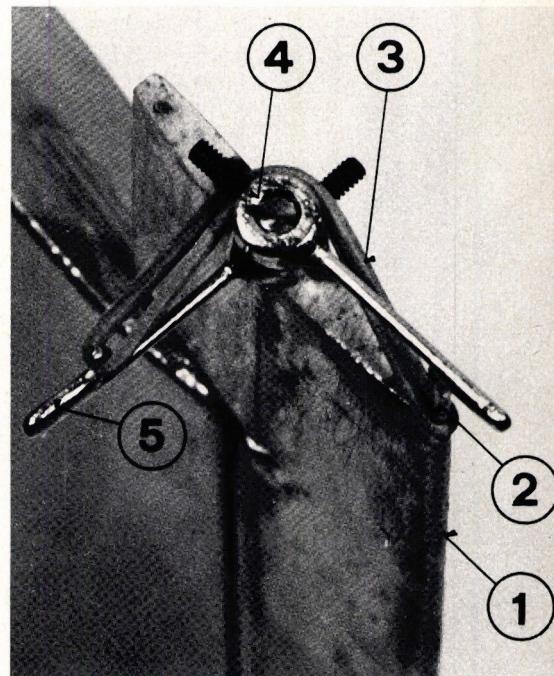
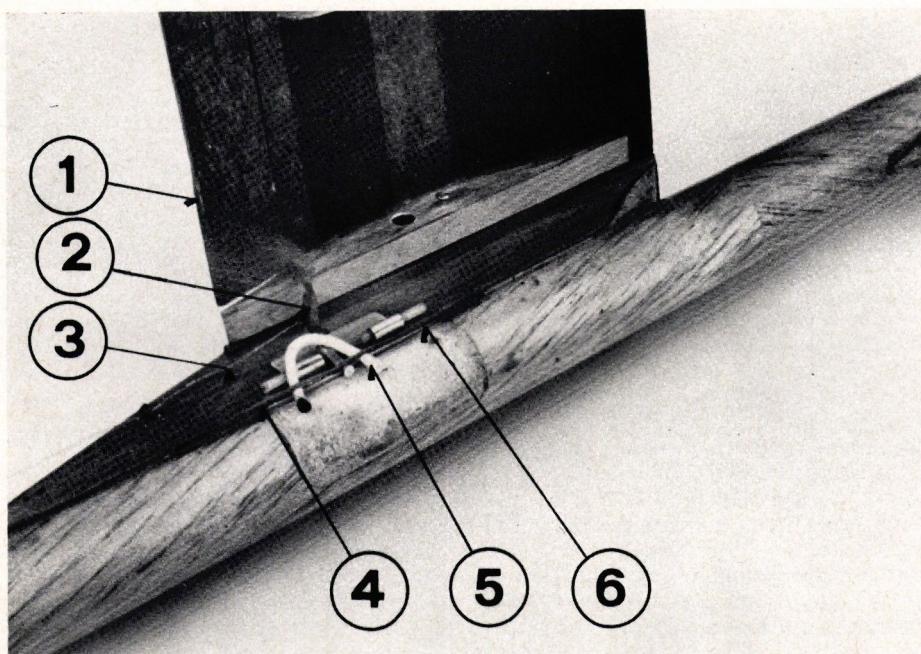
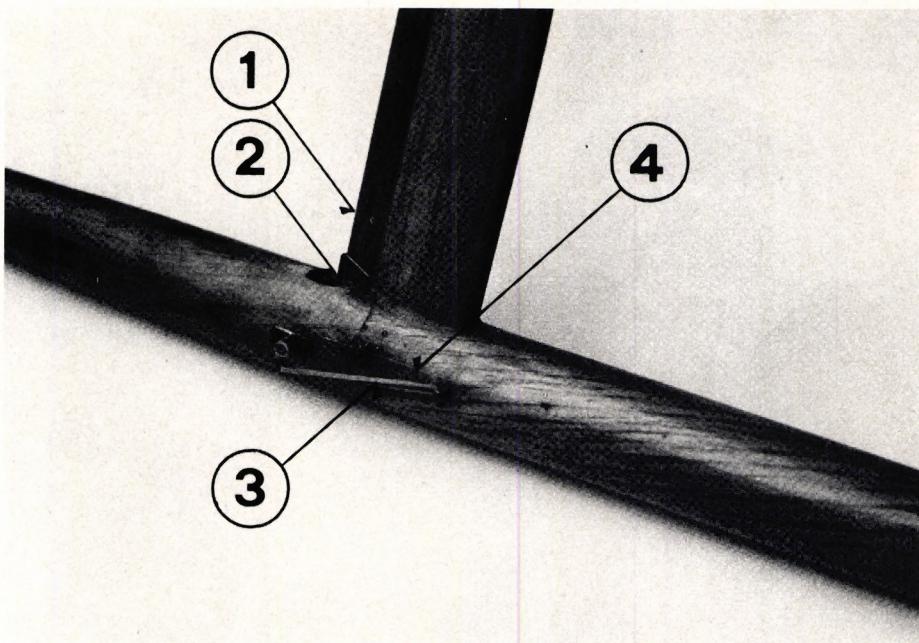
But how does such a turning-course control system actually work? It’s quite simple once you understand it—see Figs. 1 and 2. Two levers are clipped onto the rudder axis, which has been extended upward, in the two desired flight directions. They thus serve as stops for the two end positions of the movable rudder, relative to the direction of the magnetic rod. The rudder must be able to move slightly on the rudder axis. The bent steel wire, which engages with the gear in the MAMO magnetic control system to lock the rudder in the corresponding position, must therefore be clamped off. A piece of steel wire is glued to the back of the upper end of the rudder. It serves as a driver onto which the two rubber rings are hooked. One of them, the rudder-locking rubber ring, pulls the rudder toward the stop for the takeoff heading until it is burned through by the inserted fuse. The time until the course change can be varied by adjusting the length of this fuse. The second rubber ring, the so-called return rubber, can now pull the recently released rudder toward the other lever, and the model turns onto the second, preset course.
It would often be all too tempting to fly the model toward suspected thermal areas and let it circle there. But that’s easier said than done. Depending on the weather or local conditions, the model should either “scour” a large area in search of thermals or fly tight turns to explore thermal tubes. If the turn is so wide that you’re not quite sure whether it’s actually a turn or just the model drifting sideways, there’s no immediate risk of a spiral dive. With tighter turns, things quickly take a turn for the worse. It happens all too often—even to the author himself—that a model circling peacefully suddenly feels an uncontrollable urge to dive downward. And if members of a friendly group happen to be right near the crash site (Ebeländ 1977), it was certainly not a malicious attempt to eliminate the competition! Incidents of this kind are always attributed to a spiral dive or undercutting.
I assume that it is well known what is meant by the terms “spiral decline” or “undercutting” and what their causes are. In addition to the design measures to counteract spiral collapse that have already been published by others, two further “spiral collapse remedies” have recently gained particular attention:
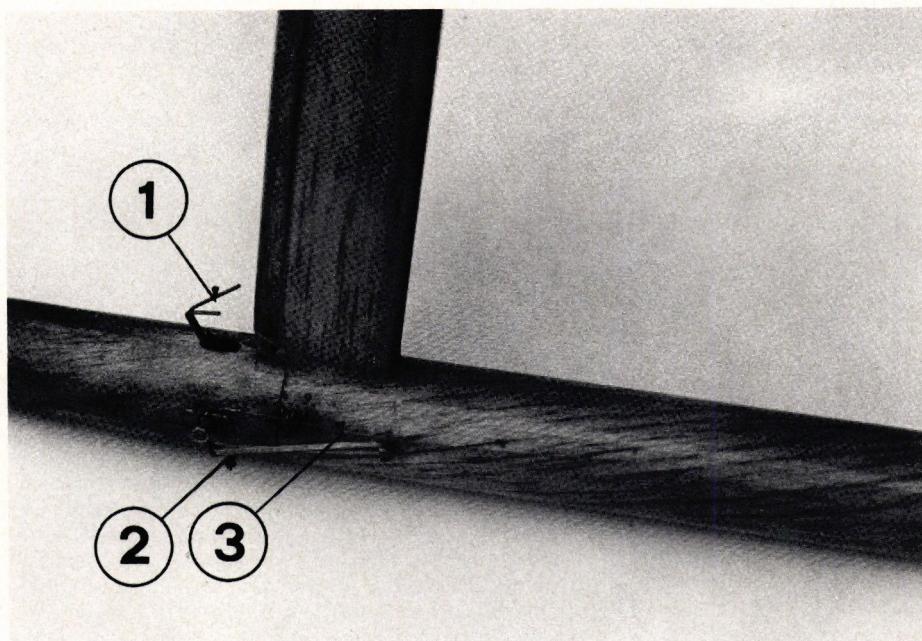
I also thought long and hard about other ways to prevent a spiral dive—and that’s how the flaperon control system was born. Below, I explain how it works to the public for the first time:
- A dihedral flap is mounted on the inner half of the wing. When it is extended, both lift and drag increase at this point: the model begins to circle.
- Extending the dihedral flap increases the difference in angle of attack between the wing and the horizontal stabilizer, thereby eliminating the tendency to spiral.
- Thanks to the greater lift on the inner half of the wing, the model circles “as if on a plate.”
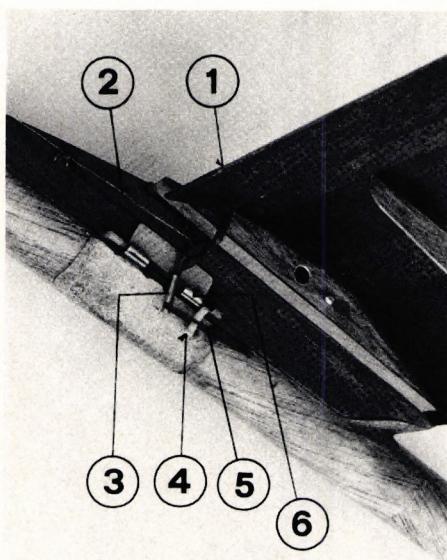
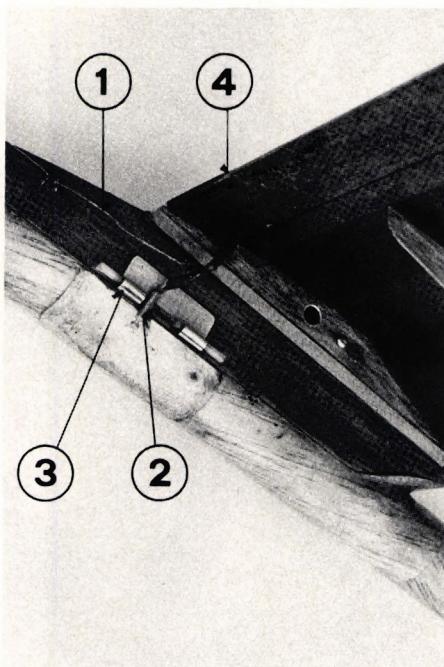
Further details are shown in Figures 3–7.
It’s well known that, even in slope flying, the bar is set just as high as in other model aircraft categories. Is it any wonder, then, that a relatively small elite group has emerged here as well? Anyone who doesn’t believe it need only take a close look at the rankings from recent years. The average age of these top competitors is also rising steadily.
But how can this situation—which, in the long run, is unsatisfactory—be remedied? Presumably only through increased support for young talent. Fortunately, there are already shining examples of this: Mr. W. Heise (MG Furttal) and Mr. C. Bolzhauser (MG Rorschach)—has the old Rorschach hang gliding tradition been revived?—have turned up at competitions with a heartening number of young pilots. How about if other model-building clubs—including those where enthusiasm for slope flying is slowly waning—could also join this new trend? Or must the old-timers, long since written off, once again be the first to take the initiative? To my knowledge, the “Magnet-Knicki” is being built successfully in courses in Germany. Its Swiss counterpart, the “Perpalnor” by Dr. Ing. Bodmer, is probably a bit too complicated for beginners. But it would still be interesting to learn more about this intriguing design when the time comes. Maurice, you know what’s expected of you as a member of the model aircraft editorial team at Aero Revue...
- 1 M. Moor: Walkringen Was Worth the Trip. Aero Revue No. 7/1964, pp. 425–428.
- 2 M. Moor: Magnetic Control—A Strong Asset. Aero Revue No. 12/1963, pp. 731–736.
- 3 K. Meier: 1974 European Championship for Magnetically Controlled Glider Models. Gold, Silver, and Bronze for Switzerland. Aero Revue No. 7/1974, pp. 406–407.
- 4 Dr. Ing. M. Bodmer: Thirty Years of Compass Navigation. Aero Revue No. 6/1970, pp. 362–363; No. 7/1970, p. 415.
- 5 Dr. Ing. M. Bodmer: Thermal-Cutting Devices—Center of Gravity Variations. Aero Revue No. 10/1976, pp. 623–625.


News from HEBU

TEAM MANAGER "THIS" BOSSHARD
 Rodito Nussbaumer

SUMMER FUN 2026 AT MG USTER
Martin Wunderli
SMALL, MODEL-LIKE SAILBOATS
Res Dauwalder
TRY-OUT DAY AT MFV WETTINGEN
Urs Keller
What's New at Leomotion.com

52. 2026 ALPS CUP
 Emil Giezendanner

ATOM, THE NEW DOUBLE-DECKER FROM CPLR
 Matthias Bosshard

INSIGHTS INTO THE HISTORY OF SEAPLANES

YOU KNOW WHAT I MEAN? 125 YEARS OF THE SWISS AERO CLUB
Emil Giezendanner
34th HAHNENMOOS ALPINE MODEL AIRPLANE CAMP
Res Dauwalder
CORSAIR F4U – A WARBIRD WITH A MEMORABLE LOOK
Jürgen Rosenberger, Jürgen Prinz
F3A EUROPEAN CHAMPIONSHIPS IN ST-MACAIRE, FRANCE
Matthias Bosshard
HORIZON HOBBY/LEMACO NEWS: MICRO OV-10 BRONCO 645 MM BY E-FLITE

PRIDE AND GOOD IDEAS
 Markus Nussbaumer

BY YOUTH, FOR YOUTH
Lorena Betschen
FREE FLIGHT IN THE MIDDLE OF SUMMER
Urs Muntwyler
THE PC-21 STORY
Emil Giezendanner
TWIN TOWN PARTNERSHIP
Wolfgang Voeller
EURO CONTEST GLIDER ACRO TOUR AUSTRIA 2026

WELCOME, NEW MEMBER!
Andrea Bolliger
COUPE DES ALPES – OBSERVE AND LEARN
Rodito Nussbaumer
NEWS FROM HEBU
 Julia Bucher

FROM 0 TO 100
Markus Nussbaumer
MEMORIES
Wolfgang Völler
NOS REGION – A HUB FOR ELECTRIC AVIATION
Emil Giezendanner
Have you almost forgotten about aircraft that take off and land vertically?
Emil Giezendanner
70 YEARS OF THE NIDWALDEN MODEL AIRPLANE CLUB
Martin Barmettler