
Safety-Day MG Diessenhofen
Fredy Doppelhofer organized this interesting day and prepared everything perfectly. After a brief explanation of the schedule and objectives, the first members began their “test flights.”
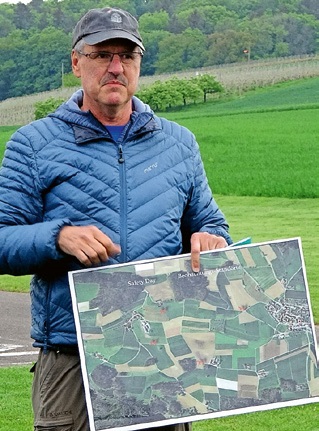
The main focus was on monitoring the airspace in which the various models fly—whether they are staying within the permitted airspace, etc.
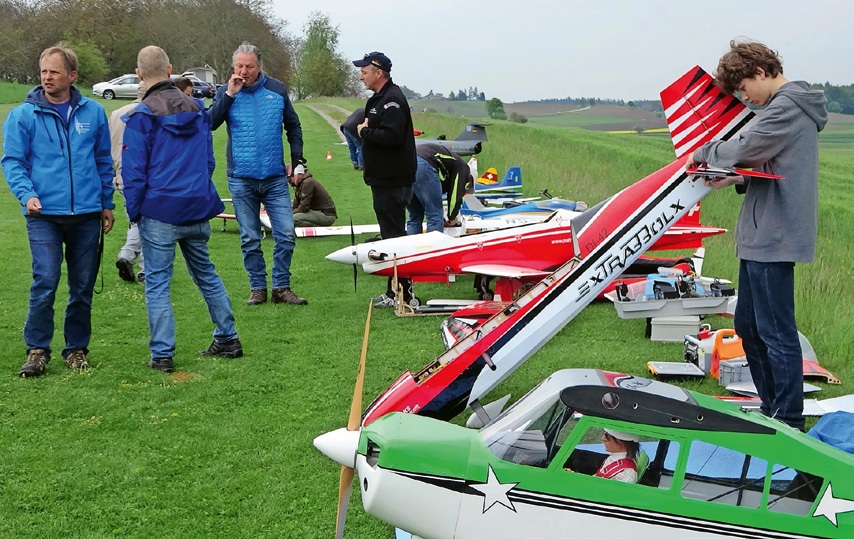
The main focus was on monitoring the airspace in which the various models fly—whether they are staying within the permitted airspace, etc.
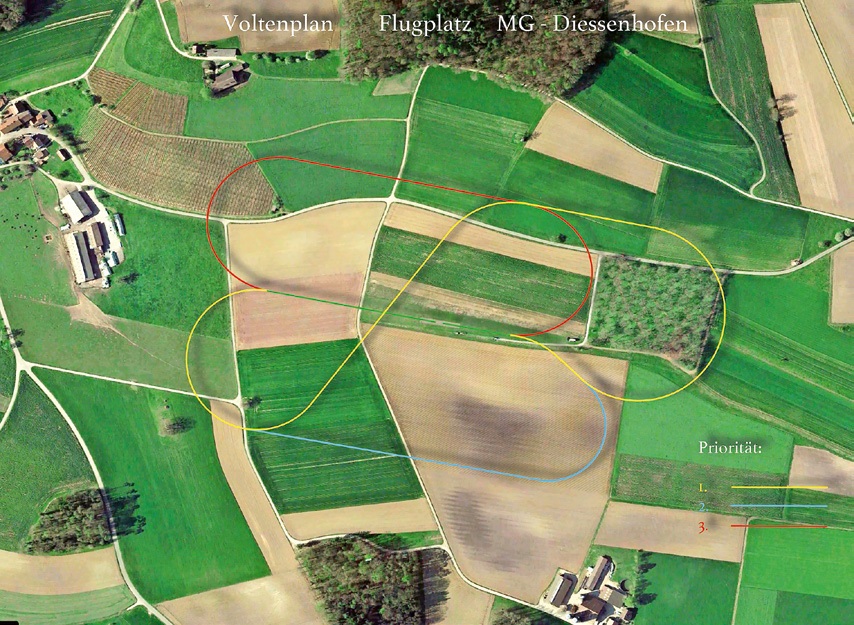
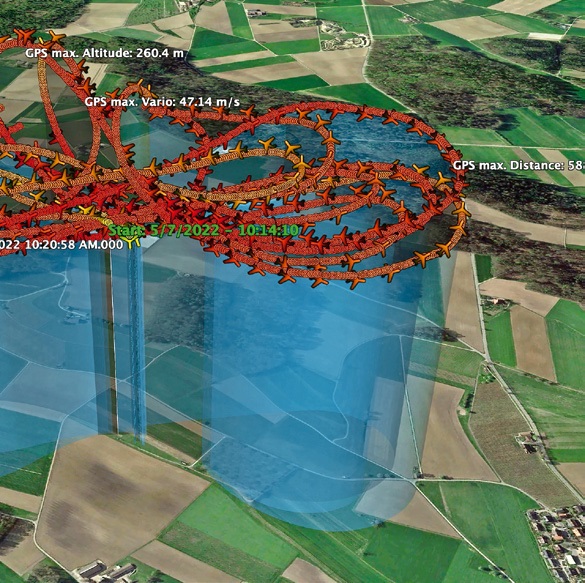
GPS data loggers were used for technical monitoring, recording flight path, speed, maximum altitude, maximum distance, etc. Fredy analyzes this data and visualizes it using Google Earth.
The current flight zones and the various landing maneuvers were also practiced during the event. Thanks to the Safety Day event, the members were very receptive to suggestions and tips.
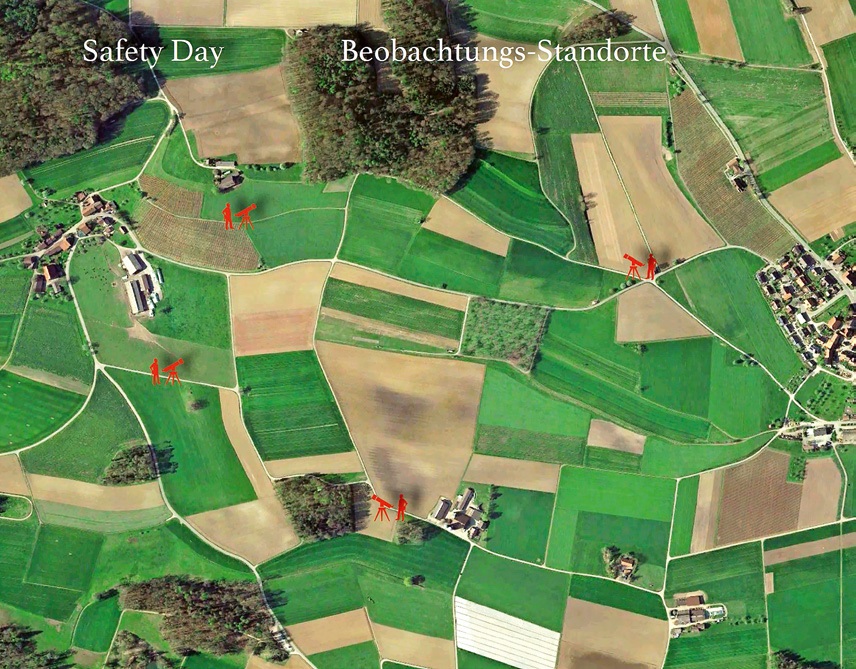
For visual inspection, members were able to observe various flights directly from the “victim’s perspective” at four observation sites. Most members were surprised not only by how far the flights extended, but also by how differently the noise levels were perceived.
It became apparent that large, fast models powered by turbines, in particular, occupy the largest airspace and sometimes fly close to the airspace boundary or even exceed it. It is a well-known problem that estimating the flight distance of large models is particularly difficult.
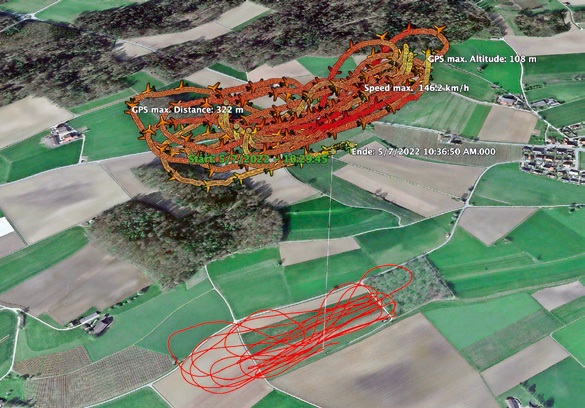
The flight area is relatively compact, with a maximum flight distance of 322 m. This is due in no small part to the fact that the model, designed for a young pilot, has a wingspan of approximately 160 cm and is therefore rather small.
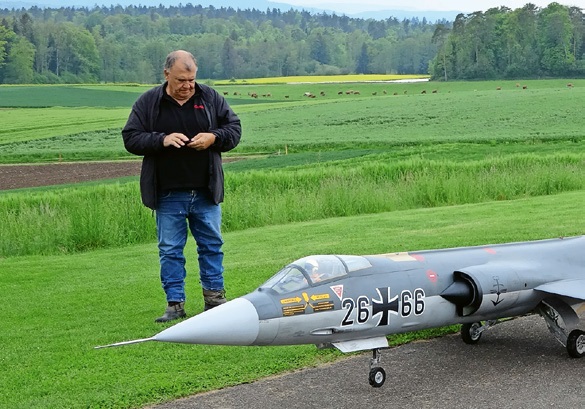
Fredy Doppelhofer's F-104 Starfighter has a maximum flight range of over 580 meters, allowing it to fly over a significantly larger area.
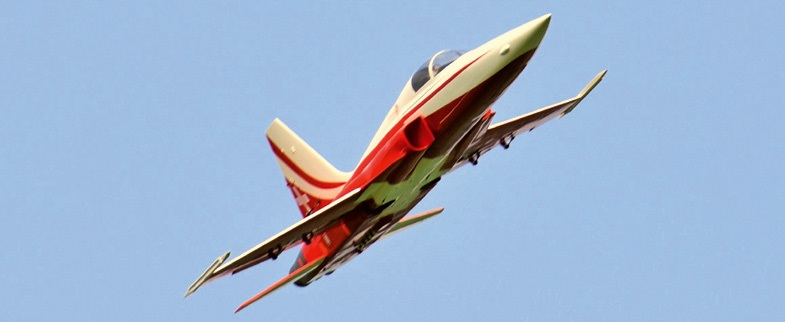
▲ An impressive demonstration of the data that can be extracted from a flight.
Maximum altitude: 260 m
; maximum speed: 254.67 km/h;
distance: 580 m
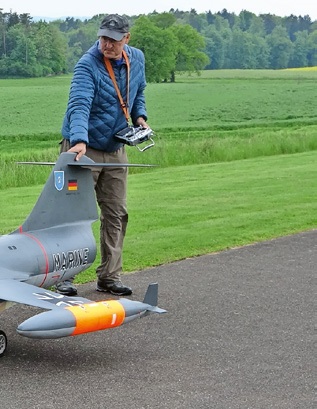
Fredy with his flight assistant, Peter Rütmann. You never fly a model like this without an assistant!
Safety is an important issue that is sometimes overlooked. The larger the model, the more airspace it requires, and the more helpful it is to fly an appropriate turn. Another insight came from comparing flying at full throttle with flying at three-quarters throttle; this can significantly reduce the noise level.
However, if you follow the most important rules, you can avoid many incidents. If you also put yourself in the shoes of a neighbor, farmer, or pedestrian, you can better understand that the noise might be a nuisance and that people might have concerns if a model were to crash. That’s why it’s important to stay within the permitted flight zone.
With a Safety Day like this, every club has the opportunity to raise its members’ awareness of safety issues and provide training.
If needed, Fredy would also be willing to share the lessons learned with other clubs or even organize a Safety Day for interested clubs.
The Safety Day will certainly continue at MG Diessenhofen. Next time, it will feature different or additional focal points that are well worth considering and discussing.
◀ A Pilatus PC-21 flying over the MG Diessenhofen model aircraft field.
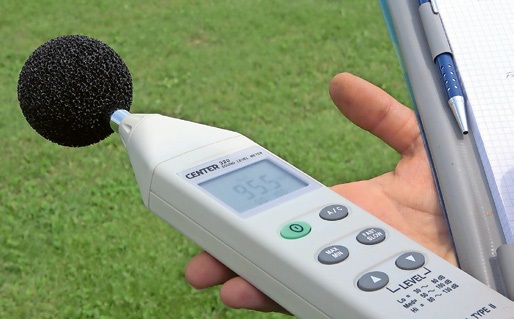
In the meantime, noise measurements were taken on various jets and propeller-driven aircraft. There is currently no noise problem at the MG Diessenhofen, but the club still wants to make its members aware that a model airplane pilot’s perception of noise may not necessarily match that of a nearby resident. This was a realization shared by members who gained firsthand experience at the observation sites.
Safety is a constant concern in our hobby, and we all actually know pretty well how to handle it. There are also many SMV documents and resources on the topic. In practice, however, things don’t always go exactly as they do in theory. Safety must be practiced every day—for example, through a positive culture of learning from mistakes and mutual “supervision,” but also through regular training and awareness-raising events within the clubs.
The main purpose of Safety Day was primarily to demonstrate how we navigate the airspace. Fredy Doppelhofer therefore decided to organize a Safety Day for his club, the MG Diessenhofen, this year as follows: “We’ll use GPS loggers to record and analyze flight paths. We all know how difficult it is to estimate the distance and range of the model. Am I still in front of the farm, or have I—even though it feels like I haven’t—already flown past it?” Outposts were set up so that the flights could be observed from the perspective of farmers or people out for a walk.
In my view, the event was exemplary and comes highly recommended.
Carlo Fornasier
Carlo Fornasier is responsible for the environment and safety on the NOS Regional Board. Ed.


News from HEBU

TEAM MANAGER "THIS" BOSSHARD
 Rodito Nussbaumer

SUMMER FUN 2026 AT MG USTER
Martin Wunderli
SMALL, MODEL-LIKE SAILBOATS
Res Dauwalder
TRY-OUT DAY AT MFV WETTINGEN
Urs Keller
What's New at Leomotion.com

52. 2026 ALPS CUP
 Emil Giezendanner

ATOM, THE NEW DOUBLE-DECKER FROM CPLR
 Matthias Bosshard

INSIGHTS INTO THE HISTORY OF SEAPLANES

YOU KNOW WHAT I MEAN? 125 YEARS OF THE SWISS AERO CLUB
Emil Giezendanner
34th HAHNENMOOS ALPINE MODEL AIRPLANE CAMP
Res Dauwalder
CORSAIR F4U – A WARBIRD WITH A MEMORABLE LOOK
Jürgen Rosenberger, Jürgen Prinz
F3A EUROPEAN CHAMPIONSHIPS IN ST-MACAIRE, FRANCE
Matthias Bosshard
HORIZON HOBBY/LEMACO NEWS: MICRO OV-10 BRONCO 645 MM BY E-FLITE

PRIDE AND GOOD IDEAS
 Markus Nussbaumer

BY YOUTH, FOR YOUTH
Lorena Betschen
FREE FLIGHT IN THE MIDDLE OF SUMMER
Urs Muntwyler
THE PC-21 STORY
Emil Giezendanner
TWIN TOWN PARTNERSHIP
Wolfgang Voeller
EURO CONTEST GLIDER ACRO TOUR AUSTRIA 2026

WELCOME, NEW MEMBER!
Andrea Bolliger
COUPE DES ALPES – OBSERVE AND LEARN
Rodito Nussbaumer
NEWS FROM HEBU
 Julia Bucher

FROM 0 TO 100
Markus Nussbaumer
MEMORIES
Wolfgang Völler
NOS REGION – A HUB FOR ELECTRIC AVIATION
Emil Giezendanner
Have you almost forgotten about aircraft that take off and land vertically?
Emil Giezendanner
70 YEARS OF THE NIDWALDEN MODEL AIRPLANE CLUB
Martin Barmettler