
Quadcopters, iPhones, video cameras, and video glasses... a new kind of freedom?
UVS (Unmanned Vehicle Systems), UAV (Unmanned Aerial Vehicle), UAS (Unmanned Aircraft Systems), and FPV (First Person View) are terms that have gained tremendous momentum in recent months and are now well on their way to becoming a major trend in the world of remote-controlled model aircraft, much like the introduction of EPP models. Since the launch of the Parrot.AR drone, which can be controlled using an iPhone or iPad, it has become “trendy” to be a model aircraft enthusiast. This affordable quadcopter model is particularly popular among teenagers and adults who are young at heart, as it allows users to control a model aircraft with a very unconventional “remote control”—a feature that also helps the pilot stand out from the crowd of other model pilots. The fact that it can also transmit images and record videos during flight is the icing on the cake. After all, such equipment (photo and video cameras) for standard model aircraft can easily add a few hundred francs to the cost of an already expensive model.
We ordered the Parrot.AR drone, received it, and assembled it in just a few minutes. Then, as responsible model pilots, we first flew the model over the model airfield, filming everything along the way and taking in the view of the field from a bird’s-eye
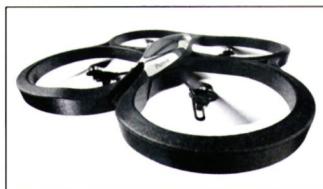
It offers a perspective that’s usually off-limits to us. A quick pan over the pilot’s or model airplane hangar, followed by an elevated shot of the field. The image quality is amazing. Of course, I have to show the whole thing to the best wife ever as soon as I get home. It looks really cool, too. A quick sightseeing flight around the yard, a short flight over the house. Change the battery and right back up again. In the meantime, the best wife ever has left us, shaking her head, and is preparing dinner. Take off and fly over the house again, a quick pan over the neighbor’s yard… a close-up of the sausage on the neighbor’s grill, maybe a quick glance at the pretty neighbor, and back to the yard. Watching the video afterward also lets you extract photos from the footage, giving you a perfect aerial view of your own house. And it’s cost-effective, too. Post the whole thing online right away on Facebook, Twitter, or your own website. Wow, what a wonderful new world of model flying.
For those who find the iPhone and its capabilities insufficient, it’s time to upgrade. Why not fly your own midi/large glider, powered aircraft, or jet over your own airfield? An RC-controlled active video camera transmitting a signal to video goggles or a ground-based video control system with data recording? Cool.
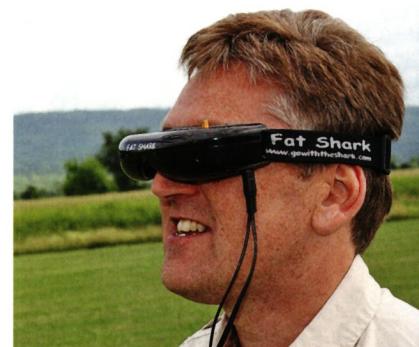
There’s plenty of room in the cockpit, plenty of power too, and once ordered from the online store, these objects of desire arrive in your mailbox within a few days. In no time at all, everything is installed and programmed via remote control. The first test of video transmission at the airfield works too. So here we go: put on the video goggles, clear for takeoff, and off into model airplane heaven. Views like those you’d only expect from manned aviation are addictive. Keep the model tow plane in view from the cockpit’s perspective, release the tow, and enjoy. With the remote-controlled camera, you can look left and right. This opens up entirely new aspects of model flying. Just like in manned aviation. The only thing missing is the G-sensor, which uses air cushions and compressed air to provide physical feedback on the G-forces acting on our backsides. Model aviators, the future looks bright and everything’s hunky-dory. After all, everything is freely available for sale and can therefore be used without restriction, right!?
The older folks among us know the answer from Radio Yerevan: “In principle, … Yes, but …” The fact that our fictional enthusiastic model aviator, with his video-controlled flight and data recording over his neighbor’s yard, has just been fined CHF 10,000.– francs, possibly six months in jail, and the confiscation of his entire equipment will likely come as a surprise to him… but unfortunately, this isn’t entirely far-fetched.
The legislation, which is increasingly regulating model aviation as well, is quite clear on this point and significantly restricts the enjoyment of flying with cameras and video cameras. Not always without good reason. But let’s take a closer look at this. When it comes to remote-controlled model flying, the iPho-
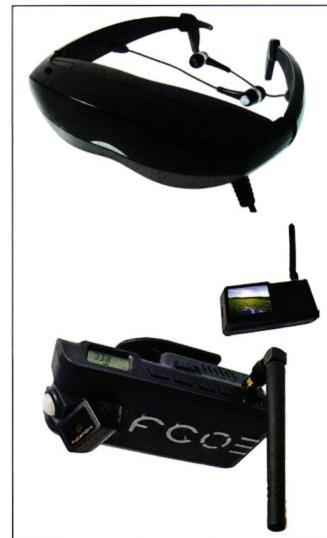
No, with real-time video signal transmission to video glasses, automatic or manually triggered photo capture, or a signal-amplifying patch-panel antenna operated by a co-pilot to ensure the model’s signal is not lost and to fly to the visual line of sight or beyond—the law is always at the controls. The new VLK (DETEC Ordinance on Special Categories of Aircraft of November 1994, updated edition of April 1, 2011, 748.941), as well as the DSG (Federal Act on Data Protection of June 19, 1992, updated edition of January 1, 2011, 235.1) and the publication by the FOCA
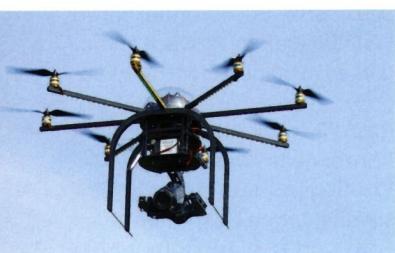
**This makes it clear why a co-pilot is necessary when flying with video goggles. Source:
Regulations from May 2011 clearly and unambiguously govern their use. Remote-controlled UAVs, UVS, or aircraft commonly referred to as “drones” are remote-controlled, in most cases small aircraft, and are therefore legally treated the same as model aircraft. In principle, they may be operated without a permit if they weigh 30 kilograms or less. In this discussion, we will focus exclusively on model aircraft used as sports equipment and not for commercial purposes. Anyone who takes video or photographic recordings and subsequently distributes them as part of a for-profit or even a not-for-profit activity and/or processes them using database technology generally requires a permit to do so!!!
The difference between model aircraft and drones was defined by the SMV as early as 2009 in a position paper as follows:
- Model aircraft are generally built and used for recreational activities and sporting competitions. The focus is on the fun factor, the sporting competition, or the personal enjoyment of the builder/pilot
- UAVs and drones are devices specifically designed to perform specific tasks (missions) and are equipped with appropriate sensors or transmitters to fulfill these tasks.
This definition is also used in a similar form by the FOCA, as in a recent statement.¹
However, a prerequisite for operation as a model aircraft is that the model
pilot maintain visual contact with their model at all times. In the age of 2.4-GHz systems, this is actually a matter of survival for the model, since otherwise control over the model can no longer be exercised and the model will inevitably crash. Our colleagues in the 35-MHz camp still have the major advantage here that, in the event of loss of visual contact due to signal reflections, the model may still be controllable under certain circumstances. However, since April 2011, doing so has been a criminal offense and violates Article 17 of the Air Traffic Regulations (LVK):
*“... Anyone operating a model aircraft weighing up to 30 kg must maintain direct visual contact with the aircraft at all times ...”*
This sentence is explosive when it comes down to it. If interpreted literally, not even a brief glance to monitor the airspace ahead or to look for buzzards circling in the thermals is permitted, because doing so would result in the loss of direct visual contact with the model. The FOCA clarifies the term “visual contact” as follows:
*“... (without the use of technical aids such as binoculars, video goggles, etc.) with the aircraft ...”1*
Here are the most important rules regarding model aircraft and drones, which the FOCA has also published on its official website at http://www.bazl.admin.ch/dienstleistungen/02658/index.html?lang=de:
1 Peter Krüger, lic. iur., Federal Office of Civil Aviation (FOCA)
- Provided that the “pilot” maintains direct visual contact with the aircraft at all times, drones and model aircraft may be operated without a permit.
- If someone wishes to use technical aids such as binoculars or video goggles to extend the natural range of vision, a permit from the FOCA is required.
- Within the “pilot’s” line of sight, operation using video goggles and similar devices is permitted, provided that a second “operator” monitors the flight and can take control of the aircraft at any time if necessary.
- Automated flight (autonomous operation) within the “pilot’s” field of view is permitted, provided that the pilot can intervene in the controls at any time if necessary.
- Aerial photography is permitted, provided that regulations regarding the protection of military installations are observed. Privacy protection and the provisions of the Data Protection Act must also be observed.
- Anyone operating a drone or model aircraft weighing more than 500 grams must ensure liability coverage of at least 1 million Swiss francs for any damages.
- There are restrictions on flying drones and model aircraft near airports. For example, it is not permitted to fly such aircraft closer than 5 kilometers from the runways.
- Cantons and municipalities may impose additional restrictions on the use of unmanned aircraft.
Author’s note:
Re 2) If devices are used to extend the range of the model aircraft control system, or if the system is modified in such a way that the transmitted power exceeds 100 mW, the model aircraft pilot is also in violation of
nor does it violate the Telecommunications Act.
Re 6) If a slightly larger battery is installed in the Parrot AR.Drone to increase flight time, the model aircraft—when combined with the indoor shell—may weigh more than 500 g, in which case model aircraft insurance is required.
So far, we have only considered the basic operation of model aircraft; let’s now look at model aircraft equipped with photo and/or video cameras. The latest devices weigh only a few grams, yet some offer HD resolution, can record flights in full resolution for up to 12 minutes, and some even have a built-in automatic photo function. If this function is activated, photos are automatically taken at adjustable intervals during the flight. This makes it possible to capture entirely new shots of the model airfield, the surrounding area, or even during a flight in an unfamiliar flying zone in a high-alpine setting. Thanks to the wonderful world of electronics, this allows for one-of-a-kind souvenir photos. But wait… are there restrictions here as well?
Radio Yerevan would say: In principle, no… but!
So where exactly are the limitations? Are you not allowed to take photos or record videos?
Yes, of course... but the law limits
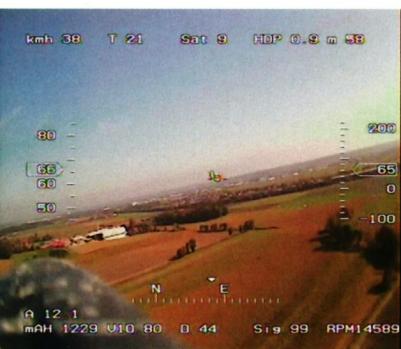
their use. According to Article 80 of the Federal Act on the Protection of Military Installations (LFV), aerial photography and the dissemination of such images are permitted subject to the provisions of the legislation on the protection of military installations.¹ The Federal Act on Data Protection (DSG) also clearly regulates how photos in which third parties are depicted and/or recognizable may be handled. Article 2, paragraph 2a, clearly states that the law does NOT apply if the photos or videos are processed or used exclusively for private purposes and are NOT published. So, everything’s clear. Fly freely and keep the camera rolling.
But it’s not quite that simple or clear-cut. As is so often the case, the devil is in the details. There isn’t enough space here to cover all aspects of privacy protection and image rights, and extensive legal correspondence would need to be consulted. Nor will we address the commercial acquisition of photo and video material using remote-controlled model aircraft, since the Federal Office of Civil Aviation (FOCA)’s consent is required in every such case. However, the following can be stated in principle here, as it directly affects us as model aircraft pilots.
As a general rule, Article 4(4) of the DSG applies to all aerial and video recordings:
“... The collection of personal data and, in particular, the purpose of its processing must be recognizable to the data subject ...”
Photos taken from a neighbor’s yard are therefore generally permissible if:
- the neighbor is aware of it;
- it does not cause any nuisance.
Even for the sake of maintaining good neighborly relations in the future, the neighbor should therefore be informed about the photos. You could even return the favor by taking a photo of the neighbor’s property—even in the age of Google®, not everyone has a nice photo of their own property.
Personal data requiring special protection is regulated in Art. 3, para. 3, of the DSG:
Personal data requiring special protection is data that provides information about:
- religious, ideological, political, or union-related views or activities;
- health, privacy, or racial origin;
- social assistance measures;
- administrative or criminal proceedings and sanctions.
In addition to intimate privacy, personal privacy is also protected. Privacy refers to the non-public sphere in which a person exercises their right to the free development of their personality, unhindered by external influences. The right to privacy is considered a human right and is enshrined in all modern democracies.²
Privacy is regulated in Article 13 of the Federal Constitution:
Art. 13 Protection of Privacy
1. Every person has the right to respect for their private and family life, their home, and their correspondence, postal, and telecommunications communications.
2. Every person has the right to protection against the misuse of their personal data.
2 http://de.wikipedia.org/wiki/Privatsphäre
3 http://www.altenburger.ch “The Right to One’s Own Image”
In the case of a house, the term “home” is extended to include the entire property, provided that the property is shielded from view and/or access. Therefore, taking photos or videos in a neighbor’s garden without the affected person’s knowledge is prohibited if individuals can be clearly identified in the images and/or data could be collected in accordance with DSG Art. 3, para. 3.
The use of data falling under this definition is clearly regulated in DSG Art. 4, para. 5:
“... If the consent of the data subject is required for the processing of personal data, such consent is valid only if it is given voluntarily after the data subject has been provided with appropriate information. In the case of the processing of particularly sensitive personal data or personality profiles, consent must also be given expressly ...”
The right to privacy is based on the idea that every individual possesses an intrinsic value that requires legal protection. This protection and right apply to everyone. It is an absolute right. Civil law alone cannot guarantee the protection of this right. Rather, it is a task for the entire legal system. Provisions on the protection of personality can be found in the Swiss Federal Constitution (Art. 10, para. 2 FC), in criminal law (Art. 179quater SCC), in civil law—i.e., in the Swiss Civil Code (SCC)—on the one hand, and in data protection legislation (DSG). Further provisions can be found in the Victim Assistance Act (OHG)3.
Under Art. 28 of the Civil Code (ZGB), fault is not required for a violation of personality rights to exist. This follows from the nature of the right to personality as an absolute right.³
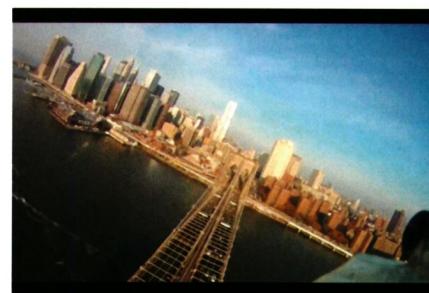
The publication of photos and video footage in which military installations are recognizable is strictly prohibited. Therefore, exercise caution when taking aerial photographs in high-alpine areas where secret or hidden military installations are still in operation and could be recognizable in the photos or video footage.
If you take into account the above provisions—which have been summarized to the best of our knowledge and belief, do not constitute a legal claim, have not been reviewed by a legal expert, and are, of course, not exhaustive— there will be no obstacles to taking photos and videos while model flying, and you can decorate your model flying club with great shots and also share the content on your website for the enjoyment of other model flying enthusiasts. If you need further information or have specific questions on this topic, please contact your regional president so that we can compile these questions and, if necessary, have them clarified by our legal department. Please also refer to the document “Drones and UAVs—Position Paper on the Distinction from Model Aircraft,” which is available for download on the SMV website.
The products listed in this article are not promoted or recommended by the SMV but are provided solely for the reader’s information. ■
Rb/smv
1) Peter Krüger, lic. iur., Federal Office of Civil Aviation (FOCA
) 2) http://de.wikipedia.org/wiki/Privatsphäre
3) http://www.altenburger.ch “The Right to One’s Own Image”


TEAM MANAGER "THIS" BOSSHARD
 Rodito Nussbaumer

ATOM, THE NEW DOUBLE-DECKER FROM CPLR
 Matthias Bosshard

INSIGHTS INTO THE HISTORY OF SEAPLANES

CORSAIR F4U – A WARBIRD WITH A MEMORABLE LOOK
Jürgen Rosenberger, Jürgen Prinz
SUMMER FUN 2026 AT MG USTER
Martin Wunderli
F3A EUROPEAN CHAMPIONSHIPS IN ST-MACAIRE, FRANCE
Matthias Bosshard
What's New at Leomotion.com

HORIZON HOBBY/LEMACO NEWS: MICRO OV-10 BRONCO 645 MM BY E-FLITE

PRIDE AND GOOD IDEAS
 Markus Nussbaumer

News from HEBU

YOU KNOW WHAT I MEAN? 125 YEARS OF THE SWISS AERO CLUB
 Emil Giezendanner

34th HAHNENMOOS ALPINE MODEL AIRPLANE CAMP
Res Dauwalder
SMALL, MODEL-LIKE SAILBOATS
Res Dauwalder
TRY-OUT DAY AT MFV WETTINGEN
Urs Keller
52. 2026 ALPS CUP
Emil Giezendanner
TWIN TOWN PARTNERSHIP
Wolfgang Voeller
EURO CONTEST GLIDER ACRO TOUR AUSTRIA 2026

BY YOUTH, FOR YOUTH
Lorena Betschen
WELCOME, NEW MEMBER!
Andrea Bolliger
FREE FLIGHT IN THE MIDDLE OF SUMMER
Urs Muntwyler
THE PC-21 STORY
Emil Giezendanner
COUPE DES ALPES – OBSERVE AND LEARN
Rodito Nussbaumer
NEWS FROM HEBU
 Julia Bucher

FROM 0 TO 100
Markus Nussbaumer
NOS REGION – A HUB FOR ELECTRIC AVIATION
Emil Giezendanner
MEMORIES
Wolfgang Völler
Have you almost forgotten about aircraft that take off and land vertically?
Emil Giezendanner
70 YEARS OF THE NIDWALDEN MODEL AIRPLANE CLUB
Martin Barmettler