
How Sensible Regulations Become Absurd
Dear Reader
We’ve all encountered those rules—well-intentioned as they may be—that seem practically pointless in certain situations—especially when we believe we’ve used our common sense. We come across plenty of such rules in our hobby as well. For example, there’s a model airfield with a prescribed maximum flight altitude of less than 100 meters that hasn’t been flown over by an aircraft since the Wright brothers, or models being weighed at F3P competitions because the rules stipulate a weight limit of 300 g (!). Only the (brain-)dead were heavier! I’ve even seen meticulous noise measurements being taken at an F3A competition right next to the highway—presumably the judges had turned off their hearing aids. Here, too, the letter of the law always takes precedence over common sense and the courage to make decisions appropriate to the situation. It must be a special kind of pleasure to spend days and nights before FAI World Championships going to great lengths to measure the models—right down to the interesting task of determining the area of an elliptical wing— even though the FAI regulations have long since abolished such requirements in favor of random spot checks during competitions—which is, in any case, more realistic and holds national federations accountable for ensuring that models comply with the rules.
When rules and laws are enacted immediately in response to specific incidents, this is always accompanied by our desire for safety and a fear of doing something wrong. An organization does not want to take responsibility and passes the buck to the next—usually higher—authority. This overlooks the fact that no collective can prevent mistakes or violations of laws and regulations by individuals. If an organization—even a powerful federation—were to claim during negotiations, for example with a regulatory authority, that its members would never fly their models near a helicopter, that they would never violate this or that altitude restriction, or that they would never fly farther with video goggles than the model remains visible to the naked eye, then this would be absurd, if not a lie. Ultimately, we can and must appeal solely to our members’ personal responsibility: Let us always conduct ourselves at the airfield in such a way that we do not grossly violate the operating regulations or even risk official intervention—up to and including the closure of the airfield. However, our associations must also show backbone. The fault does not always lie with us model aviators, and those higher up in the hierarchical ladders of professions, government agencies, and clubs do not always demonstrate more professional behavior as they rise in “rank.”
Sincerely,
Emil Ch. Giezendanner
The opinions expressed on this page by the editor—as well as by other authors of this issue—do not necessarily reflect the official position of the SMV. Readers can find official association announcements in the “SMV” section.
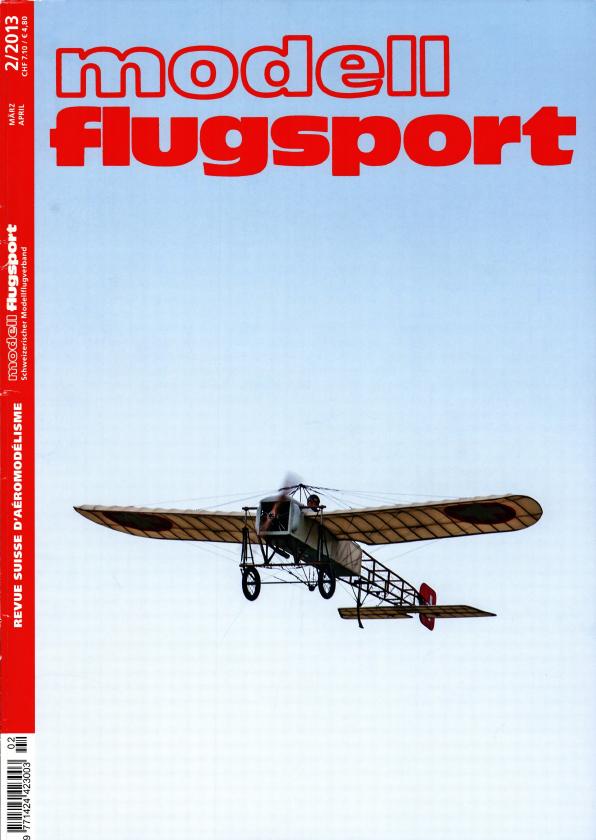

What's New at Leomotion.com

PRIDE AND GOOD IDEAS
 Markus Nussbaumer

News from HEBU

TEAM MANAGER "THIS" BOSSHARD
 Rodito Nussbaumer

ATOM, THE NEW DOUBLE-DECKER FROM CPLR
 Matthias Bosshard

INSIGHTS INTO THE HISTORY OF SEAPLANES

34th HAHNENMOOS ALPINE MODEL AIRPLANE CAMP
Res Dauwalder
CORSAIR F4U – A WARBIRD WITH A MEMORABLE LOOK
Jürgen Rosenberger, Jürgen Prinz
SUMMER FUN 2026 AT MG USTER
Martin Wunderli
F3A EUROPEAN CHAMPIONSHIPS IN ST-MACAIRE, FRANCE
Matthias Bosshard
52. 2026 ALPS CUP
 Emil Giezendanner

HORIZON HOBBY/LEMACO NEWS: MICRO OV-10 BRONCO 645 MM BY E-FLITE

TWIN TOWN PARTNERSHIP
Wolfgang Voeller
EURO CONTEST GLIDER ACRO TOUR AUSTRIA 2026

BY YOUTH, FOR YOUTH
Lorena Betschen
YOU KNOW WHAT I MEAN? 125 YEARS OF THE SWISS AERO CLUB
Emil Giezendanner
SMALL, MODEL-LIKE SAILBOATS
Res Dauwalder
TRY-OUT DAY AT MFV WETTINGEN
Urs Keller
WELCOME, NEW MEMBER!
Andrea Bolliger
FREE FLIGHT IN THE MIDDLE OF SUMMER
Urs Muntwyler
THE PC-21 STORY
Emil Giezendanner
COUPE DES ALPES – OBSERVE AND LEARN
Rodito Nussbaumer
NEWS FROM HEBU
 Julia Bucher

FROM 0 TO 100
Markus Nussbaumer
NOS REGION – A HUB FOR ELECTRIC AVIATION
Emil Giezendanner
MEMORIES
Wolfgang Völler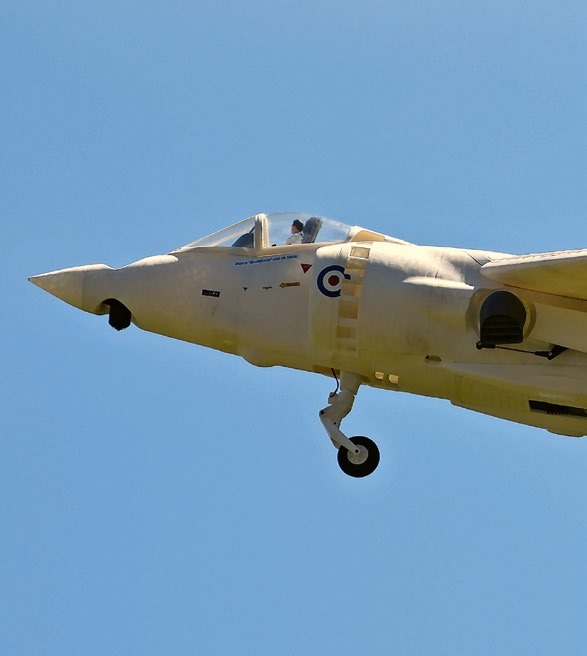
Have you almost forgotten about aircraft that take off and land vertically?
Emil Giezendanner
70 YEARS OF THE NIDWALDEN MODEL AIRPLANE CLUB
Martin Barmettler