
High-tech model airplanes—too good to throw away
What should you do with F3A model airplanes that are defective, damaged, or simply missing parts? Throw them away? Why? Disposal doesn’t always have to be the last resort. After all, repairing these high-tech model airplanes—especially the expensive, lightweight F3A models—can definitely be worth it, particularly if it’s a special model, a collector’s item, or a model you’ve poured your heart and soul into.
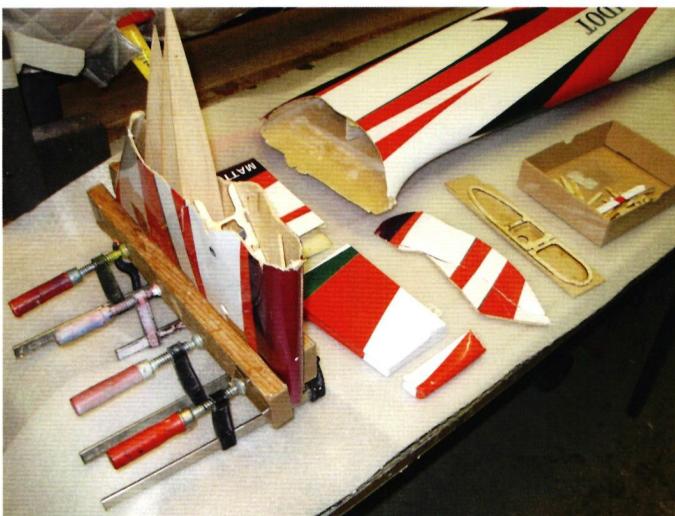
To achieve a good repair result and restore or improve the model’s typical flight characteristics, extensive experience in this field is essential—in addition to the correct use of the right materials and clean, precise workmanship. After all, the goal is to restore the damaged or defective aircraft to a new and/or airworthy condition with minimal weight gain. A professional repair is therefore also a matter of trust. Just as with the human body, injuries and problems affecting the “extremities” and motor functions are very similar. Broken legs, arms, and ribs, as well as bruises and cuts, leave marks that restrict a person’s movements. Damage to the fuselage or wings, as well as breaks and cracks, impair the aircraft’s flight performance or prevent it from taking off in the first place.
The most important factor for success is not just an accurate diagnosis
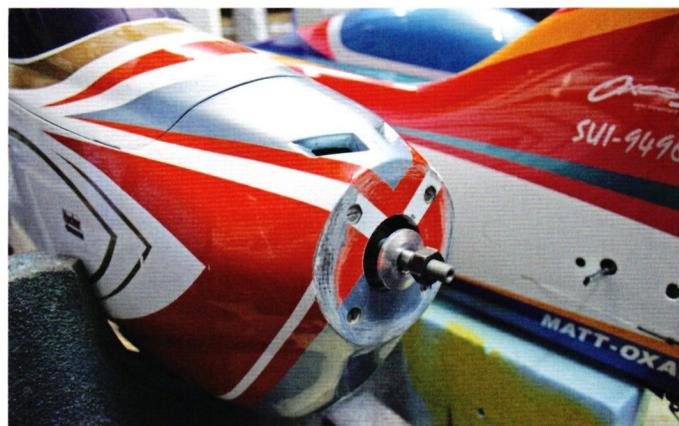
and determining the nature of the damage, but also knowing which parts are directly and indirectly affected. Precisely for reasons of balance and weight optimization, one should make the effort and take the time to replace even those parts that, at first glance, appear undamaged but—when considered in relation to the entire aircraft structure—no longer ensure optimal flight characteristics. It is therefore very important to take the time to diagnose the aircraft. This is best done using bright lights (1,000-watt spotlights or similar) in a darkroom. The light shines through the material, making it possible to assess internal damage and/or identify structural and material weaknesses. For easily accessible areas, one can examine the damage from both the inside and outside and determine how it can be repaired through intervention. The keyhole method (endoscopy) is used for inaccessible areas. As in medicine, a flexible metal tube equipped with a light and a camera is used to examine the interior for problem areas. An often underestimated but essential criterion for a successful repair is the consistent use of lightweight materials with maximum strength, as well as the willingness to experiment with new materials and to test composites such as carbon fiber, fiberglass, Herex, or Depron in new areas of the aircraft. Tip: A professional repair can only be carried out in several stages. The goal is to succeed without leaving any visible traces. I generally don’t have any problem cases. Either the airplanes are warped, dented, or broken. Then they need a few skilled or technical “tweaks” to get them back on a straight flight path.
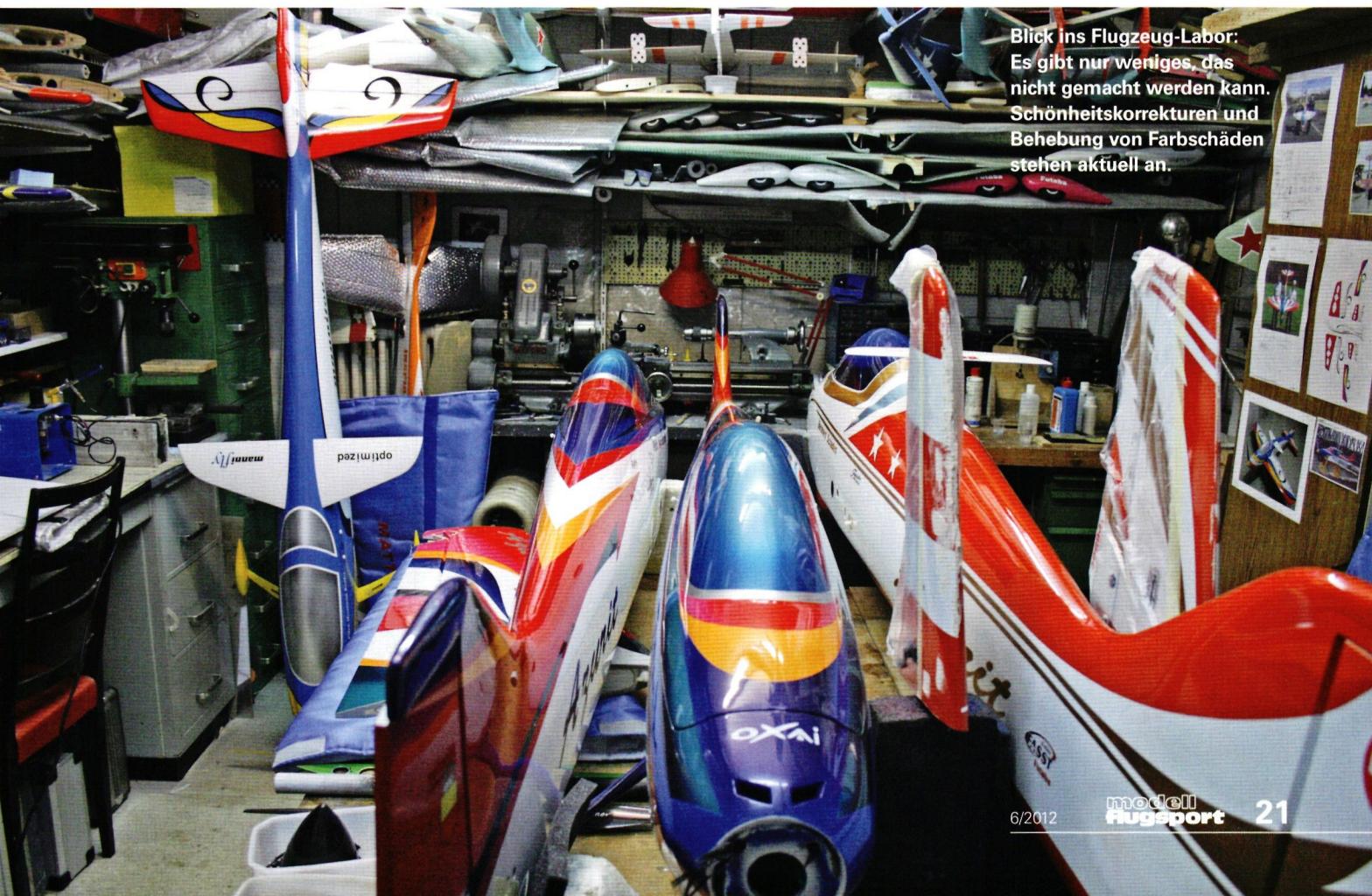
performed in a darkroom. The light shines through the material, making it possible to assess the damage inside and/or identify structural and material weaknesses. In easily accessible areas, one can examine the damage from both the inside and outside and determine how it can be repaired through an intervention. The keyhole method (endoscopy) is used for inaccessible areas. As in medicine, a flexible metal tube equipped with a light and a camera is used to examine the interior for problem areas. An often underestimated but essential criterion for a successful repair is the consistent use of lightweight materials with maximum strength, as well as the willingness to experiment with new materials and to test composites such as carbon fiber, fiberglass, Herex, or Depron in new areas of the aircraft. Tip: A professional repair can only be carried out in several stages. The goal is to succeed without leaving any visible traces. I generally don’t have any problem cases. Either the airplanes are warped, dented, or broken. Then they need a few skilled or technical “tweaks” to get them back on a straight flight path.
Others simply want a facelift—a “nose job,” for example, or a modified engine cowling for their model airplane—because the model previously had a gasoline, 2-stroke, or 4-stroke engine installed. A partial aerodynamic and visual modification to the intake and chin would be beneficial and make sense from a cooling perspective. Another aesthetic and functional feature is winglets (attachable wings) at the wing tips. They provide better lift and reduce induced drag.
No doubt there are many model airplanes gathering dust somewhere in a hobby room, or forgotten in an attic or barn. What a shame, really. But forgotten doesn’t mean lost. Bring these aviation treasures back to life, and let yourself be inspired once again by the flying prowess of these new “old” models in the sky—and by model aviation itself.
*Oxai Professor H. Kistler/V. Kistler*
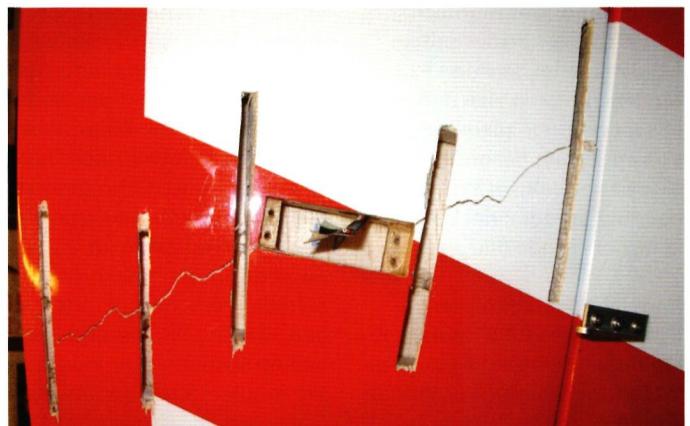
*www.mannifly.ch* Wing breakage: An unexpected gust of wind caused damage to the wing tip, resulting in a crash landing.


What's New at Leomotion.com

PRIDE AND GOOD IDEAS
 Markus Nussbaumer

News from HEBU

TEAM MANAGER "THIS" BOSSHARD
 Rodito Nussbaumer

ATOM, THE NEW DOUBLE-DECKER FROM CPLR
 Matthias Bosshard

INSIGHTS INTO THE HISTORY OF SEAPLANES

34th HAHNENMOOS ALPINE MODEL AIRPLANE CAMP
Res Dauwalder
CORSAIR F4U – A WARBIRD WITH A MEMORABLE LOOK
Jürgen Rosenberger, Jürgen Prinz
SUMMER FUN 2026 AT MG USTER
Martin Wunderli
F3A EUROPEAN CHAMPIONSHIPS IN ST-MACAIRE, FRANCE
Matthias Bosshard
52. 2026 ALPS CUP
 Emil Giezendanner

HORIZON HOBBY/LEMACO NEWS: MICRO OV-10 BRONCO 645 MM BY E-FLITE

TWIN TOWN PARTNERSHIP
Wolfgang Voeller
EURO CONTEST GLIDER ACRO TOUR AUSTRIA 2026

BY YOUTH, FOR YOUTH
Lorena Betschen
YOU KNOW WHAT I MEAN? 125 YEARS OF THE SWISS AERO CLUB
Emil Giezendanner
SMALL, MODEL-LIKE SAILBOATS
Res Dauwalder
TRY-OUT DAY AT MFV WETTINGEN
Urs Keller
WELCOME, NEW MEMBER!
Andrea Bolliger
FREE FLIGHT IN THE MIDDLE OF SUMMER
Urs Muntwyler
THE PC-21 STORY
Emil Giezendanner
COUPE DES ALPES – OBSERVE AND LEARN
Rodito Nussbaumer
NEWS FROM HEBU
 Julia Bucher

FROM 0 TO 100
Markus Nussbaumer
NOS REGION – A HUB FOR ELECTRIC AVIATION
Emil Giezendanner
MEMORIES
Wolfgang Völler
Have you almost forgotten about aircraft that take off and land vertically?
Emil Giezendanner
70 YEARS OF THE NIDWALDEN MODEL AIRPLANE CLUB
Martin Barmettler